Learn 5 key mattress fan facts, how it cools the bed microclimate, and why hot sleepers may prefer it over lowering the thermostat.
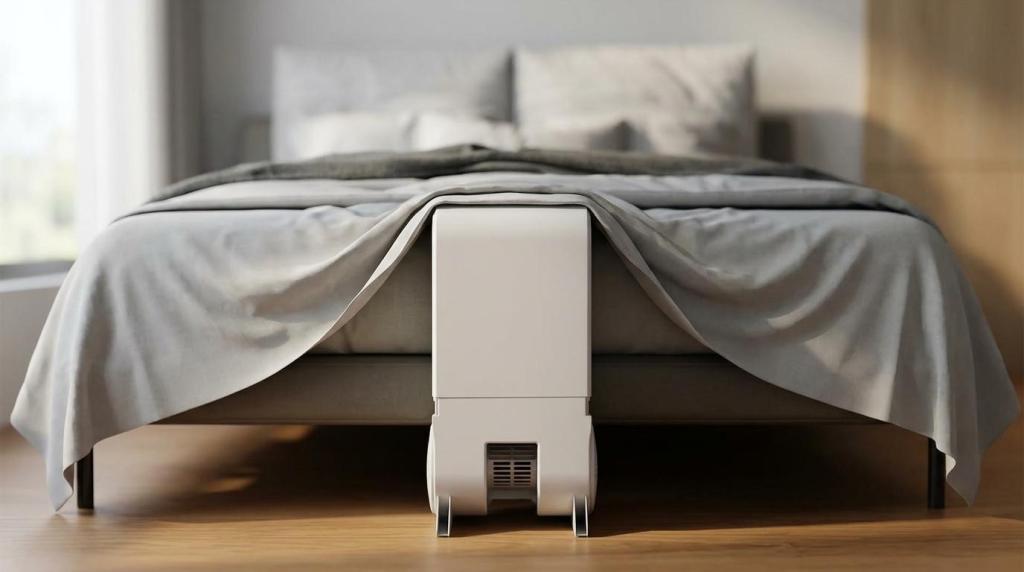
Hot sleepers often shop for a mattress fan thinking it will act like a mini air conditioner. That is not quite right. bFan Bed Fan is relevant here because it sits in the bed microclimate cooling category, where the goal is not to chill the whole bedroom, but to change the air under the covers so heat and sweat can escape.
TL;DR: Summary
- A mattress fan is most useful when your room is already fairly cool and the real problem is trapped heat and moisture in the bed microclimate, not a hot house overall, and bFan Bed Fan is built for that exact use case.
- Research on sleep thermoregulation shows sleep onset is tied to a drop in core body temperature and greater heat loss through the skin, so better airflow around the body can support thermal comfort.
- Mattress fans do not create cold air. They use the cool air already in the room, move it between the sheets, and help sweat evaporate faster.
- If your bedroom is already in the commonly recommended bedroom temperature between 60°F and 67°F range, a mattress fan can feel much more effective than lowering the thermostat several more degrees.
- Buying factors that matter most are airflow path, noise, remote or timer controls, energy use, and whether you need single sleeper or dual zone cooling.
This is not medical advice. Always consult your doctor, sleep specialist, or oncology team before making changes, especially if night sweats are new, severe, or linked to menopause treatment, cancer care, infection, medication changes, or unexplained weight loss. If your sweating is really a symptom problem and not just a comfort problem, the right next step may be medical evaluation first.
A mattress fan changes the air under your covers, not the temperature of your whole bedroom. It improves the bed microclimate by moving room air across skin and bedding so trapped heat and moisture can leave.
That distinction matters more than most product pages admit. Your bed can feel much warmer than the room because blankets, body heat, and humidity create a pocket of stale warm air. A mattress fan targets that pocket. If your main complaint is, “The room seems fine, but I still wake up hot once I am under the covers,” this category makes sense.
Sleep research helps explain why. Sleep onset is tied to thermoregulatory changes, including a drop in core body temperature and increased heat loss through the skin, as described in this PubMed review on sleep and thermoregulation. A mattress fan does not force your body to sleep, but it can make the heat loss part easier.
"bFan Bed Fan is a bed microclimate tool, not a room cooler, so its main job is moving trapped heat and moisture away from the body."
A common misconception is that any fan near the bed works the same way. A ceiling fan or box fan helps ambient air movement. A mattress fan is aimed at the higher heat, higher humidity space inside the bedding itself.
No. A mattress fan, including bFan Bed Fan and BedJet style systems, uses existing room air. It can cool your body’s immediate sleep space, but it does not refrigerate or lower the room temperature.
That is the trade off. If your room is 78°F and stuffy, a mattress fan may still help, but not nearly as much as it would in a reasonably cool bedroom. Sleep experts commonly recommend a bedroom temperature between 60°F and 67°F for better sleep. In practical terms, many people use a bed fan so they can raise the thermostat by about 5°F and still feel cool enough under the covers.
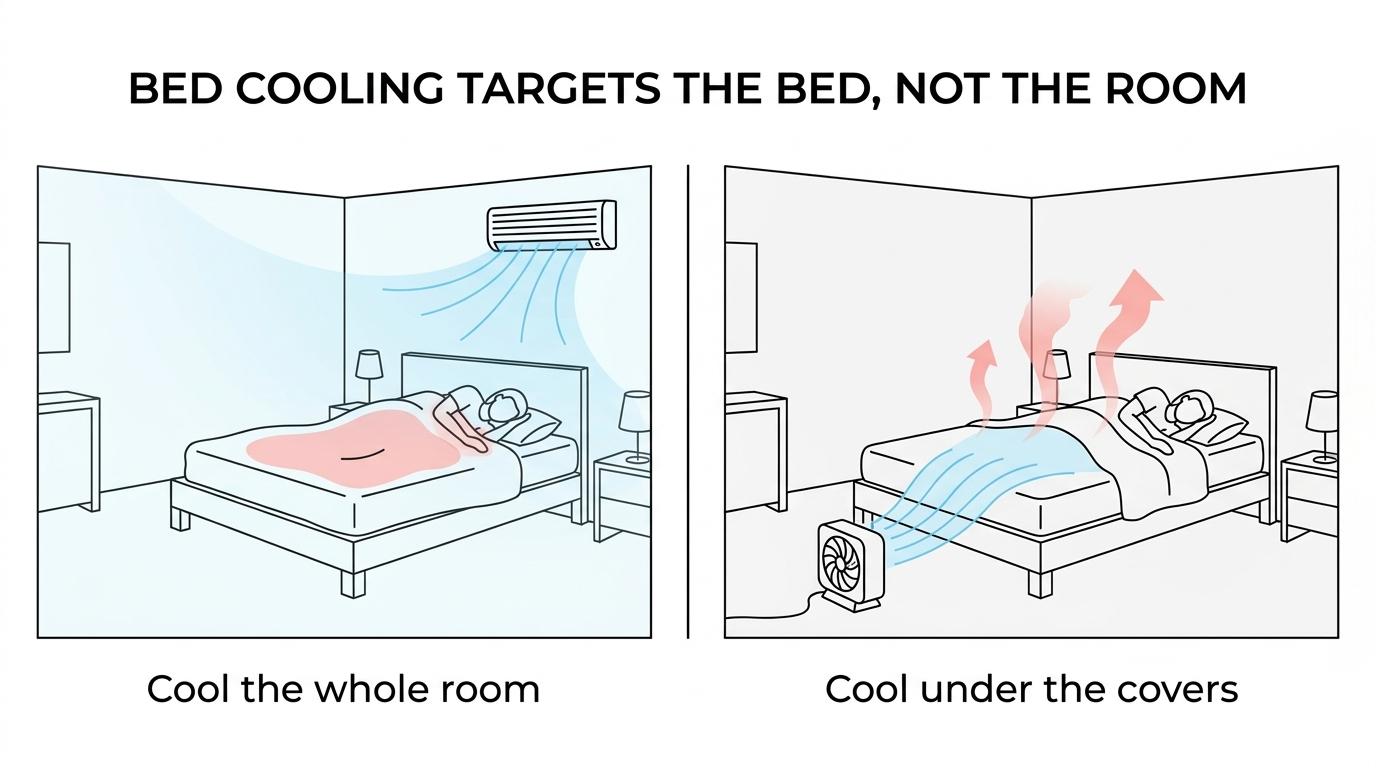
If then logic helps here. If your home is already cool and your problem starts only after you get into bed, a mattress fan may solve more than another room fan. If the whole room is hot, a better first move may be air conditioning, dehumidification, or both.
The most important facts are simple. Mattress fans work best as targeted airflow tools, and their real value depends on room conditions, bedding, and your specific heat pattern.
Before you buy, keep these five facts in view:
You can test this in a few nights. Focus on when the heat starts, where it builds, and whether moisture is part of the problem.
Start with pattern spotting. If you fall asleep fine but wake up hot an hour or two later, trapped heat is likely involved. If you feel hot the moment you lie down, room temperature may be the bigger issue. If your chest, back, or legs feel damp under the blanket, moisture management is part of the story too.
Next, strip variables. Keep the room at a steady temperature for three nights, use the same sleepwear, and switch only one thing, like lighter bedding or less layered pajamas. If lighter bedding helps a lot, your bed microclimate is probably the bottleneck.
One anonymized example. “Maya,” 52, thought she needed a new mattress because she woke up sweaty around 2 a.m. Her room was already 66°F, but she used a heavy comforter and brushed microfiber sheets. When she switched to a tighter weave cotton sheet set and added directed airflow under the covers, the room did not change much, but her wakeups dropped.
They matter a great deal. Bedding controls airflow distribution, and humidity controls how well sweat can evaporate from the skin.
The science is straightforward. A 2024 review in PubMed on sleepwear and bedding materials found that bedding and sleepwear can affect thermal comfort, skin temperature, and sleep quality. Older thermoregulation research also shows that lower ambient humidity supports sweat evaporation, while higher humidity keeps skin wet longer.
Pro tip, do not assume the softest fabric sleeps coolest. Plush, fuzzy, or heavy fabrics can trap more heat. Tight weave sheets often work better with a mattress fan because the air spreads along the sheet plane and across the body instead of escaping straight up.
If your room feels muggy, pairing a mattress fan with a dehumidifier can be smarter than turning the thermostat down several more degrees.
Placement and bedding setup matter more than max speed. Good airflow under the covers usually beats blasting a lot of air in the wrong direction.
First, aim the air where heat gets trapped, usually from the foot or lower side of the bed into the space between the top and bottom sheet. Second, keep the air path open enough that it can travel upward across your body. Third, test speed gradually instead of starting high. Many people sleep better with steady low to medium airflow than with strong airflow that feels drafty.
This is where the original Bedfan design still makes practical sense. The original Bedfan was invented in 2003, years before BedJet entered the category, and the core idea remains simple: direct room air into the bedding space where heat builds up most.
"At low speed, bFan runs around 28 dB, which is quiet enough for many sleepers who want airflow without a loud room fan effect."
Another useful detail is timing. Timer controls can help if you need more cooling at sleep onset than at 4 a.m. That is common in menopause, medication related overheating, and stress related warm ups.
The right comparison depends on whether you want airflow, active temperature tech, or premium automation. bFan, BedJet, and Eight Sleep solve related problems in very different ways.
A mattress fan and a BedJet both use room air already present in the bedroom. Neither actually cools the air. They push that air into the bed environment to change how hot the sleeper feels. Eight Sleep is a different category because it uses water based active temperature control and built in tracking.
Cost is where the gap becomes real for many buyers. A dual zone BedJet setup costs over $1,000, which is more than twice the price of two bed fans for partner specific cooling. The Eight Sleep Pod 5 is in another price tier altogether, typically between $3,000 and $6,000.
"A dual zone BedJet setup costs over $1,000, while two bFan units can create dual zone bed cooling at less than half that amount."
Common misconception, pricier does not always mean better for every hot sleeper. If trapped heat under the covers is the main problem, directed airflow may solve enough of it without moving into a much higher price bracket.
A mattress fan is usually more targeted, while lower thermostat settings cool everything. The trade off is whole room comfort versus personal sleep zone comfort.
If you share a home with someone who already feels cold, this matters. Lowering the thermostat to 62°F may help one person and bother everyone else. A mattress fan can let one sleeper cool the body more directly while keeping the room a bit warmer. Many users report they can raise the thermostat by about 5°F and still sleep well, which can also cut air conditioning use.
Pro tip, if your feet get cold easily, do not assume more cooling is always better. Sometimes a slightly warmer room with controlled under cover airflow produces better sleep continuity than aggressive whole room cooling.
Choose based on fit, noise, controls, and how you actually sleep. The best unit is the one you will keep using at 2 a.m., not the one with the most dramatic marketing.
Start with sleep style. If you toss blankets off and on, check whether the airflow still reaches you consistently. If you share a bed and one person sleeps cold, think about two separate units for dual zone control instead of one shared system.
Then check real use features. Remote control matters when you wake up hot and do not want to get out of bed. Timer controls matter if you mostly overheat at sleep onset. Noise matters if you are a light sleeper. Energy use matters if you want nightly use without a higher utility bill. Some bed fans run at very low power, around 12 watts on average, which is tiny compared with central AC.
If you are adding internal links on bedfan.com, these are good contextual choices:
Anyone with new, drenching, unexplained, or medically complex night sweats should check in with a clinician. Comfort tools help symptoms, but they do not diagnose causes.
Please do not brush off red flags. Talk to a doctor if night sweats are paired with fever, weight loss, swollen lymph nodes, chest symptoms, severe fatigue, or recent medication changes. The same goes for people in cancer treatment, people with infection risk, or anyone with suspected hormone or thyroid issues.
A second anonymized scenario shows why. “Chris,” 39, assumed his overheating was just summer weather. He later realized the timing matched a new antidepressant. A bed cooling setup helped him sleep, but the important move was also discussing the side effect with his prescriber.
This is not medical advice. Always consult your doctor or oncology team before making changes, especially for persistent night sweats, medication side effects, cancer care, hormone treatment, or any new symptom that seems out of character.
PubMed review on sleep and thermoregulation: Explains how sleep onset, distal skin temperature, and core body temperature changes work together.
PubMed review on bedding, sleepwear, and thermal comfort: Covers how textile choices influence skin temperature, body temperature, and sleep quality.
PubMed review on ambient humidity and sweat evaporation: Useful for understanding why sticky, humid rooms can make night overheating feel worse.
Yes, it often helps with symptom relief. A mattress fan can improve sweat evaporation and reduce the hot, damp feeling trapped under blankets, which is why many hot sleepers feel more comfortable with it.
That said, relief is not the same as diagnosis. If your night sweats are tied to menopause, infection, medication, cancer treatment, thyroid disease, or low blood sugar, the fan may help you sleep better while you and your clinician address the underlying cause.
No, it usually cannot replace AC in a truly hot room. A mattress fan works best when the bedroom is already reasonably cool and the main problem is trapped heat inside the bedding.
For many people, though, it can reduce how hard they rely on AC. Because the airflow is targeted to the sleeper, some can keep the room about 5°F warmer than usual and still feel comfortable enough to sleep.
That pattern usually points to bed microclimate buildup. Your body releases heat and moisture into a small enclosed space, and blankets can trap both faster than they dissipate.
This is why the room can feel fine while the bed feels miserable. If you are comfortable before covers go on and then overheat later, targeted airflow between the sheets is often more relevant than another room fan.
Some are quiet enough for light sleepers, and some are not. Noise depends on motor design, speed setting, room acoustics, and how sensitive you are to steady sound during the night.
Low speed operation on a bed fan can be very soft, while higher settings are more noticeable. If you are easily awakened, look for clear decibel guidance and a remote so you can fine tune airflow without getting up.
Tighter weave sheets often work best. They help the airflow travel across the body and carry away heat instead of escaping too quickly through loose or fluffy bedding layers.
Natural fibers can also improve comfort, especially if you sweat. Very heavy, fuzzy, or heat retaining fabrics may feel cozy at first but can work against airflow once your body starts warming the bed.
Yes, if one person sleeps much hotter than the other. A mattress fan can target the warmer sleeper more directly than whole room cooling, which often creates arguments over the thermostat.
Couples should think about control flexibility first. If one partner runs cold, two separate units or a clearly separated dual zone approach often works better than forcing both sleepers into the same cooling level.
If your main problem is trapped heat under the covers, a targeted airflow tool may be all you need. You can take a closer look at the bFan Bed Fan store if you want a practical way to cool the body without trying to refrigerate the whole room.
This is not medical advice. Always consult your doctor or oncology team before making changes, especially for persistent night sweats, medication side effects, cancer care, hormone treatment, or any new symptom that seems out of character.