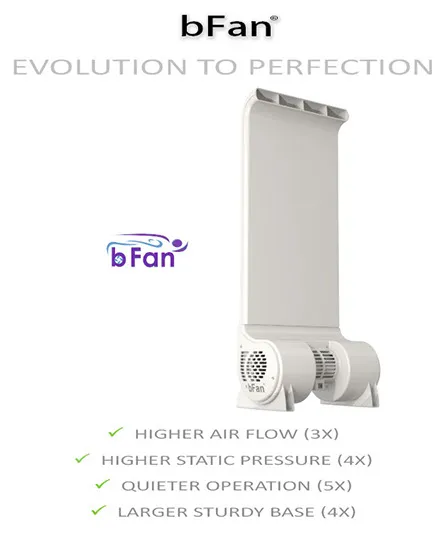
To naturally stop night sweats, it’s important to understand why they happen. By learning about the mechanics of sweating, you can take control and prevent night sweats—including those caused by menopause. With the right knowledge, you don’t have to suffer from night sweats anymore. Identifying triggers such as room temperature, bedding, anxiety, and stress can help you make effective changes. Simple adjustments, like using a bFan bed fan to keep cool at night, can significantly reduce or even eliminate night sweats, leading to more restful sleep.
In addition to environmental adjustments, considering medical treatment can be crucial for those experiencing persistent night sweats, especially if an underlying infection or cancer is suspected. Certain prescriptions and over-the-counter medications might contribute to excessive sweating or help manage it effectively. It’s important to discuss with a healthcare professional to understand the potential impact of medications on night sweats and explore suitable options that might help alleviate symptoms without compromising overall health.
• Radiation is when your body constantly gives off heat, similar to standing near something warm. Even when you’re resting, your body releases heat into the surrounding air. This natural process helps regulate your body temperature, but it can also contribute to feeling overheated at night. Using a bFan bed fan can help disperse this excess heat, keeping you cooler and more comfortable while you sleep.
• Conduction is when heat transfers directly from your body to another surface, like when you touch something hot. This process can make you feel warmer if your body is in contact with a warm mattress or bedding. Using a bFan bed fan can help reduce this heat buildup, keeping you cooler throughout the night.
• Convection is when heat from your body is carried away by moving air, like the warm air from a hair dryer. This process helps cool you down, especially if there’s good airflow in your bedroom. A bFan bed fan can boost convection, efficiently moving heat away from your body for a cooler, more comfortable sleep.
• Sweating is your body’s natural way of cooling down when it gets too hot. Night sweats happen when your body releases excess heat through sweat while you sleep, often leaving you feeling uncomfortable and disrupting your rest. While sweating is a normal process, frequent night sweats can be frustrating and difficult to manage. Using a bFan bed fan can help regulate your temperature and reduce the need for your body to sweat at night, allowing you to sleep more comfortably.
Your body cools itself in this order: radiation, conduction, then convection. If these methods aren’t enough, your body resorts to sweating, which can lead to night sweats. This is why it’s important to create an environment that supports your body’s natural cooling processes. Improving airflow in your bedroom and using a bFan bed fan can help your body and bed release heat more efficiently, reducing the chances of night sweats and helping you sleep better.
This article will show you how to keep your body cool and prevent night sweats. To manage night sweats effectively, it’s important to understand the different ways your body cools itself. We call the temperature pendulum and the objective is to stop the dramatic swinging from hot to cold.
Note: not all people that suffer from night sweats have a varying body temperature (hot flash). Therefore you will look at the cooling cycle with that in mind.
The temperature balancing act starts when you get in bed at night. You feel the cool of the sheets and the comfort of the bed. This is a good example of conductive heat transfer. Whenever there is a difference in temperature between the object you are touching and your body, you will feel either a warming sensation or a cooling sensation.
Remember that heat travels from hot objects to cooler objects. So if you touch ice you feel cold because the heat is leaving your body and going into the ice.
If you touch something that is warmer than your body you feel warmer because heat is moving from the hot object into your body. That is conductive heat transfer.
When you get in bed, it feels cool at first because your bed absorbs the heat your body produces. Over time, however, the bedding and mattress reach their limit and can no longer absorb additional heat. When this happens, your body has to find other ways to cool down. If it can’t release enough heat through radiation, conduction, or convection, it turns to sweating as a last resort. This is often when night sweats begin, disrupting your sleep and leaving you uncomfortable. Using a bFan bed fan can help your body release excess heat more efficiently, reducing the chances of night sweats and helping you sleep comfortably through the night.
Heat transfer by radiation is absorbed by your bed, with radiant energy soaking into the bed materials as you lie down. Over time, the bed absorbs more and more of this heat until it reaches a point where it can no longer take in additional radiant energy. At this stage, your body may start to feel warmer because the excess heat has nowhere to go. This buildup can make it harder to stay cool at night and may trigger night sweats. Using a bFan bed fan can help disperse this trapped heat, keeping you cooler and more comfortable while you sleep.
Conductive heat transfer happens when your body touches the bed, allowing heat to move into the mattress and bedding. Over time, this heat builds up until your bed can’t absorb any more, making it harder for your body to stay cool.
Convection, which is the transference of heat by conveying that heat, in this case to air, is only effective when you can generate air movement within that space. Heat will transfer from your body to the air around you and then move off, either by a buoyancy difference or by induced movement.
Being that you are in a bed, covered with sheets, and the air surrounding you is trapped, the fresh air required for convection to work properly, is not there.
But if that was the case wouldn't everyone have night sweats? The short answer is no.
There is a point where you reach equilibrium between the heat your body generates and the heat your bed can absorb. At this stage, your bed is able to take in enough heat to keep you comfortable, and you’re less likely to experience night sweats. This balance is known as your comfort zone, where your body temperature remains steady and you can sleep soundly. However, if your bed can no longer absorb enough heat, you may move out of this comfort zone and start to feel overheated. Using a bFan bed fan can help maintain this balance by continuously moving heat away from your body, keeping you in your comfort zone all night..
Let's say your body generates 200 units of heat every minute. Now equilibrium is where the bed is able to absorb 200 units of heat each minute. At that point you can sleep comfortably; you are in an equalized state and you will not have night sweats
If you suffer from night sweats, your body generates heat at different levels throughout the night, similar to how hormones can fluctuate in response to stress and manifest in various physical symptoms like anxiety, migraines, or even more serious conditions such as cancer, making effective treatment crucial. While your bed may feel cool at first, that sensation quickly disappears as extra heat builds up. For those prone to night sweats, this constant fluctuation in body temperature causes heat to accumulate in your bedding, eventually leading to sweating and discomfort.
As heat builds up in your bed, your body gets warmer and sweating becomes the only way to cool down. To prevent night sweats, it’s essential to remove excess heat from your bed.
So the question is how you solve the problem of excessive heat that leads to night sweats. In order to do this you must look at the three main methods of cooling and see what you can work with to keep your body and bed cool.
Radiation, this energy is absorbed into your bed and will accumulate. You must cool the bed to eliminate this heat
Conduction, Conductive heat transferred into your bed will accumulate and must be eliminated by cooling the bed as well.
Keeping your room cooler will help your bed absorb more radiant and conductive heat but relying on this method can be cumbersome and expensive. The cost associated with hyper cooling a room, the effect extra coolness has on other members of the house and the reaction time (too little too late), are just a few reasons to look elsewhere. This is the method that doctors are prescribing when they tell you to keep your room cooler to deal with night sweats, while also considering other factors such as the potential impacts of medications, hormones, or underlying health conditions like cancer on sweating. Remember the bed that absorbs 250 units of heat is a cold bed when you are only generating 200 units of heat.
Convection requires air movement to be effective. Unlike the first two methods it is not relying on a cool bed to cool your body. Convection is relying on the movement of air to cool your body and your bed. So how do you move air when you are between the sheets to stop night sweats?
There are several things you can do to move the air between your sheets. One is to kick off the covers and let some cool air in. The other is to raise the sheets and allow some air to flow in. When you lower the sheets the hot air flows out, the other option is to use a fan made specifically for this situation. This system will eliminate night sweats.
A special fan that creates a gentle breeze between your sheets is more effective than lowering your thermostat by six to eight degrees. This airflow moves along your body, pushing hot air out of your bed and removing built-up heat. By keeping your body cool, a bFan bed fan can help eliminate night sweats and improve your sleep.
This type of cooling system will also benefit you in the following ways.
The extra body heat, akin to a fever, that you generate during the night and brings on the night sweats, will be quickly moved out from between your sheets. This simple breeze will keep your body from ever reaching the point at which you have night sweats. This is the most effective method of dealing with night sweats when you look at it from a thermal dynamics point of view.
There are other methods of dealing with the effects of night sweats, like wicking pajamas and absorbent sheets, but those are not dealing with the problem at hand. They are only dealing with the aftermath of night sweats. They are collecting sweat of night sweats. What you want to do is keep from having night sweats all together. See what others are saying about our Bedfan™, I think you will join the crowd.
Multiple factors can lead to excessive sweating at night.
Various medical conditions often contribute to this problem. For instance, hormone imbalances during menopause can trigger night sweats, as can medications affecting the body's temperature regulation. Infections or immune system responses, such as those related to certain cancers, can also cause an increase in nighttime sweating. Additionally, anxiety and stress may heighten the body's tendency to sweat during sleep, exacerbating the discomfort.
Managing these contributing factors can be crucial.
Failing to address such conditions may result in recurring discomfort - which no one who struggles with night sweats wants - so it's important to explore medical and lifestyle remedies that work together for a restful night's sleep.
The bFan bed fan stands out as a practical solution to improve sleep quality by efficiently addressing nighttime heat buildup, demonstrating its effectiveness in the context of thermal dynamics
Waking up sweaty but feeling cold can be perplexing and uncomfortable, signaling an imbalance in your body's temperature regulation.
The sensation may arise as your body attempts to cool down by sweating, but when the sweat evaporates off your skin, it can make you feel cold. This process is normal but indicates that your sleeping environment might not be optimal for maintaining consistent comfort throughout the night.
Using an effective solution like the bFan to maintain airflow under your sheets can help manage this temperature fluctuation and provide a more stable sleeping experience. Additionally, consider evaluating your bedding and clothing choices, as they can contribute to temperature imbalances.
By addressing these environmental and personal factors, you can significantly improve your sleep quality and reduce the chances of waking up feeling both sweaty and cold. Creating a consistent temperature that prevents drastic swings can be the key to a more restful night, and incorporating devices designed to enhance airflow, such as the bFan bed fan, can offer an effective remedy.
Your sheets can end up drenched in sweat overnight.
This often stems from various factors. When the body's natural cooling processes become overwhelmed or disrupted, it can result in excessive sweating during sleep. This can lead to waking up in a pool of sweat, particularly if the surrounding environment doesn't support effective temperature regulation.
Increasing airflow can greatly help.
For those experiencing night sweats, finding an efficient solution is key. One approach is to address environmental factors, like using a bFan bed fan to enhance air circulation and prevent heat buildup under the sheets.
This innovative device works by maintaining a steady airflow, effectively moving excess heat away from your body and bedding. Testing in October 2008 validated its strong performance with predominantly positive feedback. By supporting your body's natural cooling mechanisms, the bFan can significantly reduce the frequency of waking up drenched, thus improving overall sleep quality.