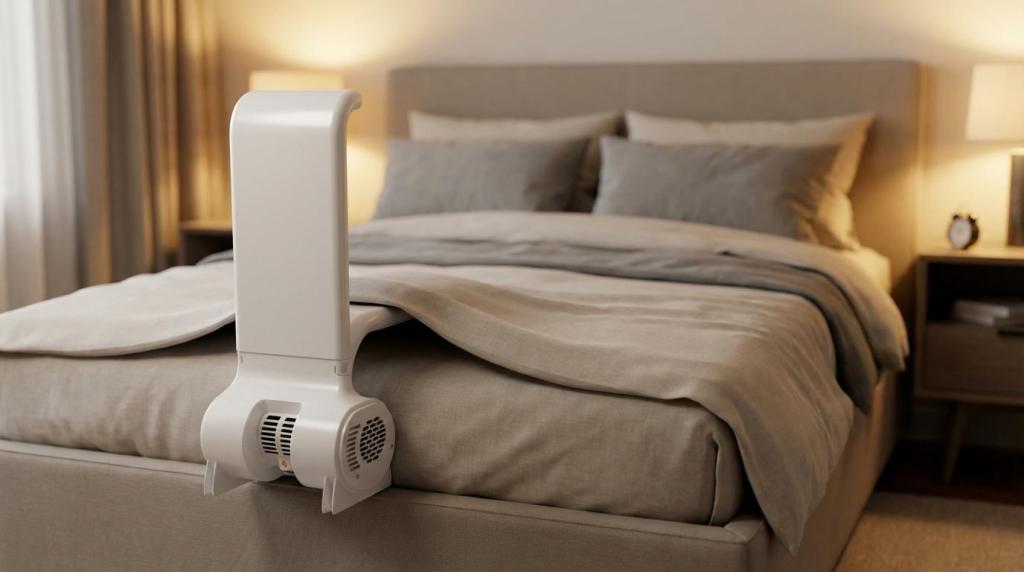
Ceiling fan vs bed fan: learn why under-cover airflow matters—bed fans ventilate the bedding microclimate for cooler, drier sleep at night.
Most people buy a ceiling fan for the same reason they buy blackout curtains: they want the room to feel calmer, cooler, and more sleep-friendly. And ceiling fans help, especially when the air feels still.
Yet a lot of “hot sleepers” learn a frustrating lesson at 2:00 a.m.: you can have a pleasantly cool bedroom and still feel like you are sleeping in a warm pocket of air under your comforter. That gap between room comfort and under-cover comfort is where a bed fan can make a night-and-day difference, greatly improving sleep quality.
When you lie down, your body starts trying to cool itself to support sleep onset. Core temperature naturally drifts downward, and your skin becomes a major heat-release surface. The catch is insulation: sheets, quilts, duvets, and even the top layers of the mattress trap heat and moisture right where you do not want it.
Researchers who study sleep environments often describe a “bedding microclimate,” meaning the temperature and humidity in the thin layer of air between your skin, pajamas, and bedding. When that microclimate runs hot and humid, sleep gets lighter. Studies have reported more wakefulness and reductions in deep and REM sleep in warmer, more humid bedding conditions, a pattern that matches what hot sleepers feel subjectively: more tossing, more wake-ups, and more “why am I sweating when the room is cool?”
If you have ever kicked off the covers, cooled down, then pulled them back up only to overheat again, you have experienced microclimate cycling. The room stayed the same. The air trapped around your body did not.
After you recognize that there are two climates to manage, the ceiling fan vs. bed fan question becomes simpler: which tool, such as ceiling fans or bed fans, actually ventilates the air you are sleeping in?
A ceiling fan is a room air circulator. Its blades move a large volume of air, but that air is distributed broadly. The familiar cooling sensation comes mostly from increased convective heat transfer at the skin and faster evaporation of perspiration.
That works beautifully when your skin is exposed.
Once you are under bedding, the physics change. The blanket and top sheet create resistance to airflow, and the moving air from the ceiling loses speed as it spreads across the room. Very little of that breeze penetrates deep under a duvet, especially if you sleep with heavier bedding or like to “tuck in” around the shoulders.
Ceiling fans also have another limitation that matters here: they are not designed to build static pressure. In plain terms, they are not meant to push air through obstacles. A comforter is an obstacle.
So the ceiling fan can make the room feel fresher with a gentle hum that might even serve as white noise, and it can help the parts of you that are uncovered. Still, the hottest zone may remain untouched: the air you are recycling under the covers.
A bed fan, often operated with a remote control, aims at the microclimate, not the whole bedroom. Instead of stirring air from above, it sits near the bed (often at the foot) and drives air upward into the bedding, between the sheets.
That single change in direction matters. A focused stream of air under the top sheet actively flushes out trapped heat and humid air, replacing it with drier room air. Reviews of under-sheet systems often describe the sensation as a calm breeze “between your sheets,” which is exactly the point: you are ventilating the space that was previously sealed.
Design also matters. Under-cover cooling asks a fan to do something harder than room circulation. It needs enough pressure to move air through layers of fabric and around the contours of the bed without turning into a noisy wind tunnel. A bed fan built for this job typically uses a blower-style design that can maintain airflow against that resistance.
This targeted approach also opens up a comfort option that couples appreciate: one person can cool their side of the bed without turning the whole room into a refrigerator. With a ceiling fan, compromise is mandatory. With under-sheet airflow, compromise becomes optional.
Below is a high-level comparison that keeps the focus where it belongs: what happens under the covers.
[markdown] | Ceiling Fan | Bed Fan (under-sheet airflow) | | --- | --- | | Circulate room air | Ventilate the bed microclimate | | Downward and outward across the room | Upward into the sheets and along the body | | Limited, indirect | Direct, designed for it | | Low static pressure | Higher static pressure (better at pushing through covers) | | Everyone in the room | Usually one sleeper’s zone (often one side of the bed) | | Often a few speeds; direction fixed overhead | Many systems offer fine speed control, timers, and adjustable outlet height/position | | Mild overheating, overall room stuffiness | Night sweats, trapped heat, “hot pocket” under comforter | [/markdown]If you love your ceiling fan, this comparison is not an argument to remove it because ceiling fans can still play a valuable role in overall room air circulation, despite their potential noise, including the soothing effect of white noise. It is a reminder that “moving air” is not one thing. Where that air moves is the whole story.
A quick self-check can save you from buying the wrong solution, reducing the risk of unnecessary noise from ineffective products. If these patterns feel familiar, room circulation alone may not be addressing the real issue:
Those are microclimate problems. They respond best to microclimate ventilation.
People often assume their only choices are: lower the thermostat or “just sleep with a sheet.” Real life is messier. Many sleepers want the comforting weight of bedding, share a bedroom with someone who sleeps cold, or experience night sweats related to menopause, health conditions, or medications.
Under-sheet airflow offers a third path: keep your preferred bedding, keep the bedroom reasonable, and cool the space that is actually overheating.
A system like the bFan Bed Fan is built around this idea and often comes with a remote control for convenient operation. Instead of trying to cool an entire room to reach one person under a comforter, it evacuates trapped body heat from the bedding itself by pushing airflow under the covers. That can feel immediate because the hottest air is being displaced, not just diluted.
There is also a subtle psychological win: when your bed feels reliably cool, improving your sleep quality, you stop bracing for the next wake-up. That sense of control often matters as much as the airflow.
A ceiling fan can let you set the thermostat a bit higher because moving air makes warm air feel cooler on exposed skin. A bed fan can extend that strategy by keeping your sleep zone comfortable even when the room is not aggressively air-conditioned.
This is where targeted cooling becomes more than comfort. It becomes a simple efficiency move: cool the person, not the empty cubic footage of the bedroom.
A practical approach looks like this:
That approach respects how sleep works. Your body needs to shed heat, and you can support that process with airflow placement rather than brute-force cooling.
Under-cover airflow should feel like ventilation, not like a leaf blower pointed at your ankles. The best results usually come from thoughtful placement and modest speed, especially during the first hour of sleep when your body is dropping temperature.
After you have the unit positioned securely at the foot or side of the bed, small bedding choices can help the air distribute evenly: a top sheet that is not tucked too tightly, breathable sleepwear, and avoiding bedding that seals completely at the edges.
A short checklist many hot sleepers find useful:
Once the airflow is tuned, many people report that the bed feels cooler without the room needing to be dramatically colder.
If the whole bedroom feels stuffy, a ceiling fan is a smart first move. If the room feels fine but the heat is trapped in the bedding, a bed fan targets the problem directly.
Plenty of sleepers end up using both, often controlled by a remote control, because they solve different problems: the ceiling fan keeps the room air moving, while a bed fan ventilates the air you are actually sleeping in. When airflow under the covers finally matches the comfort you want, the rest of the sleep routine gets easier, and sleep quality improves as 'sleeping cool' starts to feel like a realistic standard rather than a seasonal luxury.
Using a ceiling fan while you sleep is beneficial for maintaining air circulation, which can enhance room comfort and help with removing stagnant air.
However, for those who are sensitive, this might lead to discomfort or dryness.
If you frequently find yourself sleeping in a room where the temperature is inconsistent, a ceiling fan can help distribute air evenly, potentially reducing the need for excessive air conditioning.
The consistent hum and movement of air from a ceiling fan can create a soothing environment conducive for sleep. While this helps with the general air temperature in your room, to address specific comfort needs under the covers, like excessive warmth, you might consider the bFan or bed fan to directly target and cool the bedding microclimate, ensuring a more restful night’s sleep.
A ceiling fan cools a room not by lowering its temperature but by enhancing air circulation which evaporates sweat on your skin, creating a cooling effect.
When the air is still, heat accumulates near your body, leading to discomfort; however, when a ceiling fan stirs the air, the dispersal of this heat reduces the sensation of being overheated. This effect is particularly beneficial in hot weather, as it allows for a higher thermostat setting without compromising comfort.
Ceiling fans, with their large blades, are designed to move substantial volumes of air. This helps to prevent stagnation and also encourages a mild wind-chill effect, which feels refreshing on exposed skin even when temperatures rise outside.
In partner with a ceiling fan, for those who feel too warm under their covers, a bFan might be a great addition. By providing direct airflow beneath your bedding, a bed fan can specifically address any discomfort from trapped warmth and humidity, ensuring you remain comfortable throughout the night.
For those prioritizing comfort, a bed fan can excel. While a ceiling fan circulates the air in an entire room, it often falls short of addressing trapped heat and humidity beneath bedding, particularly for hot sleepers.
With a bed fan, airflow is directly targeted at the bedding microclimate. This helps significantly reduce overheating and excessive sweating by ensuring fresh air replaces stale, warm air underneath the sheets.
Bed fans, like the bFan, offer precise airflow. Their ability to focus under the covers makes them practical for those who require consistent microclimate management while sleeping.
For individuals with specific sleep issues, under-the-cover airflow can be invaluable. The bed fan's design allows users to maintain preferred room temperature settings, leading to energy savings, all while ensuring a cool, refreshing sleep environment.
Blending room-wide air circulation benefits with targeted cooling beneath the sheets sets a bed fan apart. The comfort and energy efficiency gains make it a highly desirable addition, especially when sleeping cooler could make a huge difference in sleep quality.
When considering the noise level, bed fans tend to be quieter than ceiling fans due to their design and location.
While ceiling fans produce sound from the motor and blade movement, the noise can be magnified as it reverberates throughout the room. Those who value a quiet sleep environment might find this noise distracting.
In contrast, bed fans like the bFan are specifically designed to minimize disturbance. Positioned closer to the sleeping area, they can effectively channel airflow with reduced operational noise, focusing their cooling effort quietly under the covers.
Additionally, many bed fans come with speed settings that allow users to customize the airflow and corresponding noise levels. This feature is highly beneficial in ensuring a night of peaceful, undisturbed sleep.
Overall, for those pursuing quieter sleep improvements, incorporating a bed fan may offer a more suitable solution than traditional ceiling fans.
When considering energy efficiency, it's important to evaluate how the device interacts with its environment. Ceiling fans can circulate air and make a space feel cooler, allowing for higher thermostat settings.
This can save energy because air conditioning requirements are reduced.
On the other hand, bed fans like the bFan focus specifically on displacing warm air directly from under the covers, providing targeted cooling. This means less energy is wasted on cooling the entire room when you only need to manage the bedding microclimate for sleep comfort.
Combining both fans might be the most efficient strategy. A ceiling fan can handle the room's overall air circulation, ensuring no stagnation, while the bed fan focuses on personal cooling needs during sleep. By directing airflow at the problem directly, a bed fan can significantly cut down energy use, making your overall cooling system more efficient and economical.
Choosing between a ceiling fan and a bFan often depends on whether you need to cool the air in the entire room or focus on the bedding microclimate beneath your covers.
Ceiling fans are great for maintaining overall air circulation and providing a gentle breeze throughout a room.
They work well when your main goal is to prevent stuffiness and create a comfortable ambient atmosphere in your bedroom.
However, if your primary concern is trapped heat and moisture under your covers, a bed fan may be more effective.
Bed fans, such as the bFan, target the microclimate directly, offering precise airflow that replaces stale and warm air under the sheets.
Consider using both for optimal comfort. A ceiling fan rejuvenates room air, while a bFan ensures direct cooling where it's needed most, enhancing overall sleep quality.
A ceiling fan circulates air throughout the entire room, which can help lower the perceived temperature and improve comfort. However, it does not specifically target the area under your sheets where heat can build up while you sleep. A bed fan, on the other hand, directs airflow directly under your covers, providing targeted cooling to your body and helping to wick away heat and moisture. This makes bed fans especially effective for people who experience night sweats or hot flashes.
Yes, a bed fan can be a highly effective solution for managing night sweats or hot flashes. By delivering a steady stream of cool air directly under your sheets, a bed fan helps regulate your body temperature and reduces the discomfort caused by excessive sweating. Many users report significant improvements in sleep quality and comfort when using a bed fan, especially during hormonal changes or hot weather. For more tips on managing night sweats, see our night sweats solutions guide.
No, a bed fan does not cool the air itself. Instead, it uses the existing cool air in your room and channels it under your sheets to help cool your body. This method is energy efficient and can allow you to raise your thermostat by about five degrees Fahrenheit while still feeling cool and comfortable at night. Both the Bedfan and Bedjet operate on this principle, so neither device actively chills the air.
Most modern bed fans are designed to operate quietly, making them suitable for light sleepers. The sound level is typically similar to white noise, which some people find soothing. If you are sensitive to noise, look for models with adjustable speed settings or timer controls so you can customize the airflow and sound to your preference. User reviews on Reddit and other forums often mention that the gentle hum of a bed fan is much less disruptive than traditional fans or air conditioners.
A bed fan is extremely energy efficient, using only about 18 watts on average. In contrast, ceiling fans typically use between 50 and 75 watts, and air conditioners use much more. Because a bed fan targets the area where you sleep, it can help you stay cool without needing to lower the temperature of the entire room, which saves energy and reduces your utility bills.
For best results, use sheets with a tight weave, such as cotton percale, to help the airflow move smoothly across your body and carry away heat. Heavier or loosely woven sheets may not allow the air to circulate as effectively. Many users find that switching to lighter bedding enhances the cooling effect of their bed fan.
Yes, a bed fan is a practical and cost-effective alternative to the Bedjet, especially for those who want targeted cooling without spending over a thousand dollars. The dual zone Bedjet system is more than twice the price of two bed fans, making the bed fan a budget-friendly option. Both devices use the same principle of moving room air under your sheets, but the bed fan is simpler, uses less energy, and came to market several years before the Bedjet.
Absolutely. Sleep experts recommend keeping your bedroom between 60°F and 67°F for optimal rest. With a bed fan, many people can raise their room temperature by about five degrees Fahrenheit and still sleep comfortably. This makes it easier to maintain a cool sleeping environment without overworking your air conditioner. For more information, check out our guide to sleeping cool.
For more resources on managing night sweats and improving sleep comfort, explore our articles on night sweats in men, night sweats in women, best sheets for night sweats, and how to stop sweating at night.
Always consult your healthcare provider for persistent sleep issues or excessive sweating. This information is for educational purposes only and is not a substitute for medical advice.