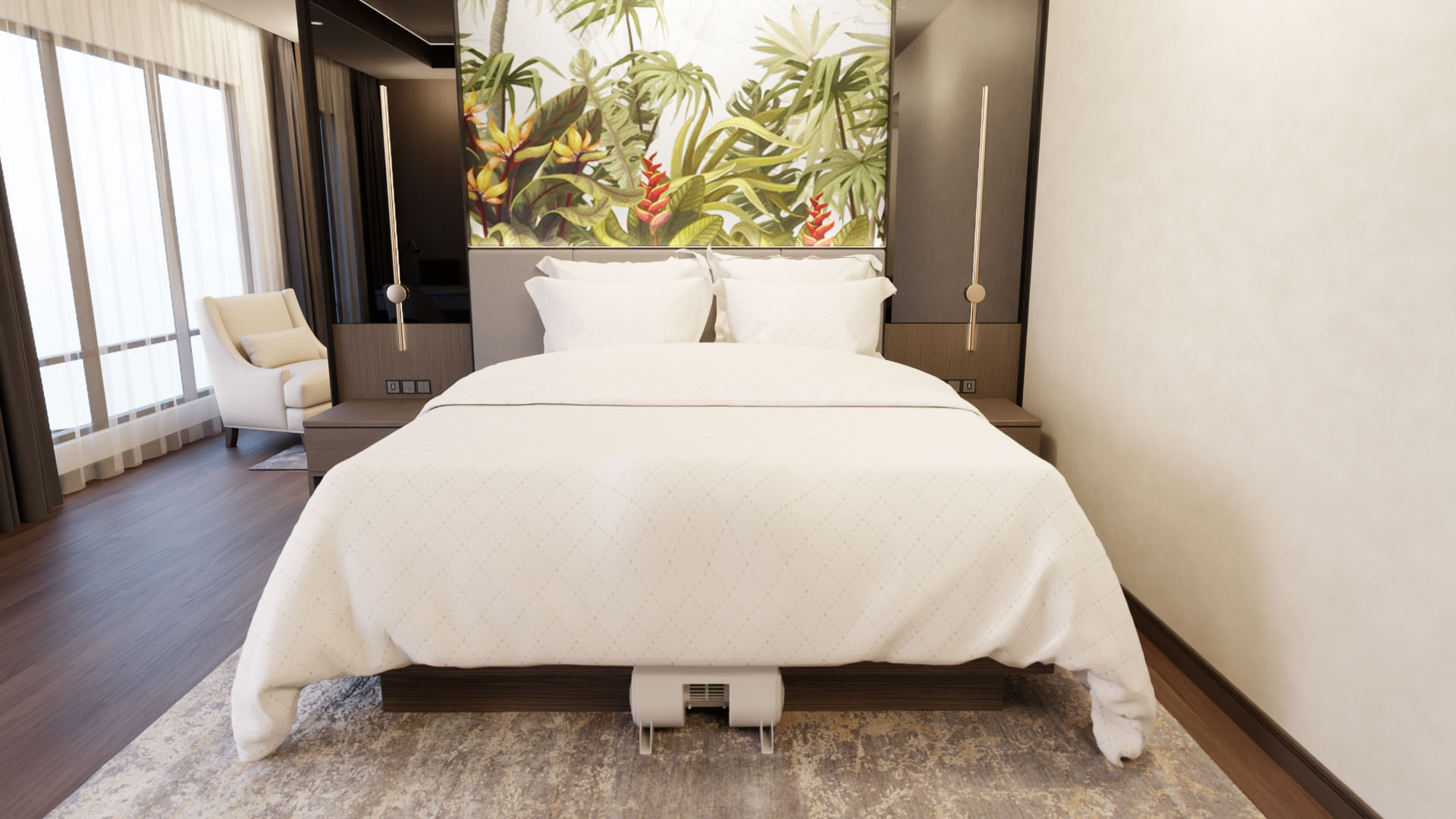
Beat night sweats with bed fans: targeted under-sheet airflow boosts evaporation, cuts clamminess, and helps you sleep cool all night.
Waking up drenched can feel unfair, but a bedfan can offer relief by cooling you down effectively. You fall asleep tired, then your body flips a switch and suddenly the sheets feel like insulation. Night sweats can disrupt sleep night after night, and the frustration is not only the heat, it’s the constant cycle of waking up, cooling off, and trying to fall back asleep. Over time, this lack of restful sleep can leave you feeling exhausted and irritable during the day. It can even impact your mood, focus, and overall well-being. If you’re tired of tossing and turning, searching for relief, you’re not alone—many people struggle with night sweats and are desperate for a solution that actually works.
A bed fan is one of the simplest ways to change that pattern because it targets the heat where it builds up most: inside the bedding, right around your body.
The concept of convection plays a crucial role in the effectiveness of bed fans. Convection involves the transfer of heat through the movement of air, and a bed fan cleverly utilizes this mechanism by ensuring that warm air does not linger under your covers. By circulating air and promoting convection, bed fans can help dissipate the trapped heat more efficiently, providing a cooler and more comfortable sleeping environment.
Night sweats are not just “being hot.” Many people can handle a warm bedroom and still sleep, but they cannot handle trapped heat and moisture under the covers. Bedding holds warmth close to your skin, and once you start sweating, humidity rises in that little pocket of air.
That sticky microclimate matters because sweat is supposed to cool you through evaporation. When the area under the sheets is already warm and humid, evaporation slows down, and you feel hotter, which can trigger even more sweating.
Sometimes the room thermostat becomes a tug-of-war between partners, or between comfort and cost. And even if you crank the air conditioning, cold room air does not always reach the space inside your sheets where you need it most.
Night sweats can be triggered by a variety of factors, including hormonal changes, medications, stress, or underlying health conditions. Sometimes, even your bedroom environment or bedding can contribute to overheating during the night. Identifying the root cause is the first step toward finding effective relief and enjoying cooler, more comfortable sleep. By understanding what’s behind your night sweats, you can take targeted steps to address them and finally get the rest you deserve.
Night sweats can show up for many reasons, and that’s part of what makes them so stubborn. Hormones, stress, sleep environment, and health factors can all play a role, and two people in the same room can have totally different experiences.
You may recognize one or more of these patterns:
Adding a bedfan to your sleep setup can drastically improve the sleep experience by promoting proper air circulation under the sheets. This simple device allows you to maintain the comfort of being under covers while effectively dispersing stagnant heat and humidity, enhancing the heat transfer process that often leads to restless nights. Ideal for those dealing with night sweats, a bedfan ensures cooler, more breathable conditions right where your body needs relief the most.
If night sweats are new, severe, or paired with symptoms like unexplained weight loss, persistent fever, or swollen glands, it’s smart to talk with a clinician. Even when there is a medical driver, though, you still have to sleep tonight, and comfort strategies can make a real difference.
Most people try the usual fixes first: lighter pajamas, fewer blankets, a colder room, a bedside fan. Those can help, but they often fail for one basic reason: air is not moving through the bedding.
A standard fan pushes air around the room. If your sheets and comforter are trapping body heat, you can end up with a cool face and a sweaty torso. That mismatch is why people kick off covers, then wake up cold later, then pull them back on, then sweat again.
A bed fan works differently. It’s designed to send a controlled stream of air into the space between your top and bottom sheets, where heat and moisture build up. That targeted airflow can:
This is also why bed fans can be especially helpful for menopause night sweats. Many hot sleepers want the security of covers, but they need an escape route for heat.
A bed fan is not an air conditioner. It does not “make” cold air. Instead, it uses the air that’s already in your bedroom and moves it to the spot that matters most, under the covers. That can still feel dramatically cooler because it breaks up the trapped warmth and humidity that your body creates.
Think of it as ventilation for your bedding.
Conduction is another important aspect to consider when it comes to heat transfer in bedding. This process involves direct heat transfer between materials that are in contact, such as your body and the sheets. While a bed fan primarily aids in convection by moving air, it can also indirectly influence conduction by keeping the surface of the sheets cooler, thus reducing the amount of heat transferred from your body to the bedding. The combined effect of convection and conduction helps maintain a comfortable sleeping environment.
Radiation can also play a role in how comfortable your bed feels. The human body emits heat energy, or thermal radiation, which can become trapped under the bedding. This trapped heat contributes to the sensation of warmth under the covers. Using a bed fan increases heat dissipation through enhanced convection, thus complementing the body's natural radiation process. By circulating air more effectively, a bed fan helps reduce the build-up of thermal radiation under the covers, improving comfort and promoting a cooler sleeping environment.
Many users also appreciate the mobility of bedfans. They can be easily moved and adjusted to suit different bedding arrangements or shared sleeping spaces. This versatility makes them a practical choice for those who frequently change beds or travel to new locations that lack consistent climate control settings.
If your room is extremely hot, pairing a bed fan with modest AC can feel better than blasting AC alone. Many people find they can raise the thermostat and still feel comfortable because the bed itself no longer acts like a heat trap.
People often stack multiple tactics. That’s normal. The goal is to build a setup you can keep using without turning bedtime into a project.
Here’s how common approaches tend to compare in real life:
If your main complaint is “my back and legs are sweating under the comforter,” that last category is the one built for the problem.
Not all bed fans are the same. The bFan Bed Fan (often called bedfan or bFan) is designed specifically to evacuate trapped body heat from bedding, using a discreet unit placed at the foot of the bed. It sends airflow between your sheets, enhancing heat transfer right where night sweats happen.
A few details matter here. First, bFan uses a whisper quiet brushless, digitally controlled DC motor, with remote speed control from 5% to 100%. That means you can dial in a barely-there breeze or stronger cooling without getting out of bed.
Second, efficiency matters if you run it for hours. Even at the highest speed setting, bFan averages about 12 watts, which is tiny compared to lowering whole-house temperature with AC. Many customers report raising the thermostat up to 6°F and still sleeping better, which can translate into meaningful utility savings.
Third, stability and usability count at 2 a.m. The bFan design is made to be sturdy, discreet, and adjustable so airflow goes into the bed rather than blasting the room.
When people say a fan “did nothing,” it’s often because the airflow never made it into the bedding pocket. Placement, pressure, and control are the difference between “I guess it’s cooler?” and “I stayed asleep.”
After you’ve decided to try a bed fan, these are the features that tend to matter most:
This is where bFan stands out as a purpose-built bedfan, under-sheet system, not a repurposed room fan.
The goal is steady, comfortable airflow that keeps humidity from building up under your covers. Setup for a bedfan is usually quick, but a few small choices can make it work better.
Radiation, as a method of heat transfer, plays a critical role in how we perceive temperature changes during sleep. While bedfans primarily use convection to move warm air away from the body, radiation can still impact how heat dissipates from beneath your covers. Effective use of a bedfan can help minimize the heat absorbed and re-emitted by your bedding, creating a cooler sleep environment.
Start with your bedding. Very heavy comforters and tightly tucked hospital corners can restrict the airflow path. You do not have to sleep with flimsy sheets, but you want an easy route for warm air to exit.
Then think about timing. Many people get the best results by starting airflow before they overheat, rather than waiting until they wake up sweating.
A practical routine looks like this:
With bFan’s remote and wide speed range (5% to 100%), that “micro-adjustment” approach is easy, and it keeps you from swinging between too hot and too cold.
A bed fan can do a lot on its own, but the overall sleep feel improves when your sheets do not cling and trap moisture, facilitating better heat transfer for a cooler environment. Breathable fabrics help the fan’s airflow do its job.
Cotton percale is a classic choice for a crisp, cooler feel. Linen can also work well if you like texture and strong breathability. If you prefer softer fabrics, look for options that still breathe well rather than ultra-brushed, heat-holding weaves.
One small change that often helps: keep a lighter top layer available. If you love a thick comforter in winter, you can still use it, but consider a breathable layer directly on top of you so the air moving under the covers can circulate more effectively.
Many hot sleepers try to solve a bed-level problem with whole-room cooling, and the monthly bill shows it. If you share a home, it can also create thermostat debates, especially when one person runs cold.
Because a bed fan cools where you sleep, it can reduce the need to overcool every other room. The bFan Bed Fan is designed with that exact tradeoff in mind: direct heat evacuation inside the bed, with very low power use, so you can stay comfortable without treating your entire house like a refrigerator.
If you want a simple way to test this idea, try raising the thermostat slightly for a few nights while using a bed fan to keep the bedding pocket comfortable. The right target is not “cold air everywhere,” it’s “no trapped heat under the covers.”
A bedfan, like the bFan, can be a game-changer for anyone dealing with nighttime heat. By specifically targeting the warm air trapped beneath your covers, a bedfan helps maintain a cool, comfortable sleeping environment without the need to significantly alter your room's temperature. It's a focused solution that provides relief directly where it's most needed, ensuring a better night's sleep.
Night sweats are often irregular. Menopause symptoms can spike and dip. Medication side effects can change with timing or dose. Stress can flare at random hours. A solution that only has “off” and “high” tends to frustrate people.
This is why fine speed control is more than a nice extra. With bFan, you can keep airflow low most of the time, then bump it up during a sweat wave, then bring it back down without getting out of bed.
One sentence that comes up again and again among hot sleepers is simple: “I just want to stay asleep.”
Targeted airflow under the sheets is one of the most direct ways to support that.
If you’re ready to take a practical swing at night sweats, start with the biggest payoff change: stop letting heat collect inside your bedding. A bed fan is designed for that exact job, and bFan Bed Fan is a purpose-built option that’s quiet, efficient, adjustable, and made to deliver airflow where your body needs it most.
If your nights are being shaped by sudden heat, damp sheets, and broken sleep, a bFan (bedfan) setup at the foot of the bed can be a straightforward shift that you feel on night one, without having to drop the whole-house thermostat to uncomfortable levels.
Fans, particularly bed fans, can significantly aid in reducing night sweats. By directing airflow under the sheets, they help dissipate trapped heat and moisture.
Regular ceiling or bedside fans may assist, but they often fail to address the specific microclimate under the blankets effectively.
With a bed fan, you can maintain the comfort of covers while allowing for proper air circulation, minimizing the sticky feeling that interrupts sleep.
Bed fans utilize convection to move warm air away from the body, helping sweat evaporate more efficiently and promoting a cooler sleep environment.
For many dealing with night sweats, the bFan is recommended as it provides focused under-sheet airflow, addressing the root cause of overheating.
Ultimately, the aim is to create a cooler, more comfortable sleeping environment that supports uninterrupted rest and revitalization.
For those seeking an effective solution to combat night sweats, the bFan Bed Fan is a standout choice due to its targeted airflow design. This bed fan excels at circulating air beneath the covers, helping to dissipate trapped heat and humidity.
With a whisper-quiet motor and remote speed control, you can adjust the airflow to fit your needs without disturbing your sleep.
Unlike regular fans, the bFan doesn’t just blow air around the room; it actively cools the microclimate under your bedding, making it effective for those who experience night sweats due to hormonal changes or other triggers.
The energy efficiency of the bFan is also commendable, as it allows users to maintain a comfortable bed temperature without the need to lower the entire home's thermostat. This targeted cooling approach is both cost-effective and conducive to better sleep health, making the bFan an excellent investment for anyone facing the discomfort of night sweats.
There are several reasons for waking up drenched in sweat.
Common causes vary, ranging from hormonal fluctuations to environmental factors. Hormonal changes, like those experienced during menopause, are a frequent trigger for excessive sweating, as the body's temperature regulation can become unpredictable. Additionally, stress and anxiety can elevate body temperature, leading to increased perspiration during sleep cycles.
Sweating can also occur due to your bedroom being too warm.
Certain medications may have side effects that include night sweats, exacerbating the discomfort of sleepless nights. It's also worth noting that illnesses or fevers can contribute to this condition by raising your body temperature during periods of rest.
Understandably, dealing with night sweats can be distressing. If this issue persists, it may be beneficial to consult a healthcare provider to explore any underlying conditions and consider practical solutions like adjusting bedding or trying a bedfan for effective relief.
Bed fans, like the bFan from www.bedfan.com, provide targeted airflow to reduce night sweats effectively. By directing air under the covers, they tackle the microclimate where heat and moisture build-up. This strategic airflow promotes faster sweat evaporation, allowing for a cooler, more comfortable sleep. As a result, users often experience less interrupted rest, waking up feeling rejuvenated and refreshed. Bed fans also offer an energy-efficient alternative to lowering whole-room temperatures, helping reduce energy costs. Their ability to cool the bedding without chilling the entire room makes them a valuable addition to any bedroom struggling with night sweats.
Many bed fans, like the bFan from www.bedfan.com, are designed to operate quietly, ensuring a restful sleep environment without disturbances.
These devices incorporate advanced technology to minimize noise while still providing excellent airflow.
By using brushless motors and advanced engineering, bed fans can achieve a whisper-quiet operation that is barely noticeable, allowing users to maintain a comfortable sleeping environment without sacrificing peace and tranquility. This is particularly beneficial for those who are sensitive to noise or easily disturbed during the night.
Furthermore, the bFan’s low noise operation makes it an ideal choice for couples with different temperature preferences, as it allows the sleeper who needs the cooling effect to remain undisturbed by sound. The combination of adjustable speed settings and a discreet design ensures that a bed fan can be both effective and unobtrusive. For many people, the sound is less a "noise" and more a "gentle" hum facilitating deeper sleep.
Bed fans often come equipped with adjustable speed controls, allowing users to tailor the airflow to their needs. This feature is beneficial for those who experience varying degrees of night sweats.
The flexibility to adjust airflow means you can keep it at a gentle breeze during mild sweating, or increase to a stronger setting during intense episodes. This adaptability ensures consistent comfort without overheating or feeling chilly.
Devices like the bFan offer remote speed control, which is particularly convenient for making adjustments without leaving the comfort of your bed. Adjustable settings add personalized comfort to the sleep environment, accommodating fluctuations in body temperature throughout the night.
This versatility makes bed fans a practical choice for individuals with different sleep preferences or those who live in areas with changing weather conditions. By targeting specific sleep challenges, bed fans offer a customized solution for restful sleep.
Bed fans, such as those offered by Bedfan, provide effective relief from night sweats by ensuring proper airflow under the bedding. They specifically target the microclimate where heat and humidity build up.
This ensures that the sleeper remains comfortably cool throughout the night.
Additionally, bed fans work by promoting faster heat dissipation and evaporation of sweat, offering a consistent and tailored cooling experience. This helps lessen the frequency of waking up drenched in sweat, thereby enhancing sleep quality significantly.
Furthermore, by using energy-efficient technology, bed fans like the bFan reduce the need for excessive use of air conditioning, making them a cost-effective solution for maintaining a comfortable sleep environment. Such advancements highlight the importance of addressing not just ambient room temperature, but also the personal sleep microclimate. For many users, this translates into "peace" in achieving restful nights.
Bed fans, such as the bFan, are designed to be energy-efficient, offering a practical solution for hot sleepers without a significant increase in utility costs.
Typically, they consume very little electricity compared to air conditioning systems, running on as low as 12 watts when set to maximum speed. This allows users to maintain a comfortable bed temperature without cooling the entire room.
Using a bed fan can also result in potential savings by reducing reliance on air conditioning. Many users find they can raise the thermostat while still enjoying cool sleep, significantly cutting down on energy expenses.
The bFan, for instance, achieves this by efficiently directing airflow where it's needed most, under the covers, rather than lowering the room's overall temperature. This focus ensures a targeted approach to cooling that conserves energy.
Overall, bed fans represent an environmentally friendly option for those dealing with night sweats, offering comfort without high energy consumption.