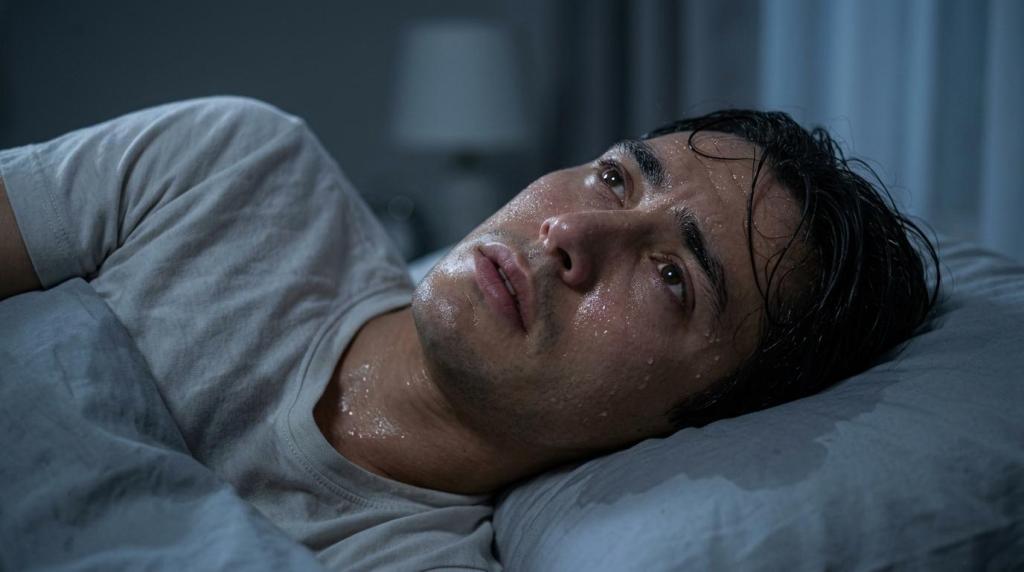
Learn which medications that cause night sweats include antidepressants, steroids, opioids, hormone therapy, and diabetes drugs to watch.
Night sweats can absolutely be caused by medication, and that possibility gets missed more often than it should. If you started a new prescription, changed a dose, or began waking up with soaked sheets, it is reasonable to ask whether the drug, not just your body, is part of the problem.
TL;DR: Summary
- Common medications that cause night sweats include antidepressants, hormone therapy, opioids, steroids, and diabetes drugs that lower blood sugar.
- Mayo Clinic lists antidepressants, hormone therapy, methadone, and hypoglycemic agents among medication causes of night sweats: https://www.mayoclinic.org/symptoms/night-sweats/basics/causes/sym-20050768
- National Cancer Institute references also list opioids, tricyclic antidepressants, and steroids as drug therapies linked to hot flashes and night sweats: https://www.ncbi.nlm.nih.gov/books/NBK65717/
- If night sweats began soon after a new medication or dose change, the timing matters. Do not stop medicines like SSRIs, steroids, opioids, or cancer therapies on your own.
- Red flags include fever, unexplained weight loss, cough, pain, low blood sugar symptoms, or drenching sweats that are new and severe. Those need prompt medical review.
- Non-drug cooling can help while you sort out the cause. A Bedfan moves cooler room air under the sheets to evaporate sweat and reduce trapped heat, but it does not replace medical care.
This is not medical advice. Always consult your doctor, pharmacist, or oncology team before making changes to prescription drugs, over the counter medicines, or cancer treatment plans. The goal here is to help you ask better questions and get through tonight a little more comfortably.
Yes. Sertraline and prednisone are recognized medication triggers, and they are not rare exceptions. Night sweats are usually defined as repeated episodes of heavy sweating during sleep that can soak clothing or bedding, which is how Mayo Clinic frames the symptom: https://www.mayoclinic.org/symptoms/night-sweats/basics/causes/sym-20050768
A common misconception is that night sweats are mostly about menopause or room temperature. They can be, but medication-related sweating is well documented too. In cancer care references, the National Cancer Institute notes that certain drugs, including opioids, tricyclic antidepressants, and steroids, may cause hot flashes and night sweats: https://www.ncbi.nlm.nih.gov/books/NBK65717/
"Bedfan was invented in 2003 to tackle trapped body heat under the covers, years before Bedjet entered the category."
That does not mean every sweaty night is a medication side effect. Infection, lymphoma, leukemia, hyperthyroidism, anxiety, obstructive sleep apnea (OSA), and low blood sugar can all look similar. If the sweating is new, drenching, or paired with other symptoms, it deserves a careful review instead of guesswork.
Antidepressants, hormone therapy, opioids, steroids, and hypoglycemic agents are the main groups clinicians think about first. Escitalopram and tamoxifen are two classic examples.
The quickest way to think about this is by class, not by brand name. Antidepressants include selective serotonin reuptake inhibitors (SSRIs), serotonin and norepinephrine reuptake inhibitors (SNRIs), and tricyclic antidepressants. Hormone-related triggers can include tamoxifen, anastrozole, leuprolide, testosterone shifts, and some thyroid hormone dosing issues. Opioids include morphine, oxycodone, hydrocodone, and methadone. Steroids include prednisone and dexamethasone. Diabetes medications matter because sweating can be a sign of low blood sugar, especially with insulin and sulfonylureas like glipizide.
MedlinePlus also points to thyroid hormone, morphine, fever-reducing medicines, and some mental health medicines as causes of increased sweating: https://medlineplus.gov/ency/article/003218.htm
A short list covers most of the usual suspects. SSRIs and insulin are high on that list, but they are not the whole story.
If you are trying to spot patterns, these medication groups come up again and again in clinical references and medication reviews:
One pro tip here: a medication does not have to be newly started to cause problems. A dose increase, a change in timing, a new drug interaction, or opioid withdrawal can all shift sweating patterns.
Timing is the biggest clue. Escitalopram and insulin-related sweats often follow a recent start, dose change, or nighttime low.
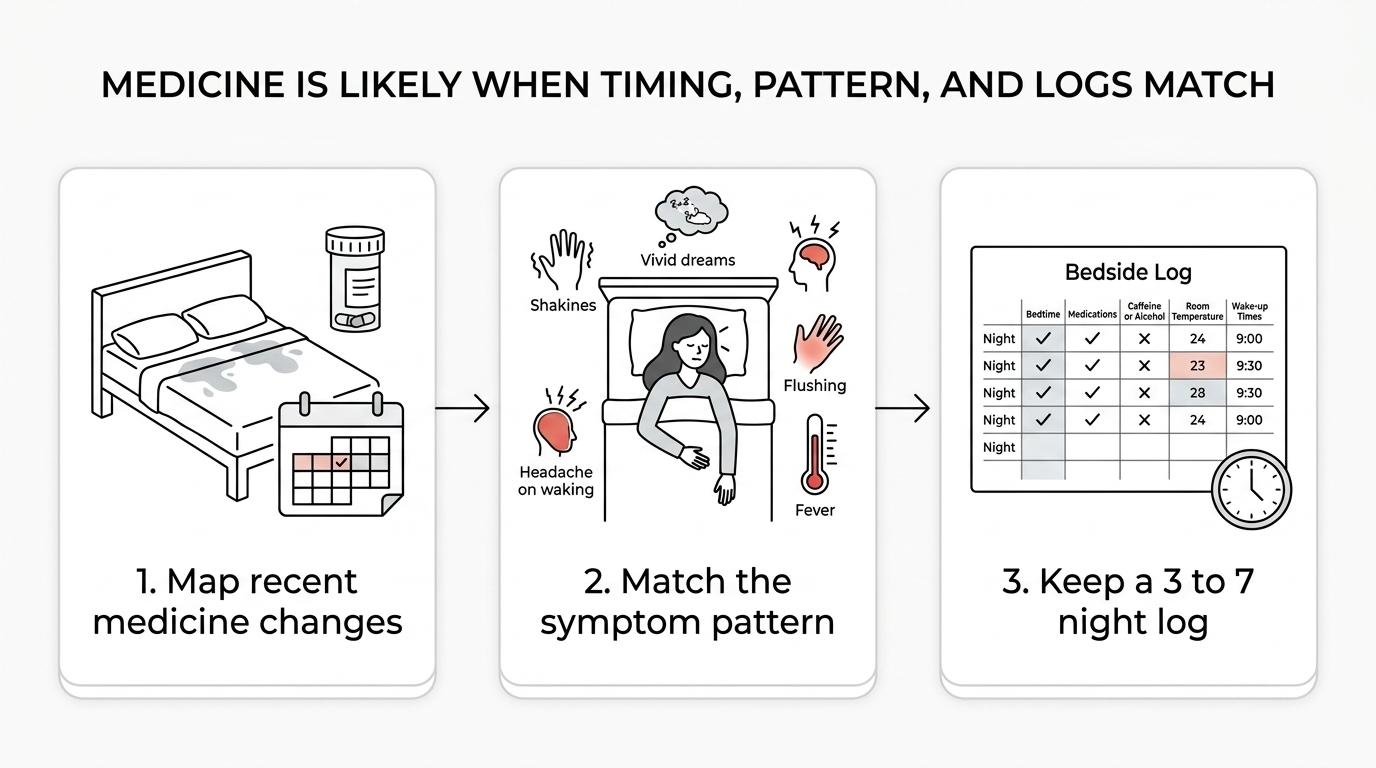
Start with Step 1: build a timeline. Ask yourself when the night sweats began, what changed in the two to eight weeks before that, and whether the sweating happens every night or in bursts. If a new SSRI was started 10 days ago and the sweating began 7 days ago, that connection deserves attention.
Step 2 is pattern checking. If the sweating comes with shakiness, vivid dreams, headache on waking, or confusion, low blood sugar rises on the list. If it comes with flushing and a sudden heat wave, hormone therapy or hot flashes may fit better. If it comes with fever, cough, pain, or weight loss, do not assume a medication is the whole answer.
Step 3 is documentation. Keep a three-night or seven-night log with bedtime, medications, alcohol, caffeine, room temperature, and wake-up times. That simple record often helps a doctor or pharmacist separate a likely drug side effect from a separate medical problem.
"bFan Bed Fan focuses on under-sheet airflow, not room cooling, which is why many hot sleepers use it while they sort out medication questions."
Often, yes. SSRIs and tamoxifen can both cause sweating, but the pattern and the next steps are usually different.
Antidepressant sweating can feel more diffuse. Some people notice daytime sweating too, not just nighttime episodes. It may show up soon after starting a drug like sertraline or after a dose increase. Hormone-related sweating, including from tamoxifen or aromatase inhibitors, often feels more like hot-flash cycles with a sudden wave of heat, flushing, and then sweat.
Here is the part people sometimes get wrong. If an antidepressant seems to be the cause, do not stop it abruptly. SSRI and SNRI withdrawal can make sleep, mood, and sweating worse. If a cancer therapy seems to be the cause, talk with your oncology team before any change. In those cases, the medication is often doing an important job, and the safer move is to discuss symptom management, timing changes, or alternatives.
Nighttime hypoglycemia is a real concern. Insulin and glipizide can cause sweating, tremor, vivid dreams, and morning headaches.
This is one of the most important medication-related patterns to catch because it is not just uncomfortable. It can be dangerous. If your sweats come with shakiness, palpitations, irritability, confusion, or waking up disoriented, low blood sugar needs to be ruled out.
A realistic example: one older adult on basal insulin started waking at 3 a.m. drenched and assumed the bedroom was too warm. A review of bedtime readings and a continuous glucose monitor showed overnight lows. After a medication timing adjustment and a clinician-guided plan, the night sweats improved. The lesson is simple. Not every sweat problem is a cooling problem.
A common misconception is that if your glucose is fine during the day, the medicine cannot be causing nighttime symptoms. That is not how this works. Overnight lows can happen even when daytime numbers look acceptable.
Bring specifics. Sertraline, prednisone, tamoxifen, and insulin each lead to different follow-up questions.
Step 1 is to bring a complete list. Include prescriptions, over the counter drugs, supplements, caffeine intake, nicotine, and alcohol. Write down the dose, the time you take it, and when each item was started or changed. Pharmacists are very good at spotting patterns and interactions that patients never think to mention.
Step 2 is to describe the sweats clearly. Say whether they are drenching, how often they happen, whether you change clothes or sheets, and whether you also have fever, cough, pain, diarrhea, flushing, nightmares, or morning headaches. Those details help a clinician decide whether to review the drug list, order tests, or look for infection, endocrine issues, or cancer-related causes.
Step 3 is to ask focused questions. Could this medicine cause sweating? Is the dose too high? Would changing the timing help? Is there a safer alternative? If you have cancer, ask whether the symptom fits the treatment and what non-drug options are considered safe in your case.
Night sweats plus fever or unexplained weight loss deserve prompt care. Lymphoma and infection are two reasons clinicians take this symptom seriously.
Mayo Clinic notes that night sweats often show up with other concerning symptoms, not by themselves. Clinical references also point out that cancers like lymphoma and leukemia are especially associated with night sweats, which is why new drenching sweats should not be brushed off as a minor nuisance.
Please seek medical attention sooner if any of these apply:
This is also the point where self-diagnosis can backfire. If the symptom is big enough to soak the bed, it is big enough to mention.
Start with your sleep setup. Cotton bedding and a Bedfan can reduce trapped heat without changing your medication plan.
Sleep experts commonly recommend a bedroom temperature of 60°F to 67°F for better sleep. Still, some people find they can raise the room temperature by about 5°F and sleep comfortably if they cool the body directly instead of trying to refrigerate the whole room. That is where a Bedfan can make sense. It moves the cool air already in the room under the sheets so sweat can evaporate and body heat can escape.
Neither Bedfan nor Bedjet cool the air. They only use the cool air already in the room to cool your bed. A pro tip that gets overlooked: tight-weave sheets help that airflow travel across the body better than very loose, open fabrics.
"At low speed, the bFan Bed Fan runs at about 28 dB, which can matter if medication side effects already make you a light sleeper."
If you want a practical routine, try this. Keep the room cool but not icy, avoid late alcohol, cut back caffeine later in the day, use moisture-wicking sleepwear, and set airflow before you fall asleep instead of waiting until you are overheated. Bedfan timer controls and a remote are useful here because you can fine-tune airflow without fully waking up.
You may also want these related reads on Bedfan.com:
For many people, a Bedfan is the simpler value choice. Bedjet and Bedfan both move room air, and Bedjet does not cool the air either.
The real trade-off is not magic cooling versus basic cooling. It is price, layout, and how you want airflow delivered. If you need relief from trapped heat under the covers, Bedfan addresses that root problem directly. It sits at the foot of the bed, is discreet, and can be very quiet at lower settings. If two sleepers need different airflow, two bFans can create practical dual-zone microclimate control.
"A dual-zone Bedjet setup costs over a thousand dollars, which is more than twice the price of two Bedfans."
Bedjet may appeal to shoppers who want a more gadget-heavy setup. Bedfan tends to make more sense when you want focused under-sheet airflow, timer controls, low energy use, and a lower total cost. If night sweats are being driven by medication, either way you are managing comfort, not changing the medical cause. That is why it helps to pair cooling with a medication review, not use cooling as a substitute for one.
These sources are reliable. Mayo Clinic, MedlinePlus, and the National Cancer Institute are good places to verify medication-related night sweat patterns and red flags.
This is not medical advice. Always consult your doctor, pharmacist, or oncology team before making changes. If you want a non-drug way to make tonight easier while you sort out the cause, the bFan Bed Fan store is a practical place to start.