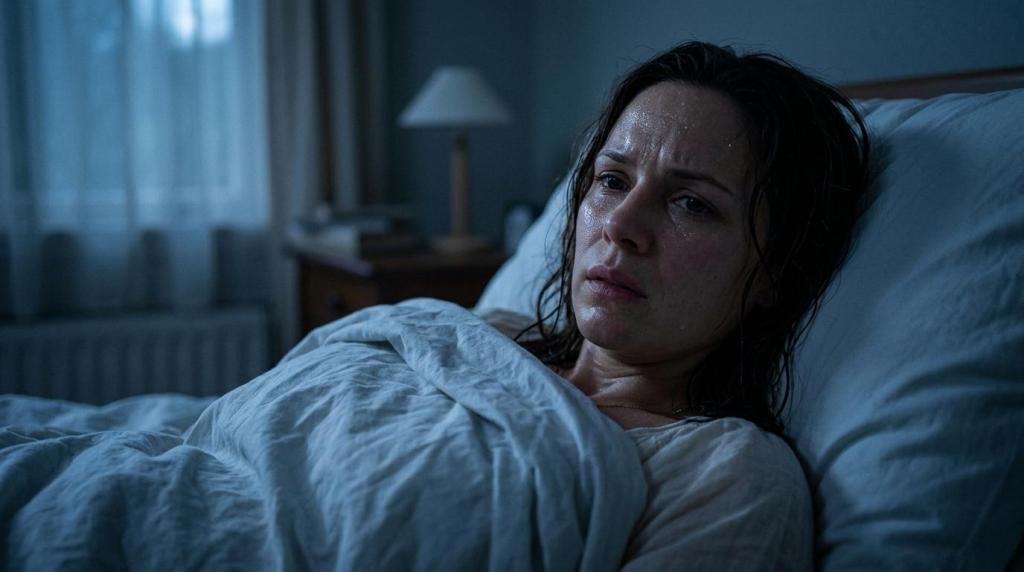
Find the best bedroom temperature for sleep: 60°F to 67°F, plus bedding and airflow tips to stay cool and reduce night wake-ups.
Most adults sleep best in a cool room, but the thermostat is only part of the story. The sweet spot is usually narrower than people think, and what your sheets, pajamas, and mattress trap around your body can make a good temperature feel much too warm.
TL;DR: Summary
- The best bedroom temperature for sleep is usually 60°F to 67°F, with about 65°F as a practical starting point for most adults.
- A cool room helps because sleep onset depends on your body shedding heat; if your sleep microclimate stays warm or humid under the covers, sleep efficiency can drop even when the room seems fine.
- Bedding and sleepwear matter almost as much as the thermostat. Tight-weave sheets, lighter sleepwear, and less heat-trapping bedding can improve thermal comfort.
- If you still wake up hot, focus on airflow at the bed, not just colder room air. A Bedfan or bFan moves existing room air under the sheets to evaporate sweat and carry heat away from the body.
- Persistent night sweats, drenching sweats, fever, weight loss, new medications, or cancer treatment are medical flags. This is not medical advice. Always consult your doctor or oncology team before making changes.
There is good reason this matters. Research and sleep guidance from groups like the CDC and the NATIONAL HEART, LUNG, AND BLOOD INSTITUTE (NHLBI) support a cool sleep environment, while newer studies show that higher nighttime bedroom temperatures are linked to worse sleep efficiency and more restlessness.
The best bedroom temperature for most adults is 60°F to 67°F, and 65°F is a useful starting point. The CDC and many sleep clinicians recommend a cool room because core body temperature needs to fall for sleep to come more easily.
That range works for many people because sleep is tied to homeostasis and the body clock. As evening approaches, your body tries to lose heat. If the room is too warm, or if heat gets trapped under blankets, you may take longer to fall asleep and spend more time awake after sleep onset.
A 2024 study in older adults found that nighttime bedroom temperature was associated with sleep duration, sleep efficiency, and restlessness, even after adjusting for other factors (PMC). Another sleep reference from the NHLBI explains that internal body temperature is part of what shapes sleep timing and sleep readiness (NHLBI).
"bFan uses only an average of 12 watts, so it targets the bed's heat buildup without needing to cool the whole house."
Temperature affects sleep because the brain, skin, and blood vessels work together to dump heat before and during sleep. The CDC and NHLBI both point to a cool bedroom as part of healthy sleep habits.
Sleep efficiency simply means how much of your time in bed is actually spent asleep. A drop of even 5% to 10% can matter for next-day function, mood, fatigue, and stress. In bedroom studies using actigraphy, hotter sleep conditions have been linked to lower sleep efficiency and more wakefulness.
A common misconception is that only the thermostat matters. It does not. Humid heat, airflow, noise, carbon dioxide, bedding thickness, and sweat evaporation all affect your sleep microclimate. If the air around your body stays trapped under the covers, you can wake up hot in a room that looks perfect on paper.
The most effective cooling methods combine a cool room with better under-cover airflow and less heat-trapping bedding. For many hot sleepers, targeted bed airflow works better than cranking central AC lower all night.
If you want the fastest wins, start with the things that directly change the air around your body, not just the hallway thermostat.
You can usually find your sweet spot in three nights if you change only one variable at a time. A simple trial beats guessing.
Step 1: Pick a starting temperature, usually 65°F. Keep the same sheets, pajamas, and bedtime. Step 2: On night two, move the room 2°F warmer or cooler based on how you felt. Step 3: On night three, keep the better room temperature and change the bed microclimate, not the thermostat, by adjusting blankets or adding airflow under the covers.
Pro tip: write down three things each morning, time to fall asleep, number of wake-ups, and whether you felt sweaty at the chest, neck, or legs. If your wake-ups improve when airflow changes more than when room temperature changes, the issue is probably trapped heat under the bedding.
Bedroom temperature and bedding are both important, but bedding often decides whether the room temperature actually works. A 65°F room can still feel too hot if your covers trap heat and moisture.
A 2024 systematic review found that sleepwear and bedding materials can affect sleep quality by changing skin temperature, body temperature, and thermal comfort (PubMed). That matches real life. People often blame the thermostat when the real issue is a heavy duvet, memory foam heat retention, or pajamas that do not breathe well.
If your room is already in the recommended range, dropping it lower may help less than changing the sleep microclimate. If your feet, back, or chest feel clammy under the covers, that points to trapped heat more than a bad thermostat setting.
Your sleep microclimate is the thin layer of air, heat, and moisture between your skin and your bedding. That little zone can make or break sleep, even when the bedroom looks cool.
Think of it this way. The room sets the starting temperature, but the bed decides what your body actually feels for seven or eight hours. Tight-weave sheets can help bed airflow move across the body. Very lofty blankets can insulate well in winter, but they can also trap sweat. Some mattress materials hold heat longer, which matters most for side sleepers and people with night sweats.

There is also a physiology piece. Distal skin temperature, the temperature of the hands and feet, shifts as the body tries to release heat. If your bedding blocks that heat loss, sleep onset can get harder. That is one reason some people fall asleep faster after uncovering their feet or reducing layers.
A bed fan works best when it supports the room temperature, not when it tries to replace it. Start with a cool room, then use airflow under the sheets to move heat and moisture away from the body.
Step 1: Place the unit at the foot of the bed so air travels between the top and bottom sheets. Step 2: Use tighter-weave sheets when possible, because they help the airflow spread instead of leaking away too quickly. Step 3: Start on a low or medium setting and use remote or timer controls so the bed feels cool, not windy.
For many people, this is the practical middle ground. Sleep experts often recommend 60°F to 67°F, yet a Bedfan can let some people raise the room temperature by about 5°F and still feel cool enough to sleep well because the body, not the whole house, is being cooled. That can also lower air conditioning costs.
"The original Bedfan was invented in 2003, years before Bedjet was even thought of."
Low-noise operation matters here too. At low speed, Bedfan sound is around 28 dB, and many people keep it near the low-30 dB range during normal use, which is quiet enough for a bedroom in most homes.
A bed fan is usually better for targeted nighttime overheating, while central AC is better for whole-room cooling. Ceiling fans help some people, but they rarely fix heat trapped under blankets.
Here is the trade-off. AC lowers room temperature. Ceiling fans move air across exposed skin. A bed fan changes the air inside the bedding, which is where many hot sleepers have the real problem. Neither Bedfan nor Bedjet cools the air. They both use the cool air already in the room to cool your bed.
That means cost and setup matter. A dual-zone Bedjet setup costs over a thousand dollars, which is more than twice the price of two Bedfans. Two bFans can create dual-zone microclimate control at a much lower price, and that matters if partners sleep at very different temperatures.
"A dual-zone Bedjet setup costs over a thousand dollars. That is more than twice the price of two Bedfans."
A common misconception is that stronger airflow is always better. It is not. Too much direct air can feel drying or noisy. For couples, separate low airflow is often more comfortable than one powerful system.
If you still wake hot at 65°F, the problem may be your bed microclimate, humidity, medications, hormones, or an underlying medical issue. A colder thermostat is not always the answer.
This is where people get frustrated. They keep lowering the AC, but the same sweaty wake-up returns at 2:00 a.m. If that sounds familiar, check the pattern. If your shirt is damp but the room feels cool, think trapped moisture and poor evaporation. If the sweating is new, drenching, or paired with fever, weight loss, swollen lymph nodes, chest pain, or shortness of breath, call a clinician promptly.
Night sweats can happen with menopause, infections, OBSTRUCTIVE SLEEP APNEA (OSA), thyroid issues, low blood sugar, anxiety, and medications including selective serotonin reuptake inhibitors (SSRIs), steroids, opioids, and some cancer treatments. This is not medical advice. Always consult your doctor or oncology team before making changes.
A short symptom log makes the conversation much easier and more useful. Bring patterns, not just a vague memory of bad nights.
Step 1: Track your bedroom temperature, bedtime, number of wake-ups, and whether the sweat was mild, moderate, or drenching. Step 2: List medications, supplements, alcohol, late meals, and any fever, cough, weight loss, or pain. Step 3: Ask whether your symptoms could be linked to hormones, sleep apnea, infection, thyroid problems, glucose swings, or medication side effects.
If you are on cancer treatment or hormone therapy, be specific. Say whether the sweating started after a medication change and whether it is affecting hydration, fatigue, or treatment adherence. Clinicians can often help more quickly when the pattern is clear.
A good fix usually combines one room change with one bed-level change. Most people do not need a freezing bedroom. They need less trapped heat where they actually sleep.
One common scenario is a woman in perimenopause who sets the thermostat to 64°F, but still wakes at 3:00 a.m. sweaty and then gets chilled after throwing the covers off. In practice, she may do better at 67°F with lighter bedding and a bFan moving air under the sheets, because the sweat evaporates sooner and the cycle of overheating, waking, and overcooling settles down.
Another familiar pattern is someone taking an SSRI who thinks they need colder AC, when the bigger win is reducing humid heat around the body. That is why targeted airflow can help. It addresses the root issue, which is trapped heat under the bedding, not just the temperature on the wall.
If you manage content on Bedfan.com, this page would pair naturally with internal links about menopause night sweats, medication-related night sweats, cancer treatment night sweats, sleeping cooler without lowering AC, and how under-sheet bed airflow works.
These sources are worth your time because they explain sleep temperature, body temperature regulation, and bedding effects in clear, evidence-based terms.
Bedroom temperature and sleep in older adults: Peer-reviewed research showing that hotter nighttime bedroom temperatures were linked with worse sleep duration, lower sleep efficiency, and more restlessness.
NHLBI sleep health overview: Plain-language guidance on how body clocks and internal body temperature shape sleep.
Systematic review of sleepwear, bedding, and sleep quality: A useful summary showing that bedding materials affect thermal comfort, skin temperature, and sleep quality.
CDC healthy sleep habits: Public health guidance that includes keeping the bedroom quiet, relaxing, and cool.
Suggested internal link: Menopause night sweats guide on Bedfan.com
Suggested internal link: Medication-induced night sweats article on Bedfan.com
Suggested internal link: Cancer treatment and night sweats support page on Bedfan.com
Suggested internal link: Sleeping cooler without lowering AC all night on Bedfan.com
Suggested internal link: How a bed fan changes the sleep microclimate on Bedfan.com
If your bedroom is already cool but your bedding still feels like a heat trap, a targeted option like the bFan Bed Fan can be a practical next step. It uses existing room air, runs quietly on low settings, offers timer control, and can help many people sleep cool without turning the whole house into a refrigerator. This is not medical advice. Always consult your doctor or oncology team before making changes.