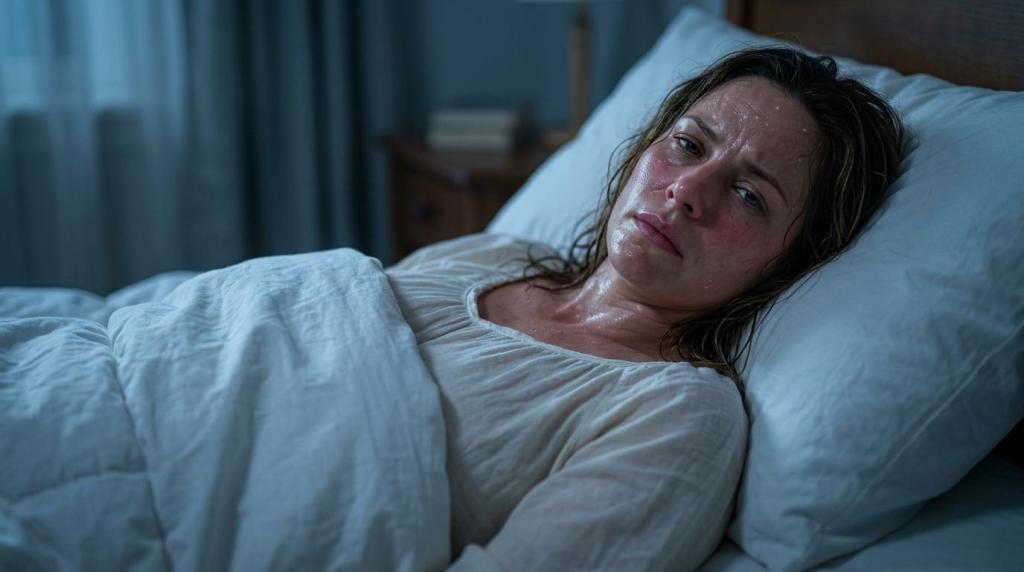
Bedding microclimate affects sleep more than room temperature—trapped heat, humidity, and poor airflow under covers can trigger night sweats.
If you’ve ever woken up sweaty in a room that already felt cool, you’ve met a problem that basic thermostat advice misses. The bedroom may be 65°F, but the air trapped between your body, the sheet, the blanket, and the mattress can still get warm, damp, and stuffy enough to disrupt sleep.
This is not medical advice. Always consult your doctor or oncology team before making changes, especially if night sweats are new, severe, or linked to treatment, medication, infection, or hormone-related symptoms.
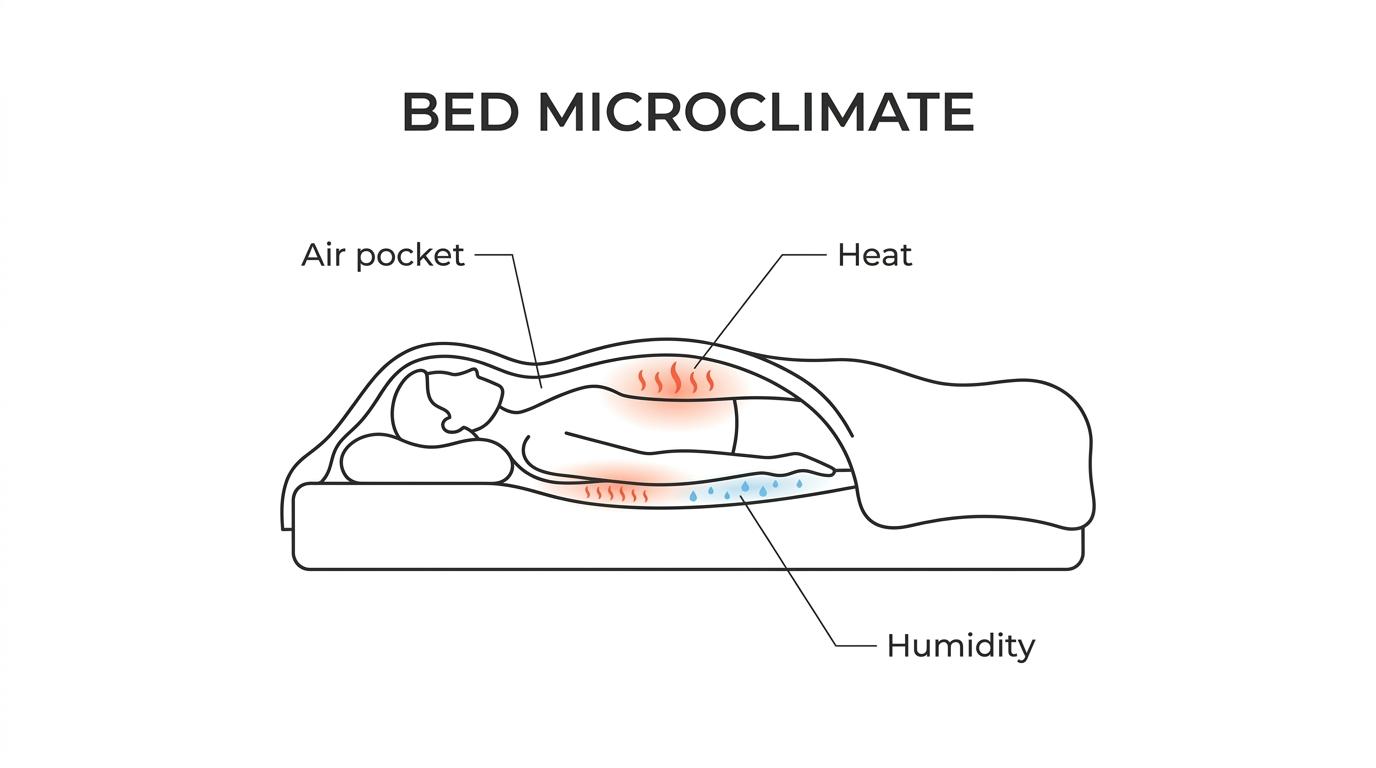
Bedding microclimate means the temperature and humidity inside the small pocket of air between your body and your bedding. That is the air your skin actually feels all night long. If that pocket gets too warm or too humid, your body has a harder time releasing heat, even when the room itself seems fine.
Sleep researchers don’t treat room temperature as the whole story. They look at the full sleeping environment, including ambient temperature, humidity, airflow, and the bed microclimate itself. A 2023 sleep study published by Oxford Academic noted that thermal comfort and sleep quality are shaped by those combined factors, and that overheated bedroom conditions, including the bed microclimate, deserve direct attention: https://academic.oup.com/sleep/article/46/Supplement_1/A96/7181752.
A few things tend to make the bed microclimate worse, even in a fairly cool room:
Most sleep experts commonly recommend a bedroom temperature between 60°F and 67°F (15.5°C to 19.5°C) for optimal temperature and better sleep. That’s solid advice, but it’s only part of the picture. Your body does not sleep out in the middle of the room. It sleeps inside a bedding system.
Think of the bed like a small climate chamber. Your body gives off heat. Bedding traps some of it. Moisture from normal sweating raises humidity under the covers. If that air cannot move, the heat stays put. That is why someone can say, “My room is cool, so why am I still waking up hot?” The answer is often right under the blanket.
This also explains why some people feel relief by changing the bed environment with thermoregulation technology rather than cranking the AC lower and lower. With better airflow under the sheets, many people can raise the room temperature by about 5°F and still feel cool enough for more restful sleep. That can be a big deal during summer, menopause, medication-related night sweats, or any stretch where utility bills start climbing.
Researchers have also looked at bedding insulation, breathability, moisture management, thermoregulation technology, and quilt thermal resistance, not just room air. A 2023 PubMed-indexed study measured skin temperature, bed climate temperature, and sleep stages while examining how quilt thermal resistance affected sleep thermal comfort: https://pubmed.ncbi.nlm.nih.gov/37748286/. In plain English, the amount of heat your bedding holds can change how comfortable you feel and how well you sleep.
That matches what people often notice at home. You may not need dramatically colder bedroom air. You may need a better-managed bedding microclimate. The same Oxford sleep research points back to airflow and humidity as part of the sleep comfort equation, not side details: https://academic.oup.com/sleep/article/46/Supplement_1/A96/7181752.
One woman in perimenopause described her nights this way: the room was set to 64°F, a ceiling fan ran all night, and yet she kept waking around 2 a.m. with damp pajamas and a hot chest. What helped most was not lowering the thermostat again. It was getting airflow under the sheet, where the heat and sweat were collecting, improving the breathability of the bedding microclimate.
Another common scenario is the person taking a selective serotonin reuptake inhibitor (SSRI) or steroids who says, “I’m not hot when I get into bed. I get hot after I’m under the covers for an hour.” That pattern often points straight to a bedding microclimate issue. The body warms the trapped air, humidity rises, and the bed becomes its own little heat pocket.
Start simple. If the top layers are too insulating, swap out the heaviest blanket or comforter for a lighter one for a few nights and see what changes. If your sleepwear feels damp by morning, try a fabric that dries faster. If you tend to cocoon tightly, leave a small opening near the feet so built-up heat has at least one escape route.
Pay attention to the sheet itself. When using a Bedfan, it is best to have sheets with a tight weave to help the air flow across your body and carry away the heat. That sounds backward to some people, but in practice it helps guide the moving air through the bed space instead of letting it leak away too easily.
One more point that matters: humidity is often the hidden villain. Warm skin can sometimes tolerate a bit of heat. Warm, damp skin is much harder to sleep through. The goal is not just cooling. It is evaporating sweat and moving humid air away from the body.
A simple reset usually includes:
This is where a bFan Bed Fan, or Bedfan sits at the foot of the bed and sends room air under the covers. It does not cool the air itself. Neither Bedfan nor Bedjet cool the air. They only use the cool air already in the room. What changes is the microclimate around your body. The airflow, enhanced by thermoregulation technology, helps with moisture management by evaporating sweat and carrying trapped heat away from the skin.
That matters because it targets the root problem. If the issue is hot, humid air trapped under the bedding, then moving that air is often more useful than making the whole house colder. It can also be more efficient. The Bedfan uses only about 18 watts on average, which is a small energy draw compared with pushing central air harder all night. Because the cooling happens under the sheets, many people can keep the room about 5°F warmer and still sleep more comfortably.
Comfort features, such as effective climate control and fabric innovation, matter too when you are using something every night. A Bedfan can be very quiet, around 28 to 32 dB on lower settings, and timer controls help if you want stronger airflow at bedtime and less later on. If one partner sleeps hot and the other does not, dual-zone microclimate control can be done with two Bedfans. That setup still costs a fraction of a dual-zone Bedjet, which runs over a thousand dollars and is more than twice the price of two Bedfans. The original Bedfan was invented in 2003, several years before Bedjet was even thought of, so this is a long-established approach, not a trendy workaround.
Night sweats are not always about bedding. They can be linked to menopause, medication side effects, infections, thyroid disease, low blood sugar, anxiety, obstructive sleep apnea, cancer treatment, and other health issues. If the sweating is new, drenching, or paired with other symptoms, get it checked.
A comfort tool can help you sleep better while you sort out the cause, but it should not replace medical care. That is especially true if you are dealing with chemotherapy, endocrine treatment, unexplained weight loss, fever, chest symptoms, or worsening fatigue.
Please contact a clinician promptly if you have:
If you’re publishing this on bedfan.com, helpful internal links would fit naturally around phrases like night sweats causes, menopause night sweats help, medications that can cause night sweats, best bedroom temperature for sleep, and how bed fans work.
All links have been checked and are currently working.
If the problem is heat trapped under the covers, not just a warm room, a targeted airflow solution can make a real difference. You can see how the bFan Bed Fan works at https://www.bedfan.com and decide whether a cooler, drier bed microclimate sounds like the practical next step for your nights.
This is not medical advice. Always consult your doctor or oncology team before making changes to your treatment plan, symptom management, or sleep setup.


