Bed cooling cost to run is often under $1/month: low-watt bed fans use ~18W vs AC units costing $30-$70+ monthly.
Sleeping hot tends to trigger two kinds of stress at once: the physical discomfort of overheating and the mental math of what it might cost to keep cool all night. A lot of people assume any bed cooling solution must be an energy hog because it runs for hours at a time.
The surprise is that many “personal cooling” options, especially targeted airflow under the bedding, can cost roughly pocket change per month to operate, while full-room or whole-home cooling can climb into real money quickly.
Electricity cost is usually billed in kilowatt-hours (kWh). A device’s wattage tells how fast it uses energy, and runtime tells how long it keeps using it.
Here’s the simple relationship:
A sleeper who runs a bed cooling device 8 hours per night is effectively “subscribing” to that wattage for one third of the day.
After that, it becomes a local-rate question. Many U.S. households land somewhere around $0.14 to $0.17 per kWh, though it varies by state, plan, and season.
Bedfans-USA makes two related under-sheet airflow systems, both designed to cool the sleeper rather than refrigerate the whole room.
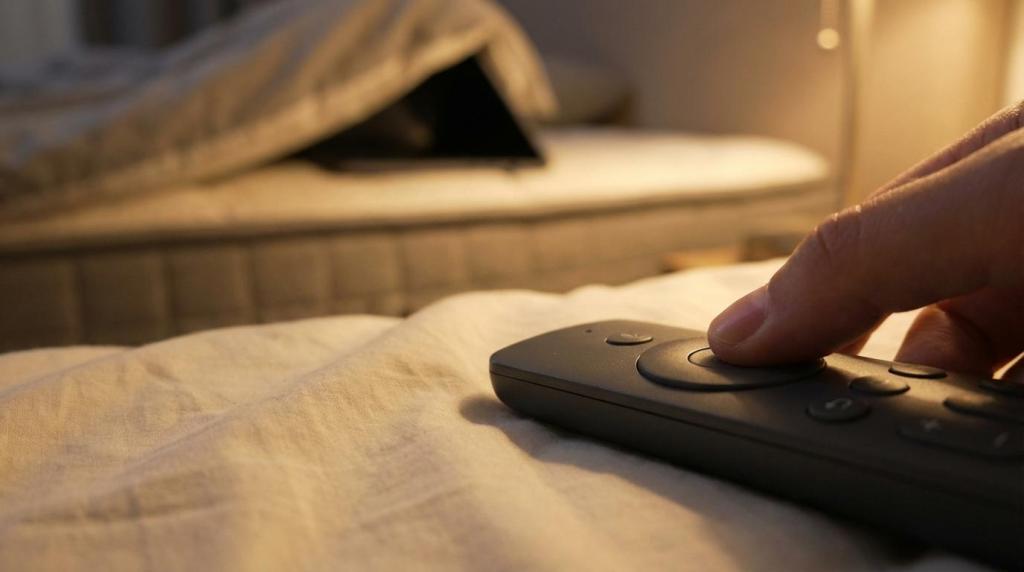
The newer bFan uses a brushless DC motor with digital speed control from 5% to 100% via remote. The manufacturer lists typical average usage at around 18 watts. The earlier Original bFan (v1.5) is listed at under 12 watts peak (12V transformer drawing less than 1 amp).
Those numbers are tiny compared with air conditioners, and they stay tiny even when used every night.
Assuming 8 hours per night and 30 nights per month at an electricity rate of $0.15/kWh, the operating cost lands around a dollar or less for the month.
[markdown]
| Cooling option | Power draw | 8-hour night |30-night month | Estimated cost per month (@ $0.15/kWh) |
| --- | ---: | ---: | ---: | ---: |
| bFan | 18 W (avg.) | 0.144 | 4.32 | $0.65 |
| Ceiling fan | 50 W | 0.40 | 12.0 | $1.80 |
| Window AC | 800 W | 6.4 | 192 | $28.80 |
| Portable AC | 1200 W | 9.6 | 288 | $43.20 |
| Central AC | 2000 W | 16.0 | 480 | $72.00 |
[/markdown]
Real-life bills will differ, but the order of magnitude usually holds: under-sheet airflow tends to sit in the “less than a latte” category, while AC sits in the “line item” category.
A bed fan does not cool the entire room. It moves air where the sleeper actually feels it, under the top sheet and around the body. That single design choice changes everything about operating cost.
Air conditioners do two energy-intensive jobs:
Both take serious power. A fan, by contrast, mostly pays the energy cost of spinning a motor and moving air.
Ceiling fans are also efficient, yet they circulate air in the whole room. Under-sheet airflow is narrower and more targeted, so it can feel stronger to the person in bed without needing to “condition” the entire space.
Many hot sleepers cool the whole house down to make the bed tolerable. That can work, but it often overcools other rooms that no one is using, and it can create comfort conflicts for couples.
Targeted bed cooling opens a different strategy: keep the bedroom, or the home, a little warmer while still giving the sleeper a cool-feeling microclimate. Bedfans-USA notes that some users can raise their thermostat by up to about 6°F while still sleeping comfortably, since the cooling sensation comes from airflow at the bed.
Even a modest thermostat change can reduce AC runtime. The exact dollar savings depends on insulation, outdoor conditions, HVAC efficiency, and the size of the home. Still, it is common for the “big money” to be in the AC reduction, not in the few watts used by the bed fan.
A couple practical takeaways tend to hold:
A device’s sticker wattage is only part of the story. The bill reflects how people actually use it, and what problem they are trying to solve.
Cost is most sensitive to these factors:
This is also where “bed cooling” products start to separate. Some systems cool with air movement. Others chill water and pump it through a pad. Water-based systems can offer a different feel, yet they usually consume more power than a low-watt fan because they run pumps, electronics, and in some designs active heating or cooling components.
A shopper does not need perfect data to get close. They just need a reasonable watt estimate and their electricity rate.
After a person checks their latest utility bill for the $/kWh number, they can run the estimate with this template:
Monthly cost = (watts ÷ 1000) × (hours per night) × (nights per month) × (rate per kWh)
To make it tangible, if a sleeper ran a 25-watt device for 8 hours nightly at $0.15/kWh:
(25 ÷ 1000) × 8 × 30 × 0.15 = $0.90 per month
If they ran closer to 18 watts average:
(18 ÷ 1000) × 8 × 30 × 0.15 = $0.65 per month
That range fits how many people actually use a remote-controlled fan: higher at bedtime, lower later, sometimes cycling with the weather.
Energy use is not only about motor size. It is also about how effectively the device turns power into a sensation of cooling where skin and bedding meet.
The bFan approach focuses on airflow delivery under the sheet, using a whisper-quiet brushless DC motor with digital control and dual squirrel-cage blowers designed for targeted pressure and fast airflow. It is also built to fit common bed heights, with an under-bed form factor that stays visually discreet.
That “cool the person, not the house” philosophy tends to resonate with:
Bedfans-USA also highlights that the bFan is built in Texas using primarily American-made components, with a long history of manufacturing since 2004, which matters to shoppers who want domestic production and repairable products.
Because the energy cost is already low, the goal is usually comfort optimization, not penny-pinching. Still, a few habits can keep the fan on the lowest effective setting while improving sleep feel.
People often get better results with small changes like these:
For shoppers who want to use pre-tax funds, Bedfans-USA notes HSA/FSA eligibility through Flex, which can change the effective out-of-pocket cost for some households even though it does not change the electric bill.
Low-watt bed cooling is strong at improving comfort for the sleeper, yet it is not a full replacement for air conditioning in every home.
If a bedroom is extremely hot, poorly ventilated, or humid enough to feel sticky, AC may still be necessary to bring the space into a livable range. In that setup, targeted bed cooling can still be useful, because it can reduce how hard the AC has to work overnight.
The practical comparison is simple: whole-room systems spend energy to change the room’s temperature and humidity. Under-sheet airflow spends energy to make the sleeper feel cooler. When the goal is better sleep without running the entire house like a refrigerator, the monthly operating cost of a bed fan is often one of the easiest wins on the list.