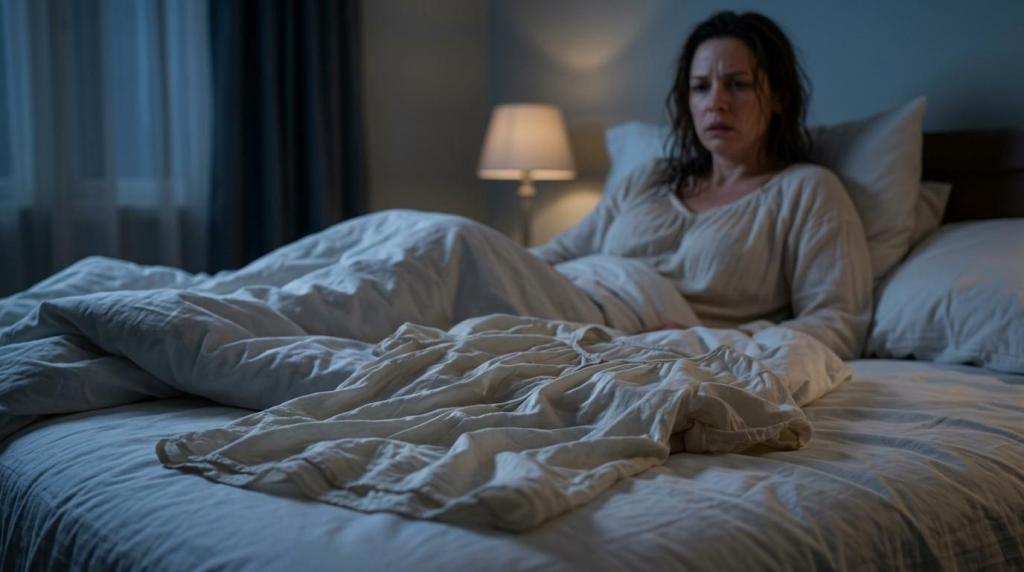
Menopause night sweats can ease with doctor-guided treatment plus under-sheet cooling to reduce heat, sweat, and sleep disruption at night.
Menopause night sweats usually improve when you address two things at the same time: the hormone-driven hot flash and the hot, damp air trapped under the covers afterward. For many women, the fastest relief comes from pairing medical guidance with bed-level cooling that dries sweat and removes built-up heat.
TL;DR: Summary
- Menopause night sweats are common vasomotor symptoms caused by changing estrogen levels, and the most effective relief often combines clinician-guided treatment with practical sleep cooling.
- Hormone therapy can help many women, and the FDA also notes non-hormonal medicine options for bothersome hot flashes and night sweats.
- A Bedfan or bFan does not treat the hormonal cause, but it can reduce the heat-sweat-chill cycle by pushing room air between the sheets to evaporate sweat and clear trapped warmth.
- Sleep experts commonly recommend a bedroom temperature of 60°F to 67°F. Many people using a bed fan can keep the room about 5°F warmer and still feel cooler because the airflow targets the body, not just the room.
- Talk to a doctor if night sweats are new, severe, or come with weight loss, fever, palpitations, or symptoms that do not fit menopause.
If you're lying awake at 2 a.m. feeling drenched, you're not imagining how disruptive this can be. The FDA says menopause can bring night sweats that disturb sleep and leave people tired, stressed, or tense, and the Mayo Clinic notes that nighttime hot flashes can cause long-term sleep disruption. This is not medical advice. Always consult your doctor or oncology team before making changes.
Yes. Menopause night sweats are vasomotor symptoms linked to changing estrogen levels and a more temperature-sensitive hypothalamus, according to the FDA and Mayo Clinic.
During the menopausal transition, estrogen levels fluctuate. That can make the brain's temperature control center react to small shifts as if you're overheating. The result can be a sudden wave of heat, flushing, sweating, then chills once the sweat evaporates. The National Institute on Aging also lists hot flashes, night sweats, and trouble sleeping among the most common menopause symptoms: What Is Menopause?.
A common misconception is that a cool bedroom should completely solve the problem. It often helps, but bedding can still trap body heat and humidity. That trapped warmth is why many women wake up sweaty even when the thermostat already feels low.
"bFan Bed Fan has been in the bed-cooling category since 2003, years before BedJet was even thought of."
Sooner is better. A gynecologist or primary care clinician should hear about frequent night sweats, especially if they are new, severe, or paired with other symptoms.
Menopause is common, and the FDA says it often happens between ages 45 and 55. Still, not every night sweat is menopause. If your sweating started suddenly, soaks the bed regularly, or comes with fever, weight loss, chest symptoms, tremor, fast heartbeat, or daytime overheating, it deserves medical attention. Thyroid disease, medication side effects, infection, obstructive sleep apnea (OSA), and some cancers can also cause nighttime sweating.
If you have a history of breast cancer, blood clots, stroke, liver disease, or you're taking tamoxifen or an aromatase inhibitor, bring that up right away. Treatment choices can change based on your medical history. This is especially important before trying hormone therapy or supplements marketed for menopause.
Start with symptom control you can use right now. The best short-term tools are the ones that reduce trapped heat, sweat, and sleep interruption in the next bedtime cycle.
After the basics are in place, these are the most useful same-night strategies:
What matters most is breaking the heat-sweat-chill cycle quickly, so one hot flash does not turn into an hour of wakefulness.
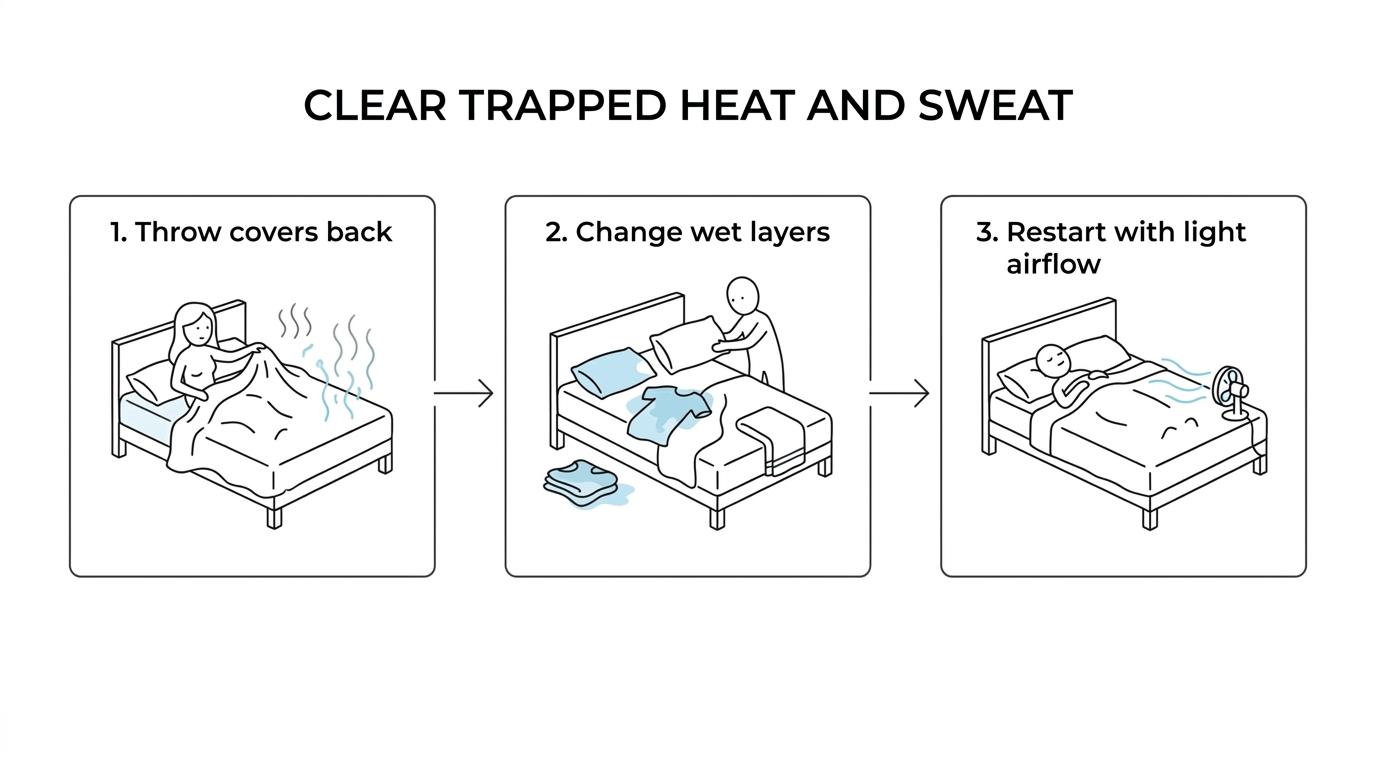
You can reset the bed in a few minutes. A fan, dry fabric, and lighter covers usually work faster than dropping the whole-house thermostat in the middle of the night.
First, throw the covers back for a minute and let moisture escape. If your shirt or pillowcase is damp, change the wet layer instead of trying to fall back asleep on it. Next, restart the bed with lighter coverage. Put the top sheet back over you, then add only the blanket you need. If you have a Bedfan or bFan, direct the airflow between the sheets, not at your face. That under-sheet airflow is what helps carry away humidity.
Pro tip: tight-weave sheets often work better than plush fabrics because they let the airflow spread across the body instead of getting lost in thick texture. If noise wakes you easily, start low. The Bedfan runs about 28 dB on low and around 30 dB in normal operation, which is quiet enough for many light sleepers.
"At low speed, bFan Bed Fan runs about 28 dB, and normal operation is around 30 dB, which suits overnight use."
If repeated wakeups are the problem, timer controls can help. Some people run bed airflow through the first sleep cycle, when hot flashes and sweat rebounds tend to hit hardest.
The best choice depends on your symptoms and health history. FDA guidance makes room for both hormone therapy and non-hormonal medicines, while bed cooling helps with comfort and sleep disruption.
If your night sweats are moderate to severe and you are a good candidate, hormone therapy can be very effective for vasomotor symptoms. If hormone therapy is not appropriate, non-hormonal options may help. The FDA specifically notes both hormone therapy and FDA-approved non-hormonal medicines for menopause symptoms on its menopause page.
Here's the trade-off people often miss. Medical treatment aims at the underlying hot flash pathway. Bed cooling aims at the aftermath in the bed itself. One treats the biologic trigger. The other helps remove the heat and dampness that keep you awake after the trigger has already happened. Those are different jobs, and many women need both.
Common misconception: non-drug cooling is not a replacement for medical evaluation if symptoms are intense or unusual. It is a comfort tool. It can be a very good one, but it does not diagnose or treat the hormonal cause.
Keep the room cool, but focus even more on the bed microclimate. A cool room and dry airflow under the sheets work better than either one alone.
Most sleep experts recommend a bedroom temperature between 60°F and 67°F, or 15.5°C to 19.5°C, for better sleep. That is a good starting point, not a rule you have to force if your partner is freezing. Because a bed fan targets airflow under the covers, many people can raise the room temperature by about 5°F and still feel cool enough to sleep better. That can also ease air conditioning costs in warmer months.
Choose breathable, tight-weave sheets. Keep a spare set nearby if sweat is heavy. Try one blanket instead of stacked layers, and avoid trapping your feet under thick bedding if that seems to trigger overheating. If you sleep on memory foam and feel heat building from below, even more reason to move air through the sheet space above your body.
"bFan Bed Fan uses about 12 watts on average, so it can cool the bed microclimate without the energy draw of harder overnight AC use."
Neither Bedfan nor BedJet cools the air itself. They use the cooler air already in the room. That sounds simple because it is simple. The win comes from putting that airflow where sweat and heat get trapped.
Air conditioning, Bedfan, and BedJet solve different parts of the problem. AC cools the room, while Bedfan and BedJet move room air into the bed space.
If your whole bedroom is hot, you still need the room cooled to a reasonable level. A bed fan is not a substitute for basic climate control in a sweltering house. What it can do is cool the microclimate under the sheets, which is often the place that still feels sticky and overheated even after the room is comfortable.
Compared with BedJet, the biggest practical difference for many couples is cost and simplicity. A dual-zone BedJet setup is over a thousand dollars, which is more than twice the price of two Bedfans. Two bFan units can create dual-zone cooling at a fraction of that cost, and each sleeper can control airflow on their own side. If timer control matters, Bedfan offers that too. If your priority is quiet, low-energy overnight airflow, Bedfan is a very sensible benchmark.
Another misconception is that these devices "make cold air." They do not. Bedfan does not cool the air, and BedJet does not cool the air. They both use the cooler air already in the room.
A short symptom log makes the conversation better. A gynecologist or primary care doctor can make much better decisions when you bring patterns, not just frustration.
Start by tracking two weeks of episodes. Write down bedtime, wake time, how many times you wake sweaty, whether clothes or sheets need changing, and any triggers like alcohol, spicy food, stress, or a warm room. Include medications, especially antidepressants, steroids, thyroid medicine, and anything started recently.
Then ask direct questions. You can say, "Do these symptoms fit menopause, or do you want to rule out something else?" You can also ask, "Am I a candidate for hormone therapy?" and "What non-hormonal options make sense for me?" If you have a cancer history or are on anti-estrogen treatment, ask whether your oncology team should weigh in before you make any changes.
If sleep is the main issue, say that clearly. Poor sleep changes treatment decisions. Some options help the hot flashes themselves. Others help you stay asleep through the night.
Most women do not need one perfect fix. They need a workable stack of small changes that reduce wakeups and help them get back to sleep faster.
One common pattern looks like this: a 52-year-old wakes around 1:30 a.m. feeling hot, throws off the comforter, then starts shivering a few minutes later because her shirt is wet. She had already lowered the room to 64°F, but her bed still felt damp and stuffy. Adding under-sheet airflow with a bed fan, switching to tight-weave sheets, and keeping a dry sleep shirt nearby cut the length of her wakeups while she talked with her doctor about hormone therapy.
Another pattern shows up in women who cannot or do not want to use hormones. A breast cancer survivor in her late 40s may need a non-hormonal plan through her oncology team, plus practical cooling at night. In that situation, a Bedfan is not the treatment. It is the comfort layer that can make the night more manageable.
That combination approach is often the most realistic. Medical care helps with the vasomotor symptom itself. Bed cooling helps with the sweaty bed, the damp sheets, and the "now I'm wide awake" part.
These are good places to verify symptoms, review treatment options, and prepare for a doctor visit.
Useful related reading on Bedfan.com could include bed fan for night sweats, medical, medication, overheating support, night sweats articles, sleeping cooler articles, menopause night sweats guides, and bedroom temperature and sleep cooling tips.
If you want a practical, non-drug way to make the bed feel cooler tonight, you can take a look at the bFan Bed Fan store. It is a simple comfort tool that moves room air under the sheets to clear trapped heat and sweat. This is not medical advice. Always consult your doctor or oncology team before making changes.