Methylprednisolone night sweats can happen. Learn causes, warning signs, and simple ways to stay cooler and sleep more comfortably.
Waking up drenched while you’re taking methylprednisolone can feel confusing fast. Is it the medication? The condition being treated? A room that is simply too warm? Often, it is a mix, but yes, methylprednisolone can be linked with increased sweating, and sometimes that shows up at night.
This is not medical advice. Always consult your doctor, pharmacist, or oncology team before making changes to methylprednisolone, your dose timing, or your sleep setup. If night sweats are new, severe, or come with other symptoms, get medical guidance.
In short, yes. The official U.S. prescribing information for methylprednisolone tablets lists increased sweating among adverse reactions in the dermatologic category on DailyMed’s methylprednisolone label. That does not mean every sweaty night is caused by the drug, but it does mean the connection with side effects is real and medically recognized.
It also helps to be precise about what “night sweats” means. The NHS guide to night sweats defines them as sweating so much that your night clothes and bedding become soaking wet, even though the place where you’re sleeping is cool. That matters. Feeling warm under heavy blankets is one thing. Repeatedly waking up with soaked sheets in a cool room is something else.
The NHS also lists medicines, including steroids such as prednisone, as a common cause of night sweats and other side effects. So if you started methylprednisolone and then your sleep suddenly turned into a sweaty mess, it is reasonable to bring up the timing with your prescriber.
In similar scenarios, medications like prednisone, another corticosteroid, can also share these side effects, including night sweats. Prednisone is often used for similar medical conditions, and it is known to cause comparable physiological changes. Since both drugs share a similar mechanism of action and therapeutic application, it's essential to monitor and discuss any concerning symptoms with your healthcare provider.
Methylprednisolone and prednisone are corticosteroids, also called glucocorticoids. MedlinePlus explains that it acts similarly to hormones made by the adrenal glands in the body’s normal stress response system: MedlinePlus methylprednisolone drug information. That can affect far more than inflammation.
Some people feel activated on steroids. They feel warmer, more alert, a little wired, sometimes hungry, sometimes restless. Steroids can also affect blood sugar, sleep quality, and the body’s normal day-night rhythm, potentially causing sleep disruption, and may contribute to hormone imbalance. If your dose is taken later in the day, that “revved up” feeling can land right at bedtime.
There is another layer here. The condition being treated may also be part of the story. If you are taking methylprednisolone for an inflammatory flare, asthma, autoimmune disease, cancer-related treatment effects, or a severe allergic reaction, your body may already be under stress. Infection, fever, pain, and anxiety can all add fuel to nighttime sweating.
Sometimes the drug is the main driver. Sometimes it is the full picture.
A few sweaty nights during a steroid pack can happen due to side effects. Still, there are times when you should not brush it off. This matters even more if the sweating is truly drenching, if it starts suddenly, or if it comes with symptoms that suggest infection, low blood sugar, or steroid complications.
One practical rule is this: if the room is cool and your clothes or bedding are getting soaked, that is worth mentioning to a clinician. If the sweats are mild and short-lived, the fix may be simple. If they are intense, persistent, or paired with other red flags, you want a real medical review.
If you are in the middle of this right now, relief usually comes from reducing heat buildup around the body, not just cranking the thermostat lower and hoping for the best. Heat and sweat get trapped under bedding. If that trapped heat stays there, you keep waking up sticky, then chilled, then sweaty again.
Sleep experts commonly recommend a bedroom temperature around 60°F to 67°F for better sleep. That range works well for many people. Still, people dealing with hormone imbalance and steroid-related overheating, such as from medications like prednisone, and experiencing side effects, often need more than a cooler room. A Bedfan can help many sleepers raise the room temperature by about 5°F and still feel cool enough to sleep, because it targets the body directly under the sheets where the heat is actually trapped.
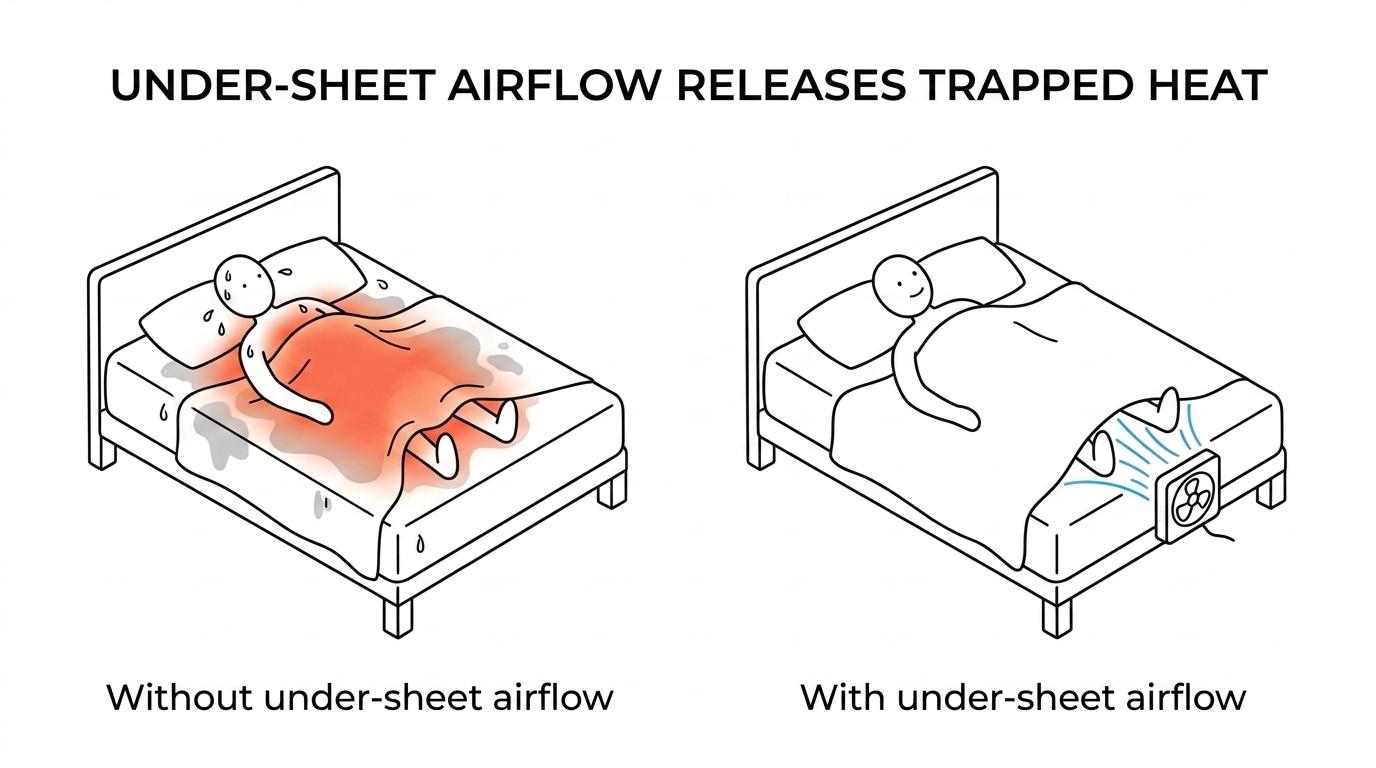
That last part is important. Neither a Bedfan nor a Bedjet cools the air. They use the cool air already in the room. The difference is where that air goes. A Bedfan pushes airflow between your sheets so sweat can evaporate and body heat can escape instead of collecting around your chest, back, and legs.
The original Bedfan was invented in 2003, years before Bedjet entered the category, and the idea still makes sense because it goes after the root issue: trapped heat in the bed microclimate, especially beneficial for those on medications like prednisone that can contribute to night sweats and their side effects. For someone whose sweating is tied to methylprednisolone, that kind of targeted airflow is often more useful than making the whole bedroom icy. It is also practical if your bed partner sleeps cold.
Prednisone, like methylprednisolone, is another corticosteroid that can introduce challenges such as night sweats, sleep disruption, overheating, and other side effects during sleep. It's crucial for those on prednisone to explore solutions like targeted airflow, as standard cooling methods might not suffice in mitigating steroid-induced overheating. Consulting with a healthcare provider about medication schedules could also offer some relief to those affected by these conditions.
A few setup details matter. Tight-weave sheets usually help the air spread across the body better than very loose knits. Lighter bedding helps too. And if noise worries you, the Bedfan runs around 28 dB to 32 dB at typical lower settings, with timer controls and remote adjustment, so you can back it off after you fall asleep. Its average energy use is about 18 watts, which is tiny compared with lowering whole-house air conditioning (AC) all night.
After a paragraph of advice, here are the simple fixes worth trying first:
If two people in one bed need different airflow, using two Bedfans can create dual-zone microclimate control at a fraction of the over one thousand dollar cost of a dual-zone Bedjet setup. In plain terms, that means each sleeper can get targeted cooling without overcooling the whole room or spending more than twice the price of two Bedfans.
One patient in her 50s was given a prednisone dose pack for a severe inflammatory flare. By the second night, she was waking around 2 A.M. with damp hair, a sweaty chest, and enough moisture on the sheets that she started sleeping on a towel. Her partner was freezing because the room thermostat kept dropping lower every night.
She did two things while waiting to hear back from her clinician. She moved her bedding to a lighter setup and used under-sheet airflow with a tight-weave sheet. The sweats did not vanish, but the bed stopped feeling swampy, and she woke fewer times. Her doctor later confirmed that the steroid, specifically prednisone, likely contributed to the side effects, made sure infection was not being missed, and advised on next steps.
That pattern is common. Comfort strategies can help tonight. Medical review still matters.
You do not need a perfect symptom diary, but a few notes make the conversation much easier. Write down when you take the dose, when the sweating starts, whether the room is cool, how wet the bedding gets, and whether you have fever, chills, cough, pain, or blood sugar issues. If you have diabetes, note any overnight readings or symptoms that suggest lows or highs.
It also helps to mention every other medication you are taking. Night sweats are not exclusive to steroids like prednisone. Some antidepressants, pain medicines, hormone treatments, and other drugs can contribute to side effects too. If your sweating began after a medication change, say that clearly.
Prednisone, a commonly prescribed corticosteroid, is known for its wide range of effects on the body, including causing night sweats as a side effect. This steroid can alter the body's natural hormonal balance, leading to an increase in sweating due to heightened metabolic activity. If you've recently started on prednisone and notice more intense night sweats, it could be the reason behind it. Discussing this with your healthcare provider is crucial to determine if adjustments to your prednisone dosage or schedule might alleviate the symptoms without compromising your treatment plan.
Your prescriber may look at the timing, the dose, the need for a gradual taper, or whether something else is going on. The official labeling and MedlinePlus guidance both support using the lowest effective steroid dose when possible and avoiding abrupt discontinuation. That decision needs to stay with the clinician managing your care.
Methylprednisolone is a corticosteroid that can affect your body's hormone balance and temperature regulation. This disruption often leads to increased sweating, especially at night, as your body tries to cool itself. Night sweats are a common side effect for many people taking this medication, and they can be more pronounced if you are also experiencing stress or other medication side effects.
Night sweats from methylprednisolone usually begin soon after starting the medication and may persist throughout your course of treatment. For most people, these symptoms improve or resolve within a few days to weeks after stopping the medication. If night sweats continue or worsen, it is important to speak with your healthcare provider to rule out other causes.
Yes, you can take steps to minimize night sweats while on methylprednisolone. Keep your bedroom cool, use lightweight bedding, and wear moisture-wicking sleepwear. Some people find that using a targeted cooling solution like the bFan helps maintain comfort and sleep quality. Staying hydrated and avoiding spicy foods or caffeine in the evening can also help reduce sweating.
You should never stop methylprednisolone suddenly without consulting your healthcare provider. Abruptly discontinuing corticosteroids can lead to serious health risks, including adrenal insufficiency. If night sweats are severe or affecting your quality of life, contact your doctor to discuss possible adjustments to your treatment plan.
While night sweats are a known side effect of methylprednisolone, persistent or very severe sweating could signal an underlying infection or another medical issue. If you experience additional symptoms such as fever, weight loss, or unexplained fatigue, seek medical attention promptly. Your healthcare provider can help determine if further evaluation is needed.
People taking methylprednisolone should aim to keep their sleep environment as cool and comfortable as possible. Experts recommend a bedroom temperature between 60°F and 67°F, but with a bedfan, many find they can raise the room temperature by about 5°F and still sleep well. Using sheets with a tight weave and setting a timer on your bedfan can also help you reach recommended sleep duration and improve overall rest.
If this topic hits close to home, these are sensible next pages to connect with from here:
All links have been checked and are currently working.
If you need a practical, non-drug way to cool the bed tonight, the Bedfan store is worth a look. A good bed-cooling setup can help move trapped heat out from under the covers, cut down on sweat buildup, and let many people sleep comfortably without driving the room temperature so low. This is not medical advice. Always consult your doctor, pharmacist, or oncology team before making changes, especially if the sweats are severe, new, or paired with other symptoms.