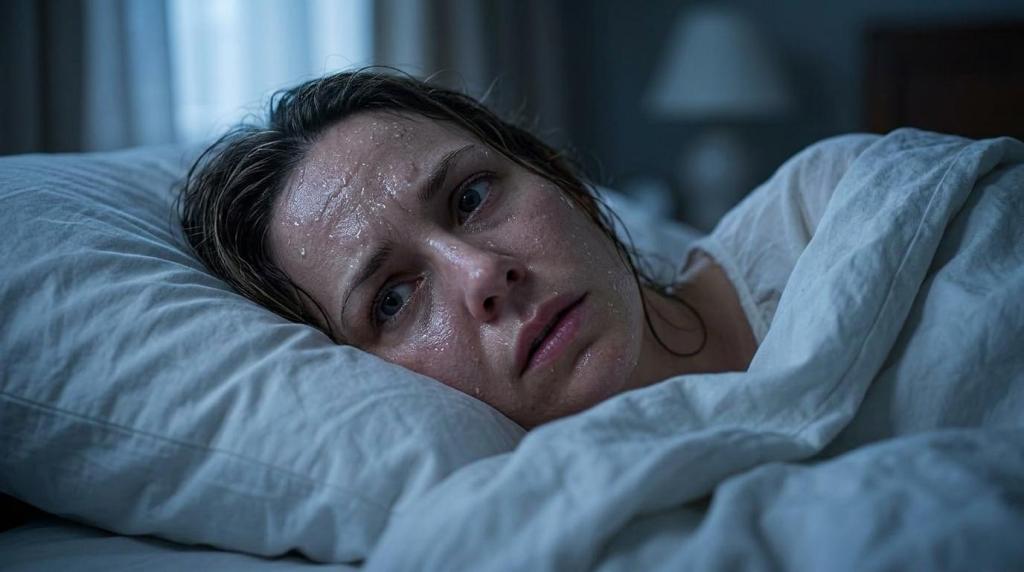
Prednisone night sweats can disrupt sleep by raising heat, blood sugar, and alertness. Learn causes, red flags, and what helps most.
If you’ve started prednisone and suddenly feel like your bed has turned into a heat trap, you’re not imagining it. A lot of people taking prednisone notice they feel hot at night, sweat more, wake up damp, or kick off the covers over and over. Drug references do list increased sweating as a known side effect, and real life complaints about prednisone night sweats are common. This medication, like many other medications, can be tricky because its effects and any medication interactions it may have with antidepressants or other medications can add extra layers of complexity to its side-effect profile.
The frustrating part is that prednisone night sweats do not come from one clean, simple cause. Prednisone can shift your cortisol pattern, make your sleep lighter, raise blood sugar, stir up your nervous system, and leave you more aware of every little spike in warmth while you’re trying to rest.
That mix can make nighttime feel rough, even when the room itself is not that warm.
Prednisone is a steroid that changes how your body handles inflammation, immune activity, stress signals, and metabolism. That is why it can help so many conditions. It is also why the side effects can feel all over the map. Many medications, including prednisone, have a dosage range that can influence side effects, and even slight differences in dosage or the timing of medications may affect how you feel at night.
When people say prednisone makes them overheat at night, they are usually describing a side effect pattern, not one single body process. You may feel flushed. You may sweat through your shirt. You may just feel uncomfortably warm under the covers, even without drenching sweats. Some people mainly notice repeated wake ups and restless sleep, then realize later that heat was part of the problem.

There is another wrinkle here. Sometimes the sweating is tied to prednisone itself, but sometimes it is tied to the condition being treated, a hidden infection, blood sugar swings, withdrawal from changing the dose too fast, menopause, anxiety, or another medication taken at the same time. So yes, prednisone can trigger night sweats, but it should not get blamed for every case without a little common sense and attention to potential medication interactions.
Your body usually follows a daily cortisol pattern. Cortisol is meant to be low at night and rise again toward morning. That rhythm helps your brain and body settle into sleep.
Prednisone steps into that system like a loud guest who arrives at the wrong time. Even though you swallow a pill earlier in the day, the body effects can last well into the night. If the dosage is moderate or high, or if you take it later in the day, it can feel like your system never really gets the signal that bedtime has arrived.
That matters because normal sleep depends in part on your body cooling down. If prednisone disrupts that process, you may feel hot when your body would usually be easing into a cooler state.
This is a big one, and it gets missed a lot.
Prednisone is well known for causing insomnia, restlessness, vivid mental activity, and that odd "tired but wired" feeling. When sleep gets lighter, you wake more often. When you wake more often, you notice heat more. Then you start tossing the blanket off, pulling it back on, changing positions, and the whole night turns into a series of mini battles with your bedding.
In other words, prednisone can make heat feel worse partly because it makes you more awake to it. Keep in mind that a well-managed dosage can sometimes help reduce these episodes when adjustments consider not only the drug itself but also its interaction with other medications you might be taking.
Steroids can raise blood sugar and push insulin resistance, especially if you already have diabetes, prediabetes, or risk factors for glucose problems. Higher blood sugar can leave you thirsty, restless, more likely to urinate at night, and generally more uncomfortable in bed.
Some people also notice a warmer, more revved up body feeling on prednisone. It is not always a true fever. It is often more like internal heat, flushing, sweating, and poor sleep all tangled together. Many medications, when combined without considering possible medication interactions, can further complicate these symptoms.
Your autonomic nervous system handles a lot of "background" body jobs, including heart rate, sweating, and how your body reacts to stress. Prednisone can nudge that system into a more activated state.
That is part of why some people on steroids feel keyed up, sweaty, jittery, or flushed, especially at night when they are hoping to slow down. This effect can also be magnified when other medications, such as antidepressants, add their own layer of stimulation to the mix.
A few things make prednisone night sweats more likely or more intense. If any of these sound familiar, you are not alone.
Most people do not describe prednisone night sweats as one neat symptom. They describe a pattern. Maybe you fall asleep fine, then wake around 1 a.m. too warm. Maybe your chest, neck, or back gets sweaty while your legs still feel cold. Maybe your sheets feel damp and your mind feels busy at the same time. Maybe you are not soaked, just uncomfortably warm enough that sleep never gets deep.
That last version matters, because a lot of prednisone related sleep trouble is not dramatic. It is death by a thousand little wake ups.
If that sounds familiar, it helps to stop thinking only in terms of "am I sweating a lot" and start thinking in terms of "is prednisone, its dosage, and any related medications keeping my body from settling into cool, steady sleep."
Sometimes the sweating really is a plain old side effect. Sometimes it is not. Prednisone can mask infection and blunt obvious inflammatory signs, which means new or severe night sweats deserve a little respect.
Talk with a clinician sooner rather than later if your symptoms come with any of the following.
If you have been on prednisone for a while, do not change or stop it on your own just because the sweating is miserable. Steroid withdrawal can create a whole new set of problems, and that can include feeling awful, weak, sweaty, or shaky.
Some fixes are small, but small is still worth it when your sleep is falling apart.
Start with the room itself. Sleep experts commonly recommend a bedroom temperature between 60°F to 67°F, or 15.5°C to 19.5°C, for better sleep. That range helps the body release heat instead of trapping it. If you are on prednisone and running hot, even the top end of that range may feel too warm.
Your bedding matters just as much as the thermostat. Heavy comforters will hold onto body heat long after you want them to. Light layers work better because you can adjust fast without fully waking up. Plus, switching to lighter bedding can be one of the easiest ways to prevent uncomfortable medication-related sweating.
Clothing matters too. Loose sleepwear or less sleepwear often beats technical fabrics that sound impressive but feel sticky once sweating starts. You are trying to reduce trapped heat, not just wick moisture after the fact.
Food and drink can quietly make the night worse. Alcohol, spicy meals, large late dinners, and a lot of caffeine can all add heat or stimulate your system when prednisone is already doing enough of that on its own. In addition, certain medications might interact with your diet, so being mindful of mealtime and your overall regimen is key.
A few practical steps can help tonight, not just in theory.
Very often, yes, if your clinician agrees.
Prednisone is usually best taken in the morning because that fits your natural cortisol pattern better than late day dosing. When the dose gets pushed too close to bedtime, you are more likely to feel activated, restless, hot, or unable to sleep deeply. This is particularly important when considering the overall dosage and how it interacts with other medications you might be using daily, including common antidepressants.
That does not mean everyone can simply move the dose around on their own. Some treatment plans use divided doses for a reason. Some people are tapering. Some conditions flare if timing changes. Still, if prednisone night sweats are hammering your sleep, asking whether your dosing schedule can shift earlier is a smart conversation to have.
Also ask whether your dose is higher than it needs to be right now. With steroids, using the lowest effective dosage for the shortest workable time is often the guiding idea.
Here is the practical truth, if your body is trapping heat under the covers, you need a way to move that heat out. Cooling the whole room helps, but it is not always enough. A lot of the discomfort comes from the warm pocket of air stuck between your body and the bedding.
That is where a Bedfan, also called a bed fan or bfan, can make a real difference for prednisone night sweats. It pushes the cooler air already in your room under the top sheet and across your body, which helps remove trapped heat where you actually feel it. Neither Bedfan nor Bedjet cool the air. They only use the cooler air already in the room. That point matters, because people sometimes expect these products to act like mini air conditioners, and they do not.
For a lot of hot sleepers, that direct airflow is the whole trick. Sleep experts commonly recommend 60°F to 67°F for the bedroom, but many people using a Bedfan can raise the room temperature by about 5°F and still sleep cool enough for more restful sleep. That can mean less air conditioning use, and lower cooling costs, which is nice when prednisone has turned bedtime into a heat management project.
The Bedfan is also a pretty sensible fit for steroid related overheating because it is quiet and simple. Normal sleep settings are around 28db to 32db at normal operating speed, so it tends to fade into the background. The Bedfan also offers timer controls, which is useful if you mainly need help getting to sleep or through the first part of the night. And when you use it with tight weave sheets, the air tends to travel across your body better and carry heat away more evenly.
There is also a value piece here that is hard to ignore. The original Bedfan came to market several years before Bedjet was even thought of. If you compare current options, one Bedjet is more than twice the price of a single Bedfan. A dual zone Bedjet is over a thousand dollars and more than twice the price of two Bedfans. If you want dual zone microclimate control for a shared bed, two bFans can do that at a fraction of the over one thousand dollar cost of dual zone Bedjet.
If you want a straightforward product recommendation for prednisone night sweats, a bFan Bed Fan is one of the most practical options I would put on the short list.
A few points stand out when you compare bed cooling approaches.
If you are trying to figure out whether prednisone is the main problem, a simple log can save a lot of guesswork. You do not need anything fancy. A note on your phone is enough.
Write down your prednisone dosage, the time you took it, what time the sweating woke you, how bad it was, whether you felt hot or just damp, your room temperature, and anything else that stands out, like wine with dinner, a late workout, or a higher blood sugar reading. Tracking how different medications and their interactions might be playing a role can also offer useful insight.
After a few days, patterns show up. Maybe the worst nights happen after a later dose. Maybe the sweating lines up with higher blood sugar. Maybe heavy bedding is doing more damage than you thought. That kind of detail gives your prescriber something useful to work with.
It also helps separate a true medication pattern from the general misery of "I am not sleeping and I do not know why."
This is where things can get messy.
If you are in perimenopause or menopause, prednisone can pile onto hot flashes and make nights feel extra chaotic. In this stage of life, hot flashes may already be a challenge, and adding steroid induced sweating only makes it more complicated. If you already have anxiety, the wired feeling from steroids can make sweating feel more intense. If you are taking prednisone for an infection, inflammatory illness, cancer treatment support, or another serious condition, the illness itself may also be part of the picture.
That overlap does not mean you are stuck. It just means you may need more than one fix at a time. Maybe the real answer is earlier dosing, lighter bedding, better glucose control, and a Bedfan to remove the trapped heat under the covers. That layered approach is often what works in real bedrooms, not just in theory.
And if you sleep beside someone who runs cold, two Bedfans can be a very practical middle ground. You get your own cooling microclimate without turning the whole room into a refrigerator.
Prednisone night sweats are a common side effect of taking corticosteroids like prednisone. The medication can disrupt your body's natural hormone balance, which affects how your body regulates temperature. This leads to increased sweating, especially at night, as your system tries to adjust to the changes prednisone brings.
Night sweats from prednisone usually start to improve within a few days to a couple of weeks after you stop taking the medication. However, everyone’s body is different, so some people might experience lingering symptoms for a bit longer. If your night sweats persist for more than a few weeks after stopping prednisone, it’s a good idea to check in with your healthcare provider.
While prednisone night sweats are uncomfortable, they are generally not dangerous on their own. They are a sign that your body is reacting to the medication, but if you notice other symptoms like fever, chills, or unexplained weight loss, you should talk to your doctor. These could indicate an underlying issue that needs attention.
To manage night sweats, keep your bedroom cool and use lightweight, breathable bedding. Sleep experts recommend keeping your room between 60°F and 67°F for optimal sleep, and with a bedfan you can often raise your room temperature by about 5°F and still sleep cool. The bFan from www.bedfan.com is a great solution, since it circulates cool room air under your sheets, helping you stay comfortable all night. Tight-weave sheets also help the airflow move across your body and carry away heat.
Yes, prednisone can cause other sleep issues like insomnia, vivid dreams, and frequent waking. These effects are due to how prednisone interacts with your body’s natural cortisol rhythms. If you’re struggling with sleep while on prednisone, talk to your doctor about adjusting your dose or timing, and consider using tools like a bedfan to stay cool and comfortable.
Prednisone night sweats and menopause night sweats can feel similar, but they have different causes. Menopause night sweats are triggered by hormonal changes related to estrogen, while prednisone night sweats are caused by the medication’s impact on your adrenal system. Both can be managed with cooling solutions like the bedfan, which helps regulate your sleeping temperature.
While you might not be able to prevent night sweats entirely, you can reduce their severity by keeping your room cool, wearing moisture-wicking pajamas, and using a bedfan for direct airflow under your sheets. Staying hydrated and avoiding spicy foods or caffeine before bed can also help minimize sweating.
Steroids like prednisone can disrupt your body’s natural circadian rhythm, which controls temperature regulation. At night, your body is more sensitive to these changes, making you more likely to sweat. During the day, your body is more active and better able to regulate temperature, so you may not notice the same level of sweating.
Absolutely, products like the bFan or bedfan are designed to help with night sweats by circulating cool air under your sheets. Unlike expensive options like the dual zone Bedjet, which costs over a thousand dollars and is more than twice the price of two bedfans, the bedfan offers dual-zone microclimate control with timer settings and uses only 18 watts on average. It’s a practical, energy-efficient solution for anyone dealing with night sweats from prednisone or other causes.
By keeping mindful of your prednisone dosage, documenting any unusual medication interactions, and checking in on how other medications, such as antidepressants, may be affecting your sleep and overall health, you can better manage these uncomfortable side effects alongside challenges such as hot flashes and other overlapping symptoms.
All links have been checked and are currently working.