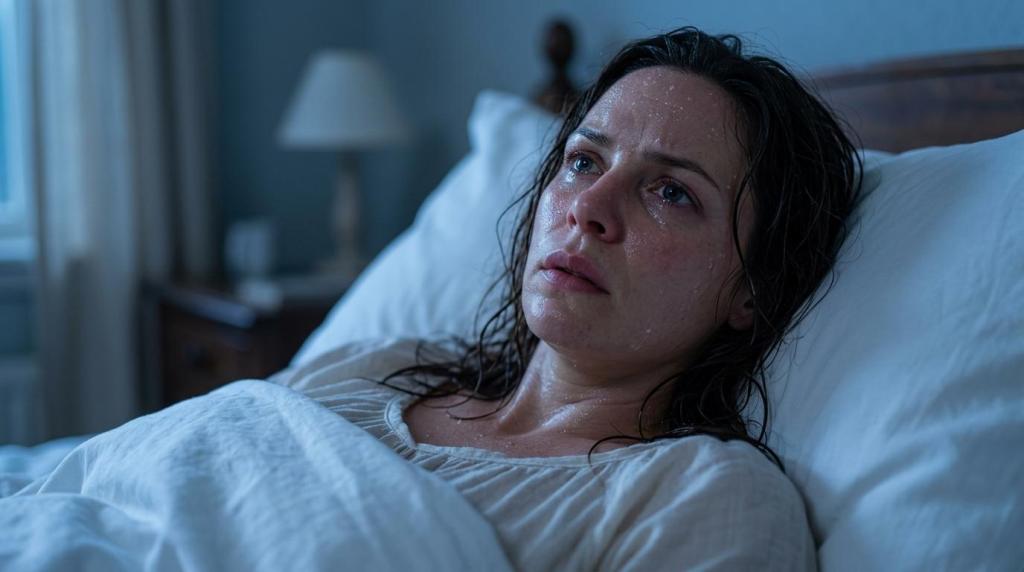
Discover the best bedroom temperature for sleep, plus science-backed tips on bedding, airflow, and staying cool without overfreezing.
If you’ve ever set the thermostat low, pulled up the blankets, and still woken up sweaty at 2:17 a.m., you already know the answer is not as simple as “make the room colder” for a comfortable night's rest.
For most adults, the best bedroom temperature for sleep lands in a fairly cool range, often around 60°F to 67°F (15.5°C to 19.5°C). That said, your body does not sleep in the middle of the room. It sleeps inside a little pocket of trapped heat created by your mattress, sheets, blankets, sleepwear, and body. That is why a bedroom can feel fine when you turn out the light, yet sleep still falls apart later.
This is not medical advice. Always consult your doctor or oncology team before making changes, especially if you have night sweats, hot flashes, sleep apnea, heart or lung disease, fever, unexplained weight loss, or active cancer treatment.
The usual advice about keeping a cool bedroom is backed by real sleep science, especially considering the impact on REM sleep. As your body gets ready for sleep, influenced by the circadian rhythm, core body temperature drops, and melatonin production increases. That drop helps signal the brain that it is time to sleep. The National Heart, Lung, and Blood Institute (NHLBI) explains that sleep is shaped by body clocks and environmental cues, including the conditions around you, not just your bedtime routine (NHLBI sleep overview).
Research is getting more specific about bedroom temperature and sleep efficiency. In a 2024 home study of older adults, sleep was most efficient when nighttime ambient temperature stayed between 20 degrees Celsius and 24 degrees Celsius, which is about 68°F to 75°F. When temperatures rose about 5°C above that range, sleep efficiency dropped by 5% to 10%, which is enough to matter in real life (PMC study on bedroom temperature and sleep efficiency). A separate 2023 actigraphy study also found that sleep efficiency fell as bedroom temperature increased, with a dose-response pattern rather than a sharp cutoff (PubMed bedroom environment and sleep study).
So why do sleep experts still often recommend 60°F to 67°F if one study found a somewhat warmer range at home? Because there is no single perfect number for every person, every season, and every bedding setup. Age, humidity, mattress type, hormones, medication side effects, and what you sleep under all change the answer.
A better way to think about it is this: aim for a cool room, then fine-tune the bed itself.
This is where many people get stuck.
Your bedroom thermostat measures ambient temperature. Your body feels something closer to a bedroom climate, which is the temperature and humidity trapped close to the skin under the sheets. A paper on bedding and sleepwear notes that sleep onset normally happens as core body temperature falls and distal skin temperature rises, helping the body release heat. The same paper points out that bedding, clothing, humidity, and air speed all influence sleep (PMC paper on thermal environment, sleepwear, and bedding).
That means two things can be true at once. Your room can be cool enough, and your bed can still be too warm.
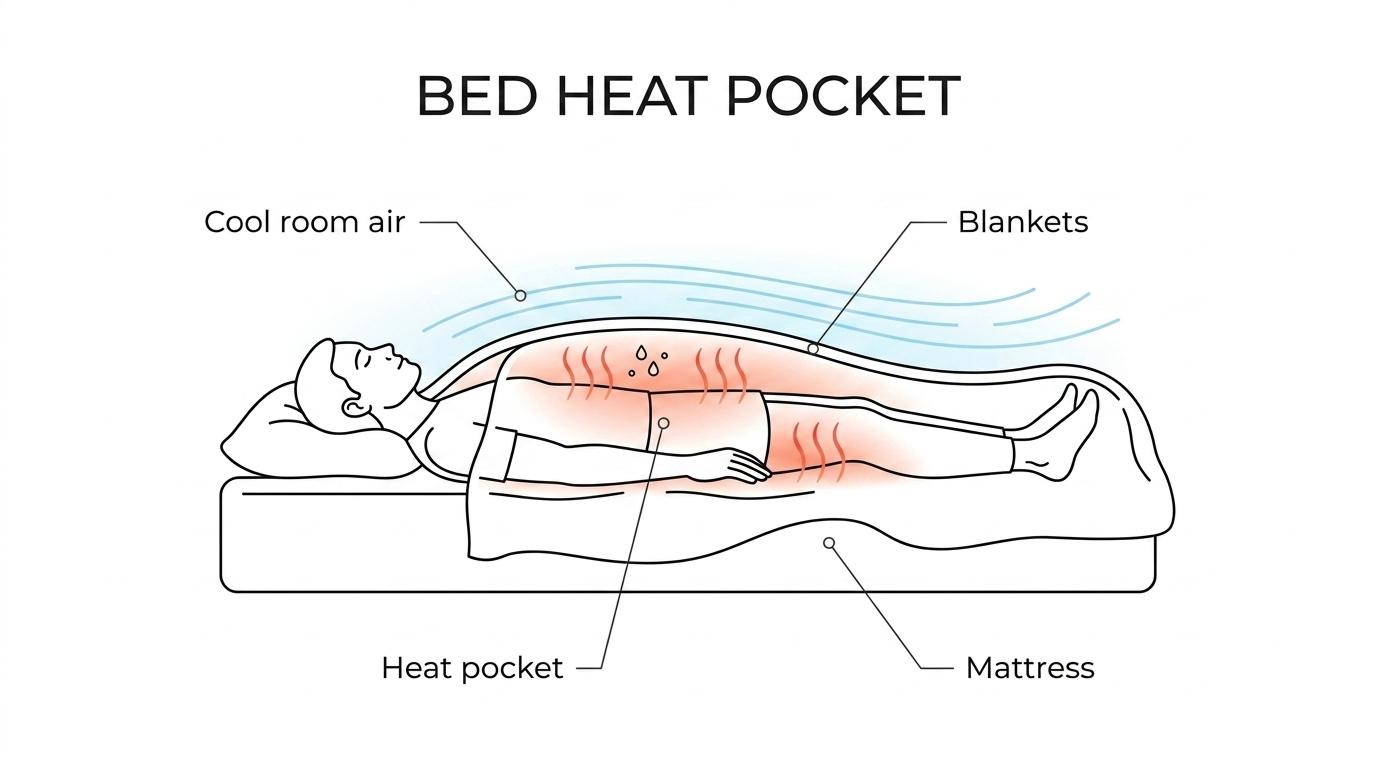
People often notice this as repeated waking after sleep onset, not just trouble falling asleep. They drift off, then wake hot several times due to insomnia, toss a leg out, kick off the blanket, cool down, pull it back up, and repeat the cycle.
If that sounds familiar, the thermostat may not be the whole problem.
Some common clues point to a bed microclimate issue rather than a room temperature issue:
Too much warmth tends to fragment sleep. You may spend more time half-awake, sweat more, move around more, and feel less restored in the morning. Warm rooms can be especially rough for people with menopause, perimenopause, thyroid issues, anxiety, medication side effects, or night sweats related to treatment.
Too much cold can be a problem too. An older sleep lab study found that both hot and cold conditions disturbed sleep, affecting rem sleep, and in that particular experiment cold temperatures were especially disruptive (PubMed study on high and low ambient temperatures and sleep stages). So if you have been told to make the room “as cold as possible,” that is not quite right either. Freezing yourself awake is not good sleep hygiene and can even exacerbate insomnia.
A useful target is to maintain a balanced bedroom climate, achieving a cool room that lets your body shed heat without making your hands, feet, shoulders, or nose feel uncomfortably cold.
Here is a simple way to check where you are landing:
The best sleep temperature, which can influence your circadian rhythm and melatonin production, is often found by testing different degrees, not guessing. Start with the room at 65°F or 66°F for a few nights if that is feasible in your home. If you wake cold, go up a degree. If you still wake hot, look at bedding, sleepwear, humidity, and airflow under the covers before dropping the thermostat lower and lower.
One patient-style example comes up all the time. A woman in her late 40s, dealing with perimenopausal night sweats, kept lowering the AC to 62°F because she thought the room was the problem. Her partner was miserable. What actually helped was keeping the room a bit warmer and getting heat out from under the covers. Once the trapped warmth was reduced, she stopped waking drenched and both people slept better.
That pattern is common because the bed is where heat gets stuck.
A few practical changes usually make the biggest difference:
If air conditioning costs are part of the problem, this is where bed-level cooling becomes very appealing. Many people can keep the room within the usual 60°F to 67°F guidance, or even raise it by about 5°F, and still sleep cooler if they improve airflow under the sheets. That can matter a lot in summer, in upstairs bedrooms, or when couples do not agree on thermostat settings.
A room fan helps with general air movement. A bed fan deals with the spot where many hot sleepers actually suffer, under the bedding.
The idea is simple. Instead of trying to lower the room by several degrees to icy levels, you move the cooler air that is already in the room into the bed microclimate so sweat can evaporate and body heat can escape. Neither Bedfan nor Bedjet cool the air. They only use the cool air already in the room. The Bedjet does not cool the air either.
That is why a Bedfan can be a practical option for people who do not want another medication, cannot tolerate a freezing room, or share a bed with someone who sleeps cold. It directs airflow under the top sheet, right where the heat is trapped. Tight weave sheets usually work best because they help the air travel across the body instead of escaping too quickly.
After helping hot sleepers for many years, one pattern stands out. People often do not need more cold air in the room. They need better heat removal from the bed itself.
The Bedfan can fit that need without being disruptive. Low settings are quiet, around 28 dB to 32 dB, which matters if noise wakes you easily. A remote and timer controls help if you want stronger airflow at bedtime and less later in the night. It also uses only about 18 watts on average, so nightly use is far easier on the power bill than overcooling the whole house.
For couples, dual-zone matters. Two bFans can create dual-zone microclimate control at a fraction of the cost of a dual-zone Bedjet setup, which runs over a thousand dollars and is more than twice the price of two Bedfans. The original Bedfan was invented in 2003, several years before Bedjet was even thought of, and the basic idea still makes sense because the problem has not changed: trapped body heat under the sheets.
Please do not assume every case of sleeping hot is just a bedding problem; disruptions in circadian rhythm, insomnia, and changes in REM sleep could also contribute to temperature regulation issues during sleep.
Night sweats can happen with menopause, infections, thyroid disease, low blood sugar, anxiety, medication side effects, obstructive sleep apnea (OSA), and cancer treatment, among other causes. If you are waking soaked, changing clothes or sheets, or having new symptoms, it is worth talking with a clinician. Cooling tools can make you more comfortable, but they do not replace a proper medical workup.
A few warning signs should push the issue higher on your list:
Related reading on bedfan.com that pairs well with this topic would include pages on menopause night sweats, medication-related night sweats, cancer treatment night sweats, best sheets for sleeping cooler, lowering AC costs with a bed fan, and dual-zone cooling for couples.
Bedroom temperature and sleep efficiency in older adults A 2024 home-based study showing that sleep efficiency was highest within a moderate nighttime room temperature range and dropped as bedrooms became warmer.
Thermal environment, sleepwear, bedding, and the sleep microclimate A useful paper on how bedding, clothing, humidity, and air speed affect heat loss, sleep onset, and comfort during the night.
NHLBI guide to how sleep works A clear overview of how sleep is regulated and why environmental conditions can shape how well you rest and the quality of your sleep.
If your room is already “cool enough” but your sleep still feels hot, stuffy, or sweaty, bed-level airflow may be the missing piece. You can see how the bFan works and whether it fits your setup at Bedfan.com. This is not medical advice. Always consult your doctor or oncology team before making changes.