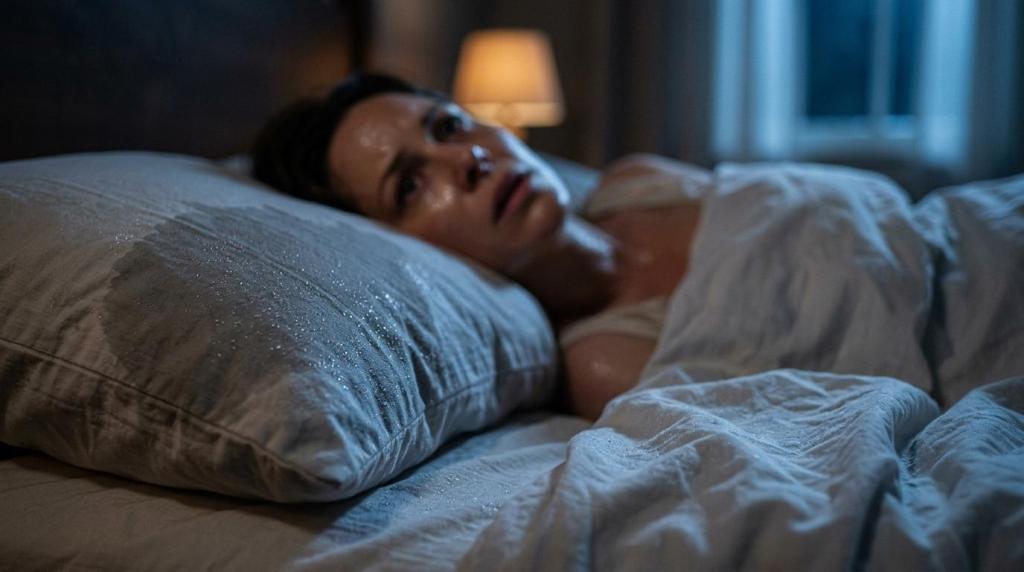
Learn which medications that cause night sweats are most common, why it happens, when to call your doctor, and how to sleep cooler.
Waking up drenched and kicking off the covers can be scary, frustrating, and oddly easy to dismiss. A lot of people assume it must be hormones, stress, the mattress, or a room that is just too warm. Sometimes that is true. Sometimes the real trigger is sitting in the pill organizer on the nightstand.
This is not medical advice. Always consult your doctor or oncology team before making changes to any prescription, dose, or treatment plan. Do not stop medications suddenly unless a clinician tells you to.
Medication-related night sweats are more common than many people realize. The pattern often shows up after starting a new drug, increasing a dose, tapering off, or mixing medicines that affect serotonin, hormones, blood sugar, or the nervous system. If the timing fits, it is worth taking seriously.
A wide range of medications can increase sweating. In medical terms, excess sweating is often called hyperhidrosis or diaphoresis. A 2008 review in PubMed lists cholinesterase inhibitors, selective serotonin reuptake inhibitor (SSRI) drugs, opioids, and tricyclic antidepressant (TCA) drugs among common causes of drug-induced sweating: PubMed review of drug-induced hyperhidrosis.
A primary care review available through PMC also notes that many other classes can contribute, including nonsteroidal anti-inflammatory drug (NSAID) medicines, blood pressure drugs, corticosteroids, hormone therapies, insulin, oral diabetes medicines, sedatives, and more: PMC review on night sweats and medication classes.
If you are trying to spot a pattern, these are some of the most common categories to look at:
That list sounds broad because it is broad. Night sweats, sometimes linked to excessive sweating or hyperhidrosis, are a side effect with many pathways, not just one.
Some medicines raise sweat production directly. Others affect brain chemicals that help regulate body temperature. Some can cause hot flashes or exacerbate conditions such as GERD, which can also contribute to night sweats. Some increase metabolism. Some lower blood sugar overnight, and sweating is one of the body’s alarm signals. Others can trigger sweating during withdrawal, even if sweating was never a problem while you were actively taking the drug.
Sometimes the clue is timing.
A person may sleep fine for months, then start waking up soaked three nights after an antidepressant dose increase. Another may blame menopause, only to notice the sweating got much worse after starting a steroid burst or changing an opioid schedule. Mayo Clinic includes medications among the possible causes of night sweats, which is why a careful timeline matters: Mayo Clinic overview of night sweats.
This is also why guessing can backfire. Night sweats can be caused by medications, but they can also show up with infections, overactive thyroid, low blood sugar, cancer treatment, sleep apnea, and other health issues. One symptom can belong to many different stories.
Antidepressants are some of the biggest offenders. In practice, people often notice sweating with SSRIs and SNRIs, and the sweating may show up in the daytime, at night, or both. Venlafaxine comes up again and again because its prescribing information specifically lists sweating, including night sweats, as a known adverse reaction. Excessive sweating can also appear as part of serotonin syndrome symptoms or discontinuation symptoms, which is one reason abrupt stopping is risky.
That last part matters. Night sweats are not only a “started the drug” problem. They can also be a “changed the dose” problem.
One anonymized example: a woman in her early 50s started waking around 2:00 a.m. with pounding heat and damp sheets a week after her venlafaxine dose was raised. She assumed menopause had suddenly gotten worse. After she tracked the timing and talked with her prescriber, it became clear the dose change was the likely trigger. Her clinician adjusted the plan slowly, and the sweating settled down.
The same kind of pattern, known in medical terms as hyperhidrosis, can happen with opioids and benzodiazepines during tapering or withdrawal. People often describe it as feeling hot from the inside out, even when the room is not warm. If you recently changed a medication, such as for GERD, mention that detail early in the visit. It can save a lot of confusion.
Start with a simple symptom log for a week or two. Write down the medication name, dose, time taken, the time you wake sweating, how soaked the sheets are, what the bedroom temperature was, alcohol intake, and whether you also had palpitations, fever, low blood sugar symptoms, or hot flashes. That kind of basic record is surprisingly useful.
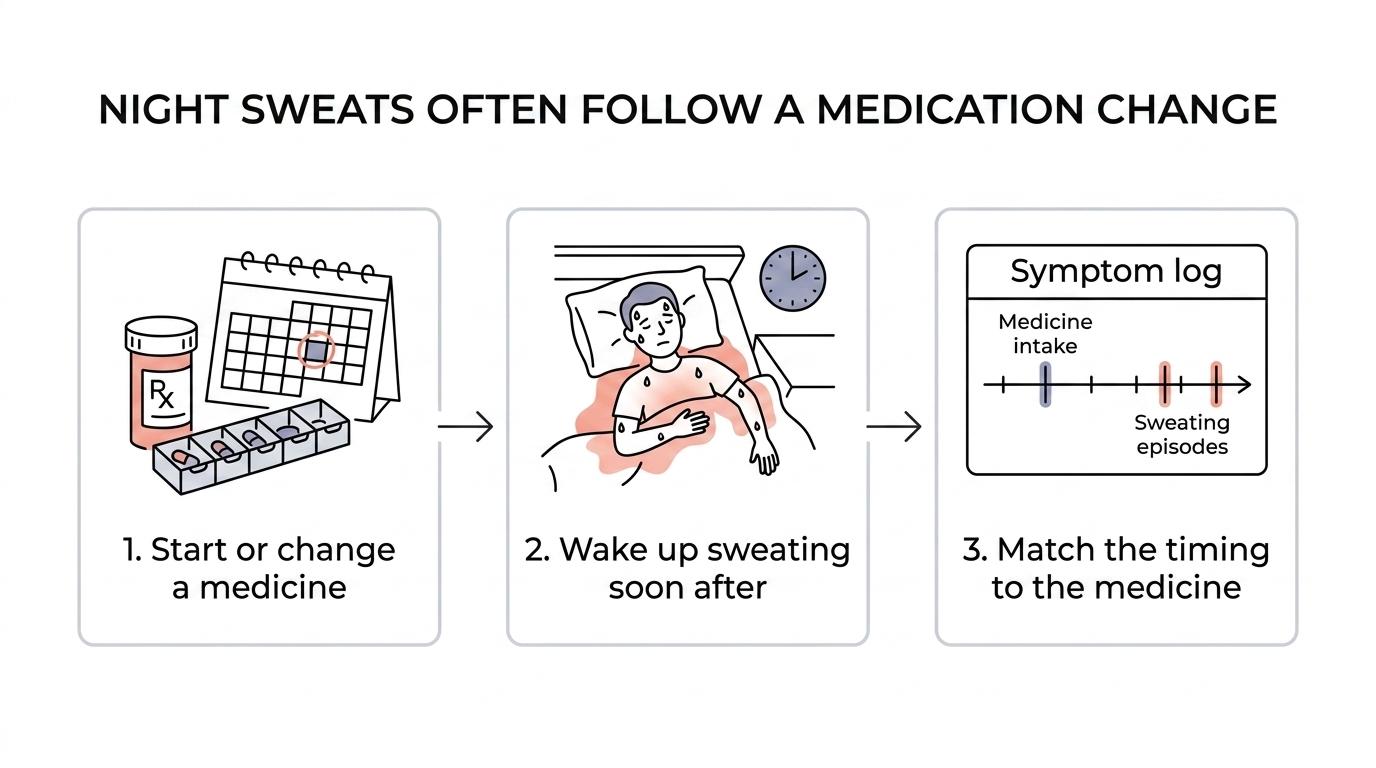
Then contact the clinician who prescribes the medications. Ask whether sweating is a known side effect, whether the dose could be adjusted, whether timing the dose differently might help, and whether there are safer alternatives. If the medication is essential, sometimes the answer is not stopping it. It is reducing the discomfort around it.
A practical conversation with your doctor may include:
Another anonymized scenario: a man taking nighttime insulin kept blaming the comforter for his sweating. His log showed he often woke shaky and hungry at 3:00 a.m. He was actually having episodes of low blood sugar. That is a very different problem from a room that is too warm, and it needs medical guidance right away.
When a medication is necessary, symptom control becomes the goal, especially to manage side effects like sweating due to infections. Breathable sleepwear helps. So does avoiding alcohol close to bedtime. Many people also do better when the room stays in the sleep-friendly range of 60°F to 67°F. If that feels expensive in summer, there is a practical workaround. A Bedfan can often let people raise the room thermostat by about 5°F while still feeling cool enough to sleep, because it moves air under the sheets where the heat is trapped.
That is the key point. Neither Bedfan nor Bedjet cools the air itself. They only use the cooler air already in the room. The difference is where that air goes. Under-sheet airflow helps evaporate sweat and carry body heat away instead of leaving it trapped in the bedding.
This is where a bFan can be genuinely useful for medication night sweats. It targets the root problem in bed, trapped heat and moisture under the covers. The quiet sound level at lower settings, roughly 28 to 32 dB, matters if you are already waking easily. The remote and timer controls help when sweating is worst in the first few hours of sleep. And energy use stays low, around 18 watts on average. Tight-weave sheets tend to work best because they help the airflow spread across the body instead of leaking straight out.
If you share a bed with someone who runs cold, two Bedfans can create dual-zone microclimate control at a fraction of the cost of a dual-zone Bedjet setup. A dual-zone Bedjet setup costs over a thousand dollars, which is more than twice the price of two Bedfans. The original Bedfan was invented in 2003, years before Bedjet was even thought of, and the basic idea still makes sense because it is simple: move air where the sweating happens.
If you manage content on bedfan.com, useful internal links from this topic would be pages like , , , , , and .
Most medication-related night sweats, often accompanied by excessive sweating, are miserable rather than dangerous. Still, some situations need prompt help because sweating can be part of a bigger problem.
Do not assume every sweaty night is “just a side effect.”
Get medical attention quickly if you have:
Cancer treatment is another special case. Hot flashes and night sweats can happen with anti-estrogen therapy and other oncology treatments. If you are in active cancer care, let your oncology team know rather than trying to manage it alone. They can help sort out side effects, safety, and symptom relief.
All links have been checked and are currently working.
If your medications are helping but the sweating is wrecking your sleep, a targeted cooling setup can make nights much more manageable. You can see how the bFan works in the Bedfan store. This is not medical advice. Always consult your doctor or oncology team before making changes to medication, especially antidepressants, opioids, steroids, diabetes medicines, or cancer treatments.


