Find the best pajamas for night sweats with breathable fabrics, relaxed fits, smart layering, and airflow tips for cooler sleep.
If you wake up sweaty at 2 a.m., then chilly five minutes later, you already know the problem is not just “being warm.” It is that awful mix of trapped heat, damp fabric, sticky skin, and bedding that suddenly feels like a plastic wrap trap. The right pajamas can help a lot, but only if you pick them for how they handle heat and moisture, not just how soft they feel in the store.
That is where most people get tripped up. They buy pajamas labeled cooling, bamboo, silky, or moisture wicking, then still wake up clammy. Usually, the issue is not one single thing. It is the fabric, the weave, the fit, the layers on the bed, and the air trapped under your covers, all working against you at the same time.
If you want pajamas that actually help with night sweats, you need to think less about marketing words and more about airflow, drying speed, and how the fabric behaves after you sweat, not before. Let’s get into what works, what sounds good but often disappoints, and how to put together a setup that gives you a real shot at sleeping through the night.
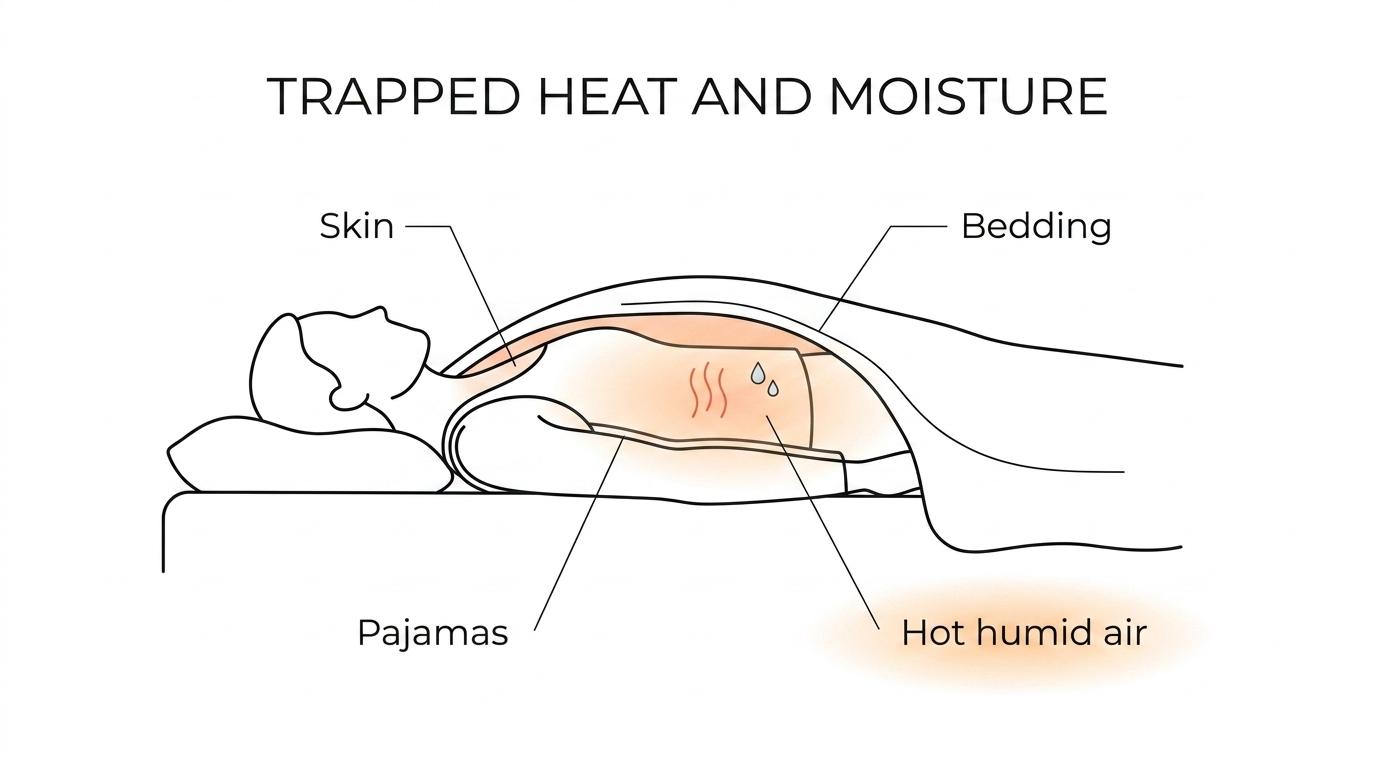
Night sweats can show up with menopause, perimenopause, medication side effects, hormonal changes, anxiety, illness, pregnancy, and a whole list of other triggers. In a lot of cases, the room itself is not the main problem. Your body heats up, sweat gets trapped, and that moisture sits between your skin, your pajamas, and your bedding.
Once that happens, bad pajamas make everything worse. Fabric that holds moisture too long gets heavy and clingy. Fabric that traps heat makes you feel hotter before you even sweat. Tight pajamas reduce airflow, so you feel every bit of dampness more intensely. Then you throw off the covers, cool down too fast, and wake up cold.
This is also why sleep experts commonly recommend a bedroom temperature between 60°F and 67°F, or 15.5°C to 19.5°C, for better sleep. Cooler air helps with temperature regulation as your body does what it already wants to do at night, which is drop core temperature. If your pajamas fight that process, you lose.
There is no one perfect fabric for every hot sleeper. Heavy sweating, light sweating, sensitive skin, and room temperature all change what feels best. Still, a few fabric categories keep showing up as the strongest options.
Lightweight cotton is still a good pick, if you choose it carefully. A thin, airy cotton weave can feel great because it breathes well and does not feel slick or synthetic. The catch is that cotton absorbs moisture and can stay damp. So if your night sweats are heavy, cotton may feel good at bedtime and soggy by the middle of the night.
Bamboo viscose, modal, and lyocell fabrics often feel cooler to the touch and softer than cotton. Many people love them because they drape nicely and feel smooth, not stiff. They can manage moisture reasonably well, but quality varies a lot. Some blends feel airy and dry fast enough, while others hold onto moisture longer than you would expect, especially if the knit is thick.
Linen deserves more attention than it gets. It is one of the best natural fabrics for airflow and quick drying, and it tends to release heat well. The downside is texture. Some people love that crisp, dry feel. Others hate it in sleepwear and prefer linen only in sheets.
Silk sounds like the luxury answer, and sometimes it is comfortable for mild heat issues. But for true night sweats, silk can be hit or miss. It is light and temperature responsive, but when you sweat hard it can show damp spots and feel wet against the skin. It also asks for gentler washing, which is not ideal if you need to wash pajamas often.
Performance synthetics can work very well, especially if your main problem is heavy sweat rather than sensitive skin. Good synthetic sleepwear pulls moisture away from the body fast and dries quickly. Bargain synthetic sleepwear is another story. It can trap heat, hold odor, and feel clammy after a few hours. That means the fabric itself matters less than the quality of the knit and how open it is.
Merino wool surprises a lot of people here. In very lightweight versions, it can be excellent at managing moisture and resisting odor. It is not the first thing most people reach for in summer, and that makes sense, but if your nights swing from hot to cold, very light merino can be better than people expect.
After testing a lot of fabrics over the years, this is the short version I give people when they want the simplest starting point.
One detail matters more than shoppers think, weave and fabric weight. A lightweight, open fabric nearly always beats a dense, silky, heavy one, even when both are made from the same fiber. That means a crisp, lighter cotton usually sleeps cooler than heavy cotton jersey. The same goes for bamboo, modal, and synthetic knits.
A lot of pajamas feel cool when you first put them on. That is not the real test. The real test is what they feel like after twenty minutes of sweating under a sheet and blanket.
You want three things at once. The fabric should let air move. It should move moisture away from your skin. It should dry fast enough that you do not stay wrapped in damp cloth. Miss one of those, and you still wake up uncomfortable.
That is why labels like cooling, moisture-wicking, and breathable are not enough on their own, and why incorporating effective cooling technology into fabric design is essential. Some fabrics wick well but do not breathe well. Some breathe well but stay wet too long. Some feel cool at first touch, then trap heat once the fabric gets damp.
If you are shopping in person, do a simple face test. Hold the fabric near your mouth and breathe through it. If air barely moves, it probably will not feel great in bed either.
Fit matters almost as much as fabric. Tight pajamas hold moisture close to the body, affect temperature regulation, and reduce airflow. Very oversized pajamas can twist, bunch, and wake you up. The sweet spot is relaxed, not sloppy.
Short sleeves, tank styles, capri pants, shorts, and sleep dresses all work well because they let heat escape. Button front tops are especially useful during hot flashes or sudden heat surges because you can vent fast without fully changing clothes.
Waistbands matter too. Anything tight around the waist, underbust, thighs, or ankles can feel much worse once you start sweating. Soft elastic, wider waistbands, and smoother seams are worth paying attention to. Tags can become weirdly annoying when your skin is damp, so tagless styles or easy to remove tags are a plus.
If I had to boil the fit advice down to a few practical cues, it would look like this.
A good pair of pajamas should disappear once you are in bed. If you are constantly aware of cling, pressure, or bunching, that set is probably not your best one for night sweats.
A lot of people hear layering and assume it means wearing more clothing. Not quite. Smart layering means building in options, so you can adjust quickly without turning your whole night into a project.
If your night sweats come in waves, a very light base layer can help. Some people do well with a thin moisture-wicking camisole or tee under a looser top. Others find any extra layer is too much. This is personal, but if you try layering, keep it light and purposeful.
The bed layers matter just as much. A lightweight sheet plus one easy blanket nearly always works better than a thick comforter that you keep throwing off and pulling back up. If you tend to wake up soaked, keep a spare top or full pajama set within reach. Changing into dry clothing can calm your body down faster than lying there hoping the wet fabric will somehow stop bothering you.
One often missed point, your sheet choice can either help your pajamas do their job or cancel it out. If you use a bed fan, a tighter weave sheet is usually best because it helps the air travel across your body and carry away heat. That surprises some people, but in practice it helps the moving air skim along the body instead of getting lost too quickly.
Pajamas can only do so much if the sleep environment keeps trapping heat. Sleep experts commonly recommend keeping the bedroom between 60°F and 67°F for better sleep, and that advice matters even more if you deal with overheating or night sweats.
Here is the part many people find useful, when you add targeted airflow in bed, many can raise the thermostat by about 5°F and still feel cool enough to sleep more restfully. That can cut air conditioning use without leaving you sweaty. So if you normally have to turn the house into a refrigerator to sleep, smarter bed cooling can change the equation.
And this is where it helps to be very clear, neither a BedJet nor a bed fan cools the air. They only use the cooler air already in the room. A BedJet does not cool the air. A bed fan does not cool the air either. What they do is move that room air through your bed space, where the trapped heat and humidity actually build up.
That sounds simple, but it is exactly why these systems can help more than changing pajamas alone.
If you have already bought breathable pajamas and still wake up damp, the missing piece may be airflow under the covers. A bed fan addresses the hot, humid pocket around your body that pajamas cannot fix on their own.
The bFan bed fan from Bedfan.com is one option worth a look if your main goal is moving trapped heat away from your body at night. It sits at the foot of the bed and pushes room air between your sheets, where night sweats actually become miserable. Pairing a bed fan with good pajamas and incorporating modern cooling technology is often more effective than obsessing over fabric alone.
The bFan offers timer controls, which can be handy if you want stronger airflow while you fall asleep, then less later on. It is also quiet enough for many sleepers at around 28db to 32db at normal operating speed, and it uses only about 18 watts on average, so it is not a power hog. If your air conditioner is doing the heavy lifting for the whole house, that matters.
It is also useful to remember the history here. The original bFan came to market several years before BedJet was even thought of, so this category did not start with the newer marketing splash. And on price, the comparison is not subtle. One BedJet is more than twice the price of a single bed fan. If you want a dual zone setup for partners, the dual zone BedJet setup costs more than twice the price of two bed fans. Two bed fans can give you dual zone microclimate control at a fraction of that cost.
That matters because many couples do not need fancy complexity. They just need one side cool, the other side less cool, and the ability to sleep without fighting over the thermostat. The bFan approach handles that with two fans, one for each sleeper, rather than one big expensive system.
The best setup depends on what kind of sweating you deal with. Someone with mild warmth and light sweating often needs a different solution than someone waking up drenched from menopause or medication side effects.
Here is a simple way to think about it.
If your sweating is tied to menopause, perimenopause, or medication changes, consistency usually matters more than chasing miracle fabrics. Good pajamas, lighter bedding, and steady airflow often beat expensive trial and error shopping.
The wrong sleepwear choices are often small things that stack up.
People buy thick jersey because it feels soft. They choose silky sateen because it feels cool in the hand. They wear snug leggings or fitted sleep tops because they look neat. Then they wonder why they wake up damp and annoyed. In bed, softness at first touch does not always mean comfort at 3 a.m.
Watch out for these common mistakes.
There is also a laundry issue people miss. Fabric softeners and residue can make moisture handling worse over time. If you rely on moisture moving pajamas, wash them regularly with a mild detergent and skip the extra coating products.
If you are replacing pajamas right now, keep it simple. You do not need ten fabric comparisons and a spreadsheet. You need one or two solid sets that match how you actually sleep.
Start with a relaxed cut. Then choose the fabric based on the amount you sweat. Mild sweaters often do well with light cotton, lyocell, or bamboo viscose. Heavy sweaters may do better with moisture-wicking performance sleepwear or very airy linen. If your nights swing from hot to chilly, light merino or a very light two layer setup can make sense.
Then fix the bed, not just the clothes. Use lighter covers. Keep the room in the recommended 60°F to 67°F range when you can. If you want to raise the thermostat and still stay cool, adding a bed fan can let many people bump the room temperature by about 5°F while still cooling the body enough for more restful sleep. That can mean better sleep and lower air conditioning costs at the same time.
A practical first buy looks like this.
If your current setup already includes decent pajamas and you are still waking sweaty, I would stop chasing fabric labels and look at airflow next. That is often where the real bottleneck is.
The bFan sits at the foot of your bed and sends a quiet stream of air under your sheets. Direct airflow helps stop sweat before it starts, and one bFan costs less than half the price of one BedJet, making it the less expensive alternative. Shop the bFan at bedfans-usa.com