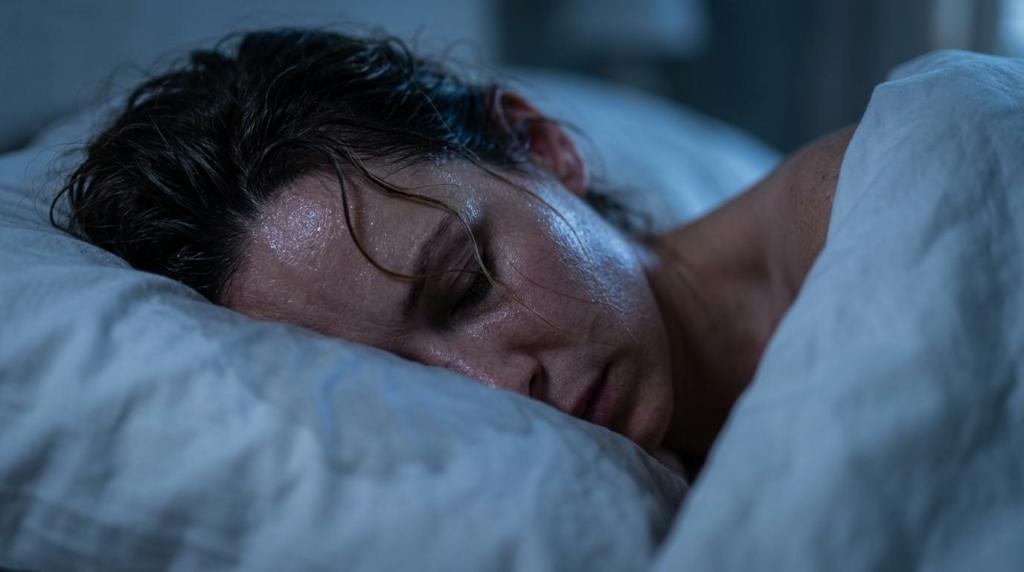
Estrogen, progesterone, and cortisol are night sweats hormones; their imbalance can disrupt temperature, causing discomfort during sleep.
If you wake up hot, clammy, and irritated at 2 a.m., it can feel random. A lot of the time, it is not random at all. Your hormones are part of the story, and sometimes they are the biggest part. In many cases, especially for women, a hormonal imbalance can trigger these sleep disturbances, making it harder for the body to manage heat regulation.
The short version is this, estrogen usually helps your body let heat go, progesterone tends to push body temperature up, and cortisol can stir the pot when stress, anxiety, and poor sleep are already in the mix. When those signals shift, especially during the menstrual cycle, pregnancy, perimenopause, or menopause, your sleeping body can suddenly feel too warm, even if the room does not seem that hot. These are classic examples of night sweats hormones estrogen progesterone cortisol at work.
That matters because sleep works best when your core body temperature drops a bit at night. Sleep experts commonly recommend a bedroom temperature between 60°F and 67°F, 15.5°C to 19.5°C, for better sleep. If your hormones are making that natural cooldown harder, you are much more likely to wake sweaty, toss off the covers, and then spend the next hour trying to settle down again.
Before you fall asleep, your body starts trying to lose heat through proper heat regulation. Blood vessels near the skin open up a bit, your hands and feet may warm, and your core temperature starts to drift down. That drop is one of the signals that helps sleep happen in the first place, preventing sleep disturbances.
During non REM sleep, your body is still fairly good at managing temperature. It can lose heat and respond to warmth in a pretty organized way. During REM sleep, that control gets looser, which is one reason temperature swings can feel more disruptive later in the night.
When hormones are stable, this system usually works in the background without much drama. When hormones are swinging (or when there is a hormonal imbalance), the system gets touchy. A small rise in body heat, a warm comforter, a glass of wine, or stress at bedtime can suddenly be enough to trigger sweating and wake you up, leaving many women grappling with these unpredictable sleep disturbances.
After all, you are not trying to sleep in a lab. You are trying to sleep in real sheets, in a real house, with real stress, real anxiety, and real body changes.
A simple way to think about it is this.
Estrogen is usually the main hormone people should think about first when night sweats show up. It helps regulate the hypothalamus, the part of the brain that acts a lot like a thermostat. When estrogen levels are steady and adequate, your body usually handles heat changes with more flexibility, reducing the risk of sleep disturbances.
When estrogen drops, that comfortable temperature window gets smaller. Your brain becomes more sensitive to tiny heat changes, so a small rise in core temperature can trigger a much bigger response, flushing, sweating, and a sudden feeling that the room is unbearably warm. This is particularly significant for women, who during perimenopause and menopause, not only face low estrogen but also erratic hormone levels that contribute to overall hormonal imbalance.
That is why perimenopause and menopause are so often tied to night sweats. It is not just that estrogen is low. It is also that estrogen can be erratic on the way down. One night you are fine, the next night you are throwing off the covers and changing the pillowcase.
You can see estrogen related temperature changes in other settings, too. People taking medications that block estrogen can develop hot flashes and night sweats. Some people notice sleep gets worse in the days when estrogen dips sharply. The pattern is not identical for everyone, but the connection is real.
Lower estrogen also means your body may have a harder time shedding heat from under the covers. That is where bedding setup matters more than many people realize. If your body is trying to dump heat but your sheets and comforter are holding it in, you are working against your own sleep biology.
Progesterone tends to raise body temperature. You can see that most clearly after ovulation, during the luteal phase of the menstrual cycle. For many women, this is the stretch when they say, “Why am I suddenly sleeping hotter this week?”
That is not in your head. Progesterone can raise resting core body temperature by roughly .3°C to .7°C. That may sound small, but at night, small temperature changes matter a lot. Sleep is sensitive. A slight rise can be enough to make you uncomfortable, especially if the room is warm or the bedding is heavy.
It is also important to acknowledge that while estrogen and progesterone are often discussed with regards to women’s health, hormones like testosterone (which is typically associated with men) also play a role in overall metabolism and may influence energy levels, though their impact on sleep temperature is less direct. In some cases, an imbalance in testosterone (which can affect both men and women) may also contribute subtly to sleep disturbances.
This is also why some women feel warmer before their period. In the follicular phase, before ovulation, nights may feel easier and cooler. After ovulation, progesterone rises, and the whole system shifts upward a bit.
Progesterone is not usually the main reason menopausal night sweats happen. In menopause, the bigger issue is low estrogen and the brain becoming extra sensitive to heat. Still, progesterone has a real effect on nighttime temperature, and if you are trying to figure out why sleep quality changes across your cycle, it deserves a seat at the table.
It also helps explain why hormone patterns can feel confusing. One hormone may be pushing temperature up, another may be dropping, and your sleep environment may be helping or hurting at the same time.
Cortisol is your main stress hormone, and it runs on a daily rhythm. It is supposed to be low at night and higher toward morning. When sleep is solid, that rhythm tends to behave itself.
When stress is high, sleep is broken, or you wake frequently, cortisol can become part of a bad loop. You wake up, your body gets more alert, cortisol rises, and then it becomes even harder to settle back down. That does not mean cortisol is the main driver of classic hormone related night sweats; rather, night sweats hormones estrogen progesterone cortisol indicate the interplay of multiple hormones. Cortisol usually is not the main culprit.
Estrogen and progesterone have a more direct effect on temperature regulation. Cortisol is more of an amplifier. It can make you feel more reactive, more wired, and more likely to wake up fully when a heat surge happens.
If you have ever noticed that your sweats are worse during weeks when anxiety is high or in the midst of stressful events, perhaps compounded by a challenging exercise routine or when managing conditions like diabetes, this is part of why. Stress may not create the hormonal trigger, but it can make the nights feel rougher and the recovery slower.
That is also why a plan that only looks at hormones can miss part of the picture. Sometimes you need to cool the body and calm the nervous system at the same time.
Hormones do not affect sleep temperature the same way in every life stage. The pattern changes, and that pattern can give you useful clues.
If you track your symptoms, you may start seeing that your bad nights are not random at all. They may line up with ovulation, the premenstrual window, pregnancy changes, or the menopause transition, stresses that can be amplified in women by a hormonal imbalance.
Here is the broad pattern most people notice.
Pregnancy deserves its own note. Many pregnant women feel noticeably warmer at night, especially in the first trimester. Later in pregnancy, body size, circulation, room warmth, and bedding all become bigger factors too. Then after delivery, rapid hormone withdrawal (which might be compounded by factors such as changes in testosterone levels) can bring another round of temperature swings and sweating.
Perimenopause is often the trickiest phase because it is so uneven. You may have a week of decent sleep, then several miserable nights in a row, then a stretch where it settles again. That variability is one reason many women sometimes doubt themselves for months before realizing hormones are involved.
Not every night sweat is hormonal. That is worth saying clearly.
Hormones are common, especially if your symptoms line up with cycle changes, menopause timing, pregnancy, or hormone treatment. Still, infections, thyroid problems, certain cancers, low blood sugar, reflux, alcohol, sleep apnea, and a long list of medications can also cause sweating at night in women can play a role. If the sweating started after a new prescription or a dose change, that is worth bringing up with your clinician.
You should also pay attention to the pattern. A brief hot flush that wakes you, passes, and then leaves you chilled can fit a hormone related pattern. Drenching sweats with fever, persistent cough, swollen lymph nodes, weight loss, or daytime illness need medical attention.
And if you snore heavily, wake gasping, or feel exhausted despite enough hours in bed, sleep apnea can be part of the problem. People often do not connect apnea and sweating, but they can absolutely show up together.
You cannot force your hormones to behave overnight, but you can make the sleep environment work with your body instead of against it.
The first move is often the least glamorous one: room temperature. Sleep experts commonly recommend 60°F to 67°F, 15.5°C to 19.5°C, because the body wants that cooler range for sleep. If your room sits well above that, night sweats are usually harder to manage.
The second move is getting heat out from under the covers. This is where a bed fan can make a real difference. A bed fan does not cool the air, and neither does a BedJet. Both simply use the cooler air already in your room and move it through the bed so trapped body heat can escape. That sounds simple because it is simple, and simple often works, especially when exercise and proper lifestyle changes are in place to improve overall heat regulation.
For many people, using a bed fan means they can raise the room temperature by about 5°F and still cool the body enough for more restful sleep. That can matter if you are trying to sleep cool without blasting the whole house with air conditioning all night. It can also help lower AC costs, because you are cooling the person, not the whole home.
The sheet setup matters more than people expect. It is usually best to use sheets with a tighter weave so the air moves across your body and carries heat away instead of escaping too quickly. If the bedding is too open or too bulky, the cooling effect can get weaker.
A good bed fan setup also tends to be quieter than people fear. The bFan sound level is commonly around 28 dB to 32 dB at normal operating speed, which is soft enough for many sleepers, especially compared with the noise of central air cycling on and off. Timer controls help too, because some people only need extra cooling during the first part of the night, or during the hours when sweats usually hit.
If you want a direct product option, the bFan from bFan is worth a look for hormone related night sweats. It is designed to sit at the foot of the bed and move room air under the covers, discreetly and without a big complicated setup. The original bFan concept also came to market years before BedJet was even on the scene, which matters if you care about a product category with a longer track record.
These basics help too.
People often compare a bed fan with BedJet, so let’s keep that plain and practical.
Neither one cools the air. They both use the air already in your room. If the room is too hot, neither system can magically create cold air. That is why the bedroom temperature still matters, and why the 60°F to 67°F range remains a good target when you can manage it.
The big differences are cost, simplicity, and how you want to set up each side of the bed. One BedJet is more than twice the price of a single bed fan. The dual zone BedJet setup costs more than twice the price of two bed fans. If two people share a bed and both want their own airflow, two bed fans can create dual zone microclimate control at a fraction of that price, a particularly attractive option for couples where both partners (often women in hormone transition stages) experience sleep disturbances.
There is also the issue of everyday use. bFan units are straightforward, quiet at normal speeds, and include timer controls, which many sleepers like because overheating often comes in waves. Older bFan references often cite about 18 watts on average, and the newer bFan design is even more efficient on some settings, so the power use stays low compared with running colder whole home air conditioning all night.
If your main goal is relief from hormone related overheating, not extra bells and whistles, a bed fan is often the cleaner answer. For many hot sleepers, that is enough.
Cooling tools can help a lot, but they do not replace medical care when symptoms are strong, persistent, or tied to a bigger hormonal transition.
If menopause is driving the problem, estrogen therapy is still the most effective treatment for vasomotor symptoms, including night sweats. For women who still have a uterus, progesterone is often added to protect the uterine lining. That does not mean progesterone is the main anti-sweat treatment, it means the combination is used for safety and symptom control.
Some people cannot take hormone therapy, or simply do not want to. In that case, nonhormonal options can help. Certain SSRIs and SNRIs reduce hot flashes for some patients. Gabapentin can also help, especially when nighttime symptoms are the main complaint. A newer class of medicines that targets neurokinin pathways is another option in some cases.
The right treatment depends on your age, your medical history, when the symptoms started, whether your periods are still happening, your cancer risk, migraine history, blood clot history, and what else is going on with sleep.
If you are in perimenopause, it can be easy to second guess yourself because the symptoms come and go. That does not mean the problem is minor. Intermittent symptoms can still wreck sleep quality, mood, and daily function.
It is also worth saying that if hormones are not the whole story, treating only the hormones may leave you disappointed. Thyroid issues, medication side effects, anxiety, and sleep apnea can all pile on top of each other. Good care looks at the whole picture, and in some cases, even testosterone levels might be explored to improve overall hormonal balance.
A good appointment is often less about one perfect test and more about getting the pattern right.
Tell your clinician when the sweats started, what time of night they happen, whether they track with your cycle, whether you are waking soaked or just overheated, and what medications or supplements you take. If you have signs of menopause transition, that history may matter more than a single lab value.
Ask whether estrogen changes could explain the pattern. Ask whether progesterone shifts are likely contributing if symptoms change after ovulation or before your period. Ask whether cortisol and stress are making your sleep lighter and more reactive, even if they are not the root cause.
It is also smart to ask about thyroid testing, medication review, and screening for sleep apnea if the history fits. Night sweats are common, but they are not something you have to just grit your teeth and live with.
Hormones may trigger the heat, but bedding often determines how bad the night becomes.
If your body is trying to lose heat and the covers trap it, you wake up. If that trapped heat gets moved away from your body quickly, you have a better shot at staying asleep. That is why personal cooling works so well for some people, even when the hormonal driver is still there.
A bed fan does not treat estrogen loss, progesterone rise, or stress chemistry. What it can do is reduce the buildup of heat around your skin, lower the chance that a mild temperature rise turns into a full sleep interruption, and make the bed feel usable again.
For people dealing with menopause, perimenopause, PMS, PMDD, pregnancy warmth, medication related sweating, or stress amplified overheating, that kind of relief can be the difference between fragmented sleep and actual rest. A few women even report that an improved cooling strategy helps them overcome anxiety-related sleep disturbances while supporting overall heat regulation.
And yes, the room still matters. Sleep experts commonly recommend 60°F to 67°F, 15.5°C to 19.5°C, for better sleep, and many people using a bed fan can keep the room about 5°F warmer than they otherwise could while still cooling the body enough for better rest. That is one reason bed fans can help with comfort and energy savings at the same time.
If you want to read the research for yourself, these are solid places to start.
By integrating strategies that address both heat regulation and overall hormonal balance (including considerations such as exercise, managing diabetes, and even evaluating testosterone levels), women can work towards reducing sleep disturbances and achieving a better night’s sleep.
The bFan sits at the foot of your bed and sends a quiet stream of air under your sheets. Direct airflow helps stop sweat before it starts, and one bFan costs less than half the price of one BedJet, making it the less expensive alternative. Shop the bFan at bedfans-usa.com