Prozac night sweats can fade with time, but may linger after dose changes. Learn causes, timing, relief tips, and when to call a doctor.
Waking up drenched can be upsetting, especially when the timing lines up with starting Prozac or changing your dose. If that is happening to you, the short answer is yes, Prozac night sweats sometimes do go away. The harder part is that they do not always fade quickly, and they are not always caused by Prozac alone.
Prozac is the brand name for fluoxetine, a selective serotonin reuptake inhibitor (SSRI). Fluoxetine can cause sweating, and antidepressant-related sweating is common enough to affect whether people stay on treatment. One review found excessive sweating in about 22% of people taking antidepressants (PubMed).
That said, night sweats are a symptom, not a diagnosis. Mayo Clinic defines them as repeated episodes of heavy sweating during sleep that can soak nightclothes or bedding, and antidepressants are one of several possible causes (Mayo Clinic). So if Prozac night sweats started after a new prescription or dose increase, the medication is a reasonable suspect. If the sweating is severe, persistent, or comes with other symptoms, it still deserves a closer look.
Yes, they can. Some people notice that sweating settles down after the first few weeks as the body adjusts. Others keep having it unless the dose changes, the medication is switched, or they add practical cooling strategies at night.
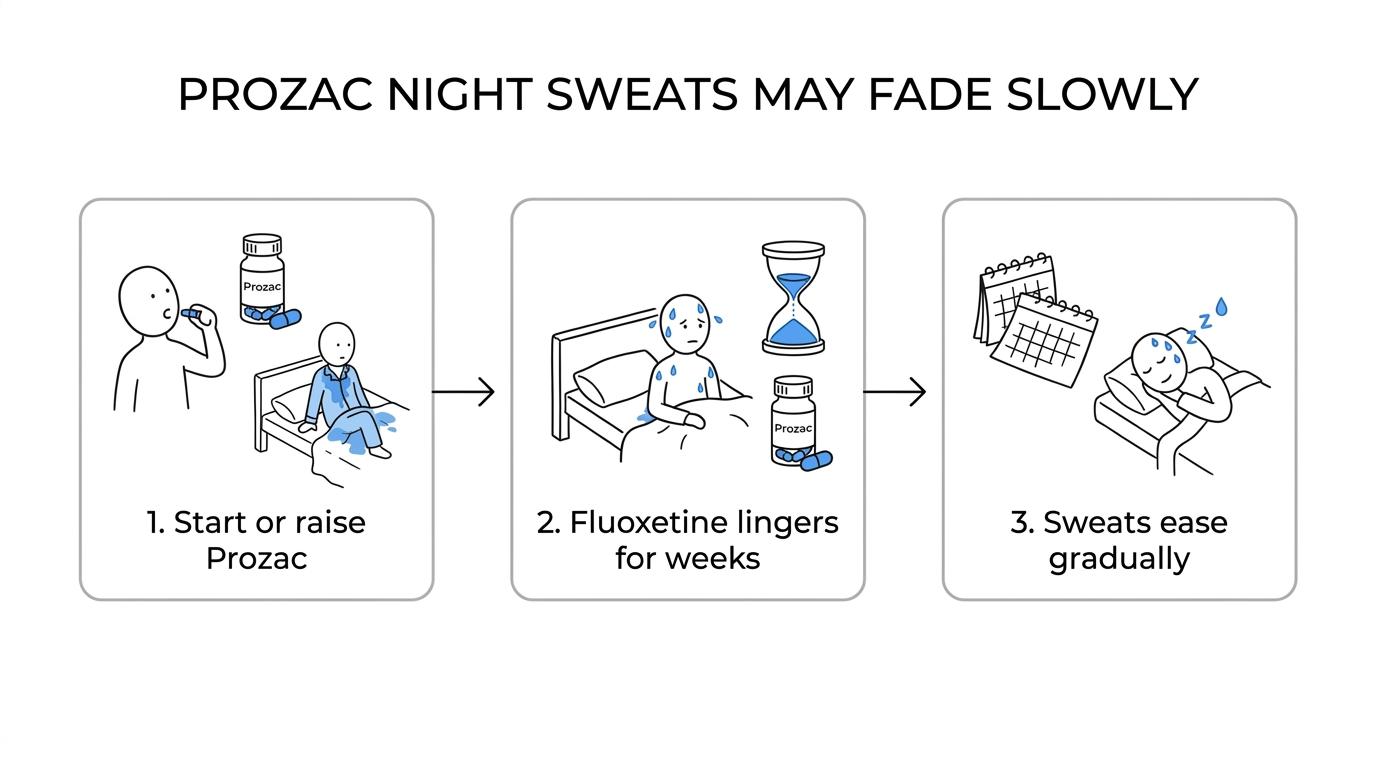
Fluoxetine has a long half-life, which matters here. In plain terms, it stays in the body longer than many other antidepressants. The U.S. Food and Drug Administration (FDA) label notes that dose changes may not be fully reflected in the bloodstream for several weeks. That means if your prescriber lowers your dose, you may not feel a big difference right away.
There is another wrinkle. Stopping fluoxetine suddenly can also cause sweating. MedlinePlus notes that fluoxetine is usually taken in the morning and that withdrawal symptoms from sudden discontinuation can include sweating (MedlinePlus). So if you are thinking about changing anything because you are miserable at night, it is smart to check with your prescriber first.
If Prozac is the main driver, these clues often show up together:
A very common pattern is this: the sweating begins during the first few weeks, or it ramps up after a dose increase. That fits with what many people report clinically, and it fits the drug’s long clearance time. Because fluoxetine lingers, side effects can linger too.
If your dose is reduced, improvement may be gradual rather than overnight. If your medication is changed, night sweats can still hang around for a bit while the drug level falls. This is one reason people get frustrated and assume nothing is working, when the body may simply need more time.
A common real-life scenario looks like this. Someone starts fluoxetine for anxiety, sleeps fine for the first week, then begins waking around 2 or 3 a.m. with a damp shirt and warm sheets. She lowers the thermostat, kicks off the blanket, and still wakes hot. After talking with her prescriber, she learns the medication may be part of the problem, but the change is not likely to vanish the same night a new plan begins.
Fluoxetine increases serotonin, which helps explain why it works for depression and anxiety. It can also affect thermoregulation, the body’s temperature-control system. When that system gets nudged off balance, some people sweat more during the day, at night, or both.
Nighttime can make the problem feel worse because bedding traps heat. Once body heat gets stuck under the covers, even mild sweating can turn into soaked pajamas and broken sleep. That trapped heat is a big reason people often feel better with airflow under the sheets, even if the room itself is not icy cold.
The timing of the dose may matter for some people too. MedlinePlus says fluoxetine is usually taken in the morning. If you take it later in the day, ask your prescriber whether timing could be part of the issue before changing it on your own.
This part matters because Prozac is not the only possible answer. Mayo Clinic lists many causes of night sweats, including menopause, infections, thyroid problems, some cancers, low blood sugar, and other medications. Sleep problems can contribute too, including obstructive sleep apnea (OSA).
If your sweating began before Prozac, if it is paired with new health symptoms, or if it keeps going long after medication changes, it is smart to think wider than fluoxetine alone.
Common possibilities include:
You may not be able to change the cause by bedtime, but you can often make the night more tolerable. Sleep experts often recommend a bedroom temperature around 60°F to 67°F. With a bed fan, many people can set the room a few degrees warmer and still sleep comfortably because the airflow goes under the covers instead of forcing you to chill the whole room.
It helps to know what a bed fan can and cannot do. A bed fan does not cool the air. It uses the cooler air already in the room and moves it through the bed so trapped heat can escape. Direct airflow helps stop sweat before it starts. That is why it can feel very different from pointing a fan across the room.
This is where a targeted option like the bFan can make sense without turning the bedroom into a refrigerator. It sits at the foot of the bed and directs under-sheet airflow between the sheets, where overheating usually builds. For someone dealing with Prozac night sweats, that under-sheet airflow can be more useful than just lowering the thermostat another notch. It is also efficient. Traditional bed fan systems use very little electricity, and the bFan itself uses about 18 watts on average and never more than 24 watts.
Bedding choices matter too. When using a bed fan, tightly woven sheets with a higher thread count usually work better because they help the airflow travel across your body and carry away heat. Very loose or gauzy fabrics can let the air escape too quickly.
A few changes often help right away:
Some people get enough relief from a few practical changes. Others need their clinician to rethink the medication plan. If the sweating is affecting your sleep, mood, or willingness to keep taking Prozac, bring that up clearly. Medication adherence drops when side effects wear people down, and sleep loss can make anxiety or depression feel worse.
A useful message to send your prescriber is simple: when the sweating started, whether a dose change happened first, how often it wakes you up, and whether you have fever, weight loss, cough, palpitations, or other new symptoms. That gives them a faster read on whether this sounds like a side effect, something else, or both.
Sometimes the answer is patience. Sometimes it is a lower dose, a timing change, or a different medication. The key is not assuming you have to just live with soaked sheets night after night.
If you want more help sorting out medication-related sweating and cooling strategies, these are good next reads on the site:
If the sweating is mild and clearly started after Prozac, you may be able to watch it for a short period while using cooling steps at home. If it is soaking the bed, waking you repeatedly, or making you want to stop the medication, it is time to check in.
Mayo Clinic points out that night sweats deserve prompt medical attention when they come with other concerning symptoms. Think fever, unexplained weight loss, pain in one area, cough, or diarrhea. Those signs do not mean something serious is definitely going on, but they do mean Prozac should not be the only thing you blame.
Seek urgent care faster if you have chest pain, trouble breathing, fainting, signs of severe dehydration, or you feel acutely ill.
If Prozac night sweats are disrupting your sleep right now, start a symptom log, contact your prescriber, and make your sleep setup cooler tonight. If you want targeted airflow under the sheets without dropping the whole-house thermostat, take a look at the bFan Bed Fan and the related night sweats guides above.
Disclaimer: This article is for general education only and is not medical advice, diagnosis, or treatment. Do not stop, start, or change fluoxetine or any other prescription medication without guidance from a licensed clinician. Persistent, severe, or unexplained night sweats should be medically evaluated.
The bFan sits at the foot of your bed and sends a quiet stream of air under your sheets. Direct airflow helps stop sweat before it starts, and one bFan costs less than half the price of one BedJet, making it the less expensive alternative. Shop the bFan at bedfans-usa.com