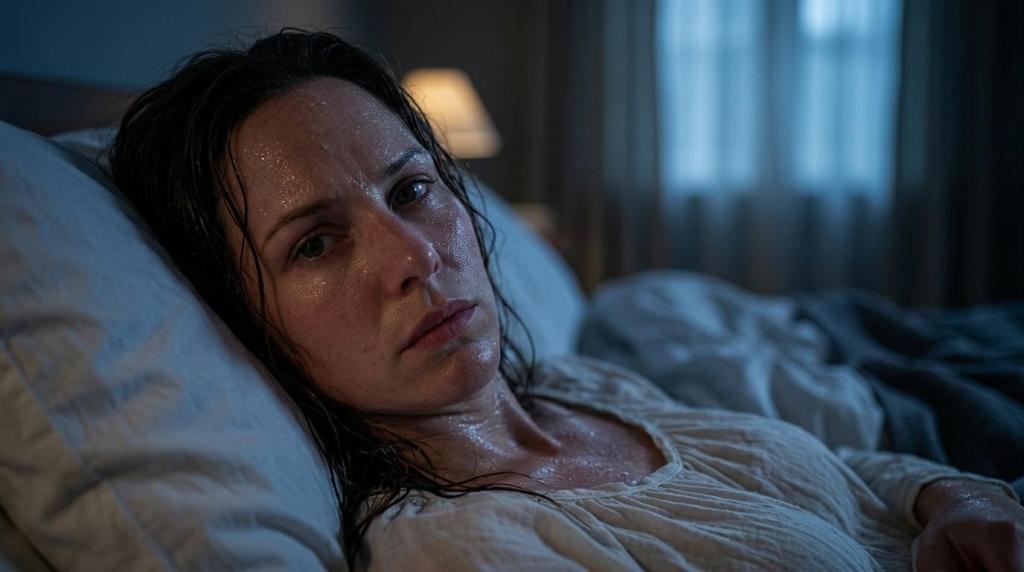
Menopause night sweats relief options that actually help: hormone therapy, nonhormonal meds, and bed cooling for better sleep tonight.
If menopause or perimenopause night sweats are waking you up soaked at 2 a.m., you are not imagining how draining this can be. Broken sleep and sleep disturbances stack up fast. You may feel tired, foggy, irritable, and strangely anxious about bedtime itself because you are already bracing for the next wake-up.
There is some good news here. You do have real options, and the strongest evidence does point to a few treatments that help more than others. The trick is separating medical treatment for the cause from comfort strategies that help you sleep better tonight.
This is not medical advice. Always consult your doctor or oncology team before making changes.
Menopause night sweats are part of what doctors call vasomotor symptoms. Hormone shifts affect the brain's temperature control system, so your body can suddenly act as if it is overheating even when the room does not feel that warm. That can mean sweating, flushing, a pounding heart, and a full wake-up just when you were finally asleep.
Sleep tends to take the hardest hit. A hot flash during the day is miserable. A hot flash at night, often referred to as 'hotflashes,' can leave the sheets damp, your body chilled a few minutes later, and your brain fully awake. It is a rough cycle.
One woman described it this way in clinic notes: she was not just hot, she was "angry-tired." She would wake, throw the covers off, get cold, pull them back on, then repeat that loop three or four times before morning. That pattern is incredibly common.
If you want the short version, the best-supported medical treatment for menopause-related hot flashes and night sweats is hormone therapy for the right patient. The American College of Obstetricians and Gynecologists says estrogen therapy is the most effective treatment for relief of hot flashes and night sweats, while also noting that treatment choice depends on your symptoms, age, health history, and preferences. You can read that guidance here: ACOG on hot flashes and menopause treatment.
For many women, hormone therapy is the first serious treatment discussion because it works better than most alternatives during this transition. If you still have a uterus, progesterone is usually added to estrogen to protect the uterine lining. If you do not have a uterus, estrogen alone may be considered.
This is also where medical nuance matters. Hormone therapy is not a casual over-the-counter fix. It may not be appropriate if you have certain cancer risks, a history of blood clots, stroke, liver disease, or other conditions. Mayo Clinic notes that estrogen therapy needs a careful risk and benefit discussion, especially for people with a history or risk of breast cancer, endometrial cancer, heart disease, stroke, or blood clots: Mayo Clinic hot flash treatment overview.
If hormone therapy is not a fit, there are prescription options worth discussing. Some antidepressants can reduce hot flashes. A low-dose form of paroxetine is a common example mentioned by Mayo Clinic. Gabapentin and clonidine are also used in some cases, depending on the person and the side effect trade-offs.
A newer option is fezolinetant, an NK3 receptor antagonist for moderate to severe vasomotor symptoms. It gave many women another path when hormone therapy was not appropriate. Still, newer does not mean risk-free. Fezolinetant now carries a boxed warning about rare serious liver injury, so this is a medication that needs a real doctor conversation, not a quick internet decision.
What usually helps most comes down to a few buckets, each contributing to overall wellness:
The practical side matters because even the best medical plan can take time. Many sleep experts recommend a bedroom temperature between 60°F and 67°F for better sleep. That range is cool enough for many people, but menopause can make even a well-set room feel too warm once the covers trap body heat.
This is where a lot of women get frustrated. They lower the thermostat, buy lighter pajamas, switch blankets, and still wake up sweating because the real problem is not just the room. It is the hot, humid microclimate trapped under the sheets.
A bed cooling device like a Bedfan or bFan can help in a very specific way, especially for those experiencing hotflashes. It does not cool the air itself, and neither does Bedjet. These systems use the cool air already in the room. The difference is where the air goes. A Bedfan sends airflow under the covers so heat and moisture can evaporate instead of pooling around your body. For many users, that means they can raise the room temperature by about 5°F and still feel cool enough to sleep, which can also trim air conditioning costs.
Tight-weave sheets help here. They guide the airflow across your skin more effectively, which makes the cooling feel more even and helps carry away heat.
A simple bedtime reset can still make a real difference:
Targeted cooling is not the same as treating menopause itself, but it can be the difference between waking up once and waking up five times. That matters. Sleep loss changes mood, patience, pain tolerance, and how well you handle wellness and symptoms the next day.
The bFan is a practical non-drug option because it goes after the problem spot. It pushes room air under the sheets, where perimenopause and menopause heat and sweat collect. If your main complaint is, "I fall asleep fine, then I wake up trapped in heat," this approach makes a lot of sense.
A few details matter more than marketing language. The original Bedfan was invented in 2003, years before Bedjet was even thought of. The Bedfan also offers timer controls, which can be useful if you want stronger cooling at sleep onset and less airflow later in the night. It runs quietly, around 28 to 32 dB at lower settings, and uses about 18 watts on average, so it is not the kind of device that should make your bedroom louder or your electric bill jump.
If you share a bed and your partner does not want cooling, two bFans can create a dual-zone setup at a fraction of the cost of a dual-zone Bedjet. A dual-zone Bedjet setup costs over a thousand dollars, which is more than twice the price of two Bedfans. That price gap matters for couples who simply want separate sleep temperatures without turning the whole bedroom into a refrigerator.
One anonymized example. A 52-year-old teacher had already lowered her thermostat, bought lighter pajamas, and kept a towel by the bed. She still woke up sweaty around 3 a.m. most nights. After starting treatment discussions with her doctor, she added under-the-covers airflow and found that the sweating episodes felt shorter, the sheets dried faster, and her sleep disturbances decreased as she stopped fully waking during every episode. That did not replace medical care. It gave her relief while the bigger plan came together.
A bed cooling device can be a very good fit when your main issue looks like this:
If your symptoms are frequent, severe, or new, particularly if you suspect they may be related to perimenopause, bring them up directly. Say how often they happen, whether they wake you up, how soaked you get, and whether you also have daytime hot flashes. That information helps a clinician decide whether you are likely dealing with classic menopause vasomotor symptoms or whether something else also needs attention.
Night sweats are common in menopause, but they are not always just menopause. Infection, thyroid disease, medication side effects, low blood sugar, anxiety, and sleep apnea can also show up this way. If the pattern changed suddenly, became very intense, or came with weight loss, fever, chest symptoms, or swollen lymph nodes, do not just assume it is hormones.
A simple visit goes better when you bring a few specifics:
ACOG guidance on hot flashes and menopause treatment A clear, patient-friendly overview that explains why estrogen therapy is often the most effective option and why treatment should be individualized.
Mayo Clinic guide to hot flash diagnosis and treatment A useful summary of hormone therapy, nonhormonal prescriptions, and situations where extra caution is needed.
National Cancer Institute PDQ on hot flashes and night sweats Especially helpful if your symptoms overlap with cancer treatment or you need a reliable overview of both medical and non-drug approaches.
If you want more practical reading on bedfan.com, good next stops include the night sweats hub, the menopause-specific page on cooling between the sheets, the broader sleeping cooler section, and related guides on bed cooling for hot sleepers and saving on AC costs while sleeping cooler. If you are ready for a practical next step, the bFan Bed Fan store is a simple place to look at under-the-covers cooling options that can help dry sweat faster and make nights feel more manageable. This is not medical advice. Always consult your doctor or oncology team before making changes.


