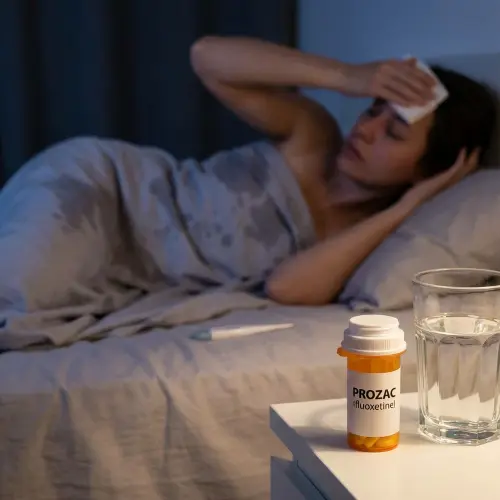
Fluoxetine, or Prozac, can cause night sweats, a side effect disrupting sleep. Solutions like the bFan may help manage fluoxetine Prozac night sweats.
Fluoxetine, best known by the brand name Prozac, is a selective serotonin reuptake inhibitor (SSRI) that has been prescribed in the United States since 1987. It is used for depression, obsessive compulsive disorder (OCD), bulimia nervosa, and panic disorder, and it is sometimes prescribed for premenstrual dysphoric disorder (PMDD). For many people it works well, but it can come with side effects, and one of the most frustrating is sweating at night. Waking up with damp sheets, a wet pillow, or a soaked shirt can wear down sleep quality and make it harder to stay with a medication that is otherwise helping.
This article explains why fluoxetine (Prozac) night sweats happen, how common they are, why fluoxetine behaves differently from other SSRIs because of its very long half-life, what your prescriber may suggest, and what you can change in the bedroom tonight. We will also explain where a bed fan like the bFan from Bedfan fits in, and where it does not. This is general information, not medical advice.
Fluoxetine increases the amount of serotonin available in the brain by slowing its reuptake into nerve cells. According to MedlinePlus, it is used to treat depression, OCD, some eating disorders, and panic attacks, and it is also used to relieve symptoms of PMDD. It is also used along with olanzapine for certain types of depression, including depression in bipolar I disorder.
What makes fluoxetine unusual among SSRIs is how long it stays in the body. The Prozac prescribing information lists an elimination half-life of 1 to 3 days after a single dose and 4 to 6 days with regular use, while its active metabolite, norfluoxetine, has a half-life of 4 to 16 days. That slow clearance matters a lot when you are trying to understand when sweating starts, when it changes, and how long it takes to settle after a dose adjustment.
Side effects reported with fluoxetine include:
Most of these are mild, and some ease as the body adjusts. Sweating is one that can linger for some people, which is why it deserves its own plan rather than simply waiting it out.
Night sweats are episodes of heavy sweating during sleep that dampen or soak sleepwear and bedding. They are different from simply feeling warm under a heavy comforter, although a hot bed microclimate can make medication related sweating feel much worse. Night sweats are also different from hot flashes, which are sudden waves of heat that can happen day or night.
Night sweats can:
That last point is important. If you are on fluoxetine and sweating at night, it is easy to blame the medication, but it is still worth ruling out other causes with your clinician. Our guide to medication-related night sweats covers other common drug triggers too.
Sweating is a recognized side effect of fluoxetine. In the pooled placebo controlled trials summarized in the Prozac label (depression, OCD, bulimia, and panic disorder), sweating was reported by about 7% of people taking fluoxetine compared with about 3% of people taking placebo. Those trials did not separate daytime sweating from night sweats, so the exact rate of night sweats specifically is not known. Increased sweating is also reported with other SSRIs, SNRIs, and tricyclic antidepressants, as a review of antidepressant-induced sweating describes.
The exact mechanism is not fully understood, but researchers point to a few likely contributors:
Night sweats on fluoxetine may be more likely with:
Sweating can start within the first few weeks of treatment or after a dose increase. Because fluoxetine and norfluoxetine build up slowly, the label notes that steady state is reached only after several weeks. In practice this means sweating may not peak right away, and it may take weeks rather than days to settle after a dose change. The same long half-life means that if you and your prescriber decide to lower the dose or stop fluoxetine, the sweating may fade gradually rather than overnight. For some people it eases as the body adapts. For others it continues for as long as they take the medication.
People with fluoxetine night sweats often also notice daytime tiredness, feeling flushed, or vivid dreams. Sweating together with agitation, confusion, a racing heartbeat, fever, muscle twitching, or shaking is different. Those can be signs of serotonin syndrome, which the label describes as potentially life threatening, especially after adding or increasing another serotonergic drug. Get urgent medical care if that combination appears.
Night sweats while taking fluoxetine are not always caused by fluoxetine. Other possibilities your clinician may consider include:
Sweats that come with fever, unexplained weight loss, swollen lymph nodes, or a new cough deserve a prompt medical visit regardless of medication. The Mayo Clinic night sweats overview lists many of these causes.
Do not stop or change your fluoxetine dose on your own. The Prozac label and NHS fluoxetine guidance both advise speaking with your doctor before stopping, because stopping too quickly can cause symptoms such as anxiety, irritability, dizziness, headache, and sweating, and the condition being treated can return. Fluoxetine's long half-life tends to make it more forgiving than shorter acting SSRIs when the dose changes, but the decision still belongs with your prescriber.
The antidepressant sweating review suggests a patient specific approach. Options a prescriber may weigh include:
Because fluoxetine leaves the body so slowly, the effect of any change may take several weeks to show. Changing the time of day you take it may make less difference than it can with shorter acting medications, though it is still reasonable to ask.
Keep a simple log of how often you wake up sweating, how severe it is, and any changes in dose or other medications. Bring it to follow-up visits. It makes it much easier for your prescriber to tell whether things are improving.
The following are illustrative examples based on common patterns, not real patient cases.
Someone starts fluoxetine for depression and notices damp sheets after the second week. They lighten the bedding and keep the room comfortable, and over the next month or two the sweating becomes occasional. No medication change is needed.
Someone's dose is raised for OCD and the sweats become nightly and drenching. Their prescriber reviews other causes, then lowers the dose slightly. Because fluoxetine clears slowly, the sweating improves gradually over several weeks rather than right away.
A woman in perimenopause who takes fluoxetine has both hot flashes and night sweats. Her clinician helps her sort out which symptoms are hormonal and which may be medication related, and she adds a bed fan and tightly woven sheets to make nights more comfortable while they adjust her plan.
Contact your healthcare provider if:
Night sweats are a real and documented side effect of fluoxetine (Prozac), reported by roughly 7% of people in the drug's pooled clinical trials. Fluoxetine's very long half-life shapes the experience: sweating may build over weeks, and it may take weeks to settle after a dose change. Many people can manage it with a combination of patience, a conversation with their prescriber about dose or alternatives, and practical bedroom changes. Any severe sweating, or sweating with fever, weight loss, or signs of serotonin syndrome, needs medical attention.
While you work with your prescriber, the bed itself is the easiest place to start. Tightly woven, higher thread count sheets and a steady cooling breeze of room air under the covers from a Bedfan can make nights more comfortable without changing your treatment plan.
The bFan sits at the foot of your bed and sends a quiet stream of air under your sheets. Direct airflow helps stop sweat before it starts, and one bFan costs less than half the price of one BedJet, making it the less expensive alternative. Shop the bFan at bedfans-usa.com
Yes, it can. Sweating is a listed side effect of fluoxetine. In the pooled placebo controlled trials described in the Prozac prescribing information, about 7% of people taking fluoxetine reported sweating compared with about 3% on placebo. Those numbers include daytime sweating, so the exact rate of night sweats specifically is not known. Night sweats can also come from other causes, such as menopause, infection, thyroid problems, or other medications, so it is worth reviewing them with your clinician rather than assuming fluoxetine is the only reason you are waking up damp.
It varies from person to person. For some people sweating eases within the first few weeks or months as the body adjusts, while for others it continues for as long as they take the medication. Fluoxetine and its active metabolite, norfluoxetine, stay in the body much longer than most antidepressants, with half-lives measured in days to more than two weeks. That means changes in sweating after a dose increase, a dose reduction, or stopping the drug often appear gradually over several weeks. Keeping a short symptom log helps you and your prescriber see the trend clearly.
There is no clear evidence that fluoxetine causes more or less sweating than other SSRIs overall. Increased sweating has been reported across SSRIs, SNRIs such as venlafaxine, and tricyclic antidepressants, and individual responses differ a great deal. Some people sweat on one medication but not another. What does set fluoxetine apart is its long half-life, which affects how quickly sweating changes after a dose adjustment. If sweating is a major problem, your prescriber can compare options based on your full history, other medications, and how well fluoxetine is working for you.
No, not on your own. Talk with your prescriber before stopping or changing your dose. Stopping an antidepressant can bring back the symptoms it was treating, and stopping too quickly can cause discontinuation symptoms such as dizziness, irritability, anxiety, headache, and sweating. Fluoxetine's long half-life tends to make these symptoms less common or milder than with shorter acting SSRIs, but they can still happen. Your prescriber may suggest waiting a few weeks, lowering the dose, switching medications, or, in persistent cases, adding a medication aimed at the sweating itself.
Possibly, and that surprises many people. The NHS notes that fluoxetine is sometimes used for menopause symptoms, and the National Cancer Institute lists fluoxetine among medications studied for hot flashes in a clinical trial of women with a history of breast cancer, where it gave a modest reduction. At the same time, sweating is a known side effect. Both can be true because the drug affects temperature regulation differently from person to person. If you take tamoxifen, ask your oncology team before using fluoxetine, since it can interfere with how tamoxifen is processed.
Focus on the bed microclimate, which is where heat and humidity build up. Use breathable sleepwear and a lighter comforter, keep the bedroom comfortable, and limit alcohol and spicy food close to bedtime. Bedfans USA recommends tightly woven, higher thread count sheets, since a tighter weave keeps airflow under the covers. A bFan bed fan sends a quiet cooling breeze of room air under the sheets so trapped warmth can move out. It needs about 6.75 inches of clearance under the bed, and if your bed sits lower, the base can be turned around to sit in front of the bed instead.
Yes. The bFan is HSA and FSA eligible, and Bedfans USA offers a simple process to get a letter of medical necessity so you can pay with your HSA or FSA card in one place. You can find the details on the Bedfans USA HSA and FSA page. The bFan is not a treatment for the cause of night sweats, so it works best as a comfort measure alongside your prescriber's advice. It moves room air under the covers rather than cooling it, and it lists at less than half the price of a BedJet.
See your clinician if night sweats are severe, getting worse, or not improving after several weeks, or if they make you want to stop your medication. Seek prompt care if sweats come with fever, unexplained weight loss, swollen lymph nodes, or a persistent cough, since those can point to a cause other than fluoxetine. Get urgent help for sweating with agitation, confusion, a racing heartbeat, fever, or muscle twitching, which can signal serotonin syndrome. Also reach out right away if you notice new or worsening depression or any thoughts of self harm.
For more on this topic at bedfan.com, read Do SSRI Night Sweats Go Away? and Which Medications Can Cause Night Sweats?
This article is for informational purposes only and does not substitute for professional medical advice. Always consult a healthcare provider for diagnosis and treatment of medical conditions.