Discover the best pajamas for night sweats, from breathable cotton and linen to TENCEL and silk, plus fit tips for cooler sleep.
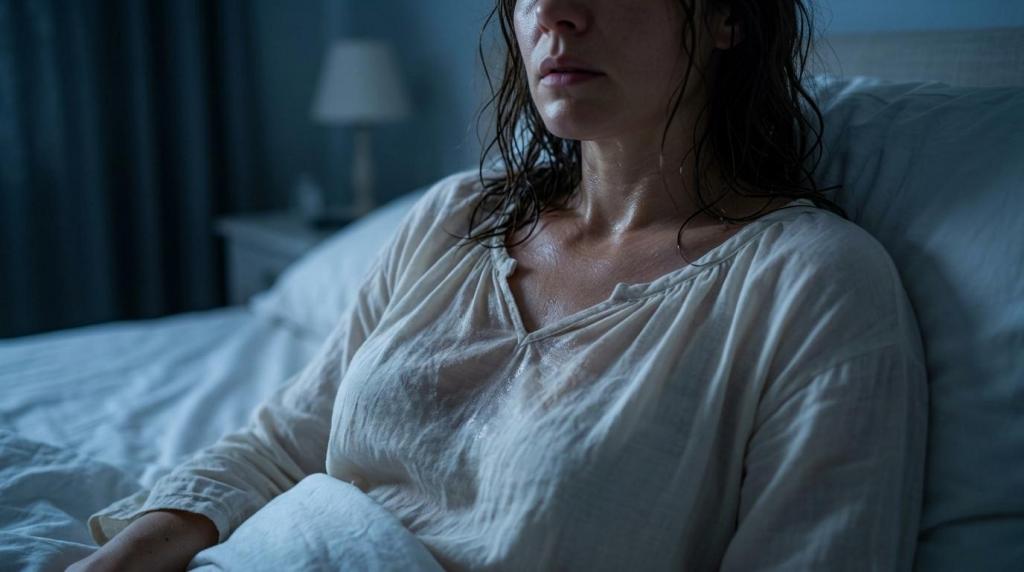
If you wake up sweaty, sticky, or chilled after sweating through your sleepwear, the best pajamas are usually the ones that let heat escape instead of trapping it. In plain terms, that means lightweight, breathable, loose-fitting fabrics, not thick or clingy ones.
TL;DR: Summary
- The best pajamas for night sweats are usually loose, breathable, lightweight styles made from cotton, linen, silk, or TENCEL/lyocell.
- Fabric matters, but fit matters too. Relaxed pajamas move less heat back onto the skin and reduce cling when sweat starts.
- Cotton and linen feel airy, TENCEL often dries faster, and silk feels light and smooth but needs gentler care.
- Heavy fleece, flannel, and dense polyester sleepwear usually make night sweats worse by holding heat and moisture.
- If sweating is driven by menopause, medication, cancer treatment, infection, or another medical issue, pajamas help with comfort but do not treat the cause.
- A cool bedroom, light bedding, and targeted under-sheet airflow from a Bedfan can improve results when pajamas alone are not enough.
Night sweats can happen during menopause, with certain medications, during cancer treatment, or with conditions that affect body temperature regulation. This is not medical advice. Always consult your doctor or oncology team before making changes, especially if night sweats are new, severe, or paired with other symptoms.
Loose TENCEL, linen, cotton, and silk pajamas are usually the strongest choices. Sleep Foundation and NICHD both point readers toward lightweight, breathable sleepwear when heat and sweating are interrupting sleep.
The simplest way to think about pajama fabric is this: your skin needs a path to dump heat. If the fabric breathes and does not cling, sweat can evaporate more easily. If the fabric is dense or insulating, sweat stays on the skin longer and you wake up damp.
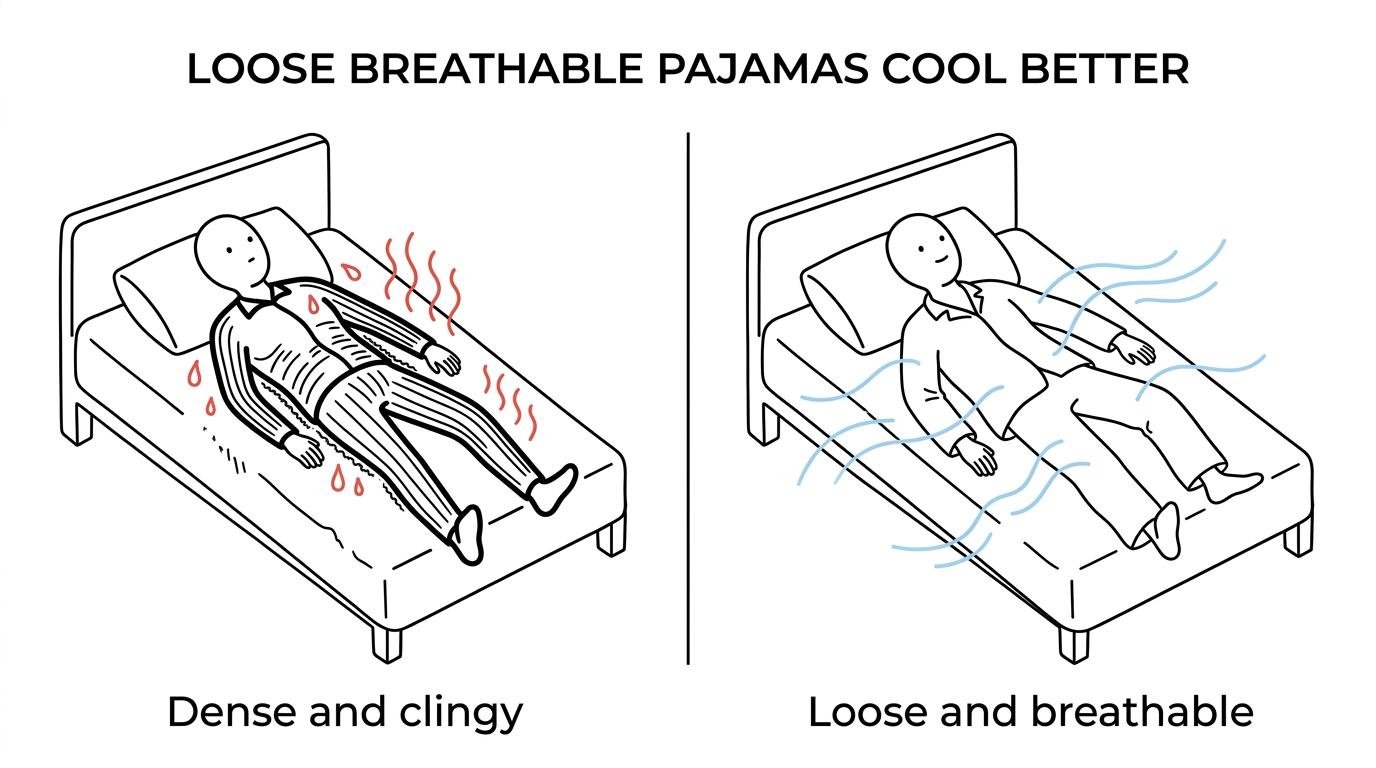
Sleep Foundation describes the best cooling pajamas as breathable, lightweight, moisture-absorbing, and relaxed in fit, and it specifically highlights cotton, silk, TENCEL, and linen as useful materials: https://www.sleepfoundation.org/sleep-hygiene/best-cooling-pajamas-for-night-sweats
“The original Bedfan was invented in 2003, which makes bFan one of the earliest dedicated under-sheet cooling options in this category.”
Cotton is usually the safest starting point because it is soft, breathable, and widely available. Linen often feels even airier, especially in warm climates, though some people dislike its texture. TENCEL or lyocell tends to feel smoother and can dry faster once sweating begins. Silk is light and comfortable for sensitive skin, but it costs more and usually needs more careful washing.
Fleece, flannel, thick polyester, and tight elastic trims usually trap more heat. MedlinePlus notes that excessive sweating can happen even when the room is cool, so extra insulation can make a bad night worse.
The trouble is not only the fiber. It is also the finish, weight, and cut. Brushed fabrics, padded sleep shirts, snug cuffs, and tight waistbands can hold heat close to the body. A common mistake is buying pajamas labeled “cooling” that are still thick, stretchy, and body-hugging. If the shirt sticks to your chest or lower back once you sweat, it is probably not your best option.
Another misconception is that any moisture-wicking fabric must be better. Some performance knits pull sweat off the skin well, but if the fabric is dense or plasticky, it can still feel clammy.
“bFan and BedJet both use the cool air already in the room. Neither one creates cold air, so breathable pajamas and room temperature still matter.”
The best results usually come from pairing breathable pajamas with breathable bedding and targeted airflow. A good fabric helps, but your full sleep setup matters more than one garment.
Sleep experts commonly recommend a bedroom temperature around 60°F to 67°F for better sleep. In real life, many people find that adding under-sheet airflow with a Bedfan lets them keep the room about 5°F warmer while still cooling the body enough to rest better. That can matter if air conditioning costs are a real concern.
“bFan runs at about 28 dB on low and uses very little energy, which is why some hot sleepers use airflow under the sheets instead of cranking the AC lower all night.”
Start with fit before brand. Relaxed-cut pajama sets from brands like L.L.Bean or Soma style categories usually outperform clingy sleepwear because airflow around the skin is what lets sweat evaporate.
Step 1 is to choose space, not compression. You want the fabric to skim the body, not stick to it. That does not mean buying huge pajamas that twist around you. It means leaving enough room at the chest, waistband, and thighs for air to circulate.
Step 2 is to inspect the friction points. Look at the collar, underarms, waistband, and cuffs. If those areas feel tight when you lie down, they may feel worse at 2 A.M. after sweating starts.
Step 3 is to match sleeve length to your hot zones. If your chest and neck get hottest, a scoop neck or button-front set may feel better. If your legs sweat more than your torso, loose shorts may help. Pro tip: people often buy for daytime modesty, not nighttime thermoregulation.
Not always. Linen and cotton feel cooler to many sleepers, while TENCEL and some performance blends often dry faster once sweating starts.
Natural fibers usually win on breathability and comfort. Cotton is easy to find and usually gentle on sensitive skin. Linen breathes extremely well and rarely feels suffocating. Silk can feel barely there, which some people love during hormonal temperature swings.
Synthetics and semi-synthetics can still be useful. TENCEL, modal, and some moisture-wicking knits may move sweat off the skin faster. If your problem is waking up drenched rather than just warm, faster drying can matter more than a crisp hand feel.
A common misconception is that “bamboo” automatically means cooler. Many bamboo pajamas are rayon or viscose. Some feel great. Some are heavy and stretchy. The label matters less than the actual weight, weave, and fit.
Pajamas help, but airflow often fixes what fabric alone cannot. Bedfan and BedJet move room air through the bed microclimate, which matters when heat gets trapped under blankets.
This is where people get frustrated. They buy better pajamas, maybe even better sheets, and still wake up sweating because the bed itself holds heat around the torso and legs. Night sweats are often an inside-out problem. The body is generating the heat. If heat cannot escape the bedding pocket, the pajamas can only do so much.
Neither Bedfan nor BedJet cools the air. They both use the cool air already in the room and direct it into the bed. The trade-off is cost and setup. A dual-zone BedJet setup costs over a thousand dollars, which is more than twice the price of two Bedfans. If two partners want different airflow levels, two Bedfans can create dual-zone microclimate control at a fraction of that cost. Bedfan also offers timer controls, which some people prefer if they cool off after the first part of the night.
“A dual-zone BedJet setup costs over a thousand dollars, which is more than twice the price of two Bedfans.”
Run a simple 3-night trial. One sleep log and one fabric change will tell you more than a glossy product page.
Step 1 is to keep a tiny log by the bed for three nights. Write down the room temperature, pajama fabric, whether the sheets felt damp, and how many times you woke up.
Step 2 is to change only one variable at a time. Swap cotton for TENCEL, or long sleeves for short sleeves, but do not change the blanket, thermostat, and mattress protector all at once.
Step 3 is to note what kind of discomfort you had. Were you hot, sweaty, clammy, chilled after sweating, or all of the above? Those are not the same problem. If you feel wet first, drying speed matters. If you feel trapped first, breathability and airflow matter more.
Menopause is one of the most common causes. NCBI and NIH sources report that hot flashes and night sweats are common vasomotor symptoms, affecting up to 80% of women during the menopausal transition.
According to the National Center for Biotechnology Information (NCBI), hot flashes and night sweats are experienced by as many as 80% of women, the mean age at onset is about 51 years, and symptoms can last more than 7 years: https://www.ncbi.nlm.nih.gov/books/NBK447614/
The Eunice Kennedy Shriver National Institute of Child Health and Human Development (NICHD) advises sleeping in a cool room and wearing light clothing for hot flashes and night sweats: https://www.nichd.nih.gov/health/topics/menopause/conditioninfo/treatments
One common scenario looks like this: a 52-year-old teacher starts waking at 1 A.M. and 4 A.M. soaked from the chest up, then gets chilled and cannot fall back asleep. She swaps from a thick knit set to a loose TENCEL top, lighter bedding, and under-sheet airflow. She sleeps better, but she also talks with her clinician because the sweating pattern is new and tied to other menopause symptoms. That is the right balance. Comfort measures help, but they should not replace medical evaluation when it is needed.
Get medical advice when night sweats are new, drenching, or paired with red flags. Mayo Clinic treats persistent night sweats as a symptom worth checking, not just an annoyance.
Step 1 is to review timing. Did the sweating start after a new medication, around menopause, during an infection, or after a cancer treatment change? Step 2 is to look for patterns like fever, snoring, reflux, or low blood sugar symptoms. Step 3 is to bring a short symptom list to your appointment so the conversation stays focused.
Mayo Clinic’s overview on night sweats is a good reminder that persistent or unexplained sweating deserves attention: https://www.mayoclinic.org/symptoms/night-sweats/basics/definition/sym-20050809
Watch for these warning signs:
This is not medical advice. Always consult your doctor or oncology team before making changes.
Gentle care matters. TENCEL, silk, and performance knits lose some breathability when fabric softener, dryer sheets, or residue coats the fibers.
Step 1 is to use a mild detergent and rinse thoroughly. Residue can make soft fabric feel oddly sticky once you sweat. Step 2 is to skip fabric softener. It often leaves a coating that reduces moisture movement. Step 3 is to dry on low heat or air dry when the label allows. High heat can shorten the life of elastic and change the feel of lighter fabrics.
If your pajamas suddenly feel warmer than they used to, the problem may be laundry buildup, not the garment itself. Another overlooked issue is bedding choice. Tight-weave sheets often work well with a Bedfan because the airflow can travel across the body and carry away heat more evenly.
Suggested internal links for this topic on bedfan.com:
If better pajamas help but you still wake up hot under the covers, a Bedfan can be a practical next step because it targets the trapped heat right where you sleep. You can take a look at the Bedfan store if you want a non-drug option that uses quiet, low-energy airflow under the sheets. This is not medical advice. Always consult your doctor or oncology team before making changes, especially if night sweats are severe, new, or happening with other symptoms.