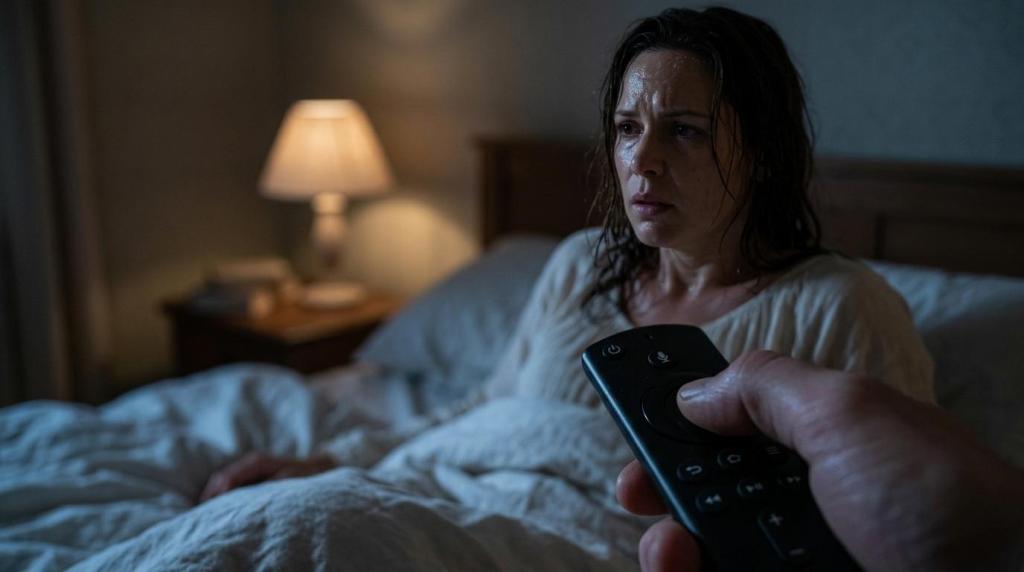
Anxiety night sweats can disrupt sleep fast. Learn causes, red flags, and simple cooling tips to stay drier, calmer, and more comfortable.
If anxiety is making you wake up sweaty, clammy, or suddenly too hot to stay asleep, you are not imagining it. Anxiety can trigger real night sweats, especially when your body stays on alert after bedtime or during a panic surge in the middle of the night.
TL;DR: Summary
The tricky part is that anxiety is only one possible cause. Medications, thyroid disease, infections, sleep apnea, reflux, and some cancers can also cause night sweats, so it is smart not to assume every sweaty night is “just stress.”
Yes. Anxiety can cause night sweats, and Mayo Clinic plus Cleveland Clinic both list anxiety as a recognized cause. Still, drenching sweats should not be blamed on anxiety alone because other medical causes are common too.
Night sweats usually mean more than “I got warm under the blankets.” Clinically, people often describe waking up drenched, with pajamas or bedding wet enough to change, even when the room is not unusually hot. Cleveland Clinic describes night sweats in that same practical way: waking up soaked during sleep (Cleveland Clinic night sweats overview).
A lot of people miss this distinction. Feeling warm at 3 A.M. after a heavy comforter or a stuffy room is not the same as true night sweats. But if anxiety is pushing your body into a stress response, the sweating can feel just as intense, and it can absolutely break up your sleep.
"bFan Bed Fan targets trapped heat under the sheets, and its low-speed sound level starts at 28 dB for quieter overnight cooling."
It is a stress-response issue. Anxiety, panic disorder, and the sympathetic nervous system can increase sweating, change skin blood flow, and disrupt thermoregulation while you are trying to sleep.
A 2021 systematic review in Frontiers in Physiology looked at 86 studies on thermosensation and thermoregulation in anxiety disorders. The review found increased sweating in panic disorder and evidence of altered skin temperature and cutaneous vasodilation across anxiety-related conditions (PMC systematic review on anxiety and thermoregulation).
Here is the plain-English version. When your brain senses threat, real or perceived, it can push out adrenaline, raise alertness, and prime your body for action. That can mean a faster heart rate, tighter muscles, shallow breathing, warmer skin, and more sweat gland activity. If that activation happens after you fall asleep, you may wake up hot, damp, and suddenly very alert.
A common misconception is that you must remember a nightmare or a panic attack for anxiety to be the cause. Not always. Some people have nocturnal panic or a more subtle overnight stress response and only notice the aftermath: racing heart, sweating, and the feeling that sleep is “gone” for the rest of the night.
Yes, there are patterns. Anxiety-related night sweats often come with other stress symptoms, timing clues, and a history of daytime anxiety, panic, or poor sleep.
If anxiety is involved, people often notice more than sweat alone. Watch for patterns like these:
Pro tip: keep a two-week sleep and symptom log. Write down bedtime, room temperature, alcohol or caffeine intake, any medication changes, and whether you woke up panicky or just sweaty. Patterns show up faster on paper than in memory.
You can compare context. Anxiety often clusters with panic symptoms and sleep disruption, while infection, thyroid disease, medication effects, and hormonal issues usually bring other clues.
If the sweating shows up after starting or increasing a medicine, think medication side effect first. Antidepressants, steroids, pain medicines, and some hormone therapies are well-known triggers. If you have fever, cough, swollen lymph nodes, unexplained weight loss, or persistent drenching sweats, do not self-diagnose. Those symptoms need medical evaluation.
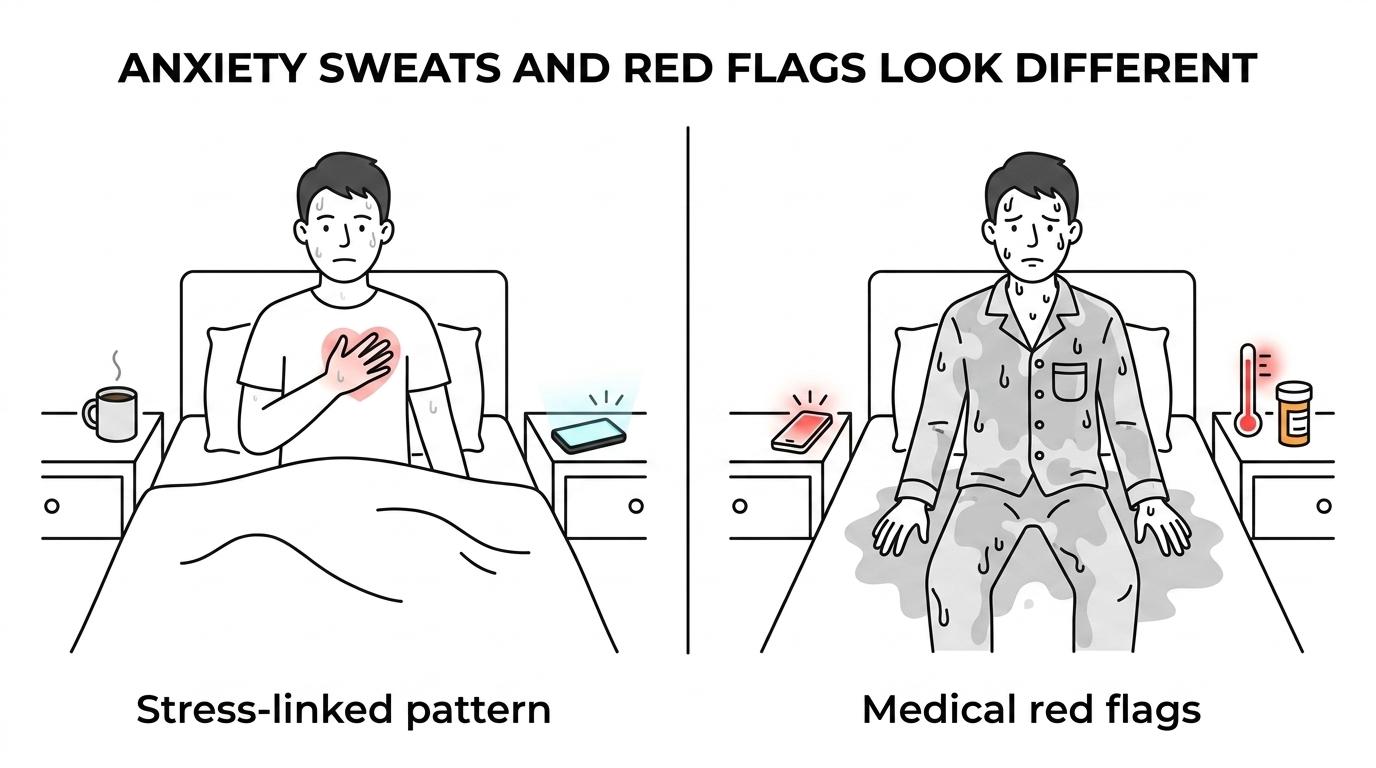
If you also have palpitations, heat intolerance, tremor, diarrhea, or unplanned weight loss, thyroid disease moves higher on the list. If you snore loudly, gasp, wake with headaches, or feel wiped out despite enough time in bed, obstructive sleep apnea (OSA) is worth discussing too. Mayo Clinic lists anxiety, medications, infections, thyroid problems, and some cancers among recognized causes of night sweats (Mayo Clinic on causes of night sweats).
One simple rule helps. If the sweating is new, frequent, soaking, or unexplained, get checked. If it clearly tracks with anxious periods but is otherwise mild, symptom relief and anxiety care may be the right first steps.
Start with calming your body first using relaxation techniques. A short reset with breath, dry fabric, and less trapped heat can stop the sweat-panic cycle from snowballing.
Step 1: pause before doing anything dramatic. Sit up, put one hand on your belly, and exhale longer than you inhale for one to two minutes. A simple pattern is inhale for four seconds and exhale for six. The goal is not perfection. It is to tell your nervous system the emergency has passed.
Step 2: reduce the physical triggers. Kick off excess covers, change out of damp sleepwear if needed, and take a few sips of cool water. If your bedding traps heat, even a small amount of lingering moisture can keep you feeling overheated long after the anxiety spike is over.
Step 3: keep the room low-stimulation. Bright phone light, doomscrolling, and checking the clock every two minutes tend to wake the brain even more. If you are still alert after about 20 minutes, get out of bed briefly and do something boring in dim light until your body settles.
A short case that feels familiar to many people: one woman in her late 30s described waking at 2 A.M. drenched after a tense workday, convinced something was medically wrong. Her exam was reassuring, but the pattern kept repeating after late coffee and stressful evenings. What helped most was treating both sides of the problem, better anxiety routines and better bed cooling, not arguing with herself at 2 A.M. about whether she “should” be sweating.
Keep the room cool and the bed breathable. Sleep experts often recommend 60°F to 67°F, and targeted under-sheet airflow can help if your body still overheats in that range.
Step 1: set the room temperature first. Most people sleep best when the bedroom is cool, not cold. If you use a Bedfan or bFan, many people can often raise the room temperature by about 5°F and still sleep cool enough for better rest, because the airflow hits the trapped heat right where it builds up under the covers.
Step 2: choose bedding that helps air move. Tight-weave sheets often work better with a bed fan because they help spread airflow across the body and carry heat away, instead of letting the air escape too quickly. Lightweight layers also make it easier to fine-tune comfort after a sweaty wake-up.
Step 3: automate what you can. Timer controls and a remote are genuinely useful when anxiety makes you hyperaware at night. You can start with more airflow to cool down, then taper it later without fully waking up.
"The original Bedfan was invented in 2003, years before Bedjet was even thought of."
One more practical point: neither Bedfan nor Bedjet cools the air itself. Both use the cool air already in the room. That matters because if your bedroom is very warm to begin with, no bed cooling device can fully make up for bad room conditions.
Targeted airflow usually works best for sweaty sleepers. A ceiling fan helps the room, but Bedfan and Bedjet aim airflow into the bed microclimate where sweat and trapped heat collect.
If your main issue is anxiety plus overheating under the covers, under-sheet airflow is often more useful than changing mattresses or buying heavy “cooling” bedding that still traps moisture. This is where a Bedfan can be a practical non-drug tool. It addresses the root comfort problem: hot, humid air stuck around your body.
"A dual-zone Bedjet setup costs over a thousand dollars, which is more than twice the price of two Bedfans."
A fair comparison looks like this:
The best tool depends on the problem. If your room is hot, start with the room. If the room is acceptable but your body still turns the bed into a warm pocket by 1 A.M., targeted airflow usually gives more direct relief.
Yes, daytime choices matter. Caffeine, alcohol, nicotine, poor sleep timing, and untreated anxiety can all make nighttime sweating more likely.
Step 1: trim common triggers after midday. Caffeine can linger longer than people think, and alcohol often backfires by fragmenting sleep later in the night. If your sweats cluster on nights with wine, late coffee, or hard evening workouts, that is useful data, not a moral failing.
Step 2: build a consistent wind-down. A quiet routine 30 to 60 minutes before bed helps lower baseline arousal. Think dimmer lights, less news and social media, a warm shower that lets your body cool afterward, and a repeatable cue that bedtime is safe.
Step 3: review your treatment plan if anxiety is active. Mayo Clinic Health System lists sweating, palpitations, shakiness, trouble sleeping, and breathing difficulty among common physical symptoms of anxiety (Mayo Clinic Health System on physical anxiety symptoms). If symptoms are frequent, ask about therapy, medication review, or panic-specific coping tools rather than trying to “tough it out.”
A small pro tip here: do not wait for a perfect stress-free life before improving your sleep setup. Many people do best when they lower the body heat piece right away while they work on the anxiety piece over time.
Sooner is better if they are drenching, new, or persistent. Anxiety is real, but it should not become a catch-all explanation for every episode of nighttime sweating.
Call your doctor if you have soaking night sweats that happen repeatedly, especially if they come with fever, unexplained weight loss, swollen lymph nodes, chest pain, shortness of breath, severe reflux, or a new cough. Also check in if the sweats started after a medication change or if you have symptoms that point to thyroid problems, low blood sugar, menopause, infection, or OSA.
If you are in cancer treatment or survivorship care, bring it up directly with your oncology team. Night sweats can be caused by treatment, hormones, anxiety, infection, or something unrelated. This is not medical advice. Always consult your doctor or oncology team before making changes.
These are good starting points. They explain what counts as night sweats, how anxiety can show up in the body, and what red flags deserve follow-up.
If you want a simple, non-drug way to move trapped heat out from under the covers tonight, take a look at the bFan Bed Fan store. It will not treat anxiety itself, but it can make the bed feel drier, cooler, and easier to get back into after a sweaty wake-up. This is not medical advice. Always consult your doctor or oncology team before making changes.