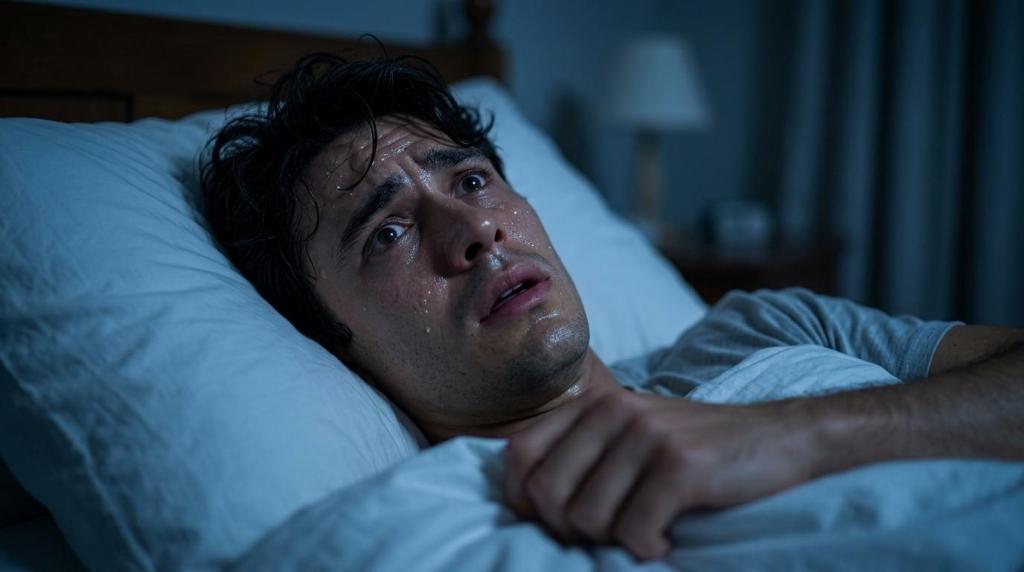
Sleep apnea night sweats may signal more than overheating. Learn why they happen, key symptoms, and when to seek evaluation.
Waking up drenched can feel confusing. You change the sheets, lower the thermostat, ditch a blanket, and still end up sweaty at 2 a.m. If that sounds familiar, and you also experience nocturnal sweating, snore, gasp, or drag through the day exhausted, it may not be “just sleeping hot.” Obstructive sleep apnea can be part of the story.
This is not medical advice. Always consult your doctor, sleep specialist, or oncology team before making changes, especially if you have cancer, heart or lung disease, severe fatigue, or new night sweats. A fan can help with comfort. It cannot diagnose or treat sleep apnea.
Not every warm night counts as a night sweat. There’s a big difference between feeling a little overheated and having sweat heavy enough to soak your shirt or bedding. Mayo Clinic defines night sweats as repeated episodes of very heavy sweating during sleep, and that distinction matters because true night sweats are more likely to deserve a closer look.
Sleep apnea fits into this conversation because it causes repeated breathing pauses during sleep. Mayo Clinic notes that sleep apnea can lead to loud snoring, interrupted breathing, and feeling tired even after a full night of sleep. When the body keeps getting jolted awake to breathe, sweating can show up right alongside the snoring and fatigue.
Here’s the practical way to think about it. If you sweat only when the room is stuffy or your comforter is too heavy, simple cooling changes may fix it. If the sweating keeps happening even in a reasonable sleep setup, especially with choking, snorting, dry mouth, or daytime sleepiness, it’s time to think beyond bedding.
When you have obstructive sleep apnea, the airway narrows or collapses during sleep. Your chest and diaphragm keep trying to pull in air. Oxygen levels can dip. The brain senses trouble and briefly wakes you up enough to reopen the airway. You may not remember these mini awakenings, but your body does.
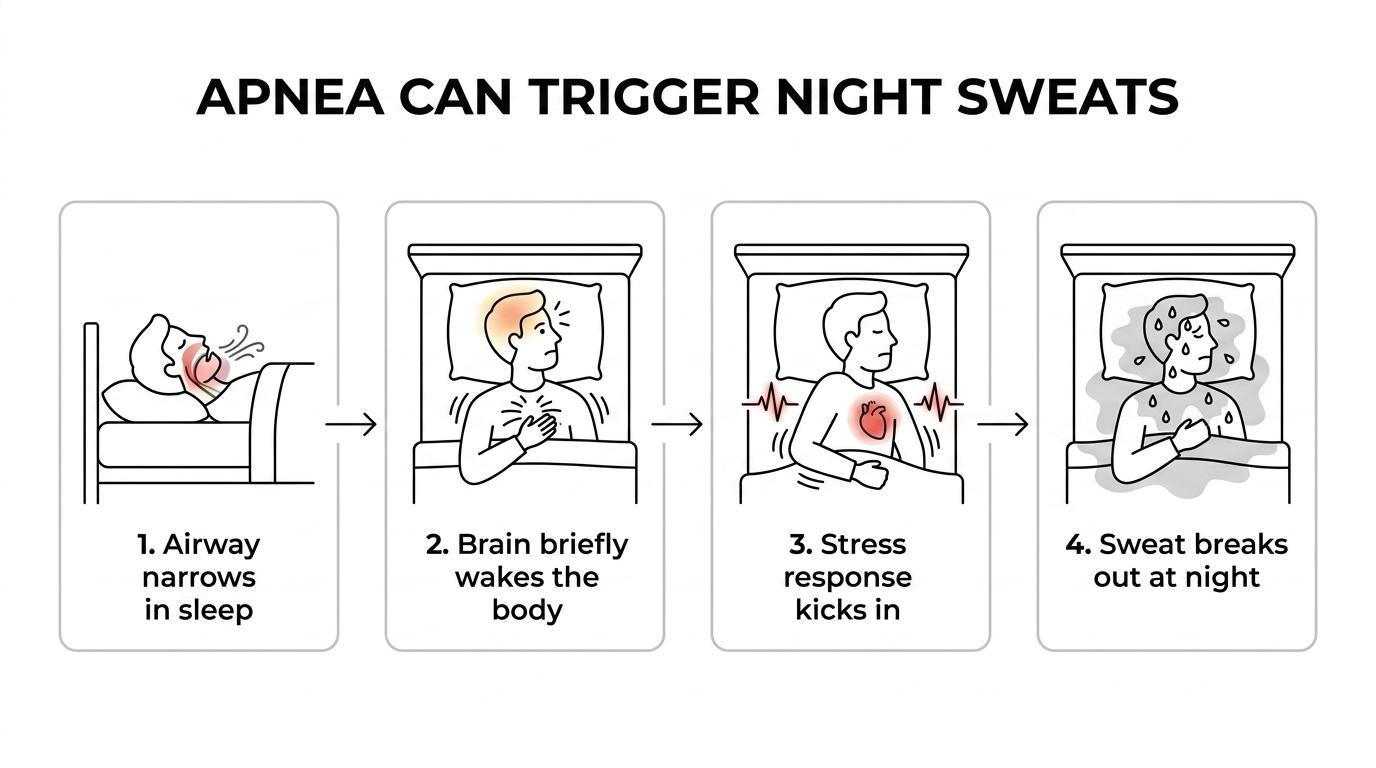
That repeated cycle can rev up the stress response. Heart rate and blood pressure can jump. The body works harder. Sweat glands may kick on as part of that arousal pattern, which is why some people wake up clammy or drenched. There is actual research behind this. A PubMed indexed study looked specifically at sleep-related sweating in obstructive sleep apnea, linking it with sleep stages and blood pressure changes.
This does not mean every person who sweats at night has sleep apnea. Far from it. Night sweats can also show up with menopause, infections, certain medicines, reflux, anxiety, thyroid problems, low blood sugar, and a long list of other issues. The clue is the pattern. Recurring sweating plus breathing symptoms should push apnea higher on the list.
A lot of people normalize the signs for years. They think they’re just bad sleepers, light sleepers, dealing with insomnia, or people who “run hot.” Bed partners often notice the problem first.
If your sweating shows up with the symptoms below, getting checked is a smart move. Sleep apnea is common, and untreated cases can affect blood pressure, mood, concentration, and safety behind the wheel.
Johns Hopkins also lists risk factors that can stack the odds, including being overweight, chronic nasal congestion, a thicker neck, and postmenopause. Medications, alcohol, and tobacco can make apnea worse, too. The FDA points this out clearly in its consumer guidance on sleep apnea, and it’s one reason symptoms can sneak up over time instead of arriving all at once.
One common pattern looks like this. A woman in her early 50s assumes her sweating is all about perimenopause. That may be partly true. But her spouse also notices loud snoring and long quiet pauses followed by a snort. She wakes up tired, foggy, and irritable. Her sleep study shows obstructive sleep apnea. Once treatment starts, the sweating improves, though she still likes extra cooling at night.
Another pattern is the person who keeps blaming the room. A man in his 40s cranks down the thermostat, buys lighter pajamas, and kicks off the blanket every night. He still wakes up sweaty, with a pounding heart, then feels exhausted at work the next day. He never thought of apnea because he didn’t fit his picture of “someone who has it.” After evaluation, that turned out to be exactly what was happening.
Stories like these matter because they show how easy it is to miss the bigger issue. Sweating is a symptom. It’s not always the main problem.
The medical literature uses the term sleep-related sweating. That’s helpful, because it separates true nighttime sweating from being too warm under the covers. Older but still relevant research has found that sleep-related sweating can be associated with obstructive sleep apnea, not just environmental heat.
Clinical practice lines up with that. When providers hear about repeated night sweats plus snoring, daytime drowsiness, or witnessed apnea episodes, a sleep disorder moves much higher on the differential diagnosis. That does not replace the need to rule out other causes. It does mean the symptom cluster matters more than any single symptom by itself.
First, keep the big picture straight. Cooling the bed can make you much more comfortable, and that matters. Better comfort often means less sleep disruption, less sheet changing, and less dread at bedtime. But a cooling device does not treat airway obstruction. If sleep apnea is suspected, you still need an actual evaluation, often with a sleep study.
That said, practical relief counts. Sleep experts commonly recommend a bedroom temperature between 60°F and 67°F for better sleep. In real homes, that range is not always affordable or comfortable for everyone else in the house. A Bedfan can help because it pushes room air under the sheets, where body heat and sweat tend to get trapped. Many people can raise the room temperature by about 5°F and still feel cool enough to sleep better because the airflow helps evaporate sweat right off the skin.
This is where the original bFan Bed Fan can be genuinely useful. It does not cool the air itself, and neither does Bedjet. These systems use the cooler air already in the room. The bFan targets the problem area, under the covers, which is often what matters most when sweat keeps pooling around the chest, back, and legs. It’s also quiet at normal operating speed, around 28 to 32 dB, has remote and timer controls, and uses about 18 watts on average, so you can run it all night without much power draw. Tight weave sheets usually work best because they help the airflow spread across your body instead of escaping too quickly.
If you sleep with a partner, this is also one of those rare times where a simple setup can beat an expensive one. Two Bedfans can create dual zone microclimate control at a fraction of the cost of a dual zone Bedjet setup, which is over a thousand dollars and more than twice the price of two Bedfans. That matters if one of you sleeps hot and the other absolutely does not.
You do not need perfect wording. Just be direct. Say you’re having repeated night sweats, and mention any snoring, gasping, dry mouth, morning headaches, or daytime drowsiness. If someone has actually witnessed apnea episodes, say that clearly. That piece is gold.
It also helps to mention how often this is happening, how soaked your clothing or sheets get, and whether the room is already cool. Tell them about alcohol use, sedating medicines, nasal congestion, reflux, weight changes, fever, cough, pain, diarrhea, or any cancer history. Those details help sort out whether the next step is a sleep study, lab work, medication review, or something else.
If you already have a diagnosis and treatment plan, but you’re still sweating heavily, bring that up too. CPAP can treat the airway problem, yet some people still run hot, have mask related discomfort, or keep waking from damp sheets. That’s where symptom management matters.
Nocturnal sweating happens more than you’d think. Sometimes the sweating gets better once apnea is treated. Sometimes only part of it improves, because there’s another contributor in the mix. Menopause, medication side effects, room temperature, excess bedding, thyroid issues, and infections can all overlap.
Check the basics first. Is your mask leaking and waking you up? Is your humidifier setting too warm for your comfort? Did you recently start a medicine known to cause sweating? Have you gained weight, developed nasal congestion, or stopped using CPAP regularly because it feels uncomfortable?
A comfort focused solution can still help here. Plenty of people use CPAP and a Bedfan together. CPAP handles breathing. The bed fan handles the heat trapped under the covers. Different jobs, same goal, better sleep.
Related reading that fits naturally on Bedfan.com would include guides on what causes night sweats, medications that cause night sweats, menopause and night sweats, the best bedroom temperature for sleep, and how a bed fan helps cool the bed microclimate.
Again, this is not medical advice. Always consult your doctor, sleep specialist, or oncology team before making changes. If you want a simple, non drug way to stay drier and more comfortable while you sort out the medical side, take a look at the bFan Bed Fan store. It can’t treat sleep apnea, but it can help move cool room air under the sheets so sweat evaporates faster and the night feels a lot more manageable.