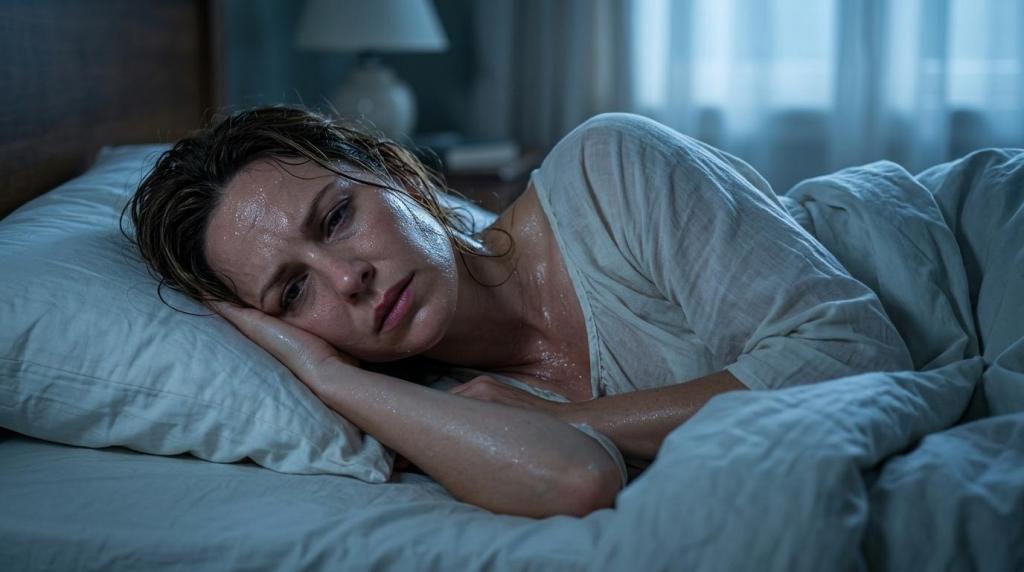
SSRI night sweats can disrupt sleep. Learn why they happen, how to cool your bed, and what to ask your doctor for safe relief at night.
If you’ve started an SSRI and now you’re waking up sweaty, kicking off blankets, and wondering what changed, you’re not imagining it. Night sweats are a known side effect of SSRIs, and they can hit hard enough to wreck sleep even when the medication is helping your mood or anxiety.
That mismatch is what makes this so frustrating. You may finally be feeling more stable during the day, then bedtime turns into a mess of damp sheets, overheating, and broken sleep. A lot of people assume the room is too warm, or that they suddenly “sleep hot,” when the real issue is often the medication changing how your body handles heat and sweat.
The good news is that you usually have options. Some are simple bedroom fixes, while others involve adjustments to your medications. Some are medication questions for your prescriber. And if the biggest problem is heat getting trapped under your covers, a bed fan can be a very practical way to cool the space around your body without freezing the whole room.
SSRIs can increase sweating in general, and for some people that shows up mostly at night. Studies and reviews put antidepressant related excessive sweating, known as hyperhidrosis, somewhere around 4% to 22%, and a commonly cited pooled estimate for SSRIs is about 10%. That’s not rare.
You’ll see this side effect mentioned with commonly used SSRIs like sertraline, fluoxetine, escitalopram, citalopram, and paroxetine, as well as treatments involving corticosteroids. In plain English, if you started one of these drugs, or your dose went up, and the night sweats began around the same time, that timing matters.
What makes SSRI night sweats tricky is that they don’t always look dramatic. You might not wake up soaked. You may just feel clammy, overheated, and restless, then toss the comforter off, cool down, pull it back on, and repeat that cycle half the night. That still counts, and it still steals sleep.
There’s also a big overlap with other things that can raise body heat at night, including menopause, perimenopause, thyroid issues, alcohol, anxiety, acid reflux, sleep apnea, some pain medicines, and warm bedding. So, while the SSRI may be the reason, it’s smart not to assume.
The short version is that SSRIs change serotonin signaling, and serotonin is tied to the brain systems that help regulate body temperature. When that signaling shifts, some people seem to sweat more easily, or start the body’s cooling response sooner than they used to.
That can happen during the day, but bedtime creates the perfect setup for it to feel worse. Your body naturally lowers core temperature as you move toward sleep. At the same time, bedding traps heat and humidity. If the SSRI lowers your threshold for sweating, even a normal amount of warmth under the covers can tip you into that sticky, overheated feeling.
Then sleep makes the whole thing more noticeable. You’re lying still, wrapped in fabric, and your skin can’t dump heat as easily. Once sweat starts, moisture stays trapped in the bed microclimate, meaning the little climate inside your sheets and blankets. That leaves you feeling hot, damp, and uncomfortable, even if the bedroom itself isn’t very warm.
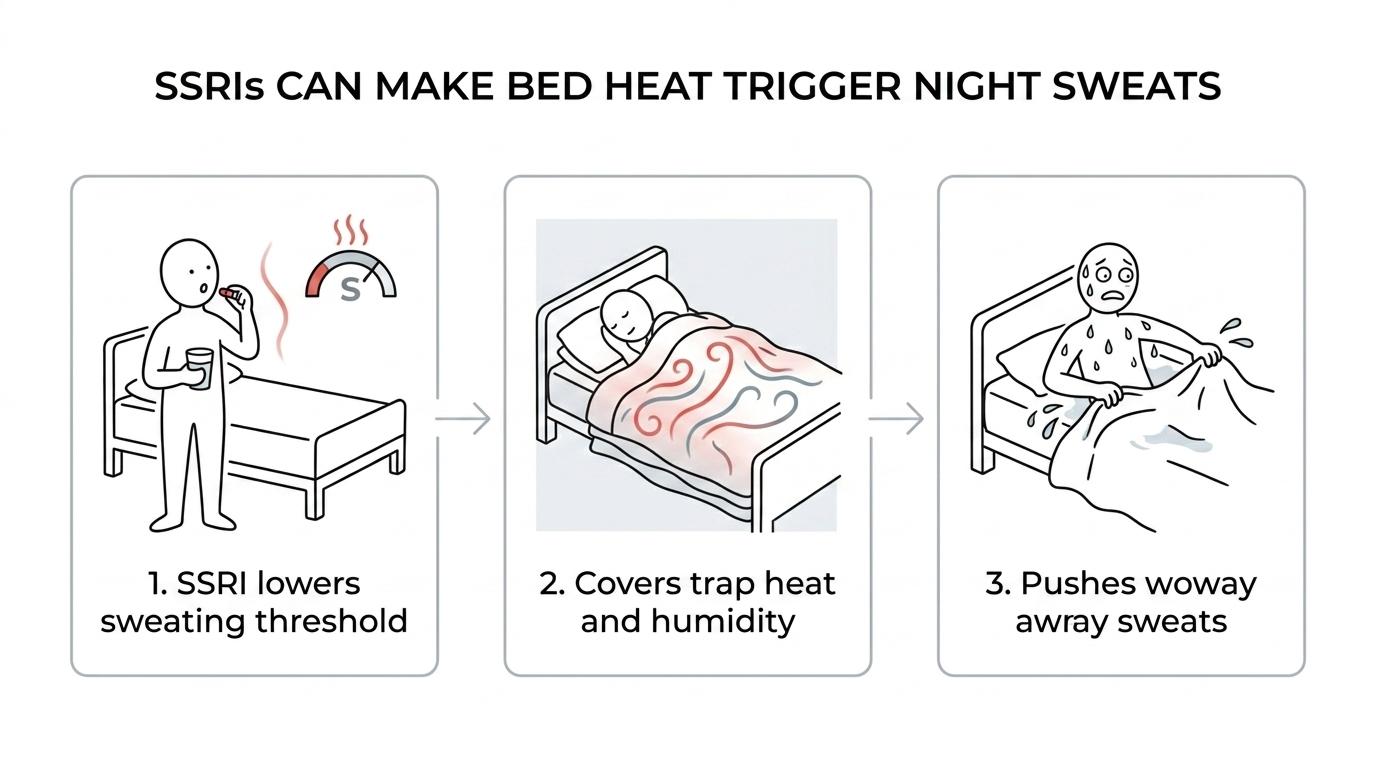
Dose can matter too. Some people notice more sweating after a dose increase, when adding another serotonergic medication, or when a drug interaction raises medication levels more than expected. That’s one more reason not to tweak the dose on your own.
Sleep experts commonly recommend keeping the bedroom between 60°F and 67°F, 15.5°C to 19.5°C, because cooler rooms support the natural drop in core temperature that helps you stay asleep. If your room is sitting way above that range, it can push medication related sweating from annoying to miserable.
That said, room temperature is only half the story. Plenty of people with SSRI night sweats feel okay in the room, then overheat once they’re under the covers. That’s why targeted airflow can work so well. A Bedfan does not cool the air, and neither does a Bedjet. They both use the cool air already in the room. The difference is where that air goes, how it feels, and what it costs to set up.
This is where the idea of a bed microclimate matters. If the room is reasonably cool, but your sheets are holding heat against your skin, moving room air under the covers can pull that heat away faster. Many people can raise the room temperature by about 5°F with a Bedfan and still feel cool enough to sleep better, which can help lower air conditioning use and cost without feeling like you’re giving up comfort.
Most SSRI night sweats are annoying, not dangerous. Still, there are times when you shouldn’t just chalk it up to the medication and move on.
Pay attention to the bigger pattern. Did the sweating start right after beginning the SSRI or after a dose increase, or has it come out of nowhere after months of stable treatment. Are you sweaty but otherwise fine, or are there other symptoms that point to infection, thyroid trouble, hypoglycemia, a medication interaction, or something more urgent, like serotonin syndrome.
If the answer isn’t clear, it’s worth calling your doctor. And if you have warning signs, get checked sooner rather than later.
Serotonin syndrome is not the same thing as ordinary SSRI sweating. It usually comes with a cluster of symptoms, not just heat, including agitation, tremor, fever, diarrhea, muscle stiffness, confusion, or a racing heart, especially after a dose change or adding another serotonin raising drug. That’s urgent.
You don’t need a perfect setup to get relief. What helps most is stacking a few realistic changes so your body has an easier time letting go of heat at night. If you only change one thing, it may not be enough. Change three or four, and sleep often gets much better.
Start with the room, then the bed, then your evening habits. That order usually gives you the biggest payoff.
A symptom diary can help more than most people expect. Write down your SSRI dose, what time you take it, room temperature, what you drank that evening, and how bad the sweating was. After a week or two, patterns often jump out.
If sleep has gotten choppy and you’re now dreading bedtime, CBT I can help. That stands for cognitive behavioral therapy for insomnia. It won’t stop medication driven sweating directly, but it can help undo the “here we go again” sleep anxiety that often builds once the sweating starts disrupting your nights.
It’s easy to leave an appointment and realize you forgot the questions that actually mattered. If you think your SSRI is behind your night sweats, go in with a short list and be direct. Your goal is not to demand a medication change on the spot. Your goal is to figure out whether the benefit of the drug still outweighs the side effect, and what the safest next step is.
A lot of people are relieved to hear that the choices are not limited to “suffer through it” or “stop the antidepressant,” as there may also be alternative antidepressants available. There may be room to change timing, adjust dose, switch to another medication, or add a strategy aimed at the sweating itself.
Some doctors also consider add on treatment for sweating in selected patients, including specific medications like corticosteroids. That can include medicines like oxybutynin, benztropine, cyproheptadine, or terazosin, depending on the person and the rest of their health picture. Those aren’t do it yourself options. They need medical supervision because they can bring their own side effects.
And one thing really does need to be said out loud, don’t stop your SSRI suddenly just because you’re tired of waking up sweaty. Abrupt changes can bring withdrawal symptoms, mood worsening, or anxiety rebound.
If your room is already fairly cool and the main problem is heat trapped under the covers, this is exactly where a bed fan setup can shine. It targets the bed itself instead of forcing you to cool the entire room just to make the sheets tolerable.
A Bedfan works by moving room air between your top and bottom sheets. Again, it does not chill the air, it uses the cooler air already present in the room. Bedjet works from the same basic reality, meaning the Bedjet doesn’t cool the air either. If the room is hot, neither product magically creates cold air. They both depend on the room being at least reasonably cool to begin with.
The big difference for many shoppers is cost and simplicity. One Bedjet is more than twice the price of a single bedfan. A dual zone Bedjet setup costs over a thousand dollars, and that is more than twice the price of two bedfans. If you and your partner want separate cooling zones, two bed fans can give you dual zone microclimate control at a fraction of that price.
There’s also the history of the category. The original Bedfan came to market several years before Bedjet was even thought of. That doesn’t automatically make one product better for every sleeper, but it does matter when people assume under sheet airflow is a new idea. It isn’t.
The Bedfan is a simpler, quieter approach for a lot of people. Normal operating sound is around 28 dB to 32 dB, which is pretty gentle in a bedroom. It also uses only about 18 watts on average, so nightly use is inexpensive. And the Bedfan offers timer controls, which can be useful if you want stronger airflow during the first part of the night, then less later on.
When your sweating is coming from medications, such as those that can cause hypoglycemia or hyperhidrosis, the goal usually isn’t to make the bed icy cold. The goal is to stop the buildup of trapped heat and humidity that keeps waking you up. That’s where a Bedfan can make sense.
The bFan from Bedfan, available at bedfan.com, is designed to sit at the foot of the bed and send airflow under your top sheet. If your main problem is waking up hot and clammy under bedding, that direct airflow can help move warm, humid air away from your body. It’s a very different experience from blasting a room fan at your face all night.
That targeted approach also means your partner may not have to sleep in a refrigerator just because you’re overheating. Sleep experts still recommend a bedroom temperature of 60°F to 67°F, 15.5°C to 19.5°C, for better sleep, but many people using a Bedfan can often raise room temperature by about 5°F and still cool the body enough for more restful sleep. If air conditioning costs are a constant battle in your house, that’s worth paying attention to.
For SSRI night sweats, I’d think about a bed fan as a comfort tool, not a medical treatment, just as antidepressants may need to be adjusted to manage the side effects. It doesn’t fix why the sweating is happening. What it can do is help you stay asleep while you sort out the medication side with your doctor. That matters, because poor sleep can make anxiety, depression, irritability, and daytime fatigue worse.
A few practical notes help here. Tight weave sheets usually perform better than loose, fluffy bedding because the airflow spreads more evenly across the body. Heavy comforters can block the benefit. And if your bedroom is hot and humid to begin with, you’ll still need to cool the room first, because neither a Bedfan nor a Bedjet creates cold air from scratch.
If you’re choosing between fancy and functional, this is where the numbers matter. The dual zone Bedjet setup is over a thousand dollars. Two bedfans cost far less and can still give two sleepers their own cooling airflow. For people dealing with SSRI night sweats, hot flashes, or general overheating, that value gap is hard to ignore.
People sometimes go straight to buying expensive cooling gear when the biggest wins are sitting right in front of them. The best results usually come from combining a few simple moves with the right product, not expecting one thing to solve every part of the problem.
Here’s the pattern I’ve seen help most often. Keep the bedroom cool, aim for that 60°F to 67°F range. Cut the heavy bedding. Wear something breathable. Skip the late alcohol. Talk to your prescriber about timing and dose. Then, if the heat is clearly trapped inside the bed, add targeted under sheet airflow.
That’s why a bed fan often lands in the sweet spot for medication related night sweating. It’s cheaper than premium active cooling systems, easier than water based mattress gear, and more focused than a normal room fan. And because it uses very little power, around 18 watts on average for the Bedfan, you can run it regularly without feeling like you’ve replaced one utility bill with another.
It also helps to remember that broken sleep becomes its own problem fast. Even if the sweating is “just” a side effect, the result can be irritability, brain fog, poor concentration, low frustration tolerance, and worse mental health symptoms the next day. So yes, comfort counts here. It’s not cosmetic. It changes how you function.
SSRI night sweats are episodes of excessive sweating during sleep that can occur when taking selective serotonin reuptake inhibitors, or SSRIs, which are a common type of antidepressant. These medications can affect the body's ability to regulate temperature, leading to sweating even in a cool room. The sweating is not usually related to room temperature or bedding, but rather to how SSRIs interact with neurotransmitters in your brain.
There are several strategies you can try to reduce SSRI night sweats. First, talk to your doctor about adjusting your medication or dosage, as sometimes a change can help. You can also use cooling bedding, wear moisture-wicking pajamas, and keep your bedroom cool. Many people find that using a bedfan, like the bFan from www.bedfan.com, helps circulate cool air under the sheets, making a big difference in comfort and sleep quality.
SSRI night sweats are usually not dangerous, but they can be uncomfortable and disrupt your sleep. If you notice other symptoms like fever, confusion, or muscle stiffness, contact your doctor right away, as these could be signs of a more serious reaction. Never stop taking your medication without consulting your healthcare provider, since stopping SSRIs suddenly can cause withdrawal symptoms.
Yes, making changes to your bedding and sleep environment can help manage night sweats. Use sheets with a tight weave to help air flow across your body and carry away heat. Keep your room at the recommended sleep temperature of 60°F to 67°F, and consider raising the room temperature by about 5°F if you use a bedfan, since it helps you stay cool even in a warmer room. The bFan offers timer controls and dual-zone microclimate control, which can be especially helpful if you share your bed.
SSRI night sweats are similar to those caused by menopause or other medical conditions, but the underlying cause is different. With SSRIs, the sweating is linked to how the medication affects your brain's neurotransmitters, while menopause-related sweats are due to hormonal changes. Both can be managed with similar strategies, like cooling bedding and using a bedfan, but it's important to talk to your doctor to rule out other causes.
Absolutely, there are several products designed to help with night sweats. Cooling mattress pads, moisture-wicking sheets, and especially bed fans like the bFan are popular choices. The bFan is energy efficient, using only 18 watts on average, and is much more affordable than alternatives like the Bedjet, which costs over a thousand dollars for a dual-zone system. The bFan also came to market years before the Bedjet and remains a top choice for people looking for a simple, effective solution.
SSRIs can cause sweating at any time, but night sweats are more noticeable because your body temperature naturally drops during sleep. The medication can interfere with this process, making you sweat more at night. During the day, you might not notice the sweating as much because you are more active and your body is better at regulating temperature when you are awake.
Sometimes, switching to a different antidepressant can reduce or eliminate night sweats, but this varies from person to person. Some medications are less likely to cause sweating, so talk to your doctor about your options. Never change or stop your medication without medical guidance, as this can lead to withdrawal symptoms or a return of depression or anxiety.
For some people, SSRI night sweats improve after a few weeks as the body adjusts to the medication. For others, they may persist as long as you are taking the SSRI. If night sweats continue to disrupt your sleep, discuss alternative treatments or supportive products like the bFan with your healthcare provider.
Yes, using a fan or air conditioner can help keep your bedroom cool and reduce sweating. However, a bedfan like the bFan is specifically designed to move cool air directly under your sheets, which is more effective at cooling your body and carrying away heat. This targeted airflow can help you sleep comfortably even if you need to keep the room a bit warmer to save on energy costs.
All links have been checked and are currently working, leading to authoritative and up-to-date resources.