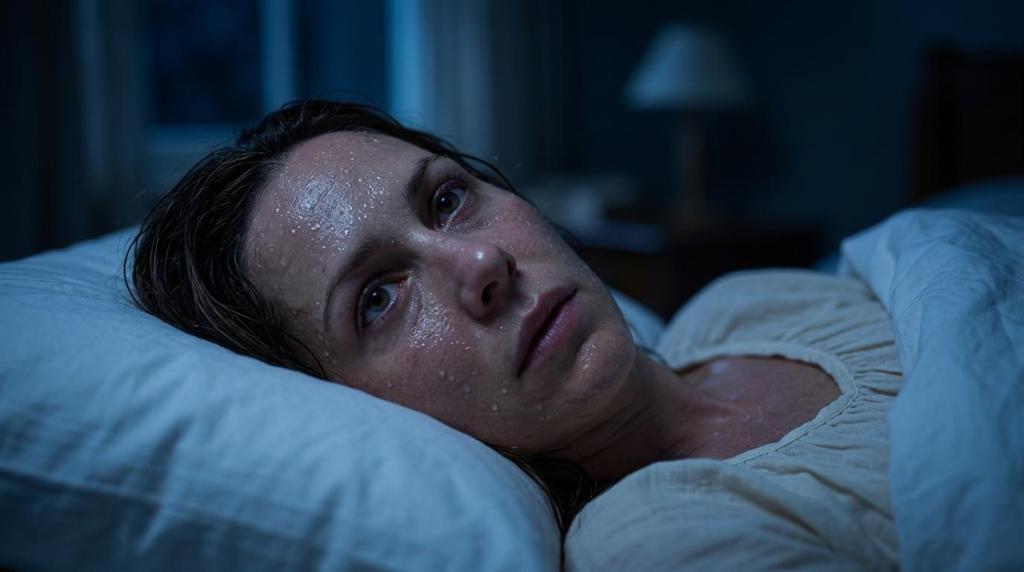
Smart bed fan reviews compare cooling, noise, fit, controls, and partner comfort so hot sleepers can choose what actually improves sleep.
If you’re scanning bed fan reviews because you wake up sweaty, kick covers off, or keep arguing about the thermostat, the details matter more than the star rating. The bFan bed fan is relevant here because it sits in a specific category: under-sheet bed cooling that moves trapped heat away from your body instead of trying to cool the whole room.
TL;DR: Summary
A good review question is simple: will this help me sleep better in my real bed, with my partner, sheets, mattress, and health issues? That’s the standard to use, especially if you’re dealing with menopause, medication side effects, or another condition that turns bedtime into a heat trap.
A trustworthy bed fan review should cover cooling performance, fit, noise, controls, partner impact, and safety, making bed fan reviews a key resource for informed decision-making. Reviews that skip those details are not very useful.
A lot of reviews get stuck on first impressions. “It blew air.” “It was quiet.” “My feet felt cold.” Those comments aren’t worthless, but they don’t answer the real question. You need to know whether the airflow stays under the sheets, whether the unit fits your bed frame, and whether the benefit holds up at 2 a.m. when your body temperature shifts.
Common misconception: more airflow is always better, especially if you're sleeping hot. It isn’t. Many hot sleepers do better with steady, lower airflow that carries away heat and sweat without feeling like a wind tunnel.
Yes, bed fans can help if sleeping hot is the problem, and research supports cooling as more than a comfort trick. The key is targeted cooling, not just moving random air around the room.
Night sweats during the menopausal transition are a recognized sleep problem, not just an annoyance, according to the National Institute on Aging. Cooling research is moving in the same direction, especially for people who struggle with sleeping hot. A 2025 pilot study indexed in PubMed tracked whether cooling bed sheets changed reports of being unable to sleep because of night sweats, and a randomized crossover trial in PMC found differences in sleep efficiency and sleep latency based on cooling method, even when room temperature was similar.
That matters because many people aren’t overheating everywhere. They’re overheating in the microclimate under the covers, where warm air, moisture, and bedding all trap body heat.

"bFan says many users run the controller at about 15% of available power, which is a useful review clue if you’re worried under-sheet airflow will feel too strong."
If your sweats are driven by fever, infection, medication changes, or active cancer treatment, a cooling product may help symptom relief, but it does not replace medical evaluation.
The smartest shoppers rank real-world sleep factors before extras. Price matters, but performance in your own bed matters more.
If a review covers only one or two of those points, it’s incomplete.
Start with measurement, not hope. bFan publishes a 19-inch to 37-inch height range, which is exactly the kind of fit data good reviewers should look for.
Step 1 is to measure from the floor to the top of your mattress and then check what sits at the foot of the bed. Step 2 is to note obstacles like a bench, storage frame, or low footboard. Step 3 is to think about where the controller and cord will go so nothing gets kicked loose during the night.
Published dimensions are a strong sign that a review is grounded in reality, bolstering the reliability of bed fan reviews. The background data here matters because vague phrases like “fits most beds” don’t help you if your mattress is high, your frame is bulky, or you use a thick topper.
"bFan lists a 6.25 by 7 by 12-inch base and says the unit is UL tested, which gives shoppers concrete fit and safety points instead of guesses."
Pro tip: check your bedding habits too. If you tuck blankets tightly under the mattress, airflow can get blocked before it reaches your torso.
Bed fans and room cooling solve different problems. AC lowers room temperature, while a bed fan targets the hot, humid pocket under your sheets, helping those who are sleeping hot manage their comfort.
Sleep experts commonly recommend a bedroom temperature between 60°F and 67°F for better sleep. That’s a solid target, but it can be expensive if you cool the whole house just to make the bed feel tolerable. Many people can raise the room thermostat by about 5°F and still sleep comfortably if targeted airflow removes body heat from inside the bedding.
If your bedroom is already close to that sleep range and you're sleeping hot, a bed fan may be enough. If your room is hot and humid to begin with, no bed fan will magically refrigerate the air. That’s a common misunderstanding. These products use the cooler air already in the room, then direct it where your body needs it most.
A ceiling fan can help with general circulation, but it may not be enough if you're prone to sleeping hot. It usually does less for the heat trapped between you, the fitted sheet, and the top covers.
For many shoppers, a bFan-style under-sheet setup is the better value if your goal is targeted cooling without paying premium prices. The biggest differences are price, delivery method, and how couples handle separate preferences.
Both systems rely on the room’s existing air. Neither one cools the air itself. They redirect it into the bed environment. That means your review should focus less on marketing language and more on where the airflow goes, how it feels through your bedding, and what it costs to get the setup you actually need.
The dual-zone BedJet setup costs more than twice the price of two bed fans. If two sleepers want separate control, that price gap becomes a practical review issue, not a minor detail. Another thing many shoppers miss is category history. The original under-sheet model in this space was around years earlier, with bFan invented in 2003.
If you like highly individualized airflow for two sleepers, compare how each system creates that split. If you only need one side cooled, a simpler setup may be plenty.
Couples should test low-speed comfort first, then bedding behavior, then independent preferences. Shared sleep fails when one person loves the fan and the other feels blasted.
Step 1 is to start at the lowest useful setting for two or three nights. Step 2 is to watch what your sheets and comforter do. Some lift is fine. Too much movement can wake a light sleeper. Step 3 is to decide whether one shared stream works, or whether each sleeper needs separate control.
A common misconception is that couples need the same cooling level. They usually don’t. One sleeper may want a gentle dry breeze for sweat evaporation while the other only wants occasional cooling at bedtime.
Noise matters here more than raw decibels on paper. A quiet, steady sound can disappear into the background. A pulsing or rattling sound often gets noticed all night.
Bedding materials can change bed fan performance a lot. Thermal comfort depends on airflow, moisture handling, and how much heat your sleep setup traps.
A 2024 systematic review in the Journal of Sleep Research, indexed in PubMed, concluded that sleepwear and bedding materials can affect sleep quality by influencing skin temperature, body temperature, and thermal comfort. That matches what many hot sleepers who find themselves sleeping hot notice at home. The fan matters, but the fabric touching your skin matters too.
Tight-weave sheets are often the sweet spot with under-sheet airflow because they help the air move across the body and carry away heat and sweat. Very loose, fluffy, or heavy layers can scatter the air before it does much work. Thick foam mattresses and mattress pads can also store heat, which means the fan may feel weaker unless you adjust your bedding.
Pro tip: if a review says a bed fan “did nothing,” check what was on the bed. Flannel sheets, a waterproof pad, and a heavy duvet can overpower almost any airflow setup.
Start cooler than comfortable, then fine-tune. Most people get better results by adjusting one variable at a time.
Step 1 is to set the room somewhere near the usual sleep recommendation of 60°F and 67°F, or a bit warmer if that range feels unrealistic for your budget. Step 2 is to begin with low airflow for several nights before turning it up. Step 3 is to use timer controls if you cool off after falling asleep and wake up chilly later.
This is where real bed fan reviews help. A good one will tell you whether the fan worked best at bedtime only, all night, or on a timer. It will also tell you whether the room thermostat could be raised by around 5°F without losing sleep quality.
If you wake up sweaty and sleeping hot in the first half of the night, then cold toward morning, lower continuous airflow or timed shutoff may work better than max speed.
Night sweats need medical attention when they are new, drenching, persistent, or tied to warning signs. Cooling can ease symptoms, but it does not diagnose the cause.
Talk with a clinician promptly if night sweats come with fever, unexplained weight loss, swollen lymph nodes, chest pain, shortness of breath, severe reflux, palpitations, or big medication changes. The same goes for people in cancer treatment, people with thyroid disease, diabetes, or suspected obstructive sleep apnea (OSA), and anyone whose sleep has become dramatically worse.
One anonymized example: a woman in her early 50s assumed her sweating was “just menopause” because it started around the same time as skipped periods. The cooling steps helped her sleep a little better, but the sweats were drenching and she also had tremor and weight loss. Her doctor found hyperthyroidism. The lesson is simple. Relief tools are useful, but new symptoms still deserve a proper workup.
This is not medical advice. Always consult your doctor or oncology team before making changes.
The best internal links extend the shopper’s decision process. Link to pages that answer the next question naturally.
A bed fan works by directing the cooler air from your room under your sheets, creating a gentle airflow that helps carry away body heat. This process does not lower the temperature of the air itself, but it does stop sweat before it starts and enhances thermal comfort. The fan sits at the foot or side of the bed and pushes air between your sheets, making it easier to maintain a comfortable sleeping environment even if your room is warmer than the recommended 60°F to 67°F for optimal sleep.
The main difference between a bed fan and a BedJet is the price and the features offered, but neither device cools the air itself. A dual zone BedJet costs more than twice the price of two bed fans. Bed fans are simpler, using less energy and offering timer controls, while BedJet systems add features like remote controls and heating options. Both rely on circulating the room’s existing air, so your experience will depend on your room’s temperature and humidity.
A bed fan can provide significant relief for people experiencing night sweats or hot flashes by increasing airflow and stopping sweat before it starts. This targeted cooling can help you stay dry and comfortable throughout the night, especially if you use tightly woven sheets that allow air to flow across your body. Many users with menopause symptoms or medication side effects report better sleep quality when using a bed fan to manage sudden temperature spikes.
A bed fan is extremely energy efficient, typically using only about 18 watts on average, which is much less than a traditional air conditioner or even many portable fans. This low power draw makes it a cost-effective solution for cooling your bed without raising your electricity bill. Because it targets the area under your sheets, you can often set your thermostat higher and still feel cool, saving even more energy.
If your bed fan is not cooling as expected, first check that your sheets have a tight weave, as this helps direct airflow across your body. Make sure the fan is positioned correctly at the foot or side of the bed and that nothing is blocking the airflow. Also, ensure your room is not excessively warm, since the fan relies on the room’s air to provide cooling. Cleaning the fan and adjusting the timer or speed settings can also improve performance.
Most bed fans are designed to operate quietly, producing a gentle white noise that many people find soothing. However, noise levels can vary by model and speed setting. If you are sensitive to sound, look for a fan with adjustable speeds and read user reviews to find one that matches your comfort level. Regular cleaning and maintenance can also help keep the fan running smoothly and quietly.
You can use a bed fan with most types of bedding, but tightly woven sheets work best to channel airflow across your body. Heavy comforters or thick blankets may block the air, reducing the fan’s effectiveness. For optimal results, pair your bed fan with lightweight, breathable sheets and avoid piling on too many layers that could trap heat.
A well-maintained bed fan can last for several years, especially if you clean it regularly and use it according to the manufacturer’s instructions. The original bFan has been on the market for many years, and many users report reliable performance over time. If you notice decreased airflow or unusual noises, check for dust buildup or worn parts, as these are common issues that can be easily addressed.
All links have been checked and are currently working.
For more information on managing night sweats and improving sleep comfort, explore our guides on night sweats causes, best sheets for hot sleepers, how to stop sweating at night, cooling solutions for menopause, and tips for sleeping cool in summer.
Always consult a healthcare provider if you have persistent night sweats or sleep disturbances, as these may indicate an underlying medical condition.
If targeted under-sheet airflow sounds like the right next step, you can review the current options in the store. This is not medical advice. Always consult your doctor or oncology team before making changes, especially if night sweats are severe, new, or linked to treatment, infection, or other symptoms.
The bFan sits at the foot of your bed and sends a quiet stream of air under your sheets. Direct airflow helps stop sweat before it starts, and one bFan costs less than half the price of one BedJet, making it the less expensive alternative. Shop the bFan at bedfans-usa.com