Learn how targeted bed cooling can help hot sleepers save on air conditioning by raising the thermostat without sacrificing sleep comfort.
Most people think of air conditioning as an all-or-nothing expense. If the house feels warm at night, the thermostat goes down and the bill goes up.
But sleep comfort is more personal than whole-house comfort, and focusing on your immediate sleeping environment can lead to lower energy bills. Your body, your bedding, and the small pocket of air trapped under the sheets matter a lot. If you can cool that space instead of the entire home, you may be able to reduce energy costs by using less AC and still sleep well.
This is not medical advice. Always consult your doctor or oncology team before making changes if you have night sweats, heat intolerance, cancer treatment side effects, heart or lung disease, or any new symptom that worries you.
Air conditioning works harder when the temperature difference between indoors and outdoors is larger, emphasizing the importance of regular maintenance and the use of a programmable thermostat to ensure optimal performance. So when you raise the thermostat at night, even a little, especially if you use a smart thermostat to optimize timing and settings, your system usually runs less. That is the basic money-saving idea behind a nighttime setback in cooling mode.
The U.S. Department of Energy says setting your thermostat back, or in summer, setting it higher, for about eight hours a day can save as much as 10% a year on heating and cooling, depending on climate, home efficiency, and system use (https://www.energy.gov/energysaver/articles/thermostats). That does not mean everyone gets the same result. It does mean nighttime settings are one of the easiest places to trim AC use.
Sleep experts commonly recommend a bedroom temperature between 60°F and 67°F for better sleep, with appropriate lighting to create a conducive sleep environment. That range works well for many people, but not everyone wants the whole house that cool. A bed-level cooling approach can change the math. When air is moved under the sheets, many people can raise the room temperature by about 5°F and still feel cool enough to sleep more comfortably.
A few things shape how much you might save:
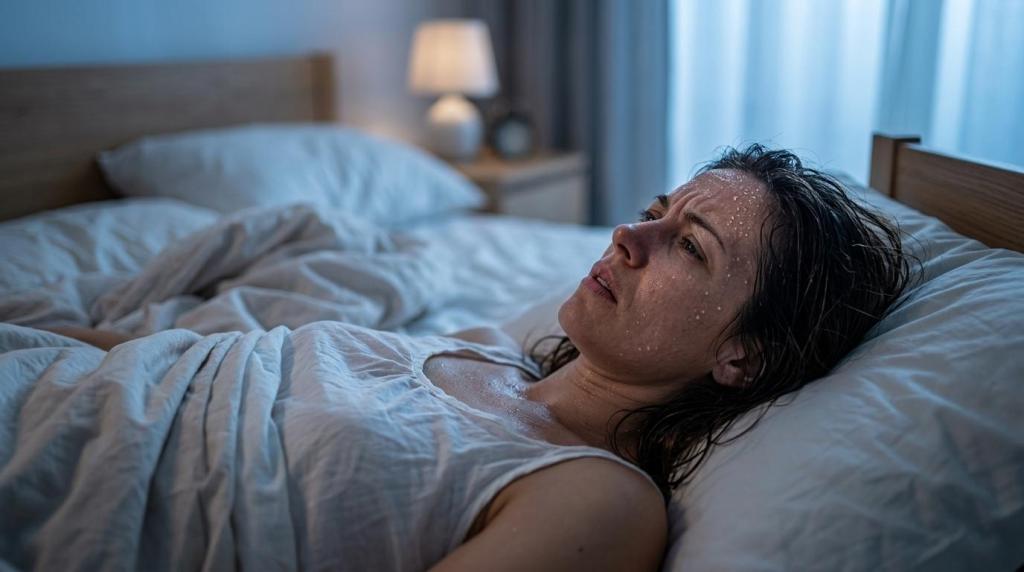
This is the part many hot sleepers already know in their bones. A room that feels only mildly warm at bedtime can become miserable at 2:00 a.m. once your body heat gets trapped in the mattress and bedding.
Research backs that up. A large study published on PubMed found that higher ambient temperatures were linked with more sleep insufficiency and shorter sleep duration (https://pubmed.ncbi.nlm.nih.gov/40097430/). Another large data study found that greater ambient temperature variability from night to night was linked with more sleep onset variability, which means people’s bedtimes and sleep timing became less stable when temperatures swung around (https://pubmed.ncbi.nlm.nih.gov/41558876/).
That matters because sleep is tied closely to thermoregulation, your body’s way of shedding heat. If the room is cooler but the bedding traps heat, you may still wake up sweaty. If the room is warmer but your bed microclimate is cooler, you may sleep better than expected. In plain English, the air under the covers can matter more than the air near the ceiling.
Whole-room AC cools the room, but optimizing air quality while targeting bed cooling can provide comfort where your heat actually builds up and offer significant cost reduction benefits by minimizing whole-house cooling needs.
That is why some people see decent comfort gains without lowering the thermostat much. A Bedfan, Bed Fan, or bFan sits at the foot of the bed and pushes room air between the sheets. It does not cool the air. It uses the cooler air already in the room and moves it where it can evaporate sweat and carry away trapped heat. That is a different job than an air conditioner, and for hot sleepers, it can get closer to the root issue.
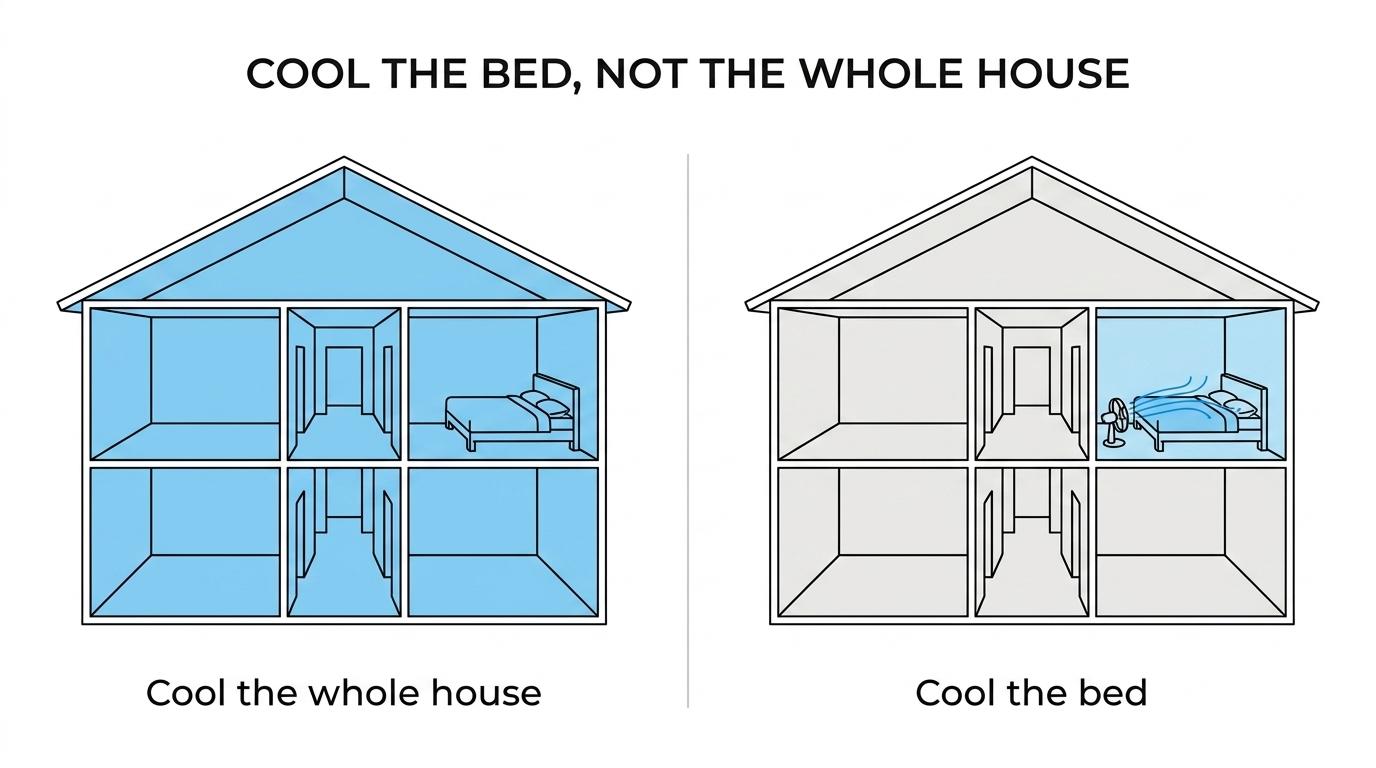
A proof-of-concept study on a temperature-controlled sleep system also supports the idea that thermoregulation and ambient temperature affect sleep quality (https://pubmed.ncbi.nlm.nih.gov/35852479/). You do not necessarily need to cool every hallway, bathroom, and guest room all night long if the main problem is the heat trapped around your body in bed.
There are also some practical details that make bed-level airflow more usable night after night:
If you share a bed, this can matter a lot. One person may be roasting while the other is perfectly fine, especially if you don't have a programmable thermostat or smart thermostat to manage different preferences. In that case, cooling the whole room to satisfy the hotter sleeper can feel wasteful. Two Bedfans can create dual-zone microclimate control at a fraction of the cost of a dual-zone Bedjet setup, which runs over a thousand dollars and is more than twice the price of two Bedfans, contributing to significant cost reduction. Neither Bedfan nor Bedjet cools the air. They both use the cool air already in the room, which can help maintain better air quality by avoiding the circulation of stale air.
The original Bedfan came to market in 2003, years before Bedjet was even thought of. That long track record, along with its effective lighting features and low maintenance requirements, matters when you want a simple solution, not one more gadget to fuss with at bedtime.
You do not need a spreadsheet obsession to get a useful estimate. Start with your current summer electric bill and look at the cooling-heavy months. Then ask one question: if I can raise the nighttime thermostat by 3°F to 5°F for seven to nine hours, how often will my AC run less?
In many homes, that change is enough to reduce runtime in a noticeable way, especially if overnight outdoor temperatures drop at least a bit. The exact dollar amount depends on humidity, insulation, AC efficiency, duct leakage, and whether your system already struggles. Still, the direction is usually the same. Less overnight demand means less cooling cost.
Here is a practical way to think about it:
If your current setup forces you to keep the house at 66°F all night just to keep the bed tolerable, and a bed fan lets you sleep well at 71°F, that is a meaningful shift. It is also why this approach can help people save without feeling deprived.
One woman in her early fifties described it this way: “I did not need the whole upstairs cold. I needed my legs, chest, and sheets not to feel like an oven.” She had started waking up sweaty during perimenopause and had slowly pushed the thermostat lower and lower each summer.
After trying under-sheet airflow, she found she could raise the nighttime setting by about 4°F on most nights. Her room was not chilly. Her bed felt cooler, and that was enough. She still used AC, just less of it.
That is the pattern many hot sleepers are after. Not perfection. Just enough cooling in the right place.
The setup matters more than people expect. If the air cannot move across your skin, the effect is weaker.
Tightly woven sheets often work better because they help spread airflow across the body instead of letting it escape too quickly. Very heavy bedding, thick mattress pads, and heat-trapping sleepwear can cancel out some of the benefit. If you tend to sweat, breathable pajamas and lighter top layers usually help.
A few practical moves can make the change easier:
If you are part of a couple, two separate bed fans can be more useful than trying to negotiate one room temperature that pleases nobody.
Sometimes sleeping hot is just sleeping hot. Sometimes it is not.
Night sweats can be linked to menopause, medication side effects, infections, hyperthyroidism, obstructive sleep apnea, anxiety, low blood sugar, cancer treatment, and other medical issues. Drenching sweats, fever, unexplained weight loss, chest pain, shortness of breath, or new severe symptoms deserve medical attention. This is especially true if the sweating is new, getting worse, or paired with daytime symptoms.
A fan can help you cope with the symptom. It does not diagnose the cause. That is why the safety message matters as much as the comfort advice.
If you want more help on related topics, useful internal links on Bedfan.com for this article would include night sweats relief, sleeping cooler tips, menopause night sweats help, medications that cause night sweats, and cooler sleep and energy savings.
U.S. Department of Energy guide to thermostat settings A practical summary of how thermostat setbacks and higher cooling-mode settings can reduce energy use.
PubMed study on ambient temperature and sleep insufficiency Large-scale data showing warmer temperatures were linked with shorter sleep and higher odds of not getting enough sleep.
PubMed study on a temperature-controlled sleep system and thermoregulation A smaller experimental study showing that sleep quality is affected by temperature control and body heat regulation during the night.
If you are trying to cut AC use without spending the night uncomfortable, bed-level airflow is one of the most practical places to start. You can see the Bedfan options at Bedfan.com. This is not medical advice. Always consult your doctor or oncology team before making changes, especially if night sweats are new, severe, or tied to a medical condition or treatment.