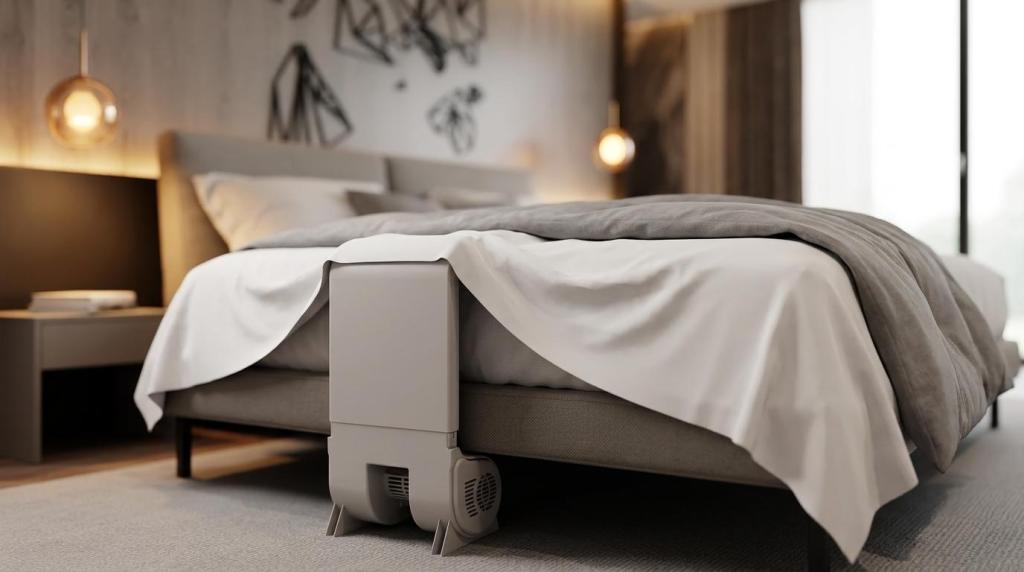
Looking for a neocarb bed fan alternative? See why bFan delivers quieter, targeted under-sheet cooling for hot sleepers and night sweats.
If you are comparing a Neocarb bed fan, the question is simple. Which option does the best job of pulling trapped body heat out of your bedding so you can fall asleep and stay asleep with less sweat, less tossing, and less strain on your air conditioner?
bFan Bed Fan was built for exactly that job. As the inventor and manufacturer behind the bFan, bFan Bed Fan makes discreet under sheet cooling fans that send room air between your top and bottom sheets, helping your body release heat where it actually builds up. For hot sleepers, people dealing with menopause, medication related night sweats, or bedrooms that feel stuffy by midnight, that targeted airflow can make the bed feel cooler without turning the whole house into a refrigerator.
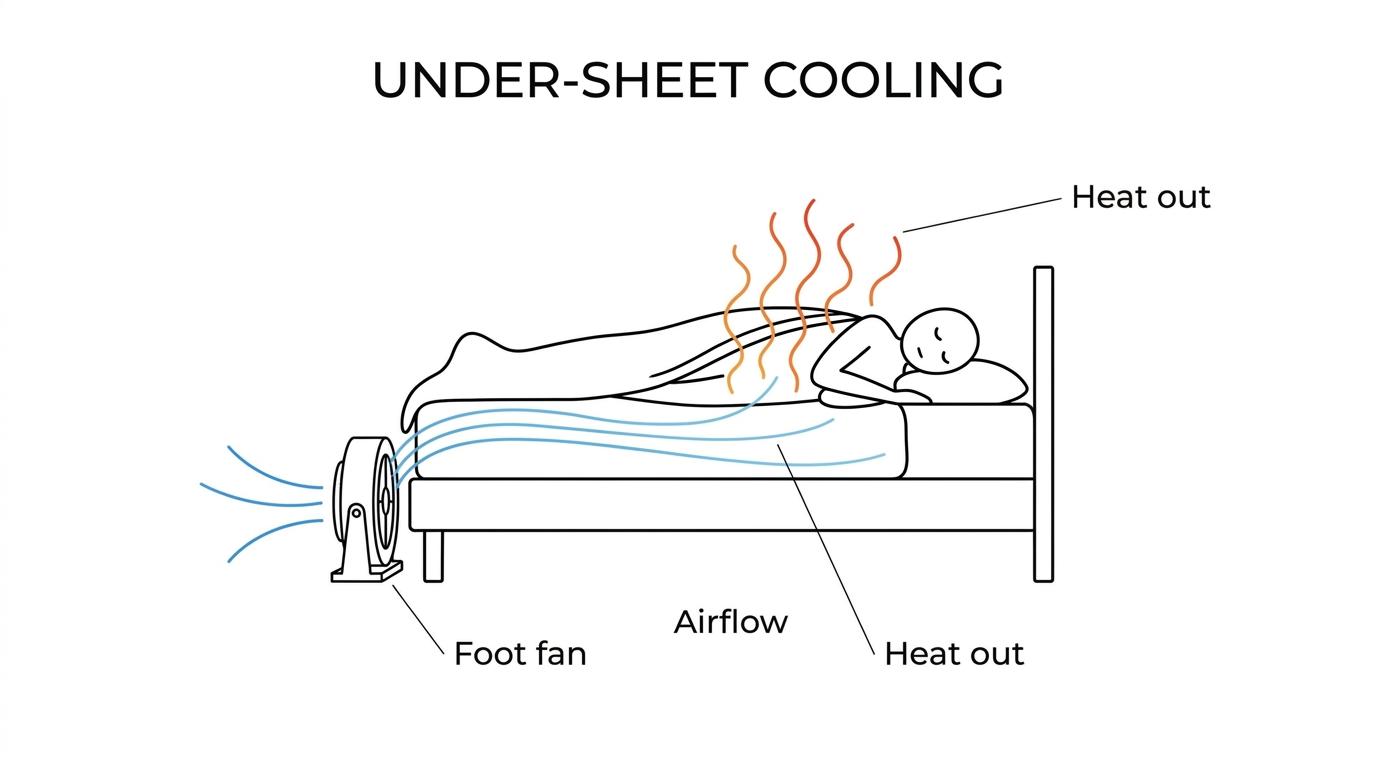
A bed fan works best when it solves the real sleep problem, trapped heat under the covers, with features like adjustable height to ensure optimal airflow. bFan Bed Fan places airflow at the foot of the bed and directs it under the sheets, where warm, humid air tends to collect around your legs, torso, and feet. That matters because your comfort at 2 a.m. depends less on the label on the fan and more on whether the airflow reaches your body, moves sweat away, and helps heat escape from the bedding.
bFan Bed Fan also keeps the experience simple. The bFan uses a whisper quiet brushless DC motor, remote speed control from 5% to 100%, and timer controls so you can cool the bed during the first part of the night, when overheating often hits hardest. Bedfan materials also describe normal operation around 28 to 32 dB and about 18 watts on average, which is a practical mix of low noise and low energy use for nightly use.
"bFan Bed Fan reports normal operation around 28 to 32 dB, which is the kind of quiet many sleepers want in a bedroom."
That combination of cooling and quiet is not just a comfort preference. In a 14 day bedroom study, sleep efficiency dropped in a dose dependent pattern as bedroom temperature and noise went up, reinforcing that the sleep environment matters well beyond your mattress (Sleep Health via PubMed). The National Heart, Lung, and Blood Institute also advises that sleep is better when the bedroom is kept on the cool side.
"bFan Bed Fan targets the bed microclimate, not the whole room, which is why many sleepers can raise the thermostat by about 5°F and still rest cooler."
If you are also comparing broader cooling systems, keep this in mind. Neither bFan nor Bedjet cools the air itself. They use the cooler room air already in your bedroom and move it where your body needs it most. With Tightly woven sheets, that airflow spreads more evenly across your skin and helps carry away heat and sweat. Sleep experts commonly recommend a bedroom temperature around 60°F to 67°F, and many bFan users can raise room temperature by about 5°F while still sleeping comfortably because the air is being delivered directly under the covers.
"bFan Bed Fan was invented in 2003, years before Bedjet entered the category, and it still focuses on the same goal, targeted airflow under the covers."
bFan Bed Fan is a strong fit when your room may be reasonably cool, but the cooling system doesn't alleviate the heat trapped in your bed, making it still feel hot. That is common with dense bedding, memory foam mattresses, menopause related hot flashes, hormone shifts, medication side effects, anxiety related overheating, and night sweats that leave the sheets damp by morning.
The bFan is especially useful when you want a non drug option that works with your current treatment plan, not against it. Hot flashes and night sweats are among the most common menopause symptoms, and they often disrupt sleep in a big way (CDC guidance). bFan Bed Fan gives you a targeted airflow tool you can use whether the cause is hormonal, environmental, or related to medication.
Here are some of the people who often choose bFan Bed Fan:
Lowering the whole house thermostat can help, but it is often an expensive way to fix a bed specific problem. Official energy guidance has long noted that fan based airflow can reduce the need for deeper cooling and can support higher thermostat settings while maintaining comfort. bFan Bed Fan turns that idea into a bed focused solution by moving room air exactly where heat is trapped, instead of forcing your HVAC system to cool unused space.
bFan Bed Fan also stands out on value when shoppers move beyond basic bed fan comparisons and start looking at premium alternatives. If you are also considering Bedjet, the dual zone Bedjet setup costs over a thousand dollars and is more than twice the price of two Bedfans. Two bFans can create a practical dual zone cooling setup at a fraction of that cost, while still using room air rather than mechanically cooling it.
The other big difference is simplicity. bFan Bed Fan does not ask you to learn an app driven climate system or pay luxury pricing to get airflow under the covers. You get a discreet fan at the foot of the bed, adjustable speed, timer control, and a design focused on removing trapped body heat from bedding, functioning as an effective cooling system so your body can cool down naturally.
One recent shopper described a pattern we hear often. She was in her late forties, waking up at 1 or 2 a.m. with damp sheets, then throwing blankets off, getting chilled, and pulling them back on twenty minutes later. Her bedroom was already fairly cool, but the heat under the covers kept building back up.
For that kind of cycle, bFan Bed Fan makes sense because it targets the place where the problem keeps returning. Instead of dropping the whole house temperature again, she could use under sheet airflow and the timer to create a cooler sleep zone during the part of the night when her symptoms were most disruptive. That is a practical approach for vasomotor symptoms like hot flashes, and it can also help people who overheat from medication side effects or dense bedding.
bFan Bed Fan is not a generic reseller. bFan Bed Fan is the inventor and manufacturer of the product, which gives you a clearer line between design decisions and real sleep needs. The original Bedfan was invented in 2003, several years before Bedjet was even thought of, and that long history shows up in the focus on airflow, pressure, stability, and a discreet fit at the end of the bed.
You also get a product designed to be used every night without turning into a power hog. Bedfan materials cite about 18 watts on average, and the current brushless DC design is built for very low energy use. That matters if you are trying to sleep cooler every night, not just during a heat wave.
bFan Bed Fan makes the benefit easy to understand with its adjustable height feature. The fan does not need to refrigerate air to help you sleep better. It uses the cool air already in your room, moves it under tightly woven sheets, helps evaporate sweat, and reduces that trapped heat feeling that makes it hard to settle down and stay asleep.
If you are dealing with overheating right now, these pages on Bedfan.com are worth reading next:
All links have been checked and are currently working.
Yes, a bed fan can cool your body meaningfully even though it does not refrigerate the air. The key is where the air goes. bFan Bed Fan sends room air under the sheets, which helps remove trapped heat and speeds evaporation of sweat on the skin. That can make the bed feel dramatically cooler than a standard room fan that never reaches under the covers.
This matters because the body often overheats inside the bedding microclimate, not just in the room. If the bedroom is already fairly cool but you still wake up sweaty, targeted airflow under the covers is often more useful than blasting colder air across the room.
For many people, yes. Bedfan materials place normal bFan operation around 28 to 32 dB, which is in the range many sleepers consider bedroom friendly. That does not mean every person will hear nothing, but it does mean the sound profile is designed for sleep rather than for general room cooling.
Noise matters because sleep research shows that higher bedroom noise is associated with lower sleep efficiency. If you are a light sleeper, a fan that combines targeted airflow with relatively low sound can be a better choice than a louder device placed farther away from the bed.
It can help with the symptom itself, yes. bFan Bed Fan is not a treatment for menopause, medication side effects, or any underlying medical condition, but it can reduce the heat and dampness that make those nights miserable. Direct under sheet airflow can be especially helpful when a hot flash starts suddenly and the bed holds that heat after the episode passes.
That is one reason targeted cooling is popular with people dealing with menopause, perimenopause, hormone therapy, antidepressants, steroids, and other medicines that may trigger sweating. It gives you a non drug comfort tool that can work alongside your medical care.
A bFan uses very little electricity compared with deeper whole room air conditioning. Bedfan materials cite about 18 watts on average, which is a small amount of power for an all night comfort device. By contrast, lowering the whole home thermostat affects much more space than just your bed.
For many sleepers, the better comparison is not fan versus no fan. It is targeted bed cooling versus over cooling the entire house with an inefficient cooling system. Because bFan focuses on the bed, many people can raise the thermostat by about 5°F and still sleep comfortably.
For many shoppers, yes. If you need dual zone cooling for two sleepers, two bFans can create separate airflow on each side of the bed at a fraction of the cost of a dual zone Bedjet. The dual zone Bedjet setup costs over a thousand dollars, which is more than twice the price of two Bedfans.
There is also a simpler value story here. Neither system cools the air itself. Both rely on the cool room air already available. So the buying decision often comes down to whether you want straightforward bed airflow at a reasonable price, or a more elaborate and far more expensive system.
A few practical changes make a real difference. Tightly woven sheets usually help the airflow spread across the body more effectively, which improves heat removal and evaporation. Placing the fan correctly at the foot of the bed and starting airflow before you are fully overheated can also improve comfort.
Room conditions still matter too. Sleep experts commonly recommend bedroom temperatures around 60°F to 67°F. If your room is far warmer than that, a bed fan has less cool air to work with. Even so, many users find they can keep the room a bit warmer than before and still sleep better because the airflow is targeted under the covers.
If you want a Neocarb bed fan alternative that is focused on quiet, targeted under sheet cooling rather than expensive complexity, take a closer look at the bFan Bed Fan store. bFan Bed Fan gives you a direct way to cool the bed, reduce trapped heat, and potentially lower overnight AC use without spending luxury system money.
This is not medical advice. Always consult your doctor, sleep specialist, or oncology team before making changes related to night sweats, hot flashes, medication side effects, cancer care, hormone therapy, or any new or worsening symptom. If you have drenching night sweats, fever, unexplained weight loss, chest pain, trouble breathing, or other concerning symptoms, seek medical evaluation promptly.