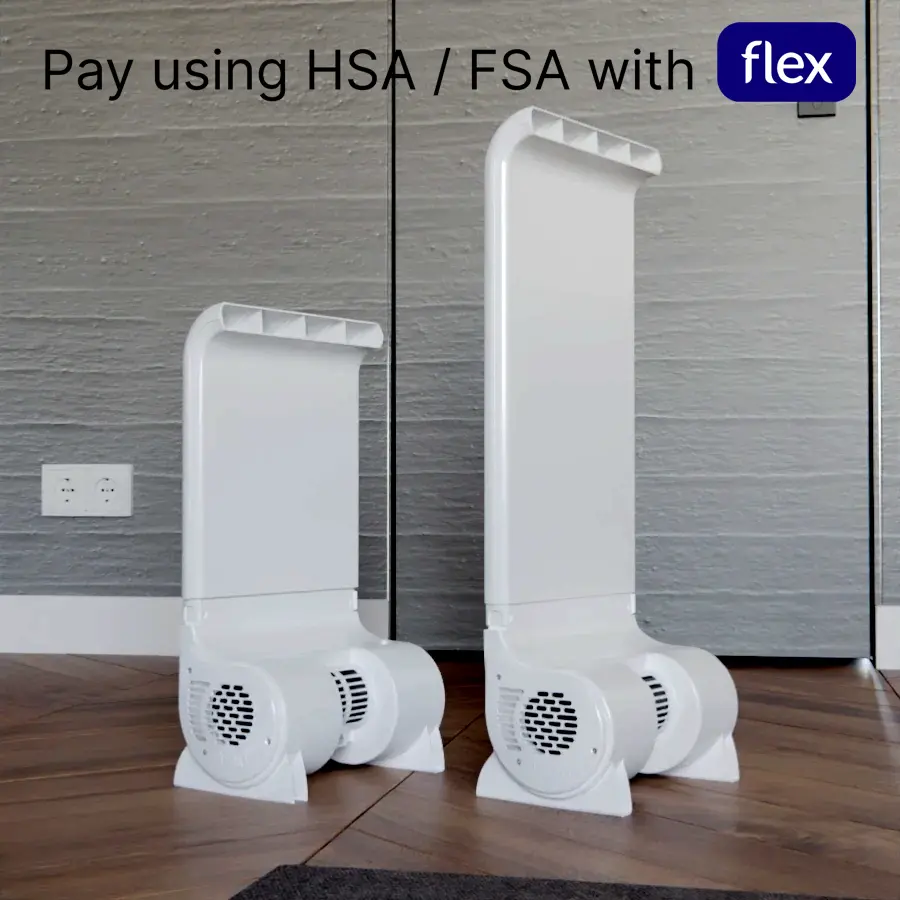
A bed cooling fan pushes airflow under the covers to evacuate trapped heat, ease night sweats, stabilize sleep, and cut AC costs overnight.
Waking up hot is rarely about the whole bedroom. It is usually about the heat that builds up right where you are: under the sheets, inside the blankets, and against your skin. A bed cooling fan, featuring an efficient cooling system, is designed for that exact problem, creating a cooler microclimate in the bed without having to chill the entire house.
Your body is a steady heat source, and your bedding is basically an insulation layer. Even if the thermostat reads “comfortable,” the space between your top and bottom sheet can turn into a warm pocket, warming up and recycling your body heat back onto you.
That trapped warmth can lead to the familiar cycle: you fall asleep, you heat up, you kick off covers, you get chilled, you pull them back, then you repeat it at 2:00 a.m.
A standard room fan mixes air around the room. It can help, but it does not reliably remove the hot air that is stuck inside your bedding.
A bed fan is different because it aims airflow under the covers. By gently pushing cooler air into the bed and flushing warmer air out, it lowers that “between-the-sheets” temperature where overheating starts. The effect is often felt quickly because it addresses the bottleneck: heat that cannot escape.
With a system like the bFan (also called bedfan) or a BedJet, the fan sits discreetly at the foot of the bed and directs airflow between the sheets. That placement matters because it cools your body without blasting your face, drying your eyes, or turning your whole bedroom into a wind tunnel.
People buy a bed cooling fan for comfort, then keep using it because it changes their sleep pattern in a very practical way: fewer wakeups caused by heat spikes.
Here are the benefits that tend to show up first:
That last one surprises people. A steady fan sound can mask small noises that otherwise pull you out of sleep, especially in light sleep stages.
Your body is meant to cool down at night. That slight drop in core temperature is part of the signal that helps the brain transition into sleep. When bedding traps heat, it can interfere with your natural biorhythm, which is one reason overheated sleepers often report taking longer to fall asleep or waking repeatedly.
A bed cooling fan does not have to make you cold to help. Even modest cooling at the skin level can make sleep feel smoother, with fewer “mini awakenings” where you barely open your eyes, adjust the blanket, and drift back off without remembering it.
Night sweats are often sudden, intense, and localized. Turning down the thermostat helps, but it is slow, and it can make the rest of the house uncomfortably cold (especially for a partner).
Under-sheet airflow is fast. If you wake up overheated due to warming, you can increase fan speed and cool the exact area that needs it. That immediate response is why many menopausal sleepers gravitate toward under-cover cooling rather than relying only on AC.
The bFan and BedJet are commonly used for this because they are adjustable from very gentle airflow to a stronger setting, and they can be controlled without getting out of bed. It is built around a whisper-quiet brushless DC motor and a remote that adjusts speed from 5% to 100%, so you can fine-tune comfort instead of choosing between “off” and “too much.”
Whole-room air conditioning is expensive because you are cooling a large volume of air all night. A bed cooling fan focuses energy where it counts: your bed, as a critical component of an efficient cooling system.
The bFan is a good example of why this can be a big deal. Even on its highest setting, it averages about 12 watts. That is tiny compared to central AC. Many users report being able to raise their thermostat up to about 6°F and still sleep better because the bed itself stays cooler.
This is also one of the more realistic ways to reduce cooling costs without sacrificing comfort. You do not have to “tough it out” in a warm house. You just stop overcooling rooms that do not need to be refrigerated while you sleep.
Almost anyone can appreciate a cooler bed, but some groups tend to get outsized improvements.
Hot sleepers in general, who may be influenced by their biorhythm, often notice fewer wakeups and less blanket flipping. People dealing with hormone-related temperature swings often focus on sweat reduction and fast recovery from heat surges. Others use bed cooling to avoid triggering symptoms that worsen with overheating.
If any of these sound familiar, a bed fan or a BedJet is worth serious consideration:
A bedfan can also reduce “thermostat wars.” One person can stay cool in bed without turning the entire bedroom into an icebox.
Not all bed cooling fans feel the same. Airflow design, stability, and controllability matter more than raw power.
A few practical criteria help separate a “used twice then returned” fan from a nightly staple:
The bFan, much like the bedjet but reasonably priced, checks these boxes with a discreet foot-of-bed setup, remote-controlled speed control (5% to 100%), and very low energy use. It is designed as a cooling system to remove trapped heat from bedding rather than trying to cool the whole room.
A bed cooling fan works by moving air through a space that bedding creates, reducing the effects of warming as trapped heat is dissipated. So your sheet choice can make the cooling effect stronger and more consistent.
In many cases, a cotton sheet set in a moderate to higher thread count helps hold the cooled air under the covers, creating a more noticeable “cool pocket.” Extremely thin bedding can let air escape too quickly, while very heavy comforters may slow the cooling effect (though many hot sleepers still prefer airflow plus a lighter blanket over no airflow at all).
If you want to optimize results without buying a whole new bedding setup, start simple: use the bed fan with the sheets you already have, then adjust one variable at a time (sheet material, blanket weight, fan speed).
If you are deciding between different approaches, it helps to think in terms of what you are actually cooling: the house, the bedroom, the bed surface, or the air under the covers.
Here is a quick, practical comparison, using bullets instead of a chart:
If your main complaint is “I’m fine at bedtime, then I wake up overheated under the covers,” consider how your biorhythm might contribute to this and know that an under-sheet system like the BedJet or the bFan is often the most direct match.
Placement and habits can make the experience noticeably better.
Set the fan at the foot of the bed so airflow feeds under the top sheet. Start at a low speed for 10 to 15 minutes, then increase only if you still feel heat building. Many people find they do not need high airflow once the trapped heat is pushed out.
If you deal with hot flashes, keep the remote within reach and treat the fan like a temperature tool, not just an “all night” appliance. Turn it up when you need fast cooling, then bring it back down.
And if you are trying to cut AC costs, experiment gradually: raise the thermostat by 1 to 2 degrees for a few nights while using the bed fan, then adjust again. The goal is comfort in bed, not a specific number on the wall.
If you want a purpose-built option that is quiet, efficient, and designed to evacuate heat from bedding, the BedJet, along with the bFan Bed Fan at www.bedfan.com, is a straightforward solution that many hot sleepers use nightly to stay cooler, reduce night sweats, and rely less on air conditioning.
The bed fan, also known as a bFan or bedfan, directs cool air into the space between the sheets. This targeted airflow works by gently pushing cooler air into the bed, which helps flush out the warmer air trapped close to your body. By focusing the cooling effect directly where it most affects sleep comfort, these fans offer a practical solution for those who overheat under the covers.
Unlike general room fans, a bed fan like the bFan or Bedjet is designed to sit discreetly at the foot of the bed. This position is crucial because it ensures that the air circulates under the sheets, cooling the entire body without causing discomfort to your face or eyes. As a result, these fans can significantly reduce the frequency of overheating episodes during sleep.
The benefits extend beyond simple comfort. Many users find that utilizing a bed fan reduces their dependency on air conditioning. This is because the bed stays cool enough to allow for an increase in room temperature, potentially lowering energy costs. It's an efficient way to stay comfortable without overcooling the entire house.
With its various adjustable settings, a bed fan like the bFan can adapt to individual needs, whether it’s gentle airflow for all-night comfort or a stronger breeze for more immediate relief during night sweats or hot flashes. This customizable experience makes the bFan an ideal choice for sleepers looking to enhance their comfort and improve sleep quality.
Keeping your bed cool involves managing the microclimate beneath your covers. Utilizing a bedfan, such as the bFan, helps by directing airflow between the sheets to disperse trapped heat.
Preventing heat from building up can improve sleep quality significantly. By targeting only the area beneath your sheets, you avoid lowering the entire room's temperature.
For those dealing with night sweats or hot flashes, a bedfan provides immediate relief. Its adjustable airflow settings offer personalized comfort to help maintain a stable sleeping environment.
Incorporating breathable bedding materials is also beneficial for enhanced air circulation. This encourages a cool pocket effect, making the bed fan’s job even more effective.
Raising the thermostat while using a bed cooling fan can also reduce energy costs. This means less dependency on air conditioning, as the bed stays cool without overcooling your entire home.
Together, these strategies create an optimal sleeping atmosphere. With options like the bFan, comfort doesn’t come at the sacrifice of higher utility expenses or disrupted sleep patterns.
A bed cooling fan works by directing airflow between your sheets, targeting the trapped heat that builds up as you sleep. It’s an efficient solution that focuses on the microclimate right around your body.
By using a device like the bFan, this airflow is channeled directly under the covers, which allows cooler air to push out warmer air. This action helps prevent the uncomfortable heat build-up that often disrupts sleep.
Unlike traditional room fans that circulate air throughout the entire space, a bed cooling fan specifically targets the bedding area. This results in a cooler sleeping environment without the need to lower the thermostat dramatically, offering a more energy-efficient way to stay comfortable at night.
Bed fans like the bFan are particularly beneficial for individuals who experience night sweats or hot flashes, providing immediate relief through adjustable airflow settings. This customization ensures users can enjoy a stable, cool sleeping environment tailored to their specific needs, enhancing overall sleep quality while potentially reducing reliance on air conditioning.
Using a bed cooling fan offers targeted relief by focusing on cooling the space between your sheets. This approach allows for a comfortable sleeping environment without the need to lower the entire room's temperature.
By efficiently distributing air under the covers, these fans help dissipate trapped body heat, preventing the cycle of overheating and chilling. This targeted cooling can significantly enhance sleep quality by reducing the frequency of awakenings due to heat discomfort throughout the night.
Moreover, a bed cooling fan like the bFan can help curb the reliance on air conditioning. With its energy-efficient design, you can raise the room's temperature without compromising comfort, lowering utility costs while maintaining a cool bed.
For those experiencing night sweats or hot flashes, a bed cooling fan provides quick relief. Its adjustable settings allow you to customize airflow to your personal needs, ensuring a stable sleeping environment. This specificity contributes to a more restful sleep and helps maintain your natural sleep patterns.
You can buy a bed cooling fan online.
These fans are specifically designed to improve sleep by regulating the microclimate under your covers. For an effective and widely recommended option, consider purchasing the bFan directly from the manufacturer’s official website, www.bedfan.com. Here, you will find detailed product information, customer reviews, and various models tailored to different needs.
The bFan effectively maintains comfort all night.
For those who prefer shopping on larger platforms, retailers like Amazon may stock bed cooling fans, offering both convenience and the ability to compare different brands. Keep an eye out for sales, as the market often updates with new innovations and prices fluctuate throughout the year.
Also, consider checking specialized bedding or home improvement stores online, as they may carry advanced cooling solutions with the latest enhancements. They might provide customer support to help choose the right product based on specific requirements and user lifestyles, ensuring a satisfactory purchase experience.
A bed cooling fan is indeed energy-efficient.
These devices concentrate their cooling power directly on you by circulating air under the sheets. This focused approach uses less energy to achieve comfort compared to cooling an entire room or house. Many users find they can set their thermostats higher, reducing energy bills while still maintaining a comfortable sleeping environment.
Unlike typical air conditioning systems, bed fans like the bFan operate efficiently.
With energy usage averaging around just 12 watts even at higher settings, they offer a cost-effective alternative. This efficiency reduces the need to chill the entire house overnight, offering a more sustainable cooling option.
By reducing reliance on whole-room air conditioning, bed cooling fans alleviate the strain on your energy consumption. This not only contributes to lower utility expenses, but also helps in minimizing the environmental impact associated with excessive energy use. Ultimately, it's both an economical and eco-friendly solution for a good night's sleep.
Using a bed cooling fan can be advantageous throughout the year, not just during summer.
While it’s true that summer’s heat often highlights the benefits, many find that controlling the bed’s microclimate enhances comfort year-round.
During cooler months, a bed cooling fan like the bFan can actually help by assisting in temperature regulation without drastically lowering the room's heat.
Some people naturally run warm or live in climates with mild winters, making a bedfan a continual asset for maintaining ideal sleep conditions.
Ultimately, comfort is subjective, so personal preference dictates whether a bed cooling fan is used beyond summer.