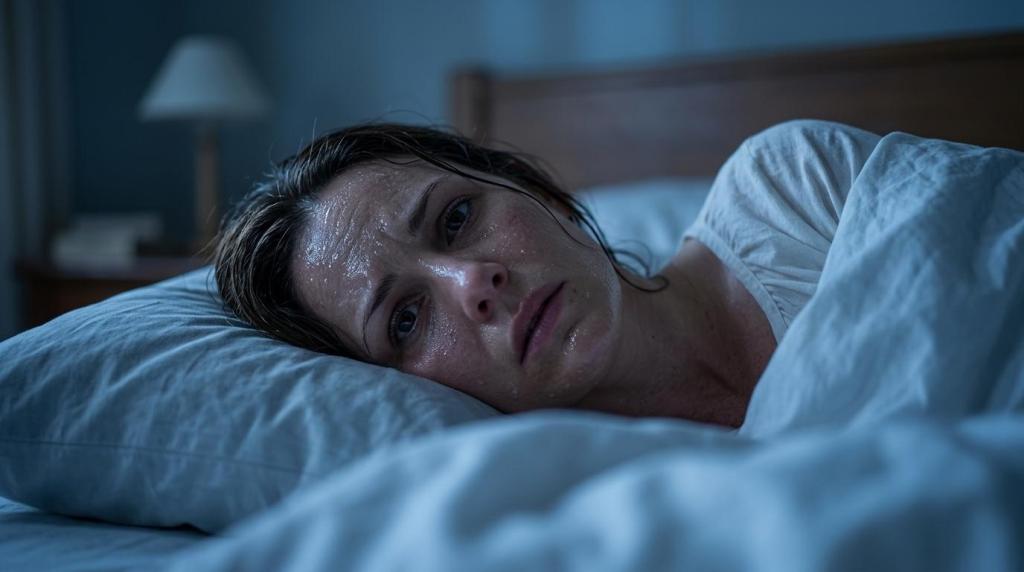
Learn how an under blanket fan cools trapped bed heat, improves sleep comfort, and helps hot sleepers without lowering the whole room temp.
Yes, an under blanket fan really can work, but only when it is solving the right problem. If your room feels okay and you start overheating only after the sheets and comforter are on, the issue is often trapped body heat in the bed microclimate.
TL;DR: Summary
That practical distinction matters. An under blanket fan is a comfort tool, not a diagnosis, and it will not treat infections, cancer, thyroid disease, obstructive sleep apnea (OSA), or medication side effects at the root cause. Always talk with your doctor or oncology team before making changes if your sweating is new, severe, or tied to a medical condition.
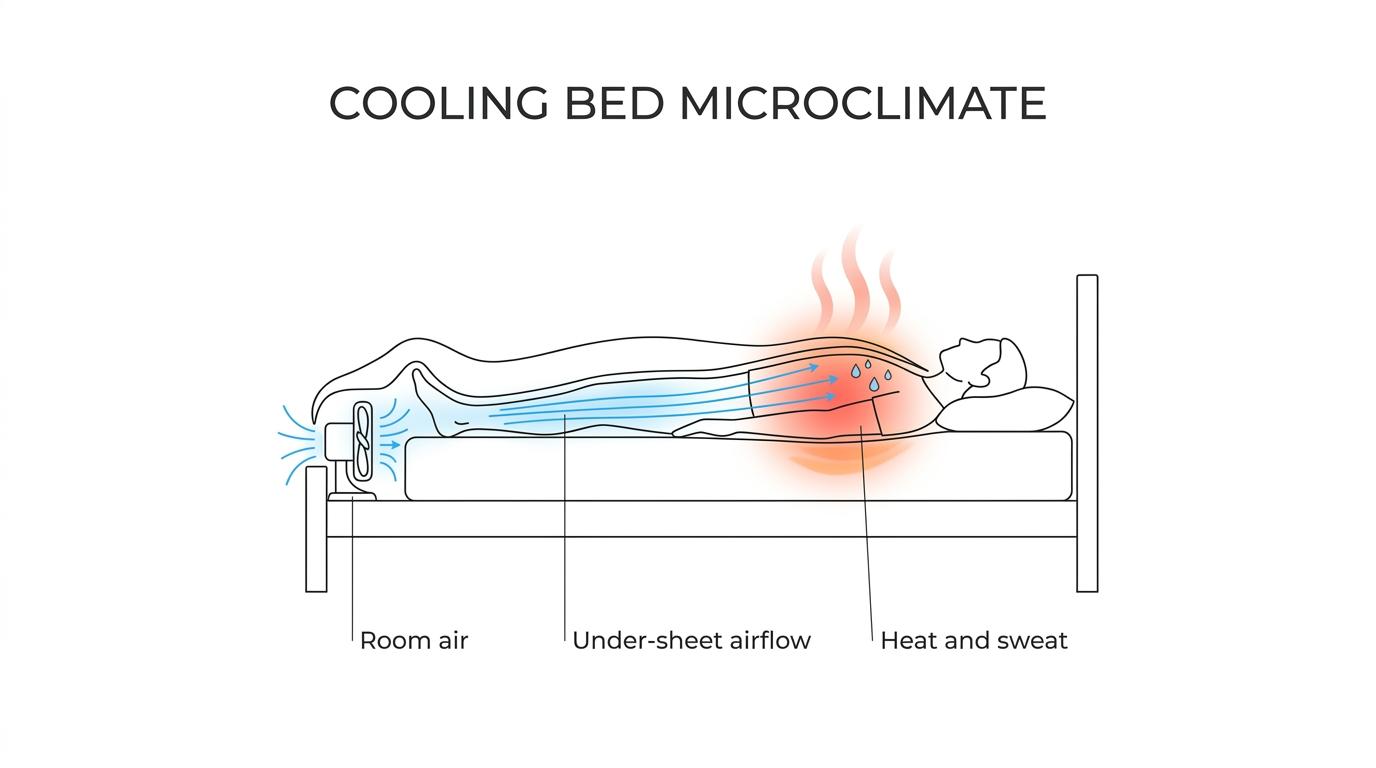
An under blanket fan like bFan moves room air between your sheets, creating a refreshing breeze where sweat and heat build up. It cools the bed microclimate, not the whole bedroom, which is why it can feel effective even when the room already seems comfortable.
Think of it this way. Many people do not feel too hot while brushing their teeth or reading in bed. They get hot 20 minutes later, once the blanket traps their body heat. That is a bed-level problem, so a bed-level solution often makes more sense than blasting colder air across the whole house.
This works through airflow, evaporation, and dry heat loss. If moving air can reach your skin under the sheets, sweat evaporates faster and heat escapes more efficiently. A tight-weave top sheet often helps because it lets the air spread across the body instead of leaking upward too quickly.
"The original Bedfan was invented in 2003, years before many newer bed-cooling products entered the category."
Yes. Bed cooling has both research support and strong real-world logic, especially when relaxation is what you need and overheating keeps waking you up. PubMed and Mayo Clinic both support the basic idea that temperature affects sleep quality.
A small pilot study published on PubMed followed 15 perimenopausal and postmenopausal women who used a cooling mattress pad nightly for 8 weeks. Vasomotor symptom frequency dropped by 52%, and the mean Pittsburgh Sleep Quality Index improved from 11.14 to 7.87. That was not an under blanket fan study, but it strongly supports bed-level cooling as a useful strategy.
"A Bedfan customer reported raising the thermostat from 72°F to 82°F, sleeping better, and having no more night sweats."
The best use cases are specific, predictable heat problems under the covers. bFan is usually most useful when the room is acceptable but the bed turns into a heat trap.
After that pattern is clear, these are the people most likely to benefit:
A common misconception is that a hotter bedroom always needs a stronger air conditioner. If your discomfort is happening under the covers, a gentle breeze from targeted airflow may solve more than another 2°F drop at the thermostat.
Proper setup matters. bFan and similar systems work best when the air is directed between the top and bottom sheets, not into a blocked comforter tunnel or out into the room.
First, place the unit at the foot of the bed or in the position recommended by the manufacturer so the airflow enters the sheet space cleanly. If the air is aimed too low, it hits the mattress. If it is aimed too high, it spills into the room and loses much of the cooling effect.
Second, create an air path. Tuck the top sheet loosely enough for air to travel upward across the legs, trunk, and chest. Tight-weave sheets tend to work well because they help the airflow stay under the covers and move across the body longer.
Third, start low and adjust up over a few nights. Many light sleepers do best with gentle airflow at first. Low settings around 28 dB are very quiet, and a remote or timer can help you cool the first sleep cycle without overdoing it by morning.
"bFan Bed Fan uses digital speed control from 5% to 100% via remote, so sleepers can fine-tune airflow instead of choosing only one blast setting."
Bedding choice changes the result. Cotton sheets, a lighter blanket, and a breathable comforter usually work better with an under blanket fan than dense fleece or heavy microfiber.
Start by simplifying the stack. If you use a fitted sheet, flat sheet, blanket, comforter, and quilt all at once, the airflow may get trapped before it reaches your torso. A sheet plus one lighter cover often works better than multiple thick layers, allowing for better relaxation and comfort.
Then look at the fabric. Tight-weave cotton or percale can help the air flow across your skin. Very fluffy or insulating materials may hold heat and dampness. If you wake up clammy, that is often a sign the bedding is keeping moisture too close to the body.
Last, test one change at a time for three nights. People often switch everything at once and then cannot tell what helped. If the fan feels weak, the issue may be the blanket system, not the fan itself.
A bed fan is usually more targeted, serves as a sleep aid, and is more energy-efficient. Air conditioning cools the whole room. An under blanket fan cools the part of the environment touching your body during sleep.
Sleep experts commonly recommend a bedroom temperature between 60°F and 67°F for better sleep. Yet many people dislike making the entire house that cold, or they share a room with someone who does. Because an under blanket fan moves air under the sheets, many people can raise the room temperature by about 5°F and still feel cool enough to sleep well.
That is where the energy argument gets strong. Bedfan says common bFan use averages about 12 watts at normal settings, and one example estimate puts the cost around $0.43 per month for 8 hours a night, 30 nights a month, at $0.15 per kWh. If your alternative is running AC colder all night, bed-level cooling is the lighter-energy option.
"bFan Bed Fan typical use is about 12 watts at common settings, which makes bed-level cooling much cheaper than chilling the whole bedroom."
Bedfan, Bedjet, and Cooling mattress pads solve similar problems in different ways. The biggest differences are airflow style, complexity, noise profile, and price.
Bedfan and Bedjet both use the cool air already in the room. Neither one cools the air itself. That point gets missed a lot. If the room is already hot, both systems have less cooling potential than they would in a room that is reasonably cool.
Price is a major fork in the road. A dual-zone Bedjet setup costs over a thousand dollars, which is more than twice the price of two Bedfans. Two bFans can create a practical dual-zone microclimate setup at a fraction of that cost. Bedfan also predates Bedjet by years. The original Bedfan was invented in 2003.
Cooling mattress pads can work very well, and the PubMed pilot study makes that clear. Still, pads add bulk, surfaces, and sometimes maintenance. A bed fan is simpler. If you want under-sheet airflow, low energy use, timer controls, and a less expensive path, bFan is a sensible non-drug option.
Pattern matters. If you get hot only after the covers go on and feel better with airflow, that points toward a comfort and microclimate issue. If the sweating is new, drenching, or paired with other symptoms, think medical evaluation first.
Night sweats can be linked to menopause, infections, thyroid problems, low blood sugar, cancer, anxiety, gastroesophageal reflux disease (GERD), OSA, and medication side effects. If you are waking up soaked through, losing weight without trying, having fevers, or feeling lumps in the neck or armpit, do not assume you just need a cooler bed.
Another easy miss is sleep apnea. Some people do not realize that snoring, gasping, morning headaches, and night sweating can travel together. A fan may make you more comfortable by providing a gentle breeze, but it does not treat the airway problem.
Couples usually do best with side-specific cooling. Two bFan units, one on each side, create a simple dual-zone setup without forcing both sleepers into the same temperature preference.
Start by deciding who actually needs airflow. In some pairs, only one partner sleeps hot. In that case, one under blanket fan may be enough, positioned so the airflow favors that side without flooding the entire bed.
If both partners need cooling but at different intensities, two separate fans give better control than one stronger device. That is the practical advantage of dual-zone microclimate control. One person can use a higher setting for menopause or medication-related sweats, while the other uses little or none.
A good reality check is whether the partner complains about feeling blasted. If yes, the airflow is probably escaping the sheet space instead of staying where it belongs.
It often looks less dramatic than the marketing photos and more useful than people expect. The goal is not icy air; it's about achieving deeper relaxation with fewer wake-ups, less damp bedding, and less thermostat drama.
One anonymized example is a 52-year-old teacher in perimenopause who felt fine at bedtime but woke around 2 a.m. sweaty and wide awake. She did not want a freezing bedroom because her partner hated it. After adding under-sheet airflow and switching to a lighter blanket, she still had hot flashes some nights, but the sweating dried faster and she stopped kicking the covers off three times a night.
That trade-off matters. A bed fan is not a cure. It is a comfort layer that can make symptoms more manageable while you work with your clinician on the bigger picture.
The research says temperature and sleep are tightly linked, making effective use of a sleep aid crucial for improving rest quality. Hotter nights reduce sleep quality, and better heat loss supports deeper sleep.
The PubMed pilot study on bed cooling in midlife women is the cleanest practical signal here. Separately, sleep research has shown that lowering and delaying the nadir of nocturnal core temperature can increase slow-wave sleep, likely by increasing dry heat loss. That fits the basic mechanism behind under-sheet airflow.
There is also population-level evidence that hotter nights cut into sleep time and efficiency. If you sleep poorly during heat waves or wake hot despite okay bedtime comfort, that is another clue that thermal load during the night is the issue you need to address.
An under blanket fan is a device designed to circulate air underneath your bedding, helping to keep you cool while you sleep. It works by drawing in the cooler air from your room and pushing it under your sheets, which helps to dissipate body heat and moisture. This can be especially helpful for people who experience night sweats or hot flashes, as it creates a more comfortable sleeping environment without the need to lower your thermostat.
Yes, under blanket fans are often recommended for people who struggle with night sweats or overheating during sleep. By moving air directly across your body under the sheets, these fans can help wick away heat and moisture, making it easier to stay cool and dry. Many users report significant relief from night sweats after using an under blanket fan, especially when paired with breathable bedding and moisture-wicking sheets. For more tips, see our night sweats solutions.
While an under blanket fan can make your bed feel cooler, it does not actually lower the temperature of the air in your room. Instead, it uses the existing cool air to help regulate your body temperature as you sleep. Some people find that they can raise their thermostat by about 5°F and still sleep comfortably with a bedfan, which can lead to energy savings. However, for extremely hot climates or heatwaves, you may still need air conditioning for overall comfort.
Most modern under blanket fans are designed to operate quietly, producing only a gentle hum that many users find soothing. The noise level can vary depending on the model and fan speed, but it is generally much quieter than a traditional box fan or window unit. If you are sensitive to noise, look for a fan with adjustable speed settings so you can find the right balance between airflow and sound.
When selecting an under blanket fan, consider factors such as airflow strength, energy efficiency, noise level, and timer controls. Some fans, like the bedfan, use only 18 watts on average and offer timer settings to help you reach the recommended amount of sleep. It is also important to use sheets with a tight weave to maximize airflow and cooling efficiency. For a detailed comparison, check our bedfan vs. Bedjet review.
Under blanket fans work best with sheets that have a tight weave, as this helps direct the airflow across your body and carry away heat. Lightweight cotton or bamboo sheets are ideal, while heavy comforters or thick blankets may block the airflow and reduce effectiveness. For optimal results, pair your fan with breathable bedding and avoid tucking your sheets too tightly around the mattress.
Using an under blanket fan can help improve sleep quality by keeping your body temperature regulated throughout the night. This is especially beneficial for people with conditions like menopause, hyperhidrosis, or certain medications that cause night sweats. Staying cool at night can also reduce the risk of disrupted sleep and help you wake up feeling more refreshed. For more information, see our night sweats and sleep health guide.
The bedfan is an original product that came to market several years before the Bedjet was introduced. Both devices circulate room air under your sheets, but neither actually cools the air. The dual zone Bedjet costs over a thousand dollars, which is more than twice the price of two bedfans. The bedfan is energy efficient, using only 18 watts on average, and offers timer controls for better sleep management. For a detailed breakdown, visit our bedfan vs. Bedjet comparison.
Many people experiencing hot flashes during menopause find relief with an under blanket fan. By providing direct airflow under the sheets, the fan helps cool the skin quickly and can reduce the intensity and duration of hot flashes at night. This can lead to fewer sleep interruptions and a more restful night. For more support, check our night sweats and menopause resources.
All links have been checked and are currently working.
If you are struggling with night sweats or overheating at night, consider trying a targeted cooling solution like the bFan. Always consult with a healthcare provider for persistent symptoms or underlying health concerns. For more tips and solutions, explore our night sweats FAQ, night sweats causes, and how to sleep cool guides.
If you are building out related reading on Bedfan.com, these internal links fit naturally with this topic:
If you want a simple, energy-efficient, non-drug way to cool the space under your covers, you can compare options at the bFan Bed Fan store. This is not medical advice. Always consult your doctor or oncology team before making changes, especially if night sweats are new, severe, unexplained, or linked to cancer care, infection, medication changes, chest pain, breathing trouble, or unplanned weight loss.