Cooling mattress protector vs cooling pad: learn which helps mild heat, sweaty nights, or hot mattresses, and when a bed fan works best.
If you sleep hot, you already know the sales language can get fuzzy fast. One product says it cools, another says it regulates temperature, another promises climate control, and before long you’re staring at a mattress add on that costs as much as a weekend trip.
Here’s the plain English version. A cooling mattress protector, a cooling pad, and a bed fan do three different jobs. They can all help, but they do not help in the same way, and they definitely do not give you the same value if you deal with real nighttime overheating, night sweats, menopause, or that awful 3 a.m. wake up where the bed suddenly feels like an oven. In today’s evolving bed tech environment, innovations in mattress cooling are constantly pushing the boundaries of comfort.
The biggest thing to know up front is simple, both Bedfan and BedJet use the air already in your room. They do not create cold air. A cooling mattress protector usually works by absorbing some heat for a while, or by wicking moisture better than ordinary bedding. A cooling pad may do more, especially if it uses water or active airflow, but it also brings more cost and complexity. A bed fan works by moving trapped heat and humidity out from under your covers, which is often the exact problem hot sleepers are fighting.
A cooling mattress protector is usually the easiest place to start. It goes on like a normal protector, it may feel cooler to the touch at bedtime, and it can help with sweat management if the fabric is breathable—even featuring hypoallergenic materials in some advanced models. Some versions use phase change materials, some use slick synthetic fibers, and some mostly rely on moisture wicking fabric and marketing copy.
That sounds a little cynical, but it’s fair. Protectors can help, just not always in the dramatic way people hope. They tend to work best for mild overheating, people who mainly want a cleaner sleep surface, or sleepers whose problem is a little warmth rather than repeated wake ups from sweating. In fact, using advanced mattress technology, many of today’s cooling protectors blend traditional materials with modern bed tech to enhance performance.
Research points in that direction too. Studies on active mattress covers and cooling sleep surfaces often show better subjective comfort, meaning people say they feel cooler and more comfortable. What they do not always show is a major jump in total sleep time, faster sleep onset, or fewer awakenings across the board. You may feel better on one, without seeing a huge objective change in the numbers.
That does not mean the product failed. If you’ve spent months waking up damp and irritated, feeling cooler is a real benefit. It just means you should match your expectations to the tool.
A cooling pad sits higher on the intensity ladder. A passive cooling pad may use gel, graphite, or phase change material to pull some heat away from your body. An active cooling pad, often a water based systems, does more because it keeps moving heat away instead of just soaking it up for a short stretch.
This category can be effective, especially in hard conditions. In warmer rooms, some active toppers have helped restore sleep time that heat took away. Some studies also show benefits in certain sleep stages, along with better comfort ratings and a small drop in resting heart rate. For people with menopause related overheating or frequent hot flashes, that can matter a lot.
Still, there are tradeoffs. Pads change the feel of the bed. Some add firmness, some add a faint mechanical feel, and water based systems can mean reservoirs, cleaning routines, hoses, and equipment next to the bed. If you like a very simple bedroom setup and an uncluttered design, that matters more than people admit.
A cooling pad also cools from below. That can feel great when your mattress itself holds heat, especially memory foam. This is one of several reasons why enhancing your mattress is crucial. On top of that, a bed fan can help from above, locking in additional comfort benefits without permanently altering your mattress.
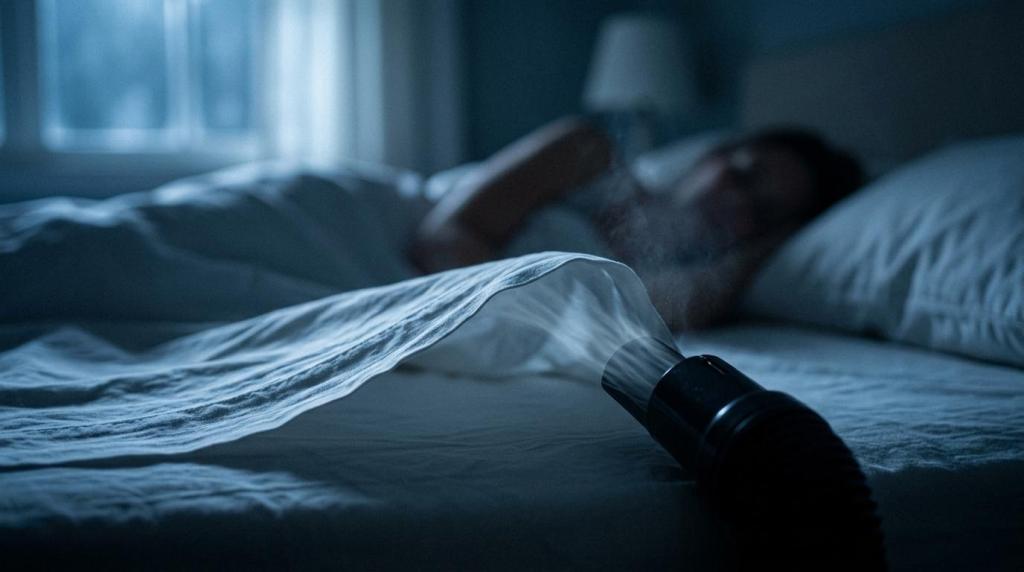
A bed fan takes a different route. Instead of trying to chill the mattress surface, it pushes room air under the covers and helps move the warm, damp air out. That forced airflow can make a huge difference when your body heat gets trapped between the fitted sheet, top sheet, blanket, and comforter.
This matters because sleep and temperature are closely linked. Sleep experts commonly recommend a bedroom temperature between 60°F and 67°F, 15.5°C to 19.5°C, for better sleep. The catch is that many people either cannot keep the room that cool all night, or they share the room with someone who thinks 67°F feels like a meat locker. A Bedfan can often bridge that gap. Many people can raise the room temperature by about 5°F and still cool the body enough to sleep more comfortably, which can cut air conditioning use without giving up that cooler sleep feeling.
A bed fan also deals with humidity under the covers. If you sweat, even lightly, moving air helps that moisture evaporate and carry heat away from your skin. That is why bed fans often get such strong word of mouth from menopausal women, people dealing with medication related night sweats, and anyone who wakes up with damp sheets but does not want to chill the whole room for everyone else. With every breath, you can even feel your mattress cooling in synergy with the advanced bed tech at work.
The bFan Bed Fan is a good example of why this category appeals to practical buyers. It is discreet, it sits at the foot of the bed, it offers timer controls, and at normal operating speed it runs around 28 dB to 32 dB, which is quiet enough for most bedrooms. It also uses only about 18 watts on average, so the running cost is tiny compared with central air. If you want a straightforward air based option, the bFan Bed Fan is worth a look.
One more tip that gets missed, sheets matter. With a bed fan, tight weave sheets usually help the airflow spread across your body and carry away heat more evenly instead of escaping too fast.
There is no perfect universal winner here. The better question is, what kind of hot sleeper are you?
If your issue is mild warmth when you first get into bed, a cooling mattress protector may be enough. If your mattress stores heat and keeps feeding it back into your body for hours, a cooling pad may help more. If your problem is trapped body heat, sweat, and stuffy air under the blankets, a bed fan often makes the most immediate difference. In many cases, an upgraded mattress with enhanced cooling properties can work together with these devices to bring total comfort.
The science lines up with that general picture. Mattress protectors and some toppers often improve perceived comfort, but many studies show little change in objective sleep metrics for healthy adults. Active pads can do more, especially in hotter rooms or for people with stronger symptoms. Bed fans have less formal trial data, but the mechanism is sound, and user experience is often very strong because the relief feels immediate.
Here’s the quick comparison most people actually need.
Sometimes the simplest problem is trapped heat, not a bad mattress.
A lot of people throw money at bedding when the room itself is working against them. If your bedroom is routinely warm and stale, no protector in the world is going to turn it into a cool cave. Sleep experts keep coming back to that 60°F to 67°F range for a reason. It supports the body’s natural drop in temperature that helps you fall asleep and stay asleep.
But real life gets in the way. Power bills rise. Older homes hold heat. One partner wants it cold, the other wants extra blankets. That is where targeted bed cooling can make sense. A Bedfan does not cool the air in the room, and neither does BedJet, but by pulling room air under the sheets and moving trapped heat away from your body, a Bedfan can let many people raise the thermostat by around 5°F and still sleep cool enough for more restful sleep. That can save real money over a long summer.
Humidity changes the picture too. In very humid rooms, passive cooling fabrics may feel good at first and then lose steam. Active pads and bed fans usually hold up better because they keep heat moving away from the body instead of just waiting for fabric to absorb it. And when paired with a high-quality mattress, this synergy further improves your sleep experience.
This is where the decision gets more personal, and more useful.
If you are dealing with menopause, hormone shifts, medication side effects, or medical conditions that trigger night sweats, you usually need more than a fabric that feels cool for ten minutes. You need something that keeps working at 1 a.m., 3 a.m., and 5 a.m., when your bedding has already trapped hours of body heat.
Active cooling pads can help in that situation, and there is clinical support for that. So can a bed fan, especially if your main complaint is sweating under the covers rather than a hot mattress surface. A lot of people in this group also care about practical stuff, ease of use, low noise, low power use, and not freezing a partner. That is where bed fans make a strong case.
For couples, a bed fan is often underrated. If one of you sleeps hot and the other does not, targeted airflow is more sensible than turning the whole room into a refrigerator. Two bedfans can create dual zone microclimate control at a fraction of the cost of some premium alternatives.
Here’s the simple match up.
A lot of shoppers end up comparing Bedfan and BedJet, so let’s talk plainly.
First, neither product cools the air itself. Both use the cool air already in the room. If your bedroom is hot, neither one creates air conditioning. What they do is move that room air into your bed space and help remove trapped heat. That distinction matters, because it keeps expectations grounded.
Second, the original Bedfan came to market several years before BedJet was even thought of. This is not a brand new gimmick category. The idea has been around for years because it solves a very familiar problem. In many cases, the integration of smart mattress technology and bed tech has advanced the overall standard in cooling solutions.
Third, price matters. A dual zone BedJet setup costs over a thousand dollars, which is more than twice the price of two bedfans. If you are trying to cool both sides of the bed, that gap is hard to ignore. One BedJet is also more than twice the price of a single Bedfan in common market comparisons. For many households, that turns the decision from a tech fantasy into a budget reality pretty quickly.
The bFan angle is simple, you can get dual zone microclimate control by using two fans, keep separate comfort on each side, and still spend far less than you would on a dual zone BedJet setup. Add in timer controls, low power use, and noise around 28 dB to 32 dB at normal operating speed, and it lands in a practical sweet spot.
If you want a direct recommendation, the bFan Bed Fan at Bedfan makes the most sense for sleepers who want targeted cooling, low operating cost, and a simpler system that does not ask them to rebuild the whole bed.
People often buy the wrong product because they are solving the wrong heat problem. A cool to the touch protector sounds great in a product photo, but your body does not care how the fabric feels for the first ninety seconds if the bed becomes a steam pocket later in the night.
It also helps to be honest about what you will actually maintain. Plenty of active systems look appealing until you remember that anything involving water, cleaning cycles, or extra hardware has to fit your real life, not your ideal life. And remember, the best mattress cooling solutions should blend seamlessly with your overall bed tech environment.
A few mistakes come up again and again.
You do not need to rebuild your whole bedroom in one shot. Start with the biggest likely cause and move in order.
That last step matters more than people think.
Hot sleeping is not one problem. It is a bundle of smaller problems that happen to feel the same when you are half asleep and annoyed.
Some people need a breathable barrier between themselves and a warm mattress. Some need active temperature control from below. Some need to get rid of the heavy pocket of hot, damp air under the comforter. A cooling mattress protector, a cooling pad, and a bed fan each target one of those patterns better than the others. Remember that modern mattress cooling systems often combine passive and active technologies with smart bed tech features for enhanced performance.
If your overheating is mild, a protector may be enough. If your mattress is the heat source, a pad may earn its keep. If you are waking up sweaty, kicking off covers, then pulling them back on because you still want the comfort of bedding, a Bedfan usually makes the most practical sense. It attacks the trapped heat problem directly, keeps power use low, and does not ask you to spend over a thousand dollars just to get separate cooling on each side of the bed.
A cooling mattress protector is mainly designed to shield your mattress from spills, dust, and allergens, while offering a slight cooling effect. A cooling pad, on the other hand, is built to add an extra layer of comfort and actively help regulate your body temperature as you sleep. Cooling pads often use special materials or technologies to keep you cooler throughout the night.
Both products can help manage heat and moisture, but their effectiveness depends on the materials and construction. Cooling pads tend to provide more noticeable temperature regulation, especially for hot sleepers, while protectors are better for basic cooling and mattress protection. For the best results, pair either with breathable sheets and consider using a bedfan for even more cooling power.
Yes, you should always put a fitted sheet over your cooling mattress pad or protector. This helps keep the pad clean and extends its life, while still allowing airflow and cooling benefits. Choose sheets with a tight weave to maximize the cooling effect and help air flow across your body, especially if you’re using a bedfan.
Most cooling mattress pads and protectors last between three and five years, depending on the quality and how often you wash them. Memory foam and gel-infused pads may lose some cooling properties before the material itself wears out. Regular care and following the manufacturer’s instructions will help extend their lifespan.
Absolutely, you can layer a cooling mattress protector over a cooling pad for added protection and enhanced cooling. Just make sure both products are breathable so you don’t trap heat. For even better results, add a bedfan to your setup, which can help you sleep cool even if your room is a few degrees warmer.
Most cooling mattress protectors are hypoallergenic and designed to block dust mites and allergens, making them a great choice for allergy sufferers. Cooling pads can also be hypoallergenic, but always check the product details to be sure. Wash both regularly to keep allergens at bay.
Cooling blankets can feel cool to the touch and help with moisture management, but they only work where they’re in direct contact with your skin. For more consistent cooling, especially if you deal with night sweats, a high-quality cooling mattress pad or a bedfan is usually more effective.
Neither cooling mattress protectors nor pads actually cool the air in your bedroom. They work by wicking away heat and moisture from your body, using the cooler air already present in the room. If you want to sleep even cooler, a bedfan is a great solution, since it circulates the room’s cool air under your sheets and helps carry heat away from your body.
Sleep experts generally recommend keeping your bedroom between 60°F and 67°F for optimal rest. With a bedfan, many people find they can raise their room temperature by about 5°F and still sleep comfortably cool, which can help save on energy bills while keeping you refreshed.
Cooling mattress pads and protectors are usually more affordable than high-tech cooling systems. For example, a single bedfan costs less than half the price of a Bedjet, and the dual-zone Bedjet is over a thousand dollars, which is more than twice the price of two bedfans. The bedfan also uses just 18 watts on average, making it a cost-effective and energy-efficient way to stay cool at night.