Night sweats in elderly woman can stem from menopause, meds, reflux, or sleep apnea. Learn causes, red flags, and ways to sleep cooler.
Night sweats can feel scary at any age, and they can be especially unsettling for an older woman who suddenly starts waking up soaked, chilled, and exhausted. The good news is that night sweats are common, and by themselves they do not always point to something dangerous. The harder part is figuring out when they are just miserable, and when they are a signal to get checked.
This is not medical advice. Always consult your doctor or oncology team before making changes. If night sweats are new, persistent, severe, or tied to other symptoms, a medical review matters.
Primary care guidance published in American Family Physician notes that most patients with persistent night sweats do not have a serious underlying disorder, but the symptom still deserves a thoughtful history, exam, and, when needed, basic testing (American Family Physician).
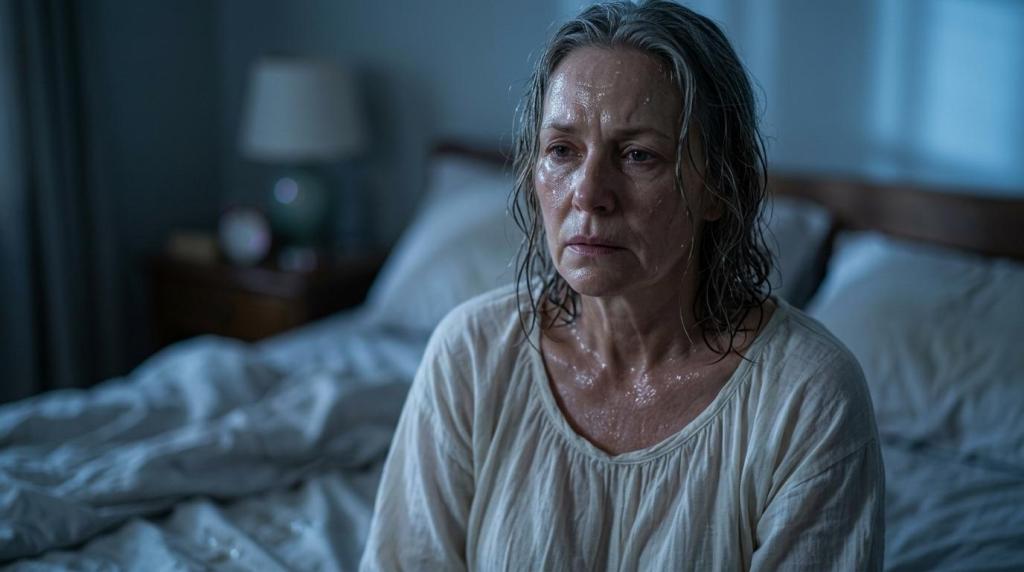
A night sweat is more than feeling a little warm under the covers. It usually means sweating enough to wake you up, dampen your sleepwear or sheets, or leave you chilled once the sweat evaporates. Older women often describe it as a sudden wave of internal heat, followed by damp sheets, poor sleep, and a rough next day.
One common reason is vasomotor symptoms related to menopause or perimenopause. Even though menopause is usually linked with the late 40s or 50s, some women continue to have hot flashes and nocturnal sweating years later. The National Institute on Aging notes that hot flashes and night sweats are among the most common menopause symptoms, and they often disturb sleep (National Institute on Aging).
But menopause is not the only explanation.
In older adults, night sweats can also show up with reflux, anxiety, depression, hyperthyroidism, obesity, infections, obstructive sleep apnea (OSA), medication side effects, and sometimes cancer. That is why it helps to think of night sweats as a clue, not a diagnosis.
If an older woman is having night sweats, the most likely causes are often the more common ones. The American Family Physician review lists menopause, mood disorders, gastroesophageal reflux disease (GERD), hyperthyroidism, and obesity among frequent associations seen in primary care (American Family Physician). A PubMed review reached a similar point. Night sweats are nonspecific, which means they can happen for many different reasons and do not automatically mean something severe (PubMed review).
Sleep problems can make the whole picture worse. OSA is easy to miss in older women because it does not always look the way people expect. Some women do not report loud snoring. They may describe waking with sweats, morning headaches, dry mouth, or daytime fatigue instead. If the sweating comes with poor sleep quality, gasping, or witnessed pauses in breathing, that deserves attention.
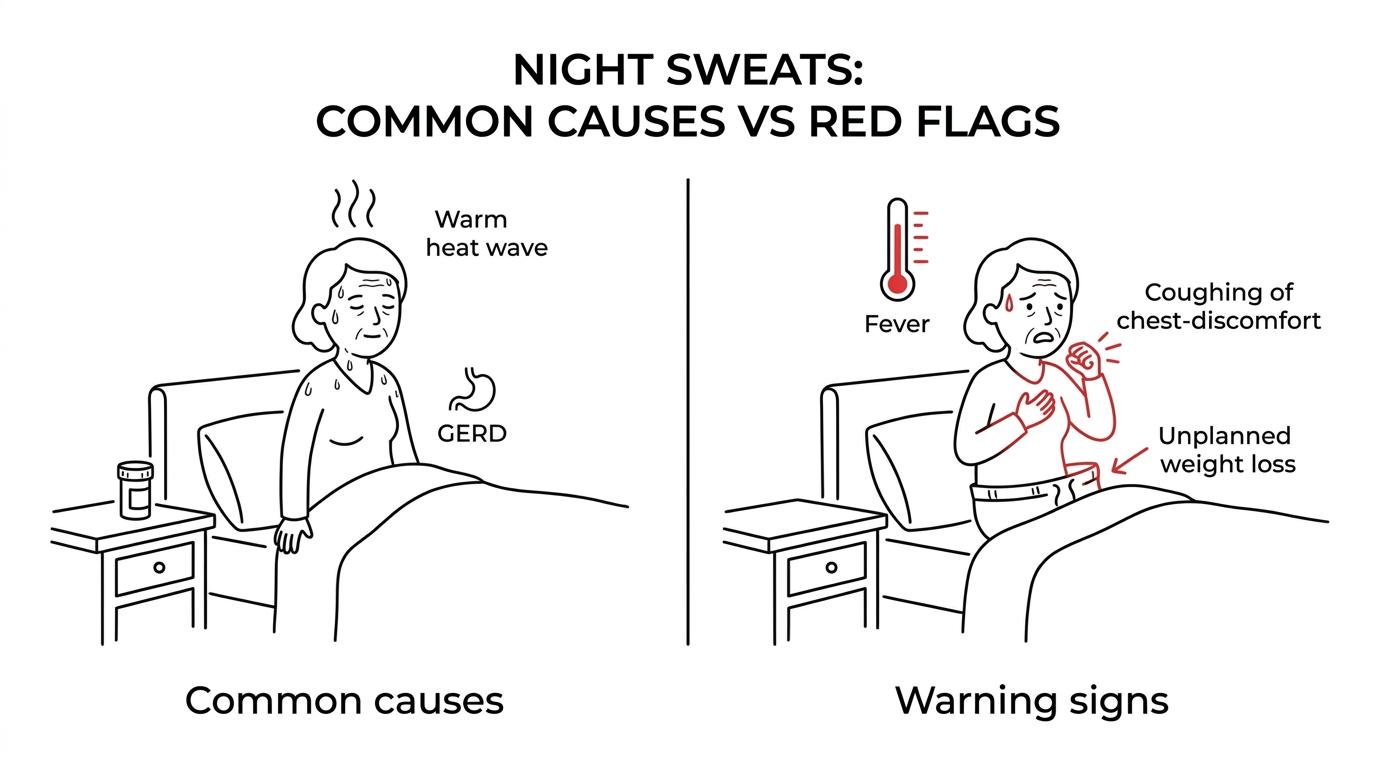
GERD is another sneaky one. Some people lie down, stomach contents reflux upward, sleep gets fragmented, stress hormones rise, and they wake sweaty and uncomfortable. The same can happen with untreated pain, anxiety, or low blood sugar in someone using diabetes medication.
A short, real-life pattern that comes up often: a woman in her early 70s starts waking sweaty three or four nights a week. She assumes it is “just age.” At her visit, the big issue turns out to be a newer antidepressant plus reflux that got worse after dinner. Once her care team adjusts the plan, the sweating settles down. That story is common, and it is a good reminder not to guess.
Medications deserve special attention in older women. Aging changes how the body handles drugs, and the risk of adverse drug reactions goes up as kidney and liver clearance slow down. The MSD Manual notes that older adults are at higher risk for medication problems, and many common drugs can trigger sweating or disrupt normal temperature control (MSD Manual).
Antidepressants are a big one. Excessive sweating has been linked with tricyclic antidepressants, selective serotonin reuptake inhibitors (SSRIs), and venlafaxine in the medical literature (PubMed). Pain medicines, steroids, diabetes drugs that can cause low blood sugar, thyroid medicine, and some blood pressure medicines can also be part of the picture.
This is why a medication review should include everything, not just prescriptions. Over-the-counter sleep aids, cold medicines, supplements, and evening alcohol can all muddy the waters.
A lot of night sweats are not dangerous. Persistent night sweats with other symptoms are where concern rises.
Please call a clinician sooner rather than later if an elderly woman experiences night sweats in addition to any of the following:
If the sweating is drenching, happens most nights, or is brand new after age 65, it is reasonable to get it checked even without the warning signs above.
A good evaluation usually starts simple. A clinician will ask when the sweats began, how often they happen, whether they are drenching, and what else is going on. They will usually ask about menopause history, medication changes, infection exposure, reflux, alcohol use, snoring, mood symptoms, and weight change.
If the history and physical exam do not point clearly to a cause, the American Family Physician review recommends basic first-line testing rather than jumping straight to the worst-case scenario. That may include a complete blood count, tuberculosis testing, thyroid-stimulating hormone, HIV testing, C-reactive protein, and chest radiography (American Family Physician).
That approach is reassuring for a reason. It means persistent nocturnal sweating should be taken seriously, but it does not mean every case needs a huge, scary workup on day one.
While the medical side gets sorted out, comfort matters. Poor sleep adds up fast in older adults. It affects mood, balance, memory, blood pressure, and pain tolerance.
Sleep experts commonly recommend a bedroom temperature between 60°F and 67°F (15.5°C to 19.5°C) for better sleep. If that feels too cold for a bed partner or too expensive to maintain with air conditioning, focused bed cooling can help because it cools the body where the heat is trapped. Many people can raise the room temperature by about 5°F and still sleep cool enough for better rest when airflow is moving under the covers.
A few simple steps can help right away:
If you use under-sheet airflow, tight-weave sheets usually work best because they help the air spread across the body and carry away heat and sweat.
This is where a Bedfan, also called a Bed Fan or bFan, can be a very practical tool. It does not treat the medical cause of night sweats, and it is not a replacement for proper care. What it can do is target the part that ruins sleep right now: trapped heat and moisture under the sheets.
A Bedfan sits at the foot of the bed and pushes room air between the top and bottom sheets. That moving air helps sweat evaporate and helps body heat escape. Neither Bedfan nor Bedjet actually cools the air. They only use the cool air already in the room. That matters because the goal is not icy air blasting your face. The goal is better airflow where your body is overheating.
For older adults, the small practical details matter a lot:
If you have been comparing products, here is the plain version. The original Bedfan was invented in 2003, several years before Bedjet was even thought of. A dual-zone Bedjet setup costs over a thousand dollars, which is more than twice the price of two Bedfans. For couples where one person sleeps hot and the other does not, two Bedfans can create dual-zone microclimate control at a much lower cost.
After helping hot sleepers for years, one pattern keeps showing up. People often do not need a colder house as much as they need better airflow under the covers. That is a very different fix.
Related reading on bedfan.com may also help: night sweats, sleeping cooler, menopause night sweats, medication-related night sweats, and how bed cooling works.
If you want to read from medical and government sources directly, these are solid places to start:
If night sweats are wearing you down and you need a non-drug way to get more comfortable tonight, you can take a look at the Bedfan store. A gentle under-sheet airflow setup can make a long night much easier. This is not medical advice. Always consult your doctor or oncology team before making changes, and seek prompt medical care if night sweats come with fever, weight loss, cough, chest pain, shortness of breath, or new pain.



