Can gerd night sweats wake you up hot? Learn how nighttime acid reflux may trigger sweating, key symptoms, relief tips, and when to see a doctor.
Waking up sweaty with a burning chest, a sour taste, or that familiar reflux creep can feel confusing. A lot of people assume night sweats must be hormonal, infectious, or just a bedroom temperature problem. Sometimes that’s true. But reflux can be part of the picture too.
The short answer is yes, GERD can be linked with night sweats, though it’s not considered a classic hallmark symptom. The better way to think about it is this: nighttime reflux can wake you abruptly, irritate the esophagus, trigger stress responses in the body, and leave you hot, clammy, and wide awake.
This is not medical advice. Always consult your doctor or oncology team before making changes. Night sweats can have many causes, including infections, medication side effects, hormone shifts, sleep apnea, and, in some cases, serious illness. If symptoms are new, severe, or unexplained, get medical guidance.
It can, at least in some people. The link is real enough that primary care guidance on persistent night sweats includes GERD among possible associated conditions, especially if you wake with a bitter taste in your mouth or other reflux symptoms. See the AAFP review on persistent night sweats.
What we don’t have is strong modern data showing exactly how common GERD related night sweats are. A published case report in the medical literature points out that this symptom pairing is probably underrecognized and underreported, not something that has been nailed down with big population studies. You can read that here: Night sweats as a manifestation of gastroesophageal reflux disease.
So if you’ve been asking, “Is this reflux or something else?” the honest answer is, it could be reflux, but you should not assume that’s the only explanation.
A few clues make GERD more likely. Usually, the sweating shows up alongside familiar nighttime reflux patterns, not by itself.
Nighttime reflux has a bad habit of sticking around longer. When you’re asleep, you swallow less, produce less saliva, and lose gravity’s help because you’re lying flat. That means acid can stay in contact with the esophagus longer than it does during the day. The physiology is described well in this NCBI review on nocturnal gastroesophageal reflux.
That doesn’t mean acid is literally heating up your body like a furnace. It’s more indirect than that. Reflux can cause pain, chest pressure, coughing, choking sensations, and sudden awakenings. Your nervous system reacts. Heart rate may jump. Breathing changes. You become alert fast, and sweating can follow.
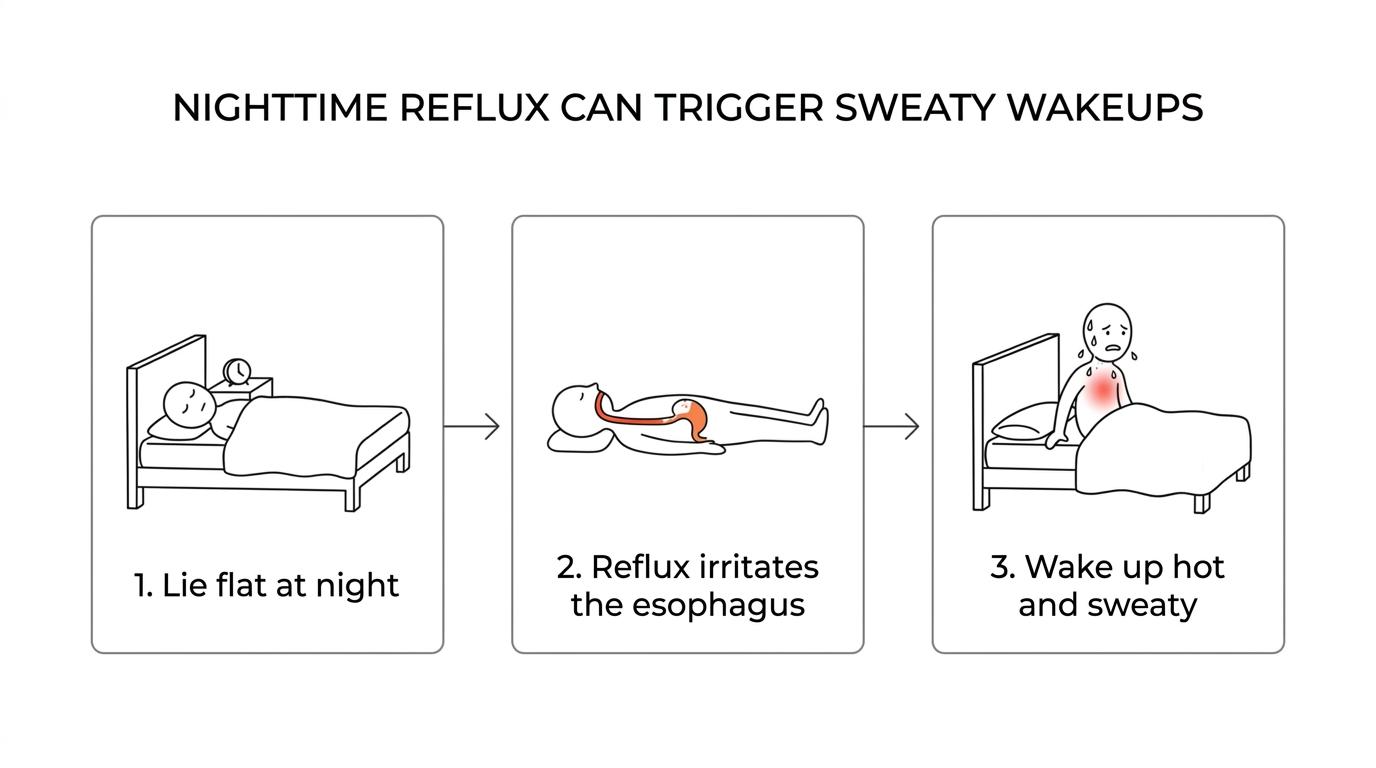
This is one reason people often describe the experience as “I woke up burning up,” even when the room itself is not especially warm.
One anonymized example. A man in his late 40s described waking around 2 a.m. drenched and sure the bedroom was too hot. But the pattern was consistent: pizza or alcohol late in the evening, then sleep, then a jolt awake with a bitter taste, upper chest burning, and sweat across the neck and back. When he shifted dinner earlier, raised the head of the bed, and got reflux treatment through his doctor, the sweaty wakeups became much less frequent.
This is where a little nuance helps. Major GERD guidelines focus on symptoms like heartburn, regurgitation, chest pain, sleep disruption, and complications from acid exposure. Night sweats are not usually listed as a core diagnostic symptom. That matters.
Still, the absence of “classic symptom” status does not mean the symptom never happens. It means the evidence is thinner. The most reasonable medical reading is that GERD is a plausible contributor to night sweats, especially when the sweating happens with obvious nocturnal reflux signs.
Guidance from the American College of Gastroenterology backs the usual nighttime reflux strategies, like avoiding meals close to bed, using acid suppression appropriately, and considering head of bed elevation when symptoms hit at night. Here is the 2022 ACG guideline for diagnosis and management of GERD.
So, if sweating and reflux happen together, it makes sense to treat the reflux first, while also managing the heat and discomfort that wake you up.
You do not need a perfect routine to start getting relief. Small changes can help a lot when the problem is happening under real life conditions.
A pattern I’ve seen again and again is this: the person focuses only on cooling the room, but the bigger trigger is late eating, lying flat, or a medication schedule that hasn’t been reviewed. Room temperature matters, yes, but reflux mechanics matter more if acid is waking you in the first place.
Try a few simple changes and keep track of what happens for a week.
Let’s be clear, a Bedfan is not a treatment for GERD itself. It does not stop acid from coming up into the esophagus. If reflux is the reason you’re waking, the root issue still needs medical and lifestyle attention.
Where a bed fan can help is the miserable middle of the night part. If you wake hot, damp, and trapped under bedding, airflow under the sheets can remove that humid pocket of heat and help sweat evaporate faster. That’s the point of the bFan. It moves the cool air already in your room through the bed microclimate. It does not cool the air itself, and neither does Bedjet. These systems use room air.
That under sheet airflow matters more than many people realize. Sleep experts often recommend a bedroom temperature between 60°F and 67°F for better sleep. In real homes, though, that can feel expensive or unrealistic. Many people using a Bedfan find they can raise the thermostat by about 5°F and still feel cool enough to sleep well, because the body is being cooled where heat gets trapped most, under the covers.
A few details matter here. The Bedfan works best with a tighter weave top sheet, because the air spreads across the body better and helps carry away heat and sweat. Normal operating sound is around 28 to 32 dB, so it usually fades into the background. Timer controls and a remote can help if you want more airflow when you first fall asleep and less later. Energy use is low, about 18 watts on average, which is tiny compared with running the air conditioner colder all night.
If you share a bed and have different sleep temperatures, two Bedfans can create dual zone cooling at a much lower cost than many alternatives. That’s relevant because a dual zone Bedjet setup costs over a thousand dollars, which is more than twice the price of two Bedfans. Bedfan has also been around much longer, it was invented in 2003, several years before Bedjet was even thought of. If you want a practical comfort tool while you work on the reflux side with your doctor, a Bedfan is a reasonable option.
Bring specifics, not just “I wake up hot.” Tell them whether you also get heartburn, a sour taste, chest discomfort, cough, choking, hoarseness, or symptoms after dinner. Mention if the sweating improves when reflux is controlled. That kind of pattern helps sort out whether GERD is likely part of the story.
Another anonymized scenario. A woman in her early 50s assumed every sweaty wakeup was perimenopause. Some were. But the worst nights also came with throat burning and a sour taste after late snacks. Her clinician looked at both problems, not just one. Once she adjusted meal timing and reflux treatment, she still had some hormonal warm spells, but the drenched, startled awakenings eased up.
Some symptoms mean you should move faster and not self treat for too long.
If you want to keep reading, a few internal pages fit naturally with this topic: the main night sweats page, the bFan product page, the nightly comfort page for hot sleepers, and the customer testimonials page. Two other helpful pages to add internally would be a sleeping cooler guide and a page focused on medication related night sweats, if those are part of your site structure.
If you want the medical side from solid sources, these are good places to start.
If you’re waking sweaty and miserable while you sort out the medical side, a gentle airflow solution can make the nights easier. You can take a look at the bFan Bed Fan here. It’s a simple, quiet way to move trapped heat out from under the sheets and help you get back to sleep. This is not medical advice. Always consult your doctor or oncology team before making changes.