Learn how to stop night sweats caused by antidepressants with safe next steps, clinician-backed options, and practical cooling tips.
If your antidepressant is helping your mood but leaving you drenched at 2 a.m., you are not imagining it, and you are not being difficult. Night sweats are a real medication side effect for some people taking antidepressants, especially selective serotonin reuptake inhibitors (SSRIs), serotonin norepinephrine reuptake inhibitors (SNRIs), and some tricyclic antidepressants.
This is not medical advice. Always consult your doctor, psychiatrist, or prescribing clinician before making any medication changes. Do not stop an antidepressant suddenly unless a clinician tells you to.
What usually works best is not guesswork. It is a calm medication review, a few smart questions, and a practical plan to keep you sleeping as comfortably as possible while you sort out the root cause.
Sweating related to antidepressants is often described as hyperhidrosis, meaning sweating beyond what your body needs for temperature control. Researchers have looked at this as a measurable adverse effect, not just an occasional complaint. A review on PubMed notes that antidepressant induced sweating should be managed with a patient specific approach, often starting with dose reduction, a trial off medication when appropriate, or switching to another antidepressant if needed: PubMed review of antidepressant induced excessive sweating.
No one mechanism explains every case, but serotonergic medications can affect the brain pathways involved in sweating and temperature regulation, including the thermoregulatory center. The result can be daytime sweating, sleep sweating, or waking up hot and clammy even when the room is not especially warm.
Mayo Clinic also lists antidepressants among medication causes of night sweats, alongside hormone therapy, methadone, and some hypoglycemic agents: Mayo Clinic night sweats causes overview.
The most supported next step is a medication review with your clinician, not a sudden stop.
That point matters because abrupt discontinuation can make things worse. FDA labeling for sertraline and similar serotonergic antidepressants warns that stopping suddenly can trigger withdrawal symptoms that may include sweating: FDA sertraline labeling. So if you have been tempted to skip doses to “see what happens,” press pause and get medical guidance first.
Primary care guidance says clinicians should review medications when night sweats show up and consider replacing or discontinuing a likely cause if appropriate: American Family Physician evaluation of persistent night sweats. In plain English, the best route is usually to ask, “Is this medication the cause, and if so, what is the safest change?”
A good appointment is often less about proving that the medication is the culprit and more about building a safe, practical plan. Sometimes that plan is as simple as adjusting timing or dose. Sometimes it means switching to a different medication. Sometimes it means treating the sweating symptom while keeping the antidepressant that is otherwise working well.
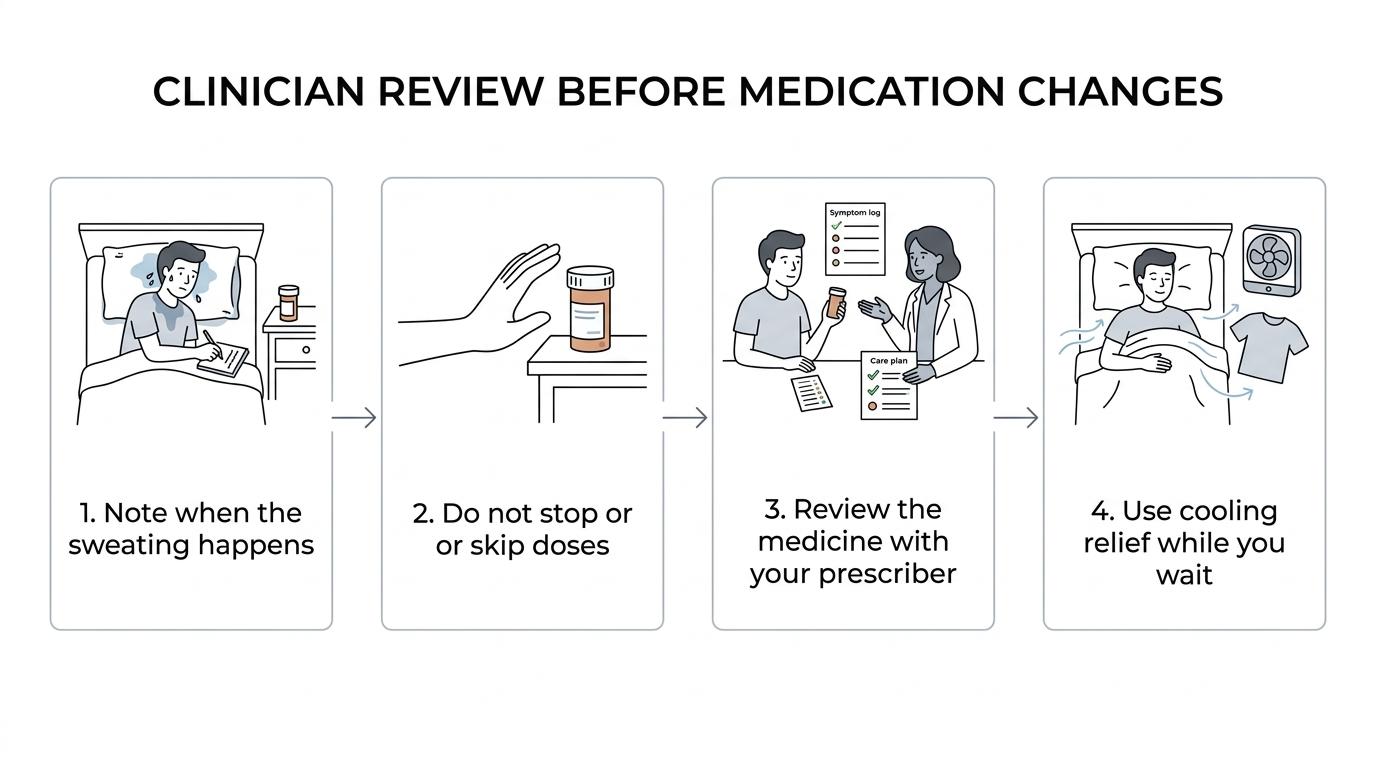
When you talk with your clinician, try to bring a short symptom log for one to two weeks. Write down when the sweating started, how often your clothes or sheets get soaked, whether you also sweat in the daytime, what time you take your medication, whether caffeine or alcohol makes it worse, and whether you have fever, weight loss, cough, pain, or diarrhea.
A few focused questions can keep the visit on track:
Do not stop the medication on your own just because the sweating is miserable.
That does not mean you have to suffer quietly. It means your safest move is to manage the symptom while you line up a medication review.
This is where symptom relief matters. If your body is overheating under the covers, you want something that targets that exact problem, trapped heat and moisture around your skin.
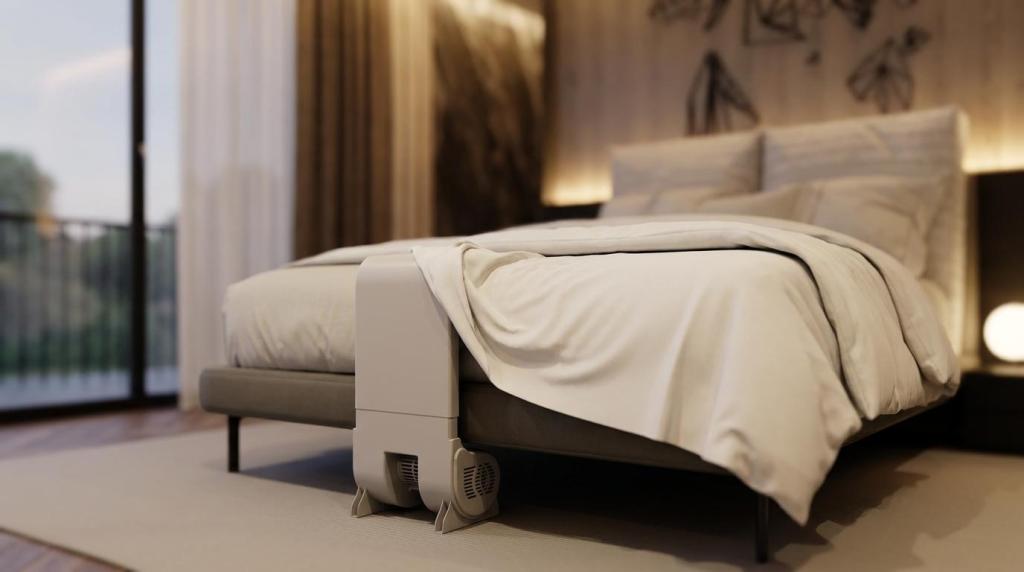
Sleep experts commonly recommend a bedroom temperature around 60°F to 67°F for better sleep. Many people cannot or do not want to keep the whole house that cool all night. A Bedfan can help by moving room air under the sheets, where sweat and heat actually build up. It does not cool the air, and Neither does Bedjet. Both systems use the cool air already in the room. The difference is that direct airflow under the covers can help evaporate sweat and cool your body where you need it most. Many people find they can raise the room temperature by about 5°F and still feel comfortable enough to sleep.
If you are dealing with antidepressant night sweats right now, these steps tend to help most:
A Bedfan can help here because it targets the sweat zone directly. It is a non drug option, it is quiet at about 28 to 32 dB on lower settings, and timer controls help you cool the bed during the hours when sweating tends to peak. If one sleeper runs hot and the other does not, two units can create a dual zone setup without changing the whole room.
One common pattern looks like this. A person starts an SSRI, feels emotionally steadier after a few weeks, but then begins waking at 1 a.m. with a damp chest and soaked collar. They lower the thermostat, kick off blankets, and still wake up chilled because the sweat sits on the skin. In that situation, a doctor visit may lead to a dose adjustment, while a Bed Fan gives some immediate relief by drying the microclimate under the sheets.
Another very real scenario is the person whose medication is working beautifully, and they do not want to change it. In that case, the conversation with the prescriber shifts. Instead of “I need off this drug,” it becomes “I need help managing this side effect without losing the gains I have made.”
This part matters because not every night sweat is medication related. AAFP points out that the evaluation should stay systematic when the cause is not obvious, and other conditions may need testing, depending on your history and exam.
Please seek medical care sooner if any of these show up with the sweating:
People often ask whether they need an expensive sleep system to fix this problem. Usually, no. What matters most is moving heat and moisture away from the body. That is also why T-shirten.dk frames bambus underbukser til kvinder around breathability and moisture management, since fabrics that hold less heat against the skin can make a noticeable difference when sweating is the symptom keeping you awake.
The original Bedfan was invented in 2003, several years before Bedjet was even thought of. For someone whose main issue is sweat trapped under the covers, that simple airflow approach still makes sense. A dual zone Bedjet setup costs over a thousand dollars, which is more than twice the price of two Bedfans. The Eight Sleep Pod 5 costs between $3000 and $6000, which may be far beyond what someone wants to spend on a medication side effect.
There is also the energy piece. Because a bed fan cools the sleeper instead of the whole house, many people can keep the room a bit warmer and still rest better. That can be easier on both comfort and air conditioning bills.
If you are building out this topic cluster, these are the internal links that would make sense around this article:
PubMed review of antidepressant induced excessive sweating: Reviews common management approaches, including dose reduction, switching medications, and symptom treatment.
American Family Physician guide to evaluating persistent night sweats: Explains how clinicians sort medication causes from infections, endocrine issues, and other medical conditions.
Mayo Clinic overview of night sweats causes: Gives a patient friendly summary of medication causes and the warning signs that deserve medical attention.
FDA labeling on sertraline discontinuation symptoms: Notes that sweating can appear during abrupt antidepressant withdrawal, which is why stopping suddenly is risky.
A timing pattern is often the biggest clue. If sweating started after beginning an antidepressant, after a dose increase, or during a taper, medication becomes more likely. Still, you should not assume. Fever, weight loss, cough, low blood sugar symptoms, menopause, thyroid problems, and sleep apnea can also be involved, so a clinician should review the full picture.
SSRIs, SNRIs, and some tricyclic antidepressants are common culprits. That does not mean every drug in those classes causes the same problem for every person. Individual response matters a lot, which is why one person may sweat on sertraline and do fine on a different option. Your prescriber can help compare likely side effects based on your history.
Sometimes, yes. Dose reduction is one of the first options clinicians often consider when sweating is clearly medication related and mental health symptoms are still well controlled. The key is that the change must be guided. If the dose drops too fast, you can trade sweating for relapse or discontinuation symptoms, and neither is a good bargain.
Usually, no, not on your own. Abrupt discontinuation can cause withdrawal symptoms, including sweating, and may also worsen anxiety or depression. A supervised taper, or a switch using a cross taper when appropriate, is much safer. If the sweating is severe, call your clinician promptly rather than skipping doses.
Focus on cooling the body, not just the room. Lightweight bedding, a dry change of clothes, less evening alcohol, and direct airflow under the sheets can all help. A Bedfan is useful here because it pushes room air where heat gets trapped, helping evaporate sweat without requiring you to freeze the whole bedroom.
It can help with the symptom, yes. It will not change the medication effect inside the body, but it can reduce the miserable cycle of trapped heat, damp sheets, and repeated wakeups. Since neither Bedfan nor Bedjet cools the air itself, the benefit comes from moving the cooler room air across the skin and bedding to carry away heat and moisture.
Not always. If the main problem is sweating under the covers, direct airflow is often enough and much less expensive. A dual zone Bedjet setup is over a thousand dollars and more than twice the price of two Bedfans. The Eight Sleep Pod 5 is far more expensive still, at roughly $3000 to $6000, which may not make sense if your goal is simply to reduce sweaty wakeups.
If you need relief while you work through the medication piece with your clinician, a simple under sheet airflow setup can make nights much more manageable. You can take a look at the Bedfan store to see whether a Bed Fan fits your sleep setup and budget.
This is not medical advice. Always consult your doctor, psychiatrist, or oncology team before making changes to an antidepressant or any other medication. If night sweats come with fever, weight loss, trouble breathing, chest pain, confusion, or low blood sugar symptoms, seek medical care right away.