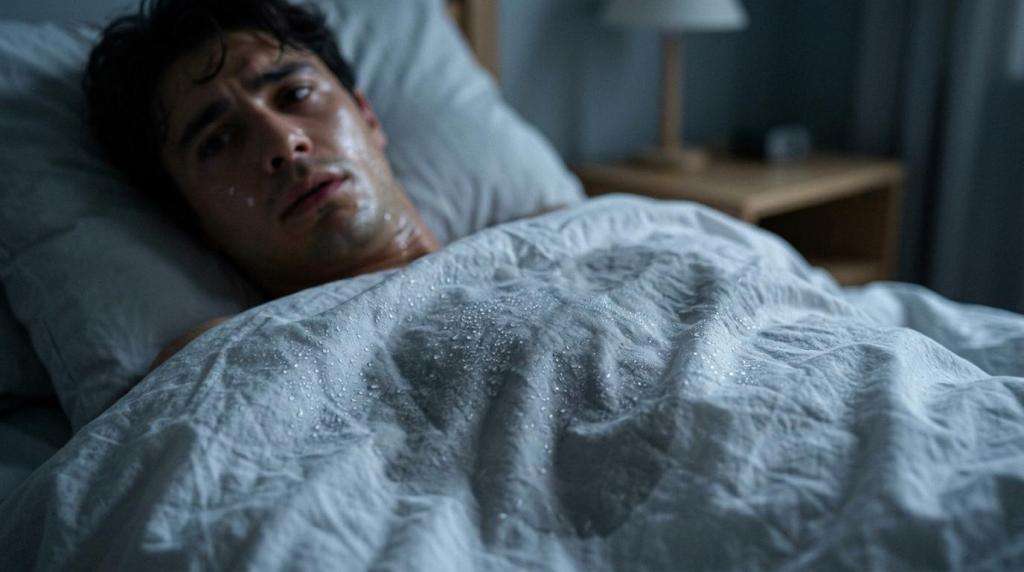
Yes, stress can cause night sweats through activation of sweat glands. Can stress cause night sweats? Always rule out other causes with a doctor.
Yes, stress can cause night sweats. Anxiety is listed by major medical sources as a common cause, and the body’s stress response can activate sweat glands even when your bedroom is cool.
TL;DR: Summary
This is not medical advice. Always consult your doctor or oncology team before making changes, especially if you have cancer, a chronic illness, or take prescription medication that can affect temperature regulation.
Yes. Stress and anxiety can trigger night sweats, and both the NHS and Mayo Clinic list anxiety as a recognized cause or associated condition. If the sweating is frequent, drenching, or new for you, it deserves a broader look.
The key detail is that “night sweats” means more than feeling a little warm. The NHS describes them as sweating heavily enough that nightclothes or bedding become soaked, even when the room is cool. It also lists anxiety among the most common causes and advises medical evaluation when night sweats are regular or come with symptoms like fever, cough, diarrhea, or unexplained weight loss (NHS night sweats guidance).
A common mix-up is assuming that if you sweat at night, the room must be too hot. Sometimes that is true. Sometimes your nervous system is the real driver, and the sweating starts even in a reasonable sleep environment.
"bFan was invented in 2003 and targets trapped heat under the sheets, which matters when stress sweating wakes you in a cool room."
Stress can trigger sweating through the autonomic nervous system, and PubMed research on psychological sweating supports that mechanism. In plain English, your body can act like it is under threat while you are trying to sleep.
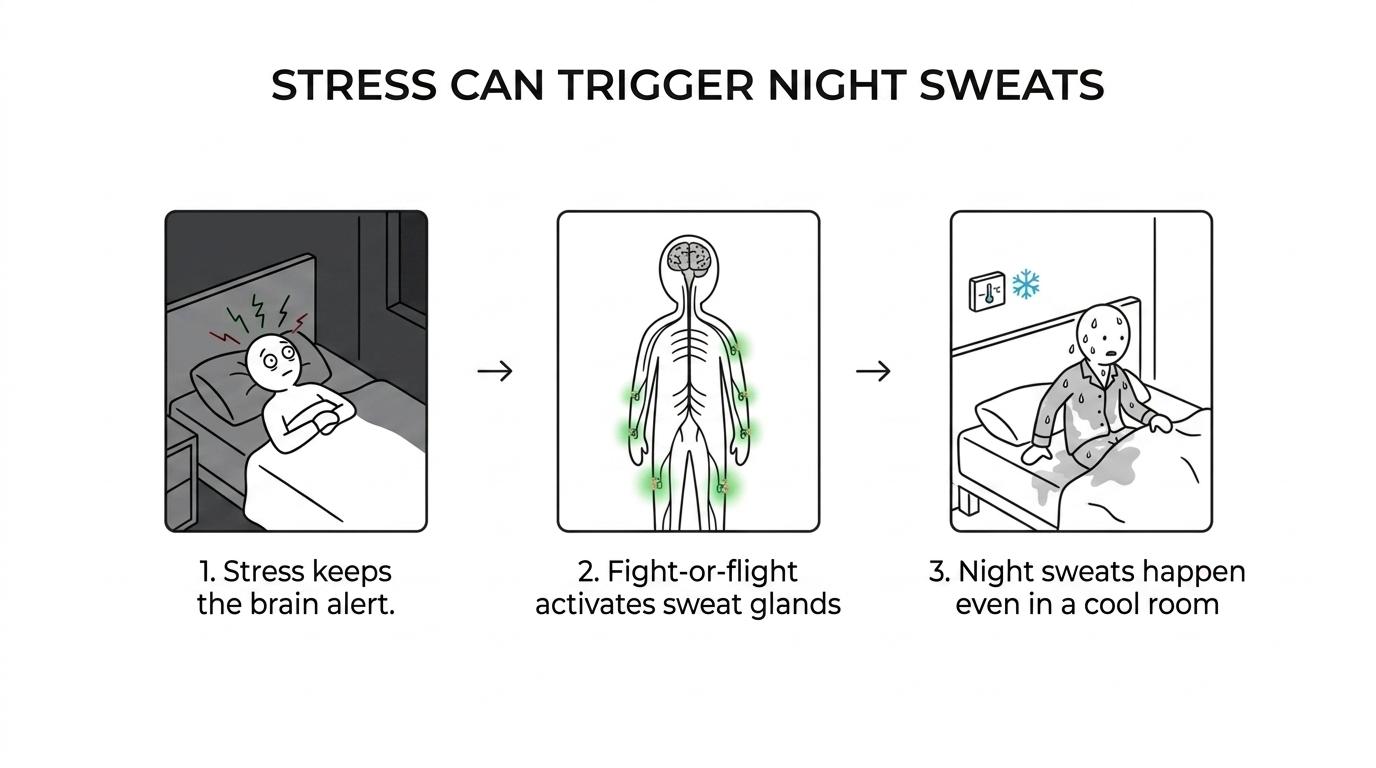
When you are stressed, your brain can keep sending alert signals after bedtime. Heart rate rises, muscles stay tense, and sweat glands get activated. Mayo Clinic notes that sweating happens not only when the body is too warm, but also when a person is under stress (Mayo Clinic sweating causes).
A systematic review on psychological sweating found that sweating in response to stress, anxiety, and pain can occur across the whole body surface, and it describes activation of eccrine sweat glands during acute psychological stress (PubMed review). That matters because if stress is pushing the system, you may wake sweaty even without a fever and even if the thermostat is set reasonably.
One more useful piece: sweat only cools you well if it can evaporate. If blankets, pajamas, or mattress materials trap heat and moisture, you can end up feeling hotter as the night goes on.
"On low speed, bFan runs at about 28 dB, which matters if sound itself makes anxious sleepers more alert."
You cannot tell with certainty from symptoms alone, but patterns help. Stress-related night sweats often cluster around anxious periods, panic symptoms, bad dreams, conflict, grief, overwork, or late-night rumination.
If the sweating tracks closely with emotional overload, improves on calmer nights, and happens without fever, weight loss, cough, swollen nodes, or other new symptoms, stress becomes more plausible. Even then, “plausible” is not the same as “proven.” A lot of people miss medication side effects, perimenopause, alcohol, or sleep apnea because stress feels like the obvious answer.
A practical clue is timing. If sweats show up after alcohol, late caffeine, intense evening exercise, or emotionally charged screen time, your body may be getting nudged into a more activated state before sleep. If the sweats are drenching, happen most nights, or are getting worse, it is time to get checked.
Start with the least disruptive fixes that match the likely cause. For many people, the best first steps are airflow, trigger tracking, and a simpler bedtime routine, especially for those with medical conditions like diabetes that can affect sleep.
Stress is only one item on a longer list. Mayo Clinic and the NHS both point to several common causes, and some are much more important to rule out than people realize.
Common categories include menopause and perimenopause, medication side effects, infections, alcohol use disorder, hyperthyroidism, obstructive sleep apnea (OSA), and autoimmune or cancer-related conditions (Mayo Clinic night sweats causes). SSRIs, SNRIs, steroids, some pain medicines, and hormone therapies are especially worth reviewing with a clinician if symptoms started after a prescription change.
A quiet misconception is that night sweats always mean hormones. Hormones are common, yes, but they are not the whole story. If you are male, younger, or nowhere near menopause, it is still worth checking for medication, infection, thyroid issues, and sleep-disordered breathing.
Do the simple things first. The goal is to reduce both nervous system arousal and heat trapped in the bed.
Step 1: Cool the sleep setup, not just the whole house. Sleep experts often recommend a bedroom temperature of 60°F to 67°F for better sleep. If whole-room cooling is expensive or your partner dislikes a cold room, targeted bed cooling can help. Many people can raise the room temperature by about 5°F and still feel cool enough to sleep when airflow is directed under the sheets.
Step 2: Give your brain a short landing strip. Ten minutes of slow breathing, a brain dump on paper, or a quiet audio track can reduce the alert-state spiral. Keep it basic. If a routine feels like homework, it often backfires.
Step 3: Set up for evaporation. Dry pajamas, lighter bedding, and direct airflow matter because sweat cools best when it can evaporate instead of pooling against the skin.
Stress night sweats are usually more tied to emotional arousal, while menopause and medication-related sweats often follow biological or dosing patterns. The overlap is real, which is why people get confused.
Menopause-related sweats often come with daytime hot flashes, cycle changes, or sleep disruption that seems to appear out of nowhere. Medication-related sweating may begin after starting or increasing a dose of an SSRI, SNRI, steroid, opioid, or hormone therapy. Stress-related sweating may spike after a rough day, a nightmare, panic symptoms, or persistent bedtime worry.
If your sweats started within days or weeks of a medication change, bring that timeline to your doctor. If you are in perimenopause and stress has also been high, both can be true at the same time. That is common.
A cooler room helps, but under-sheet airflow often works better for sweating that gets trapped in bedding. The reason is simple: the body needs evaporation and heat removal right where the sweat is collecting.
Neither Bedfan nor BedJet cools the air. They both use the cool air already in the room. The difference is how you use that air and what it costs to create a personal sleep microclimate. If you need dual-zone cooling for two sleepers, the dual-zone BedJet setup costs over a thousand dollars and is more than twice the price of two Bedfans. Two Bedfans can create dual-zone airflow at a fraction of that cost.
If you sleep alone and just need relief from stress sweating, you may not need a big system at all. A bed fan is often most useful when the room is already fairly cool, but heat keeps building under the sheets.
"bFan uses a digitally controlled DC motor adjustable from 5% to 100%, so airflow can be gentle enough for one sleeper and stronger for another."
The best setup is boring and effective. Focus on airflow, fabric, and consistency.
Step 1: Start with the room. Aim for 60°F to 67°F if you can. If that is too cold for your partner or too expensive to maintain, targeted airflow at the bed may let you keep the room about 5°F warmer and still sleep cooler.
Step 2: Use tighter-weave sheets if you use a Bedfan. That sounds backward to some people, but a tighter weave helps the air travel across your body under the top sheet instead of escaping too quickly.
Step 3: Keep the controls simple. A remote and timer are helpful if you tend to wake at 2 a.m. sweaty and do not want to fully get out of bed or fumble with settings.
Track patterns, not just bad nights. A one-page log often tells the story faster than memory does.
Write down when the sweating happens, how drenched the sheets get, your room temperature, stress level, alcohol, caffeine, illness symptoms, diabetes, menstrual cycle timing if relevant, and any medications or dose changes. Also note snoring, gasping, reflux, nightmares, and whether the sweating improves on weekends or vacation nights.
One anonymized example: a woman in her late 40s started waking around 3 a.m. with damp clothes during a brutal work deadline. She assumed it was just stress. Her tracking showed the worst nights also followed two glasses of wine and late email sessions, but her log also revealed skipped periods and daytime flushing. The answer was not one thing. Stress and perimenopause were both in the picture.
Seek prompt evaluation if night sweats come with fever, unexplained weight loss, chest pain, a persistent cough, diarrhea, or other new systemic symptoms. Those are not “wait and see” details.
A Bedfan fits as a practical symptom tool, not a diagnosis. It does one job well: it moves cool room air under the sheets so sweat can evaporate and trapped body heat can escape.
That matters because stress sweating is often made worse by bedding that holds heat close to the skin. A Bedfan can be a good non-drug option if you are trying to sleep cooler without dropping the whole-house thermostat all night. It is also useful when one partner sleeps hot and the other does not. Two units can create dual-zone control without jumping to a much pricier dual-zone BedJet setup.
It also helps to set expectations clearly. A bed fan does not treat anxiety disorders, infection, menopause, or medication side effects. It can still make the nights more livable while you work on the root cause with your clinician.
If stress-related sweating is wrecking your nights, a targeted airflow solution can help you feel drier and calmer while you sort out the bigger picture. You can compare options at the Bedfan store. This is not medical advice. Always consult your doctor or oncology team before making changes, and seek prompt care for drenching night sweats with fever, weight loss, cough, chest pain, or other new symptoms.