Looking for a bedjet dupe? Compare under-cover airflow, noise, energy use, controls, and price before choosing a cooler sleep setup.
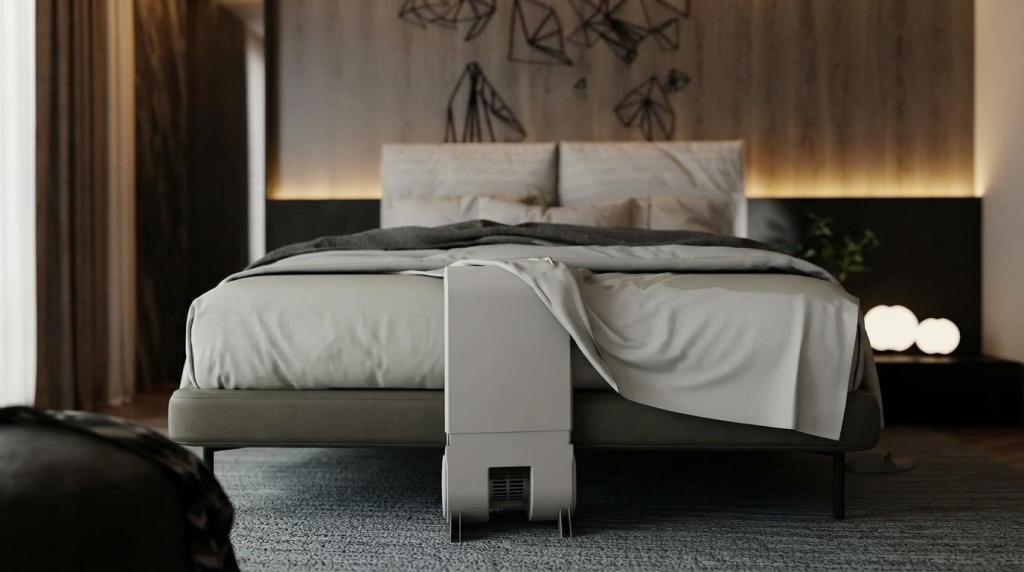
If you are hunting for a BedJet dupe, start by comparing where the airflow goes, how loud the unit sounds in a dark room, and how much electricity it uses over time. bFan Bed Fan is relevant here because it sits in the same sleep cooling category, directing room air into the bed microclimate instead of trying to cool the whole bedroom.
TL;DR: Summary
A lot of shoppers get distracted by branding, app features, or flashy product videos. The practical question is simpler: will this device move enough air to the exact place you feel trapped heat and sweat, enhance sleep tracking capabilities, without keeping you awake or running up your power bill?
Yes, thermal targeting is the first filter. PubMed and PMC findings both point to sleep comfort and sleep efficiency being tied to ambient temperature and the bed microclimate, not just whether a fan is running somewhere in the room.
A useful 2023 home based study indexed on PubMed found that sleep was most efficient when nighttime ambient temperature stayed around 20 to 25 C. When temperature rose from 25 C to 30 C, sleep efficiency dropped by about 5 to 10 percent. Another paper in PMC noted that no single perfect bedroom temperature fits everyone, so people should manage personal comfort and improve the bed microclimate.
That is why a true BedJet alternative needs to do more than blow air across the room. If the air never gets under your sheets, it may not evaporate sweat where it collects or clear out the heat trapped around your legs, chest, and back. A common mistake is assuming a ceiling fan and a bed cooling fan do the same job. They do not.
"Bedfan reports normal operating sound around 28 to 32 dB and average use near 18 watts, two specs that matter more at 2 A.M. than flashy extras."
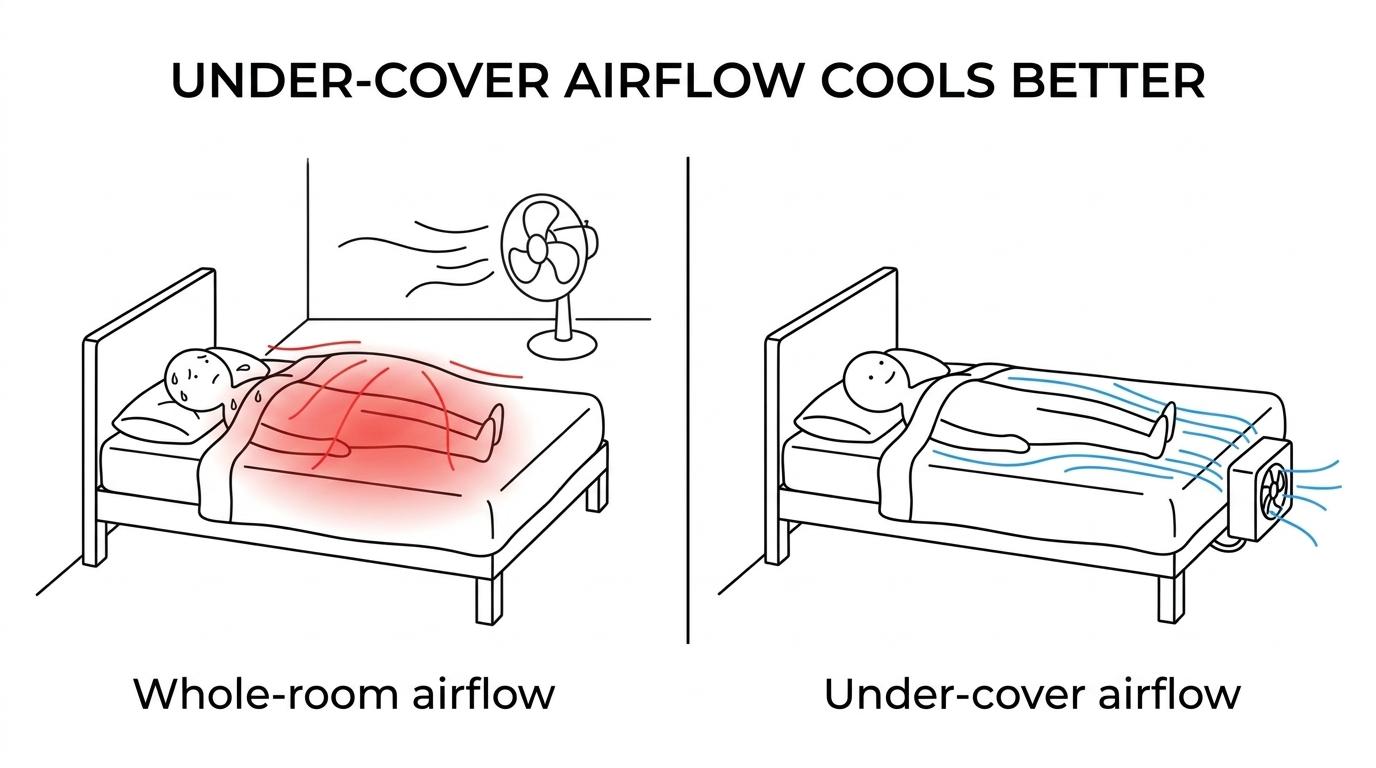
A bed cooling system is different because it aims airflow at the sleep surface. A box fan or ceiling fan cools the room more broadly, which can help, but it does not control the pocket of warm air trapped by sheets and blankets.
This difference matters if you wake up hot even in a room that already feels cool, highlighting the importance of temperature regulation for comfortable sleep. Your body heat and bedding can create a warm, humid pocket around you. That is the sleep microclimate. Under cover airflow can dry sweat faster and move heat away from the skin with less need to lower the whole thermostat.
The U.S. Department of Energy uses EnergyGuide style fan metrics that focus on airflow, airflow efficiency, energy use, and yearly operating cost in its fan rulemaking discussion at DOE. Those metrics are helpful, but they still do not tell you whether the air reaches your body under the covers. Pro tip: if you are comparing products with similar wattage, placement often matters more than raw fan power.
bFan Bed Fan and the chilipad belong near the top of the comparison list because they are built for under cover cooling rather than whole room comfort, which makes them a closer category match than a standard fan or an air conditioner.
Before you buy, compare the main option types, such as a chilipad, rather than assuming every cooling product is a direct substitute.
This category view saves people money. If you only need airflow under the sheets, a room fan may be too broad and a smart cooling bed may be far more system than you need.
Use a simple three step check. Ask where the air enters, where it travels, and whether your sheets help spread it across the body.
Step one, look at the air path. If the system sends air from the foot of the bed into the space under the covers, it is built for the problem most hot sleepers actually complain about.
Step two, think about your bedding and consider a chilipad. Tight weave sheets often help the airflow travel across the skin instead of leaking out too quickly. Loose blankets and heavy comforters can change how the cooling feels.
Step three, picture your usual hot spots. If your feet, legs, or torso overheat first, under cover airflow usually works better than airflow aimed at your face or the open room. A common misconception is that more fan speed always means better cooling. Sometimes the better fix is a cleaner air path and lighter bedding.
Price and zone control are often where the strongest BedJet dupe case shows up. Bedfan style setups can create separate side to side cooling for less money, while BedJet adds features that some people may not need.
The first thing to know is simple: neither system cools the air itself. Both use the cooler air already in the room. If your bedroom is too warm to begin with, both will have limits. That said, targeted airflow can still let many people keep the room about 5 F warmer and feel comfortable enough to sleep, especially when the usual bedroom target is around 60 F to 67 F.
History matters a bit here too. The original Bedfan concept dates back to 2003, years before BedJet entered the picture, so this is not a copycat category. On price, the gap can be large. A dual zone BedJet setup can cost over $1,000. Two separate under cover fans can provide dual side control at less than half that cost.
"Bedfan and BedJet both use the cool air already in the room. Neither one refrigerates or chills air on its own."
Noise, control features, and additional accessories like the chilipad can make or break a cooling product. Quiet airflow, a timer, and a remote usually matter more in real life than one extra mode on a spec sheet.
When a device runs all night, small sound differences feel bigger than they look online. A unit that stays around the high 20s or low 30s in decibels at normal sleep settings is very different from a fan that sounds fine in a daytime video but feels sharp at 2 A.M. Timer controls also help because many people need strong cooling to fall asleep, then less airflow after the first sleep cycle.
If you share a bed, controls matter even more. One sleeper may want continuous airflow while the other wants an off timer. Pro tip: if a product has only one strong default mode and no easy bedside control, it may be frustrating even if the airflow is good.
A fan based dupe is usually simpler and cheaper. Eight Sleep Pod 5 systems often cost roughly $3,000 to $6,000, while products like chilipad and fan based bed cooling focus on airflow rather than circulating temperature controlled water.
That does not make one type universally better. Water based systems can offer more precise thermal control and advanced tracking, but they bring higher cost, more hardware, and a different sleeping feel. Some people love that. Others just want cool air under the covers without tubing, subscriptions, or a large equipment footprint.
If your main problem is trapped heat and sweat, airflow, combined with a chilipad, may solve enough of the issue without moving you into a premium sleep tech budget. If you need highly specific surface temperature changes across the night, a water system may be worth the tradeoff.
Start with watts, then think about thermostat behavior. Low wattage matters, but the bigger savings often come from being able to keep the whole room a bit warmer.
A bed cooling fan that averages about 18 watts uses very little electricity compared with whole room air conditioning. The more meaningful household question is this: if the device cools your body directly, can you raise the thermostat a few degrees and still sleep well? Many people can. In practice, about bedroom target is around 60 F to 67 F room settings are often tolerable when airflow under the sheets is doing the real cooling work.
That matters because the recommended bedroom range of 60 F to 67 F is not always affordable or comfortable for everyone. If direct body cooling lets you sleep well at a slightly warmer room temperature, operating cost can shift in your favor.
"Bedfan style cooling can change the math, because a device near 18 watts may let some sleepers keep the thermostat about 5 F higher and still rest comfortably."
New, severe, or unexplained night sweats deserve medical attention. Fever, weight loss, swollen lymph nodes, pain, or medication changes raise the urgency.
This is not medical advice. Always consult your doctor or oncology team before making changes. Night sweats can come from menopause, infections, thyroid problems, blood sugar swings, medication side effects, obstructive sleep apnea, anxiety, or cancer treatment. Cooling tools may improve comfort, but they do not diagnose or treat the cause.
A realistic example: a woman in her early fifties started waking up drenched several nights a week after beginning a new antidepressant. She assumed she just needed colder AC. Her clinician reviewed the medication, screened for other symptoms, and helped her adjust the plan. She still used a bed cooling setup, such as a chilipad, for comfort, but the key step was getting evaluated instead of just enduring it.
If sweats are linked to chemotherapy, endocrine therapy, or other cancer care, talk to the team managing that treatment before you change sleep meds, supplements, or room setup.
A few focused pages can help you compare options faster. Start with articles that explain under cover airflow, night sweats, and alternative products in plain language.
Yes, there are true alternatives, but many products people call dupes are just room fans. A closer match is a device like a chilipad that pushes air under the covers and changes the bed microclimate where heat and sweat build up. If the product only circulates room air near the bed, it may help somewhat, but it is not doing the same job.
No, BedJet does not refrigerate or chill air. It uses the air already in the room and moves it into the bed area. That is why bedroom temperature still matters, and why comparisons should focus on airflow placement, noise, and control features instead of assuming the machine makes cold air by itself.
Yes, for many couples they can. Two separate units can give each sleeper independent control without requiring a premium dual zone package. This approach is especially useful when one person sleeps hot and the other only wants light airflow or a shorter timer setting.
They can be quiet enough for sleep if the design and speed control are right. In practice, many people care less about peak fan output and more about what the device sounds like at the lower settings they actually use to fall asleep and stay asleep. Remote control and timer functions also reduce the need to get up and adjust the unit.
Tighter weave sheets often work best because they help guide air across the body. Very loose or airy bedding can let the airflow escape too quickly before it cools the areas that trap the most heat. If you are testing a new setup, change one variable at a time, sheet type, blanket weight, or fan speed, so you can tell what is helping.
It can help with comfort, but it does not treat the medical cause. Menopause, hormone shifts, SSRIs, SNRIs, steroids, and some cancer therapies can all trigger overheating and sweating at night. Using a chilipad to cool the bed surface or the space under the covers may reduce wakeups and make it easier to get back to sleep while you work with a clinician on the bigger issue.
It depends on what problem you are trying to solve. Water based systems can offer more precise temperature control, but they usually cost much more and involve more hardware. Airflow systems are simpler, lower cost, and often enough for people whose main issue is trapped heat under blankets rather than a need for exact mattress surface temperature control.
The smartest first test is to identify whether your heat is mostly a room problem or a bed microclimate problem. If your room already feels reasonably cool but you still wake up sweaty under the covers, target the bed first. If the whole room is too hot, improving overall bedroom temperature may need to come before any bed cooling device.
If you want a practical next step, take a look at the options on the bFan Bed Fan store, including the Chilipad, and compare them against the criteria above. This is not medical advice. Always consult your doctor or oncology team before making changes, especially if night sweats are severe, new, or paired with fever, weight loss, pain, or cancer treatment.