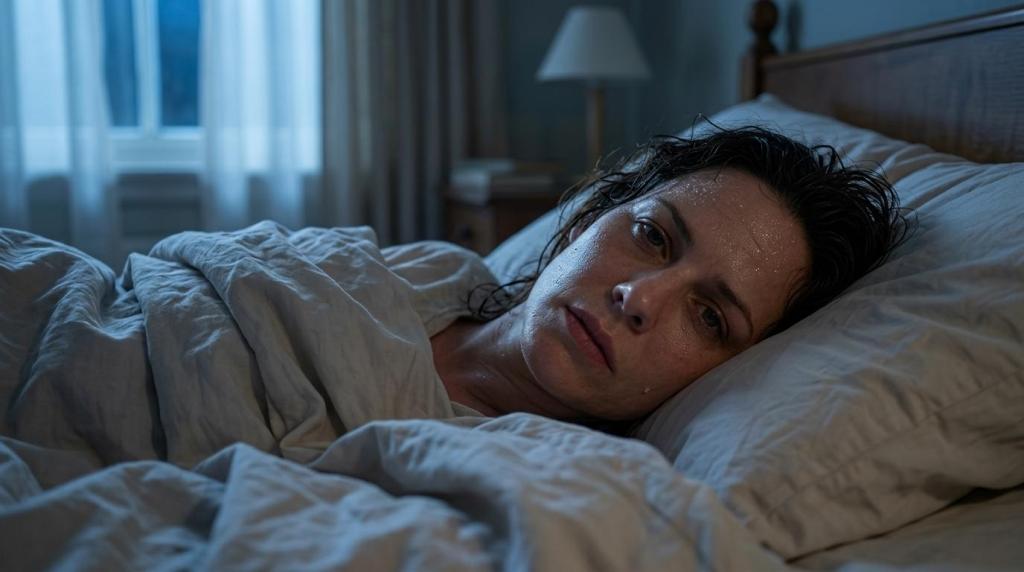
Why do I wake up hot at night? Learn how bedding, room heat, hormones, meds, and sleep apnea can trigger overheating too.
If you keep waking up hot at night, sweaty, restless, or suddenly wide awake with the covers kicked off, you are not imagining it. That kind of heat can come from the room, your bedding, your hormones, a medication, or a medical issue that deserves attention.
This is not medical advice. Always consult your doctor or oncology team before making changes, especially if night sweats are new, severe, or happening along with other symptoms.
Sometimes the room feels fine, but the bed does not. That difference matters more than most people realize.
Your body is always trying to regulate temperature. That process is called thermoregulation. Sweating is one of the main ways the body releases excess heat, which is why the National Library of Medicine notes that sweating is a normal cooling response, but can also show up with medical problems like thyroid disorders, low blood sugar, and nervous system disorders when it becomes excessive or out of proportion to the setting: MedlinePlus on sweating and excessive sweating.
Here is the part people miss. You do not sleep in the room. You sleep in a small heat pocket between your body, the mattress, the sheets, and the covers. If that pocket traps warmth and moisture, you can wake up hot even when the thermostat says the bedroom is cool.
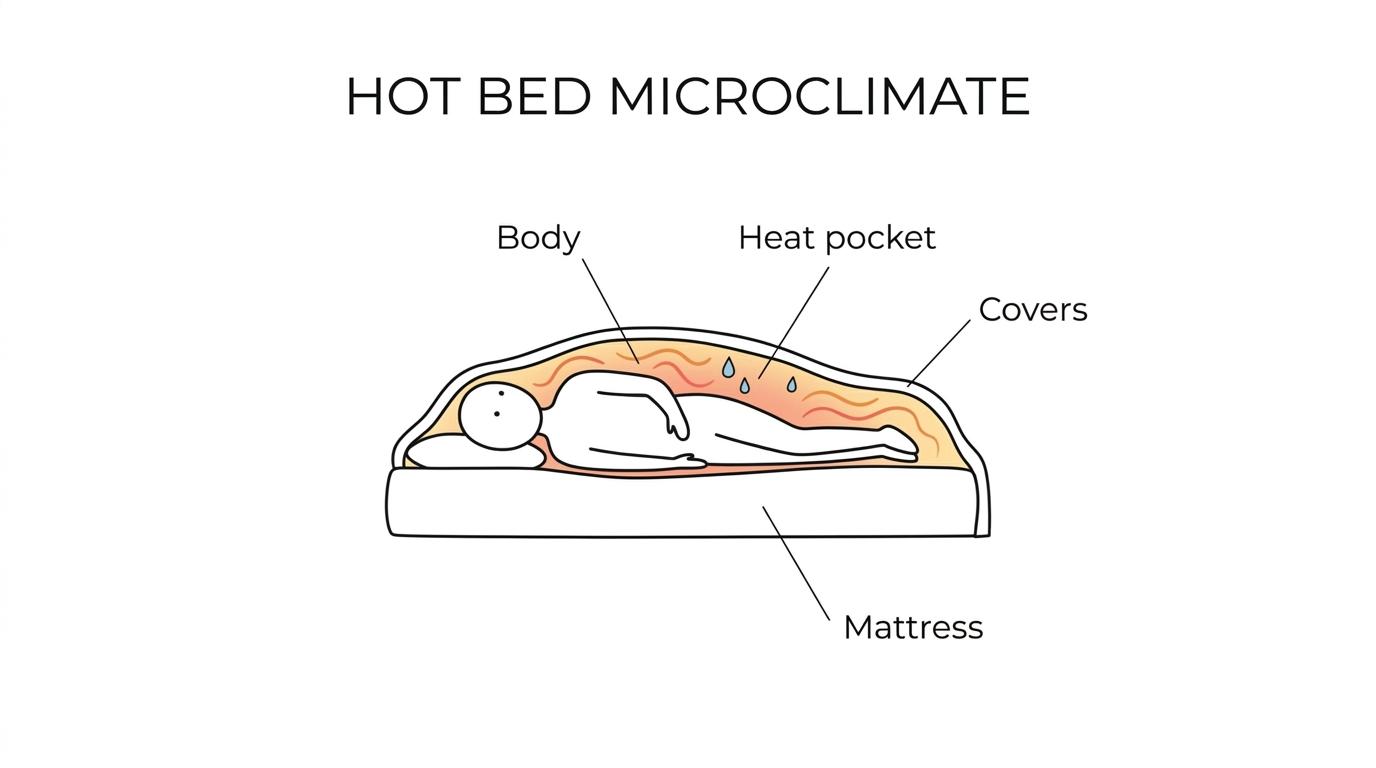
Sleep experts commonly recommend a bedroom temperature between 60°F and 67°F for better sleep. Even then, a heavy comforter, a foam mattress, a waterproof protector, or close-fitting sleepwear can keep body heat from escaping. This is why some people feel hot at 65°F. Their room is cool, but their sleep setup is not.
That “under the covers” microclimate is also why targeted airflow can help. A Bedfan does not cool the air. Neither Bedfan nor Bedjet cools the air. They only use the cooler air already in the room. The difference is where that air goes. When airflow moves under the top sheet, it helps evaporate sweat and carry heat away from the skin, which is the root issue for many hot sleepers.
If you want a deeper look at that pattern, this guide on common reasons a cool room can still feel hot in bed is a useful next read.
Sometimes waking hot is mainly a comfort problem. Sometimes it is a symptom of underlying issues like insomnia.
Mayo Clinic notes that nighttime hot flashes can wake people from sleep and, over time, lead to poor sleep quality and exhaustion. They can happen with menopause, but also with medication side effects, thyroid problems, and some cancer treatments: Mayo Clinic on hot flashes and night sweats.
Common medical reasons include:
One anonymized example that comes up often is a woman in her late 40s who assumes the thermostat is the whole problem. She lowers the room temperature, buys lighter pajamas, even changes mattresses, but still wakes up flushed around 2 a.m. Her pattern, along with irregular periods and daytime hot flashes, turns out to fit perimenopause much more than a “bad bedroom.”
Another common story is a man who says he wakes up hot and damp, but his partner says he also snores, stops breathing, and jolts awake. That is not just sleeping hot. That is a strong reason to ask about OSA testing.
If your symptoms seem tied to hormones or medication side effects, the broader night sweats hub can help you sort patterns before you talk with your clinician. Related topics like menopause night sweats and medications that cause night sweats are especially relevant for many readers.
A lot of overheating is mechanical. Heat goes in, but it does not get out.
This is especially common when people pile solutions on top of each other. A memory foam mattress, a foam topper, a waterproof protector, flannel sheets, and a heavy duvet can create a very warm sleep chamber. The room may be set perfectly, but the bed keeps recycling your own heat back to you.
The usual culprits are simple:
There is also a practical detail that matters if you use under-sheet airflow. Sheets with a tighter weave often work best with a Bedfan because they help the air travel across the body instead of escaping straight upward. That airflow helps move heat and moisture where you actually feel it.
Many readers also find it helpful to browse the sleeping cooler section or a guide on how to sleep cooler when they are trying to sort out whether the issue is their room, their bed, or both.
Night sweats are not rare, and they, along with insomnia, can wear people down fast. MedlinePlus notes that menopause can bring hot flashes at night, trouble falling asleep, and difficulty getting back to sleep after waking, which can snowball into fatigue and memory problems over time: MedlinePlus on menopause symptoms.
Sleep disruption itself makes heat feel worse. Once sleep becomes lighter and more fragmented, people notice every flush, every damp spot on the pillow, every tangle of blankets. The body gets stuck in a loop where overheating wakes you, and poor sleep makes you more sensitive to overheating the next night.
OSA deserves special mention here. A meaningful share of people with OSA report regular night sweats. If you wake hot and also snore, wake with a dry mouth, have morning headaches, or feel exhausted despite spending enough time in bed, it is worth bringing that full picture to your doctor.
Not every hot night is a red flag. Repeated unexplained night sweats should not be brushed off, though.
You do not need to overhaul everything at once. Small changes can tell you a lot about where the problem is coming from.
A simple plan works best:
This is where a Bedfan can make practical sense. It is a non-drug option that targets the trapped heat under the covers. For someone who feels okay in the room but overheats in bed, that matters. Many people can raise the room temperature by about 5°F and still sleep comfortably because the airflow is cooling the body where it counts. That can mean better sleep and lower air conditioning use at the same time.
The helpful features are the ones that solve real problems. It is quiet enough for many light sleepers, around 28 to 32 dB at lower settings. It has remote and timer controls, which is useful if you cool off later in the night and do not want airflow running full speed until morning. It uses very little power, about 18 watts on average. For couples, two Bedfans can create dual-zone microclimate control at a fraction of the cost of a dual zone Bedjet setup. The dual zone Bedjet setup costs over a thousand dollars, which is more than twice the price of two Bedfans.
There is also a long track record here. The original Bedfan was invented in 2003, several years before Bedjet was even thought of.
A short real-world scenario. One couple had a familiar problem: one partner slept cold, the other woke up hot almost every night around 3 a.m. Lowering the whole-room thermostat made one miserable and barely helped the other. Under-sheet airflow was the first change that addressed the hot sleeper’s bed climate without turning the entire bedroom into a refrigerator.
If this is happening more than occasionally, go into the appointment with details. Doctors can do much more with a pattern than with “I sleep hot.”
Tell them when it started, how often it happens, whether you are soaked or just warm, and what else is going on. Mention snoring, missed periods, medication changes, fever, weight loss, palpitations, anxiety, reflux, blood sugar issues, or cancer treatment. If you can, keep a one-week note on room temperature, bedding, alcohol, food, and wake-up time.
Please get prompt medical care if waking hot is paired with fever, unexplained weight loss, swollen lymph nodes, chest pain, shortness of breath, or severe daytime fatigue. Those are not “just sleep” complaints.
All links have been checked and are currently working.
If trapped heat under the sheets sounds like part of your problem, a Bedfan is a practical way to move that heat away without medication. You can take a look at the options at Bedfan. This is not medical advice. Always consult your doctor or oncology team before making changes.