Night sweats in men can signal sleep apnea, stress, meds, or illness. Learn causes, warning signs, and smart cooling tips for better sleep.
This is not medical advice. Always consult your doctor or oncology team before making changes. If you are a man who keeps waking up with nighttime sweating, feeling sweaty, chilled, or stuck with soaking wet sheets, it is worth taking seriously, especially if it keeps happening or comes with other symptoms.
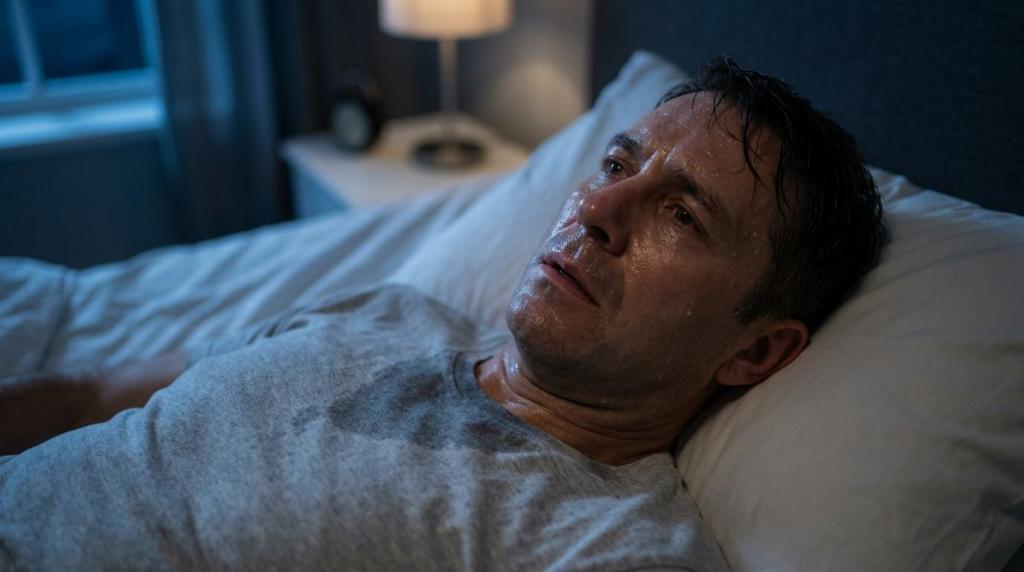
A lot of people assume night sweats in men are just a bedroom-temperature problem. Sometimes they are. But true night sweats usually mean repeated, heavy sweating during sleep that soaks nightclothes or bedding, even when the room is reasonably cool, indicating a disruption in body temperature regulation. That definition is consistent with Mayo Clinic’s overview of night sweats and the NHS guide to night sweats.
If that sounds familiar, the good news is that many causes are common and treatable, and appropriate treatment can significantly improve your condition. The key is separating a hot room from a body signal that deserves a closer look.
Waking up warm after piling on blankets is uncomfortable and can have implications for your overall health. It is not the same as drenching sweats. Real night sweats tend to be heavy enough that you may need to change clothes, swap pillowcases, or even remake the bed in the middle of the nights.
That distinction matters. Mayo Clinic notes that sweating because the bedroom is too warm or the covers are too heavy is not usually considered true night sweats. The NHS makes a similar point and says night sweats are more concerning when nightclothes and bedding become soaking wet even though the sleeping area is cool.
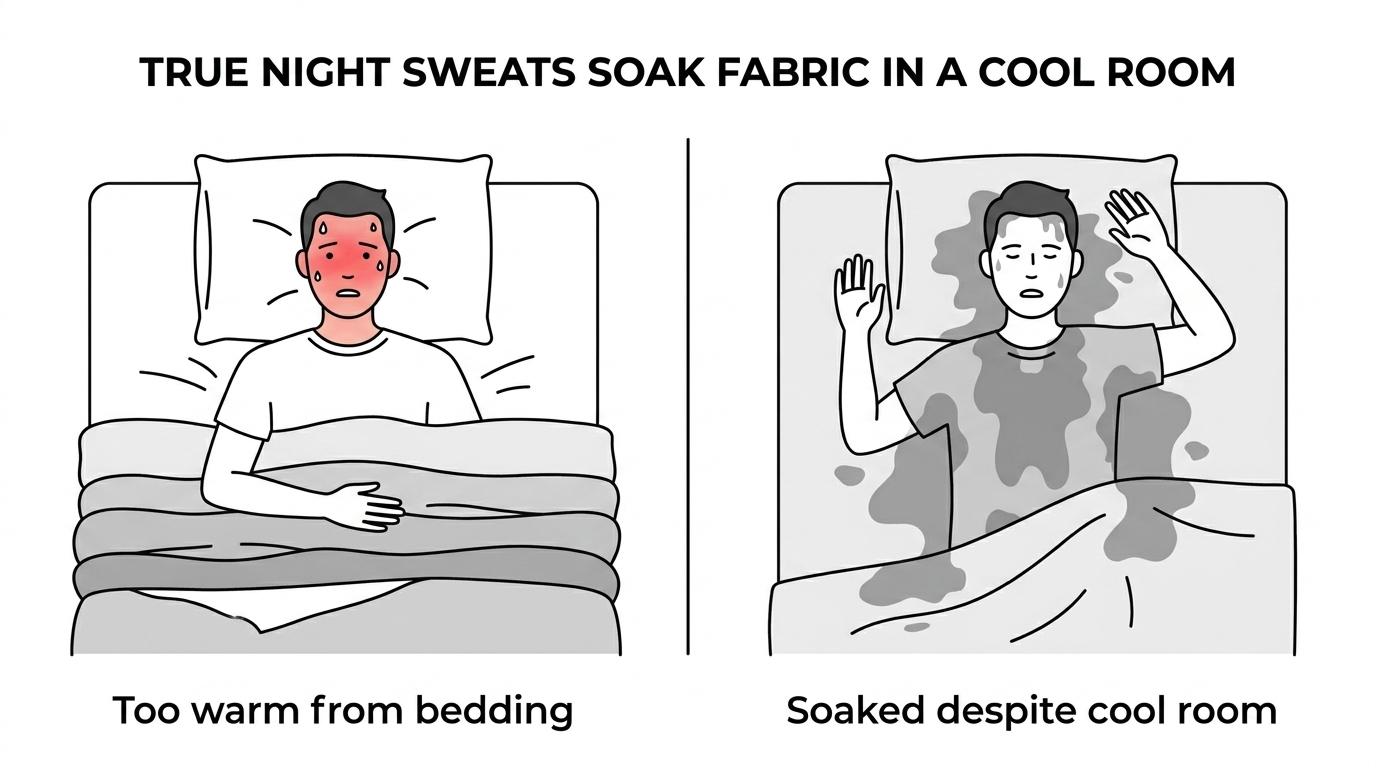
A simple test helps. Ask yourself this: if the room were cooler and the blanket lighter, would you still be sweating hard enough to soak fabric? If the answer is yes, think beyond the thermostat.
For many men, the cause is not dramatic. It may be a medication side effect, low testosterone, stress, alcohol, reflux, sleep disturbances, or a sleep disorder. Low blood sugar can also trigger sweating, especially in people with diabetes or anyone taking glucose-lowering medicine. Some men also have Hyperhidrosis, a condition where the body sweats excessively even without a clear heat trigger.
Another cause that deserves extra attention in men is obstructive sleep apnea (OSA). Men are 2 to 3 times more likely than premenopausal women to have OSA, according to Mayo Clinic’s obstructive sleep apnea page, highlighting how hormonal changes experienced during menopause, or before for that matter, can also lead to an increased risk of OSA. That matters because OSA can show up as sweating, restless sleep, dry mouth, snoring, choking, or gasping.
Some of the more common reasons include hormonal imbalances, such as low testosterone, highlighting the role of hormones in night sweats:
One brief example. A man in his late 40s described waking at 2:00 a.m. with damp hair, a wet T-shirt, and a racing heart. He assumed it was work stress. After a sleep evaluation, he learned he had OSA, and his “night sweats” eased once the sleep disorder was treated. His room temperature had never been the real problem.
Here is the part I do not want anyone to brush off. If a man is regularly waking up with soaking wet sheets, especially when the room is not hot, that pattern deserves a medical conversation. The concern rises if sweats come with fever, weight loss, cough, chest symptoms, diarrhea, or repeated sleep disruption. Both Mayo Clinic and the NHS recommend getting checked when sweats are frequent, severe, or paired with other warning signs.
Night sweats can show up with infections, hormone problems such as low testosterone or menopause-related hormonal changes, sleep apnea, medication reactions, and less often with cancers like lymphoma, but experiencing sweaty nights doesn't automatically indicate something is dangerous. That does not mean every sweaty night is dangerous. It does mean you should not self-diagnose if there is a pattern.
Call your doctor sooner rather than later if you notice any of these:
A second real-world pattern I hear often is this: a man starts a new antidepressant or steroid, then a week later the sheets are damp most mornings. That is still worth reporting. Do not stop prescription medication on your own, but do tell the prescriber exactly what is happening.
OSA is one of the most overlooked reasons men experience sleep disturbances and nighttime sweating due to fluctuations in body temperature, and low testosterone levels can also contribute to night sweats, impacting overall health. When breathing repeatedly narrows or stops during sleep, the body gets stressed. Oxygen can drop. Sleep becomes fragmented. That can trigger sweating, surges in heart rate, and a feeling of waking in alarm.
Men are more likely to have OSA, and risk rises with age, excess weight, nasal obstruction, and alcohol use before bed. If your night sweats come with loud snoring, daytime sleepiness, morning headaches, or a partner noticing pauses in breathing, it is smart to ask about sleep testing.
This is one place where cooling the bed can help comfort, but it should not replace medical care. If sweating is being driven by OSA, you want the cause treated with appropriate treatment, not just the damp sheets.
Once the serious causes are being looked at, comfort matters a lot. Broken sleep adds up fast. Sleep experts commonly recommend a bedroom temperature between 60°F and 67°F for better sleep. Still, many people find that the right bed airflow lets them keep the room about 5°F warmer and still feel comfortable enough to sleep well, which can also trim air conditioning costs.
The trick is not just making the room cold. It is reducing the hot, humid pocket trapped under the covers. Sweat cools the body by evaporating. If heat and moisture stay trapped in your bedding, your skin cannot cool itself well.
A few changes help more than people expect:
That last point is where a bed fan can be genuinely useful. A good bed fan does not cool the air itself. It uses the cooler air already in the room and pushes it under the sheets, which helps evaporate sweat and release trapped body heat.
For men who are sweating under the covers but do not want the entire bedroom icy, the bFan or Bed Fan is a practical non-drug option. It targets the real trouble spot: the warm, damp air pocket around your body. By moving room air under the sheets, it can help you feel drier and cooler without blasting your face all night.
That matters for couples, too. One partner may be sweating while the other is perfectly comfortable. In that situation, two Bedfans can create dual-zone microclimate control at a fraction of the cost of a dual-zone Bedjet setup, which runs over a thousand dollars and is more than twice the price of two Bedfans. Bedfan came to market in 2003, several years before Bedjet was even thought of. And just to keep expectations honest, neither Bedfan nor Bedjet cools the air. They only use the cool air already in the room.
Some men like a Bedfan because the features solve very specific nighttime problems. A quiet setting around 28 to 32 dB can fade into the background. Remote and timer controls help if you mainly overheat in the first half of the night. Energy use is very low, so you can cool the bed itself instead of driving down whole-house AC. If you share a bed and want separate cooling, using two units can work well without getting into luxury-system pricing.
If you want to keep reading, these are the kinds of bedfan.com pages that fit naturally with this topic:
Mayo Clinic’s guide to night sweats explains what true night sweats are, how they differ from getting overheated in bed, and when repeat episodes should be checked by a clinician.
The NHS night sweats page gives a plain-language summary of common causes, including anxiety, alcohol, medicines, low blood sugar, and hyperhidrosis, along with a clear list of when to seek medical care.
Mayo Clinic’s obstructive sleep apnea symptoms and causes page is useful if your sweating comes with snoring, gasping, dry mouth, or daytime fatigue.
If you are dealing with repeated night sweats and want a simple comfort measure while you sort out the cause, take a look at the bFan Bed Fan store. It can help cool the bed where sweat and heat build up most. This is not medical advice. Always consult your doctor or oncology team before making changes, and seek prompt care if night sweats come with fever, weight loss, cough, chest symptoms, or snoring and gasping during sleep.