Discover a hyperhidrosis night sweating solution with targeted bed cooling airflow to reduce trapped heat, improve comfort, and support sleep.
Nighttime sweating can turn sleep into a repeating cycle of waking up hot, throwing off blankets, cooling down too fast, then pulling covers back up again. From a clinical standpoint, that pattern matters because repeated heat stress during sleep can fragment your rest, worsen fatigue, lower concentration, and leave your skin irritated from constant moisture.
People often use the word hyperhidrosis to describe any excessive sweating, including drenching sweat at night. That can be a helpful starting point, but it is also important to be precise. Primary focal hyperhidrosis often shows up in the underarms, hands, feet, or face and may be less active during sleep. In cases where underarm sweating is problematic, additional underarm treatment options, such as topical antiperspirants or localized therapies, may be considered. Heavy nighttime sweating may still be related to a sweating disorder, but it can also be tied to hormones, medications, stress, reflux, thyroid disease, sleep apnea, infections, low blood sugar, or simply heat trapped under bedding.
That is why a good nighttime sweating solution usually has two parts, appropriate medical review when needed, and a practical way to cool the sleep space around the body right away. This strategy is a key element of comprehensive sweat management, ensuring that both environmental and clinical factors are addressed.
Your body sleeps best within a fairly narrow temperature range. When heat builds under blankets, your skin starts producing sweat to release body heat, and if that sweat cannot evaporate well because sheets, blankets, and mattress materials trap warmth and humidity, you end up in a damp, overheated microclimate. Even when the room itself is not very warm, the space under the covers can become much hotter than expected.
This matters for people with excessive sweating because moisture itself becomes part of the problem. Wet sleepwear clings to the skin, blankets feel heavy, and evaporating sweat can later create a chilled feeling that triggers more awakenings. Many patients describe not just “sleeping hot” but waking several times to adjust covers, change positions, or replace soaked clothing. These challenges emphasize the need for effective sweat management strategies that target both moisture and heat.
A few patterns make nighttime sweating more likely:
Cooling the sleep microclimate matters more than many people realize.
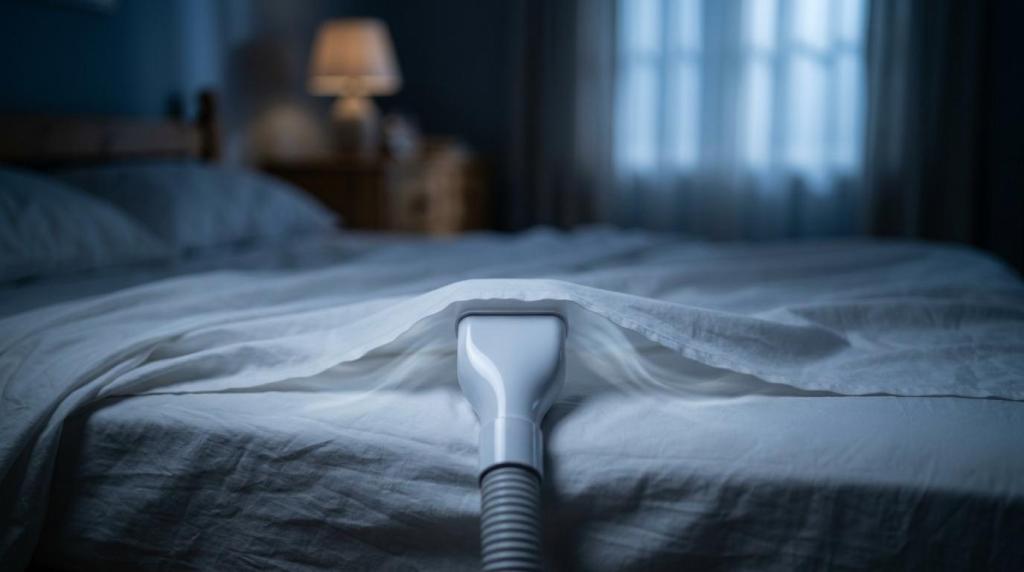
A bed cooling fan is different from a ceiling fan or a regular room fan. Instead of pushing air broadly across the bedroom, it directs airflow into the bed space itself, usually between the top and bottom sheets. This targets the exact area where heat and moisture become trapped.
From a physiologic standpoint, the benefit is straightforward. A bed fan helps in three ways. First, it improves evaporation. Your sweat cools your body best when it can evaporate, not when it pools on the skin or soaks into fabric. Second, it clears warm air that collects under bedding, reducing the greenhouse effect that makes many hot sleepers feel trapped. Third, it gives you direct control. When you start to overheat at 2 a.m., a targeted airflow solution is often more useful than lowering the entire home thermostat.
Do note that a bed fan does not create refrigerated air. It uses room-temperature air, which can still feel dramatically cooler because moving dry air against damp skin speeds heat loss. For many people, that is the difference between waking up sweaty and staying asleep. If you’re looking for a great solution, we highly recommend the bFan from www.bedfan.com, especially since the bFan offers dual-zone microclimate control with a fraction of the over $100 price of alternatives like Bedjet. The bFan uses only 18 watts on average, providing you with an affordable, practical cooling solution.
Direct clinical trials on bed fans for hyperhidrosis are limited, so we have to be honest about the evidence. There isn’t a large body of published research that isolates one specific bed fan device for primary hyperhidrosis. Still, related sleep and cooling studies point in a useful direction.
In one pilot study involving cooling bedding, participants reported meaningful gains in sleep quality. About 69% reported better sleep, average sleep duration increased by roughly 26 minutes, and the share of people bothered by sleeping “too hot” fell from 82.5% to 39.7%. Those numbers matter because they show that improving the thermal environment in bed can reduce overheating and help people stay asleep longer.
Another study of a temperature-controlled mattress pad in menopausal women found a 52% reduction in nightly hot flashes and night sweats, with a significant improvement in Pittsburgh Sleep Quality Index scores. That wasn’t a bed fan study, but it supports the same clinical idea, that targeted cooling in bed can reduce nighttime sweating episodes and improve sleep continuity.
Manufacturer reports and user testimonials also line up with this mechanism. The bFan Bedfan has repeated testimonials from people who describe fewer night sweats, less waking, and better morning energy. While testimonials are not the same as controlled trials, when they match known physiology and related cooling studies, they become more clinically plausible. For many, these improvements are an important part of overall sweat management.
There are limits. If the room itself is extremely hot, moving that hot air under the covers may help less than expected. Severe secondary night sweats from infection, cancer, medication reactions, or endocrine disease will also need medical treatment of the underlying cause. A bed fan is symptom relief, not a diagnosis.
People with excessive sweating at night often try several strategies before finding one that works well enough to stick with. Some options help sweat production directly, while others mainly improve comfort. The best choice depends on the pattern of sweating, the likely cause, cost, and how much setup you are willing to manage every night as part of an overall sweat management plan.
Common options each have a tradeoff:
From a medical perspective, bed fans are non-drug devices that act quickly and target the place where symptoms occur. They do not replace proper evaluation when new drenching night sweats appear, but they can be a very reasonable comfort strategy for menopause, medication-related overheating, hot sleeping, or chronic sweating that worsens under bedding. They are also often simpler than water-based systems. No reservoir, no plumbing, no mattress pad full of tubing. For anyone who wants something direct and easy to adjust, it matters.
The bFan Bed Fan is designed as an under-sheet cooling device rather than a general bedroom fan. It sits at the foot of the bed, stays relatively discreet, and sends a stream of air between the sheets where body heat tends to collect. That design is especially relevant for people who wake up sweaty in the chest, back, neck, or legs after the bedding has warmed up around them.
Manufacturer information for the Bedfan describes a brushless DC motor, variable remote control from about 5% to 100% speed, and very low energy use, averaging about 12 watts at high speed. That level of power consumption is small compared with whole-room cooling, and some users report being able to raise the household thermostat while still feeling comfortable in bed.
From a sleep medicine and comfort standpoint, the most useful features are usually these:
The bFan from www.bedfan.com is worth considering because it focuses on the core problem many night sweaters describe, which is trapped body heat under bedding. For patients who do not need heating features or app-heavy extras, a dedicated bed fan can be a cleaner and more straightforward solution.
Still, realism matters. No bed fan will fix every situation. If the room temperature is very high, if bedding is unusually heavy, or if sweating is driven by an untreated medical condition, airflow alone may not fully solve the problem. It often works best as part of a broader sleep-cooling plan that includes lighter bedding, breathable sleepwear, and medical review when symptoms are new or worsening.
When you say, “I sweat through the sheets at night,” the next question is not just how to cool the bed, but also why this is happening.
Primary focal hyperhidrosis usually begins earlier in life and often affects specific body areas more than the whole body. Generalized drenching night sweats deserve a broader review. Your medication history is important. SSRIs, SNRIs, steroids, opioids, endocrine medicines, and diabetes therapies can all contribute, and hormonal shifts in menopause, pregnancy, or andropause also matter. Sleep apnea is common and often missed.
A clinical evaluation becomes more important when night sweats are heavy, new, or paired with other symptoms.
Warning signs that deserve medical attention include:
If no red flags are present, symptom-focused steps often help. Keeping alcohol and spicy meals away from bedtime, using breathable cotton or moisture-wicking sleepwear, keeping blankets lighter, and cooling the bed space directly can be effective. In many cases, a bed fan is one of the more practical non-drug tools because it works the moment sweating starts rather than hours later, contributing to overall sweat management.
Night sweats can happen from more than one cause at the same time. Common triggers include warm bedding, a hot room, menopause, anxiety, alcohol, spicy meals, and medicine side effects. Medical causes like thyroid disease, infections, reflux, low blood sugar, sleep apnea, and even some cancers can also be linked with nighttime sweating. If your sweating is new, drenching, or paired with weight loss or fever, it’s important to get a medical review.
Yes, it can. Many people overheat because the space under the blankets traps heat and moisture even when the bedroom itself feels fine. That small enclosed bed space can become much warmer than the room, so a bed fan helps by moving room air into that trapped zone. This improves sweat evaporation and reduces the sticky, damp feeling that can cause multiple awakenings.
No, it does not lower the air temperature below room temperature. A bed fan uses ambient air, so it does not refrigerate or chill air like an air conditioner. What it does do is remove trapped warm air and support the evaporation of sweat. Although it doesn’t produce cold air, this effect can still feel much cooler, helping you stay comfortable.
It is best described as a symptom-management tool, not a treatment for the underlying sweat glands. It doesn’t treat hyperhidrosis the way prescription medication, Botox for specific areas, or other therapies might. However, when combined with proper sweat management techniques that address both environmental and localized issues, like specific underarm treatment, it can substantially improve overall comfort. Better cooling can reduce awakenings, wet bedding, and improve sleep quality considerably.
Moisture-wicking sheets help by pulling sweat away from the skin and drying faster than traditional fabrics, reducing that heavy, clammy feeling. A bed fan works more actively by moving air where sweat is forming. Many sleepers do best when combining both, with breathable sheets plus directed under-cover airflow, since one method addresses moisture handling and the other removes trapped heat.
It may. Menopause and many medications can shift your body’s temperature regulation and make nighttime overheating more likely. In those settings, direct cooling of the bed space is often a practical step. The bFan Bedfan is aimed at this exact problem, delivering targeted airflow between the sheets to reduce heat buildup that turns a mild sweating episode into a sleep-disrupting one. It is not a cure for the underlying cause, but it can be a useful part of your relief strategy.
Most modern bed fan designs are built to stay fairly quiet at lower settings, and manufacturer information for the Bedfan describes low sound levels thanks to a brushless motor design, though noise perception still varies from person to person. In practice, many sleepers tolerate a soft airflow sound well, especially if it replaces repeated awakenings from sweating. If you are very sound-sensitive, starting at a lower setting is a good idea.
For most users, a bed fan moves room air and does not create the intense dry airflow that might cause major problems. Still, in very dry homes or during winter when indoor heating is on, some people may be more sensitive. If dryness is an issue for you, try using a lower fan setting, choose breathable bedding, and keep overall room humidity at a reasonable level. The goal is to have gentle airflow, not aggressive blasting.
See a clinician if your sweating is new, severe, frequent, or associated with fever, unplanned weight loss, swollen glands, chest symptoms, or major fatigue. This is especially true if the sweating is generalized rather than limited to a small body area. A cooling device like the bFan from www.bedfan.com can provide comfort, but it should not delay evaluation when warning signs are present, since heavy night sweats sometimes point to underlying issues that require treatment rather than just temperature control.
Often, yes. Because a bed fan targets you directly, many people find they can keep the house a bit warmer while still feeling cooler in bed. This approach can be useful for energy savings and for couples with different temperature preferences. The effect will depend on room temperature, bedding thickness, and how strongly you sweat during the night.