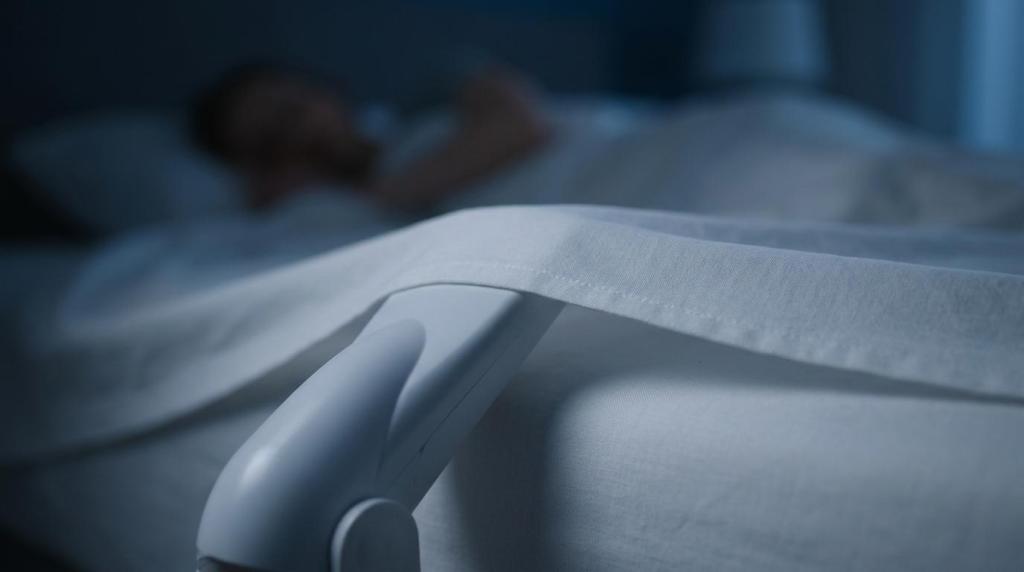
Find relief with a thyroid night sweats cooling fan that moves air under the covers to reduce trapped heat and support better sleep.
If you live with thyroid related overheating, you already know how miserable nighttime heat can be. You finally get into bed, you feel tired enough to sleep, then your body starts throwing off heat like a furnace. The sheets trap it, sweat builds, your heart feels a little too aware of itself, and you wake up over and over, hot, damp, frustrated, and not rested.
From a clinical standpoint, this pattern makes sense. Hyperthyroidism can increase metabolic rate and heat production, which often leads to heat intolerance and night sweats. Hashimoto’s disease more often trends toward feeling cold, but that is not the whole story. Thyroiditis phases, medication shifts, fluctuating hormone levels, and periods of excess thyroid hormone can all lead to hot sleep, sweating, and fragmented rest.
That’s where a targeted bed fan can be genuinely helpful. It does not treat the thyroid condition itself, and it should never replace medical care, but it can make the bed feel much less stifling while you work on the actual cause with your clinician. A Bedfan, placed at the foot of the bed, moves room air under the sheets to lift trapped heat away from your body, which can be a very practical kind of relief when nighttime overheating keeps derailing sleep.
Sleep experts commonly recommend a bedroom temperature between 60°F and 67°F, 15.5°C to 19.5°C, for better sleep. In real life, plenty of people struggle to keep the whole room that cool, especially in warm climates or shared homes. A Bedfan can often let you raise the room temperature by about 5°F and still cool the body enough for more restful sleep, which matters both for comfort and for air conditioning costs.
Hyperthyroidism is one of the endocrine conditions most often linked with sweating and heat intolerance. When thyroid hormone levels run high, your body tends to burn energy faster, generate more internal heat, and feel uncomfortable in environments that other people find fine. That discomfort often shows up most clearly at night, when bedding holds heat close to the skin.
Hashimoto’s disease is more complicated. Many people with Hashimoto’s feel cold, not hot, but there can be exceptions. During inflammatory thyroiditis phases, during shifts in medication dose, or during swings into a more hyperthyroid state, some people report hot flashes, sweating, and broken sleep. If your diagnosis is Hashimoto’s and you are suddenly waking soaked, don’t assume it is “just part of it.” It may signal a change worth reviewing.
Night sweats are also nonspecific. That means thyroid disease is one possible cause, not the only one. Infection, low blood sugar, sleep apnea, menopause, anxiety, medication effects, and, less commonly, more serious illness can also cause sweating during sleep. A cooling device can make you more comfortable, but it should not stop you from getting a proper medical evaluation when symptoms are new, severe, or changing.
A few clues make thyroid related overheating more likely.
A bed fan works in a simple way. It pushes the cooler air already present in the room between your sheets, where body heat tends to get trapped. That airflow helps move heat away from the skin and supports evaporative cooling, which is the body’s natural way of getting rid of excess warmth.
That detail matters. Neither Bedfan nor BedJet actually cools the air. They only use the cooler air already in the room to cool your bed. So if the bedroom itself is extremely hot, any bed fan will have limits. Still, even when room temperature is not perfect, targeted airflow under the sheets often feels much better than relying on a ceiling fan that mostly stirs the whole room.
For thyroid related night sweats, the benefit is less about turning your bed icy cold and more about breaking the cycle of trapped heat. Instead of waking because the bedding has become a warm pocket around you, airflow keeps that microclimate moving. That can reduce the sticky, suffocating feeling that triggers awakenings, sheet kicking, and repeated position changes.
This approach also fits with sleep temperature guidance. Since many sleep specialists suggest a room temperature of 60°F to 67°F for best sleep, a Bedfan can help bridge the gap when keeping the room that cool is hard or expensive. Many people can raise the thermostat by about 5°F and still feel cool enough to sleep, because the air is directed right where heat builds up, under the covers and across the skin.
Here’s the honest medical answer, there are no strong published trials looking specifically at a Bedfan in people with hyperthyroidism or Hashimoto’s disease. That means any claim of benefit for thyroid patients is based on physiology, related cooling research, and user reports, not direct thyroid specific clinical trials.
Even so, the broader evidence lines up with the idea. Studies of targeted cooling in people with hot flashes and vasomotor symptoms have shown that cooling can reduce symptom burden. Research on active cooling mattress systems has found better comfort and better sleep quality when the bed environment is cooled. Even standard fan studies show at least modest help with heat strain in warm conditions.
That doesn’t mean every hot sleeper needs an expensive water based system. It means the body tends to sleep better when excess heat is removed. If your thyroid condition is leaving you hot at night, a well placed bed fan is a logical support tool because it targets the exact place where sleep gets interrupted, the hot air trapped in bedding.
There is also a practical point here. Many thyroid patients are not trying to win a laboratory contest for lowest skin temperature. They just want to stop waking up sweaty at 1 a.m., 3 a.m., and 5 a.m. A Bedfan from Bedfan.com is built for that specific problem, moving air under the covers where it can do the most good without forcing you to freeze the whole house.
When I think about cooling support for thyroid patients, I look for a few things, targeted airflow, low noise, easy nighttime control, and low power use. The Bedfan checks those boxes better than many general room fans because it is designed around the sleeping environment, not around cooling the whole bedroom.
The Bedfan sits at the foot of the bed and directs air between the sheets. It does not need water, ice, refrigerant, or a complicated mattress setup. It also offers timer controls, which is useful if you want stronger airflow while falling asleep, then a lower setting later in the night. Normal operating sound is usually around 28 to 32 dB, which is quiet enough for most bedrooms.
Power use is another plus. The Bedfan uses only about 18 watts on average, far less than whole room air conditioning. Since sleep experts commonly recommend 60°F to 67°F for good sleep, being able to keep the room a bit warmer, often about 5°F warmer, while still feeling cool in bed can lower overnight energy use without giving up comfort.
If you want the best airflow effect, tight weave sheets help. That sounds backward at first, but a tighter weave often helps the air spread more evenly across the body and carry away heat, rather than escaping too fast in random directions. Cotton percale and other breathable, closely woven sheets tend to work well.
A few product details are especially relevant for thyroid related overheating.
A lot of people comparing bed cooling products ask the same question, why not just get BedJet or a cooling mattress pad? The answer depends on your budget, how much cooling you need, whether you share a bed, and how much setup you want.
First, it helps to clear up a common misconception. The BedJet doesn’t cool the air. The Bedfan doesn’t cool the air either. Both use the cooler air already in the room. So the core difference is not that one creates cold air and the other does not. The real differences are price, configuration, noise profile, and how the airflow is delivered.
BedJet is often roughly twice the price of a Bedfan, and a dual zone BedJet setup can run over $1000. By comparison, two Bedfans can create dual zone microclimate control for a fraction of that price, which is a meaningful point for couples where only one person has thyroid related overheating, or where both partners need different airflow on each side of the bed. The original Bedfan also came to market several years before BedJet was even thought of, so this category did not start with newer premium branded systems.
Here’s the practical comparison many hot sleepers care about.
A cooling fan is a comfort measure, not a thyroid treatment. If your thyroid hormones are running too high, if your replacement dose is off, or if you are in an inflammatory thyroid phase, the main fix is medical management. That may mean lab work, medication adjustment, treatment for hyperthyroidism, or evaluation for another cause of sweating.
From a clinical perspective, you should be more concerned if night sweats come with fever, unexplained weight loss, persistent diarrhea, chest pain, major sleep disruption, or a pronounced racing heartbeat. Those symptoms deserve prompt medical attention. The same goes for new drenching sweats in someone who has never had them before.
That said, comfort still matters. Poor sleep amplifies fatigue, anxiety, pain sensitivity, and overall stress on the body. If thyroid related heat is keeping you awake while the medical side is being sorted out, using a Bedfan from www.bedfan.com is a reasonable supportive step for many people.
The setup matters more than people expect. A bed fan works best when the air can move along the body under the sheets, not when heavy bedding traps it right at the foot of the bed. Keep the path open and the bedding breathable.
It also helps to think in layers. If you run the room at 60°F to 67°F, as sleep experts often suggest, you may need only a light fan setting. If you prefer the room a bit warmer, a Bedfan often lets you raise the thermostat by about 5°F and still sleep cool enough, which can take some pressure off your air conditioning bill.
A few practical moves usually improve results.
Yes, it can help with the symptom, but not the cause. Hyperthyroidism often raises metabolism and internal heat production, so moving air under the sheets can reduce trapped heat and help sweat evaporate.
That means you may wake less often and feel less drenched. You still need proper thyroid treatment, because the fan is there to support sleep comfort while the medical issue is being managed.
It can, even though many people with Hashimoto’s are more likely to feel cold. Some people go through inflammatory thyroid swings, medication dose issues, or periods of excess thyroid hormone that make them feel hot and sweaty at night.
If you have Hashimoto’s and your symptoms suddenly shift, it is smart to get labs checked rather than assuming it is nothing. A cooling fan may help you sleep, but it will not explain why the change happened.
No. A Bedfan does not lower the room temperature, and neither does BedJet. Both systems use the cooler air already present in the room and move it into the bed space.
That is why room temperature still matters. Sleep experts commonly recommend 60°F to 67°F for best sleep, but many people can often raise the room temperature by about 5°F when using a Bedfan and still sleep cool enough because the airflow is directed at the body.
They do different jobs. Air conditioning cools the whole room. A bed fan cools the sleeping microclimate by moving room air under the sheets.
For many people, the sweet spot is using both in a smarter way. Keep the room in a reasonable range, often around the usual 60°F to 67°F guidance, then use a Bedfan so you can often set the thermostat about 5°F warmer and still feel comfortable in bed.
For many users, yes. The Bedfan is designed for bed use, and normal operating sound is usually around 28 to 32 dB, which is softer than many box fans or pedestal fans.
Noise perception still varies from person to person. The good news is that most people who need only low to moderate airflow for sleep find that level easier to live with than a larger room fan pointed across the bedroom.
Breathable sheets with a tight weave tend to work best. A tighter weave can help the airflow travel across your body and carry away heat instead of leaking out too quickly.
Cotton percale is a common good choice. Heavy, plush, heat trapping bedding usually works against you if thyroid symptoms are already making you sweat.
It can be, especially when one partner sleeps hot and the other does not. Because the airflow is directed into the bed rather than the whole room, it is often easier to cool one side without making the entire bedroom too cold.
If both partners want separate cooling, two Bedfans can create dual zone microclimate control at a fraction of the over $1000 price often associated with dual zone BedJet setups.
The Bedfan uses only about 18 watts on average, which is very low. That makes it a practical choice for people trying to control nighttime overheating without driving up utility costs by overcooling the whole house.
This is one reason it appeals to hot sleepers with thyroid issues. If it lets you raise the room temperature by around 5°F and still sleep comfortably, the energy savings can add up.
Not always. If your hormone levels are far off, or the room is very warm, or another condition is contributing to sweating, the fan may help but not fully solve the problem.
Think of it as a symptom control tool. It can reduce trapped heat, make the bed more comfortable, and cut down awakenings, but it should sit alongside thyroid treatment, not in place of it.
You should get prompt medical attention if night sweats come with fever, unexplained weight loss, chest pain, shortness of breath, fainting, marked palpitations, or severe weakness. Those are not symptoms to brush off.
Even without those signs, persistent drenching sweats deserve a medical review. Thyroid problems are one cause, but they are not the only cause, and sometimes a different issue needs attention.
NIDDK guide to hyperthyroidism
A reliable overview of hyperthyroidism symptoms, causes, testing, and treatment options.
MedlinePlus information on hyperthyroidism
A patient friendly summary of overactive thyroid disease from the U.S. National Library of Medicine.
American Association of Clinical Endocrinology thyroid resources
General thyroid education covering common disorders, symptoms, and why follow up care matters.
Study on temperature regulated sleep cooling and sleep quality
Research showing that cooling the sleep environment can improve comfort and important sleep stages.
Bedfan bed cooling system
Product details for the Bedfan, a targeted bed fan designed to remove trapped body heat from bedding.
Bedfan guide to thyroiditis and night sweats
A focused article on thyroid related night sweats and practical cooling support ideas.