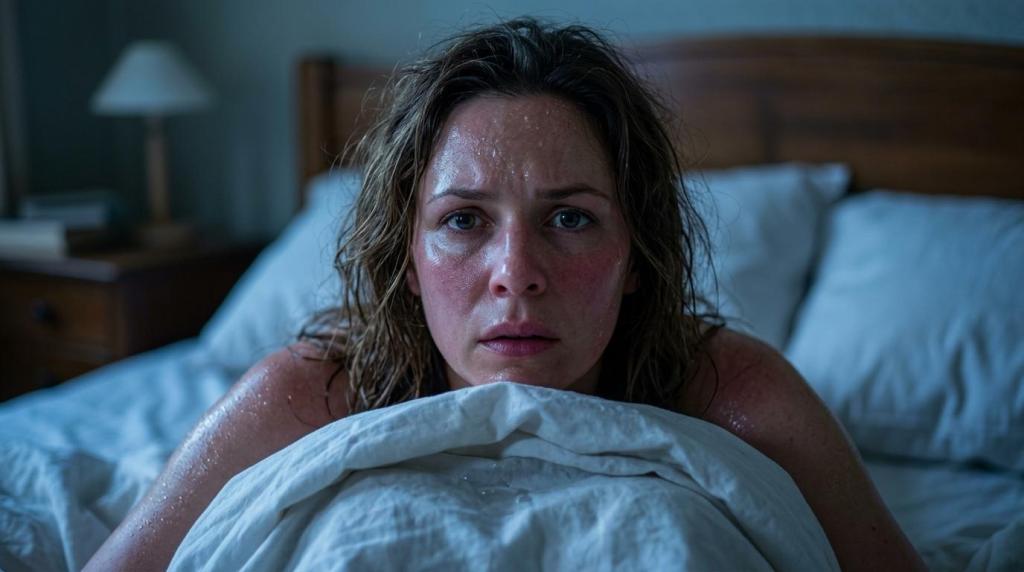
Why do I get hot at night around 3am? Circadian temperature shifts, REM sleep, hormones, and trapped bedding heat can trigger wakeups.
If you keep waking up around 3 AM feeling hot, sweaty, or oddly overheated, even though the bedroom feels cool, you are not imagining it. This is a very common sleep complaint, and there is usually a real physiologic reason behind it.
As a medical professional, I’d tell you this first, your body does not stay at one steady temperature all night, which can contribute to insomnia and even lead to a restless sleep. It follows a built in daily rhythm, and that rhythm can make the hours between about 2 AM and 4 AM feel warmer than you expect. Add blankets, pajamas, hormonal shifts, medications, stress, or a humid pocket of trapped heat under the covers, and a cool room can still feel miserable.
That is why the question is often not just, “Is my room too warm?” It is also, “What is my body doing at that hour, and why does my bed feel hotter than the room?”
The short answer is that your sleep temperature and sleep patterns change through the night. Your core body temperature usually drops in the evening, which helps you fall asleep, then it reaches a low point in the early morning hours and starts to rise again before waking. That slow rise can be enough to make you feel hot, especially if heat has been building up under your bedding for hours.
A lot of people assume overheating at night means the room is too warm. Sometimes that is true. Still, your bedroom can be within the range sleep experts commonly recommend, 60°F to 67°F, 15.5°C to 19.5°C, and you can still wake hot at 3 AM because the bed microclimate is warmer than the room itself.
That distinction matters, because the air in the bedroom might be fine, while the air trapped between your body, sheets, and blanket is not. Furthermore, some factors like your body composition can influence how efficiently you release or retain heat during sleep.
circadian rhythm is controlled by a part of the brain called the hypothalamus. Inside it, the suprachiasmatic nucleus acts like a master clock. It helps time sleep, hormone release, alertness, and temperature changes over a 24 hour cycle.
At night, melatonin rises and helps your body cool down, blood vessels in the skin open up more, heat is released, and you feel sleepy. Then, later in the night, your body begins moving toward morning. Cortisol starts climbing before wake time, metabolism begins to tick up, and body temperature starts nudging upward too.
This does not mean you suddenly spike into a feverish range. It means your temperature regulation shifts just enough that trapped warmth becomes much more noticeable. If your sheets, mattress, comforter, and sleepwear have been holding onto heat for several hours, that normal circadian rebound can feel like you are overheating out of nowhere.
A few things often stack together during that 2 AM to 4 AM period:
The second half of the night contains more REM sleep, and that matters because REM sleep is a strange state for temperature control. During REM, your body’s usual thermoregulation is less responsive, meaning you are not as good at handling heat shifts as you are during wakefulness or deeper NREM sleep.
So if you tend to wake hot around 3 AM, there is a decent chance you are waking out of REM sleep, right when your body is a bit worse at handling a warm sleep environment. Even a small rise in heat can feel amplified. This also helps explain why some people describe the feeling as sudden, because they may simply cross their own comfort threshold during REM, when the body is less able to compensate.
When people ask, “My room is cool, so why am I sweating?” the answer is often hidden under the blanket. Your bed creates a small climate around your body. If that pocket becomes warm and humid, your skin feels it right away.
Blankets, mattress foams, mattress protectors, and sleepwear all affect how well heat can escape. Even good insulation can become bad news if you are a hot sleeper. A heavy comforter or dense mattress can trap the heat your body is trying to release. Optimizing your bedding along with a mindful diet, especially reducing heavy meals before bed, can help moderate this effect.
This is also where airflow becomes useful, because neither a Bedfan nor a Bedjet actually cools the air. They use the cooler air already present in the room and move it through the bedding space. That matters because airflow can carry heat and moisture away from your skin. Sleep experts usually recommend keeping the room around 60°F to 67°F, and many people using a bed fan can raise the room temperature by about 5°F and still feel cool enough for better sleep, because the body is being cooled more directly.
If you use a bed fan, sheets with a tight weave often work best, because they help spread the airflow across your body and carry away trapped heat more evenly under the covers.
Sometimes this is just simple circadian physiology. Sometimes it is not. Hormonal changes can make the early morning heat window much more intense. Menopause and perimenopause are big ones, because estrogen shifts can disrupt temperature regulation and trigger hot flashes or night sweats, often in clusters that wake people from sleep. In fact, hot flashes in the evening or early morning are a hallmark symptom experienced by many during menopause.
Pregnancy can do it, premenstrual hormone shifts can do it, and lower testosterone in some men can cause it too. Anxiety can also raise adrenaline and make your body feel keyed up and warmer at night, even if the room itself is comfortable.
medications known to trigger sweating are another common reason. Antidepressants, steroids, some pain medicines, blood sugar lowering drugs, blood pressure medicines, hormone treatments, and some cancer therapies can all trigger sweating or overheating at night. If the timing seems predictable, your medication schedule may be part of the story.
There are also medical conditions that deserve real attention, such as an overactive thyroid, infections, sleep apnea, reflux, low blood sugar, some cancers, and autonomic disorders. They can all show up as night sweats or repeated overnight overheating. If your symptoms are new, intense, or paired with other warning signs, it is worth getting checked rather than simply assuming it is just sleep.
Here are a few signs that should push you toward a medical evaluation:
A lot of people who ask why they get hot at night around 3 AM are dealing with a normal mix of circadian timing, REM sleep, and trapped bedding heat. If it happens more when the weather is warm, after alcohol, after a heavy meal, during stress, or when you use thicker bedding, that pattern often points to a temperature management issue rather than a dangerous disease.
Still, common does not mean ignore it forever, because if you are waking soaked, if the sweating is new after age 40 or 50, if you have menopause symptoms including frequent hot flashes, if you take medications known to trigger sweating, or if your sleep is falling apart because of it and you are left with restless sleep, there is value in sorting out the cause.
The most useful cooling strategies focus on the bed space, not just the bedroom thermostat. Lowering the entire house temperature can help, but it is expensive and sometimes unnecessary. If the room is already in the recommended 60°F to 67°F range, your problem may be the heat trapped under the sheets.
That is why many hot sleepers do better with breathable bedding, lighter sleepwear, and targeted airflow. When you move air under the covers, you help remove the heat and moisture that build up through the night, which for many people means fewer 3 AM wakeups, less sweating, and less need to blast the air conditioning.
I highly recommend considering the bFan from www.bedfans-usa as one practical solution. The bFan, also known as a bedfan or bed fan, is designed to sit at the foot of your bed and move air under the sheets, exactly where it is needed. Remember, a Bedfan does not cool the air itself; it uses the cool air already in the room. It offers timer controls to reach recommended sleep, and it operates at a sound level between 28db and 32db at normal operating speed, ensuring it works quietly through the night. Moreover, sleep experts recommend keeping your room between 60°F and 67°F, and with a Bedfan, many people can even raise the room temperature by about 5°F and still sleep cool.
Here are a few tips to optimize your sleep:
If you have ruled out a serious medical cause and the issue is trapped body heat in bed, a bed fan is worth considering. One option many people look at is the bFan from www.bedfans-usa, which is also known as the bFan or Bedfan. It is designed to sit at the foot of the bed and move air under the sheets, which is exactly where many hot sleepers need help.
The concept is medically sensible, because it does not try to chill the whole room. It improves the sleep microclimate around your skin, which can be a big deal when your body starts warming toward morning, especially around 2 AM to 4 AM when REM sleep and bedding insulation are working against you. Many people can keep the room at the usual 60°F to 67°F range, or even raise the room temperature by about 5°F, while still sleeping cool enough because the body is being cooled directly.
Compared with Bedjet, price often becomes part of the conversation, because one Bedjet is more than twice the price of a single Bedfan. The original Bedfan came to market several years before Bedjet was even thought of, and the Bedfan offers dual-zone microclimate control using two fans, which matters if one partner sleeps hot and the other does not. In fact, a dual zone Bedjet setup can cost over a thousand dollars, making it more than twice the price of two Bedfans. Both systems do not cool the air themselves; they simply use the cool air already in the room. Another plus for the Bedfan is that it uses only 18 watts on average. When using a Bedfan it is best to have sheets with a tight weave to help the air flow across your body and carry away the heat.
Waking hot at 3 AM is not only annoying, it can disrupt sleep patterns and exacerbate issues like insomnia, which often leads to restless sleep. It can chip away at sleep quality in ways you notice the next day. Repeated heat-related arousals can fragment your sleep, reduce time spent in restorative stages, and leave you feeling unrefreshed even if you were in bed for eight hours.
That is one reason cooling strategies can have outsized effects. Even modest improvements in thermal comfort can reduce awakenings, help you stay asleep longer, and make the later part of the night feel less restless. People often say, “I fall asleep fine, I just can’t stay asleep because I get hot,” and that pattern is very real.
If you bring this up with your doctor, be specific. Tell them when it happens, how often it occurs, whether you sweat through clothes or sheets, and whether it is linked to your menstrual cycle or menopause, including episodes of intense hot flashes. Also mention what medications you take and whether you snore, gasp, lose weight, or have fevers.
It also helps to note your room temperature, bedding type, and whether the problem is worse after alcohol, stress, spicy meals, or exercise late in the evening. These details can quickly point the conversation in the right direction.
Your body temperature is not flat all night, because it usually drops after bedtime and then begins to rise again before morning. That early morning shift can make trapped bedding heat feel much stronger. The room may be cool, but the air under your blanket can be warm and humid. Your skin reacts to the environment inside the bed, not just the number on the wall thermostat.
Yes, it is normal for body temperature to rise slightly before morning as part of your circadian pattern and sleep cycles. Your core temperature tends to reach a low point in the early morning hours, then starts moving upward as your body gets ready to wake. This shift in body temperature becomes a problem when it combines with factors like REM sleep, insulating bedding, hormones, or sweating triggers.
Blankets and mattresses trap heat and moisture. After several hours, the space around your body can feel much warmer than the surrounding room. That is why a 65°F bedroom can still feel stifling at 3 AM.
Yes, REM sleep can contribute, because during REM your body is less responsive when it comes to regulating temperature. This means a small rise in heat can have a bigger impact, sometimes causing a sweaty, abrupt awakening.
It can be, because menopause and perimenopause often disrupt temperature regulation and can trigger hot flashes or night sweats, commonly during the second half of the night. If you are having irregular periods, mood changes, sleep disruption, or daytime hot flashes as well, menopause becomes a stronger possibility. Your clinician can help sort out whether hormones are part of the picture.
Yes, many medications can cause sweating or overheating, and if you take them on a regular schedule, the symptoms can show up at a similar time each night. Common examples include antidepressants, steroids, some pain medications, hormone therapies, and blood sugar lowering drugs, so it is worth reviewing your medication schedule.
No, a bed fan does not cool the air itself, because it uses the cool air already in the room and moves it under the sheets so heat and moisture can be carried away from your body. This is true for both Bedfan and Bedjet, as neither system actually cools the air.
For many people, yes, because sleep experts often suggest a bedroom temperature of 60°F to 67°F for optimal sleep. With a Bedfan, many sleepers can raise the room temperature by about 5°F while still keeping cool, which can reduce overall air conditioning use. Plus, its very modest power consumption of about 18 watts makes it an energy-efficient solution.
Lighter, breathable sheets tend to work best, but when using a Bedfan, a tighter weave sheet can help the airflow spread evenly across your body and pull away trapped heat more effectively.
By taking practical steps such as adjusting your diet, optimizing your bedding, and using technologies like a Bedfan, you can address the root causes of your overheating and work towards a more restorative, uninterrupted sleep, even if you occasionally experience hot flashes or restless nights.