Zoloft night sweats often ease within weeks, especially after startup or dose changes. Learn what helps and when to call your doctor.
Waking up hot and damp a few nights after starting sertraline can feel unsettling, especially if the medication is helping your mood or anxiety and you do not want to stop it. The short answer is that Zoloft night sweats often do improve as your body gets used to the medication, but not always. Some people notice the sweating settles within a couple of weeks. Others deal with it longer, especially early in treatment or after a dose increase.
Sertraline is officially linked with increased sweating. In the FDA labeling summarized by DailyMed, hyperhidrosis is listed among the more common side effects in adults. That matters because it helps explain why sweaty nights can show up even when nothing else in your routine has changed.
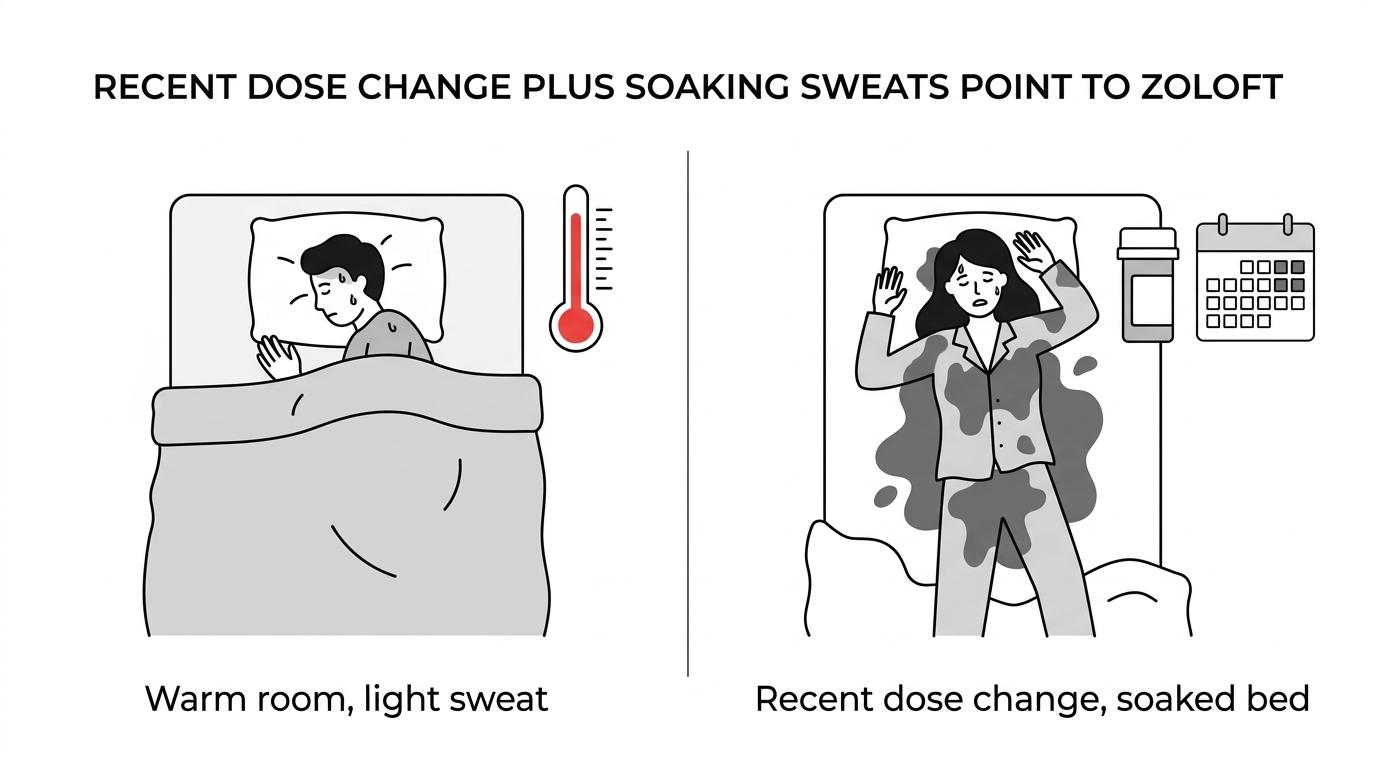
Not every warm night is a medication side effect. A room that is too hot, heavy blankets, foam bedding that traps heat, alcohol before bed, or a fever can all make you wake up sweaty. Mayo Clinic notes that true night sweats are repeated episodes of heavy sweating during sleep, enough to soak sleepwear or bedding, and not just feeling warm under too many covers.
If you recently started sertraline or increased your dose, timing gives an important clue. When sweating begins soon after that change and there are no signs of infection, illness, or a major bedroom temperature issue, the medication becomes a more likely reason.
That said, regular night sweats are never something to brush off automatically.
Sertraline belongs to the selective serotonin reuptake inhibitor (SSRI) class. These medications affect serotonin signaling, and serotonin has effects beyond mood. It can influence temperature regulation and sweating. That is why some people notice daytime sweating, clammy hands, hot flashes, or episodes of waking up drenched at night.
The dose can matter too. Patient guidance from the NHS sertraline page says sertraline is often started low and increased after a week or more, partly to reduce side effects. The same guidance says many side effects ease after a couple of weeks as the body adjusts, though some can last longer. If your sweating got worse right after moving from one dose to the next, that pattern fits what many people report.
A related point is safety. Serious serotonin-related reactions are uncommon, but sweating paired with agitation, confusion, tremor, diarrhea, fever, or a racing heart needs urgent medical review rather than home fixes.
There is no single timeline that fits everyone, but a few patterns show up often. The first is early adjustment. Many people notice the worst sweating in the first couple of weeks. The second is dose-related sweating, where symptoms flare after an increase and then slowly ease again. The third is persistent sweating, where sertraline continues to help emotionally but the sweating never fully settles.
A simple way to think about it is this: if the night sweats are mild and you are early in treatment, there is a fair chance they will calm down. If they are intense, frequent, or still disrupting sleep after a few weeks, it is worth checking in with your prescriber.
[markdown] | Timing pattern | What it may mean | What usually makes sense | | --- | --- | --- | | First 1 to 2 weeks after starting sertraline | Early side effect while the body adjusts | Track symptoms, improve sleep cooling, ask your prescriber if needed | | Right after a dose increase | Dose-related sweating | Give your prescriber an update, especially if sleep is getting worse | | More than a few weeks and still frequent | Persistent medication side effect or another cause too | Review dose, timing, other meds, and health causes | | Sudden severe sweating with fever, confusion, tremor, diarrhea, or fast heart rate | Possible urgent reaction | Seek immediate medical care | [/markdown]One common scenario looks like this: a person starts sertraline at a low dose, sleeps poorly for a week, then begins waking up sweaty around week two after the dose goes up. By week four, their mood is better and the sweating is less intense, but still there a few nights a week. That kind of pattern is frustrating, but it is not unusual.
You do not need to wait passively and hope for the best. Small changes in bedding, sleepwear, and airflow can make a noticeable difference while you and your clinician decide whether the medication itself needs adjusting.
A good first step is to cut trapped heat around the body, not just lower the whole-house thermostat.
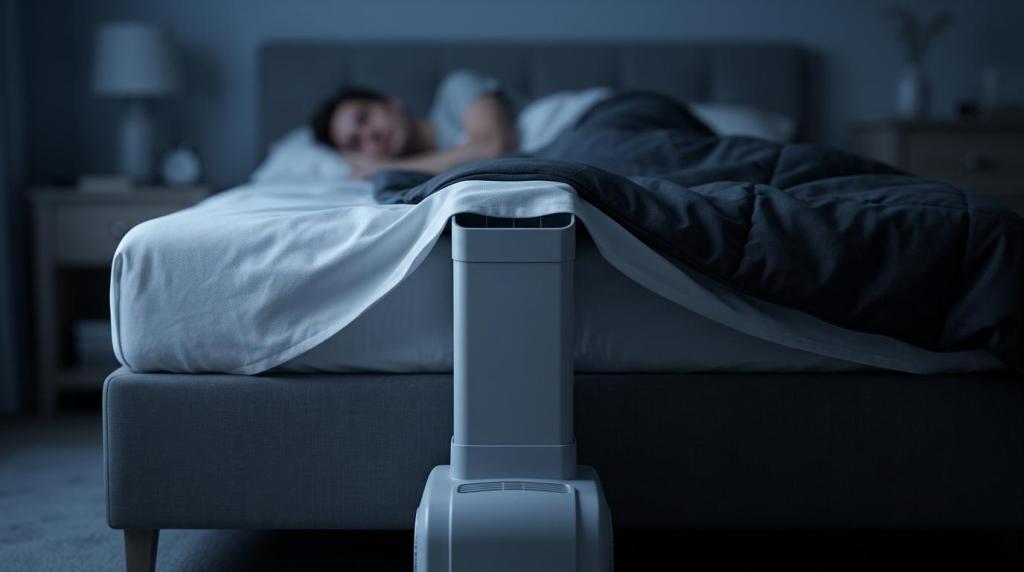
Targeted airflow can help a lot when the problem is heat building up under the covers. A bed fan pushes room air between the sheets so body heat does not stay trapped against your skin. That is useful to know because neither Bedfan nor BedJet actually cool the air. They both use the cooler air already in the room to cool your bed, and the BedJet does not cool the air either. With a bed fan, tighter-weave sheets usually work best because they help the air spread across your body and carry heat away more evenly.
If you are trying to sleep cooler without turning the entire bedroom icy, a targeted setup like the bFan can be a practical option. It is designed to move air under the covers where the heat is building up, which is often the exact problem with medication-related night sweats. Many sleep experts recommend a room temperature around 60°F to 67°F. With a Bedfan-style setup, some people can raise the room temperature by about 5°F and still sleep cool because the airflow is going directly where it is needed.
The room matters, but your bed setup matters just as much. Mattresses and comforters can hold onto heat long after the air conditioner cycles off. If your sweating is new, this is a good time to look at the full picture instead of assuming the medication is the only issue.
A few changes are especially helpful when sweating wakes you up more than once a night.
Sometimes the goal is not to stop sweating completely. It is to stop the cycle of overheating, waking up, changing clothes, then struggling to fall back asleep.
It is reasonable to give mild sweating a little time if you just started sertraline and everything else seems okay. Still, there is a point where checking in becomes the smart move, not an overreaction.
Mayo Clinic advises medical review when night sweats happen regularly, interrupt sleep, or come with fever, weight loss, pain, cough, diarrhea, or other concerning symptoms. That is especially true if the sweating feels new, dramatic, or out of proportion to your room temperature or bedding choices. You can read that guidance on the Mayo Clinic night sweats page.
When you reach out, a short symptom log helps. Note when the sweating started, whether it followed a dose increase, how many nights a week it happens, whether your sheets are damp or soaked, and whether you also have fever, anxiety spikes, palpitations, cough, reflux, or vivid dreams.
Your clinician may look at the dose, the time of day you take sertraline, other medications that can add to sweating, caffeine or alcohol use, thyroid issues, menopause, low blood sugar, anxiety, or sleep disorders like obstructive sleep apnea (OSA).
Some people wonder if simply switching sertraline from morning to evening will fix the problem. It might help in a few cases, but it is not a sure fix. The better move is to ask the prescriber who knows your dose history and other medications. Timing changes, dose reductions, slower titration, or a different antidepressant may all be options depending on how well sertraline is working for you.
What you should not do is stop the medication suddenly without guidance. That can bring on withdrawal-like symptoms and may cause mood or anxiety symptoms to rebound.
Cooling support can buy you time while you sort out the medical side. This is where targeted bed airflow often makes more sense than blasting the whole room colder all night.
If you have been looking at cooling products, it helps to know what they actually do. Bed fans do not refrigerate the air. They move room air under your bedding so trapped heat escapes. That simple approach is often enough for medication-related overheating.
There is also a big price difference across categories. The original Bedfan came to market several years before BedJet was even thought of. A dual-zone BedJet is over a thousand dollars and more than twice the price of two bedfans. Bedfan products also offer timer controls that can help you match cooler sleep periods to the first part of the night, and older Bedfan units use about 18 watts on average. A targeted model like the current bFan is even more energy-conscious, using very little power while focusing airflow right where most people overheat.
If your main problem is waking up sweaty under the covers, a targeted under-sheet airflow setup is often more useful than cooling the whole house far below where everyone else is comfortable.
If you are building out a helpful night-sweats resource hub, these related topics fit naturally beside this article.
If Zoloft night sweats are keeping you up right now, the most helpful next step is usually a two-part plan: talk with your prescriber if the sweating is persistent or severe, and make your sleep setup cooler tonight so you are not stuck waiting for relief. A targeted bed-cooling option like the bFan may help reduce trapped heat under the covers while you sort out the medication side.
This article is for general education only and is not medical advice, diagnosis, or treatment. Do not stop, start, or change sertraline without guidance from a licensed clinician. Seek urgent care right away for severe sweating with fever, confusion, agitation, tremor, chest pain, fainting, or a rapid heartbeat.