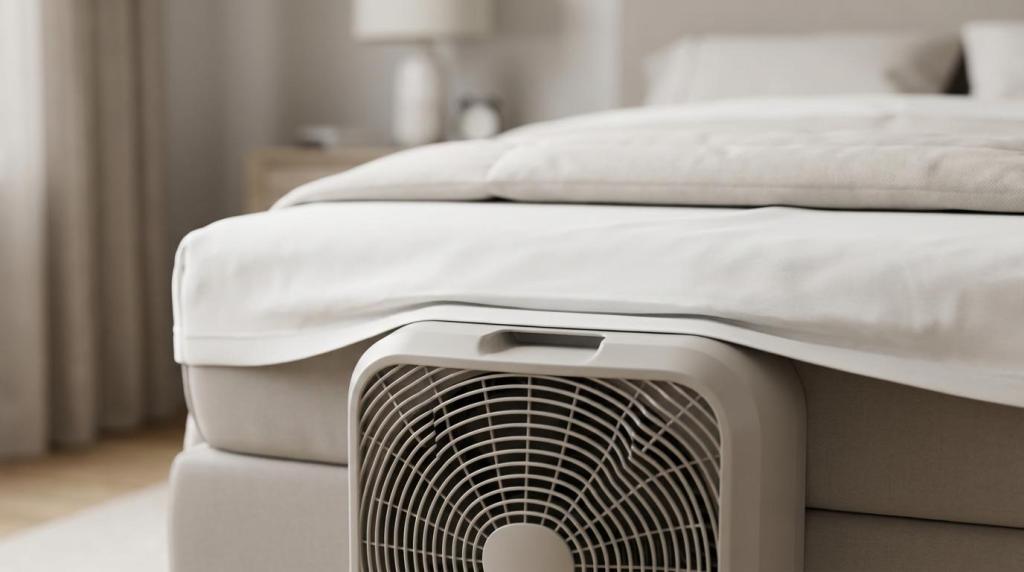
Learn how a bed cooler system helps hot sleepers reduce trapped heat, compare options, and sleep cooler at night with less AC use.
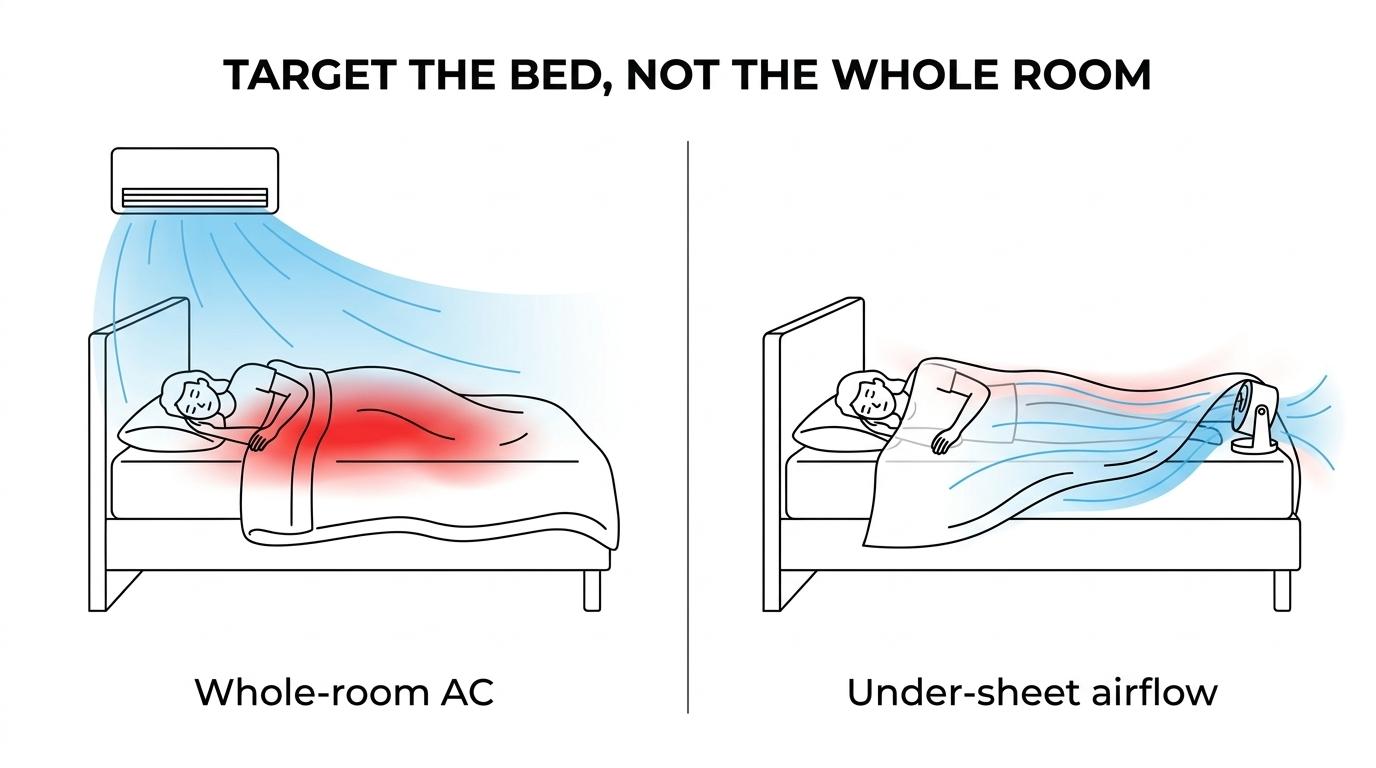
Hot sleepers usually do not need a colder whole house. They need less trapped heat around the body, and that is where a bed cooler system matters. bFan Bed Fan is one example of an under-sheet option that targets the sleep surface instead of trying to chill the entire room.
TL;DR: Summary
- A bed cooler system works best when it removes heat from the bed area itself, and under-sheet airflow systems like bFan do that by moving room air across the body rather than cooling the whole bedroom.
- The best choice depends on your heat pattern: night sweats, Menopause, warm rooms, shared beds, and budget all point to different setups.
- Neither BedJet nor a Bedfan-style unit cools the air. Both use the air already in the room, so sheet type, room temperature, and airflow path all matter.
- Hot sleepers often compare under-sheet fans with water-based mattress systems, and the main trade-offs are price, maintenance, moisture, noise, and how direct the cooling feels.
- Sleep experts often cite 60°F to 67°F as a good bedroom range, but targeted bed cooling can let some people sleep comfortably with the thermostat about 5°F higher.
The reason this category keeps growing is simple: sleep biology favors cooling. Your body temperature drops as you fall asleep, and overheating can interrupt that process, especially during menopause, medication-related night sweats, or hot flashes. That makes a bed-level cooling strategy more relevant than many shoppers first assume.
A bed cooler system lowers heat around the sleeper, not the whole house. A bed cooler system like the bFan Bed Fan uses targeted airflow under the sheets so trapped warmth can move away from the body.
That distinction matters because many buyers assume "bed cooler" means refrigerated air. It does not. A common misconception is that these products act like a mini air conditioner. Under-sheet fan systems use the cooler air already present in the room and move it where you need it most, which can help the skin release heat faster as sleep begins. That fits what sleep researchers describe about falling asleep: core body temperature drops and heat loss through the skin increases during sleep onset (PubMed).
"bFan Bed Fan directs airflow under the sheets and uses an average of 18 watts, so it targets the bed instead of cooling the whole room."
If your main problem is a hot mattress surface, sweaty legs, or heat trapped under blankets, targeted airflow often solves a different problem than whole-room AC. If your room is already 78°F and humid, though, any bed fan will have less cool air to work with. That is the first trade-off to understand.
Most nighttime overheating comes from trapped body heat, hormonal shifts, medications, or a warm sleep environment. Menopause and certain antidepressants are two common triggers, and they often combine with heavy bedding or poor airflow.
Hot flashes and night sweats are especially common around menopause. The Office on Women's Health notes that hot flashes are most common in the year before a woman's period stops and the year after, and they can continue for years (Office on Women's Health). That helps explain why many people feel fine at bedtime, then wake up suddenly drenched.
The room setup matters too. The National Sleep Foundation says many people sleep best with the bedroom around 60°F to 67°F, because body temperature naturally falls to support sleep (National Sleep Foundation). Pro tip: overheating is not always caused by the thermostat alone. Tight blankets, synthetic sleepwear, memory foam, and a partner who sleeps hot can create a personal microclimate that is much warmer than the room.
Hot sleepers usually compare four main categories. The real differences are cooling method, cost, maintenance, and how precisely the system targets the body.
After you think about your own sleep pattern, these are the main options to compare:
This is where many shoppers overestimate passive products. Cooling sheets can feel nice at first touch, but they do not actively remove heat the way airflow or water circulation does. If you wake up sweaty at 2:00 a.m., active cooling usually matters more than a cool-to-the-touch label.
The right bed cooler system comes from matching the device to your heat source, bed setup, and spending limit. If you skip any one of those, you can buy the wrong kind of cooling.
Start with three filters before comparing features:
Step 1 is to identify whether you need targeted relief or stronger active cooling. If you mostly overheat under the covers, airflow is often enough. If your mattress surface feels hot on contact, a water-based pad may do more.
Step 2 is to decide how much equipment you want on the bed. Some people dislike hoses, control cubes, or a pad that changes mattress feel. Others care more about strong cooling than bed feel.
Step 3 is to price the full setup, not the headline number. Shared beds, replacement parts, extra pads, or dual-zone upgrades can change the total quickly.
The bFan and BedJet both move air from the room into the bed area, but they differ in cost, form factor, and how the airflow reaches the sleeper. Neither system cools the air, and BedJet does not cool the air either.
For many shoppers, price is the first separator. A dual-zone BedJet setup is over a thousand dollars and can cost more than twice as much as two bed fans. That matters if both partners sleep hot and each needs separate airflow. Another practical point is category history: the original Bedfan reached the market around 2003, years before BedJet was even thought of.
The airflow method is different too. Under-sheet systems send air between the sheets so heat can travel across the body and out from the bedding. BedJet also uses room air, but its delivery style and hardware footprint are different. If you want the least visible setup, pay attention to where the air enters and whether the top sheet stays in place during the night.
"Many bFan users report raising the thermostat up to 6°F and still sleeping better because the airflow removes trapped heat from bedding."
Power use is another comparison point. Older under-sheet bed fan designs in this category have been described around 18 watts on average, and the current product discussed here is also rated at about 18 watts on average. Compared with whole-room AC, both are low-energy approaches. The U.S. Department of Energy also notes that fans and other lower-energy cooling methods can reduce reliance on air conditioning in many situations.
Good setup is half the result. The best airflow comes from the right sheet weave, a clear air path, and a speed setting that cools without feeling drafty.
Step 1 is to create a channel for the air. A tighter-weave top sheet usually works better than a loose, open weave because it helps the air travel across the body instead of escaping immediately. That is a useful pro tip many first-time buyers miss.
Step 2 is to aim the airflow at the area that overheats first. For some people that is the feet and legs. For others it is the torso. If your system allows placement at the foot, side, or top, test each position for two or three nights before deciding.
Step 3 is to adjust speed by sleep phase. Higher airflow can help you fall asleep faster if you run hot at bedtime. Lower airflow later can maintain comfort without waking you. If you feel air pressure but not cooling, your bedding may be too thick or too tucked in.
Small room and bedding changes can improve a bed cooler system more than a bigger machine sometimes can. The best low-cost gains usually come from sheet choice, thermostat strategy, and timed airflow.
If sleep experts recommend 60°F to 67°F, that does not always mean you must chill the whole house into that range. With targeted bed cooling, some people can raise room temperature by about 5°F and still sleep cool because the airflow is focused where heat builds under the covers. That can make a noticeable difference in AC use over a full summer.
Timer controls help too. If your bed fan offers a timer, use higher airflow during the first hour or two when sleep onset and heat release are most important, then taper down. That can support comfort without overcooling at 4:00 a.m. A second misconception is that more airflow is always better all night. Often the better plan is stronger cooling early and steadier airflow later.
Choose lighter sleepwear, avoid heavy mattress protectors that trap heat, and keep humidity in mind. Warm, damp air makes any airflow system feel less effective.
Night sweats deserve medical attention when they are new, severe, unexplained, or paired with other symptoms. Fever, weight loss, chest pain, swollen lymph nodes, or medication changes are all reasons to check in promptly.
One common real-life pattern looks like this: a woman in her early 50s assumes every sweaty wake-up is menopause, but her worst episodes begin two weeks after starting a new medication. A targeted cooling setup helps her sleep, but the bigger win comes from telling her clinician, who confirms the timing may be medication-related and adjusts the plan.
That is the right way to think about a bed cooler system. It can reduce heat stress at night and make sleep more manageable right now, but it does not diagnose the cause. If your symptoms line up with menopause, hot flashes, a recent prescription change, thyroid issues, infection, reflux, or obstructive sleep apnea (OSA), keep the sleep solution and still ask the medical question.
If you want practical next steps tonight, start with three things: reduce heavy bedding, set up targeted airflow under the top sheet, and test a slightly higher thermostat instead of blasting whole-room AC. You may also want to add internal links here to related night-sweats content, such as "menopause night sweats," "medications that cause night sweats," "why do I wake up sweating at 3 a.m.?," "best sheets for night sweats," and "how cooler sleep can reduce AC use."
If you are comparing options now, focus on your actual heat pattern instead of the loudest feature list. Targeted airflow can be a very effective first-line fix for hot sleepers, especially if you want simpler setup, low power use, and relief that starts where the heat is trapped.
Disclaimer: This article is for education only and is not medical advice, diagnosis, or treatment. Night sweats can be caused by menopause, medications, infections, endocrine disorders, cancer, reflux, anxiety, and other conditions. Seek urgent medical care for drenching sweats with fever, trouble breathing, chest pain, confusion, or unexplained weight loss.