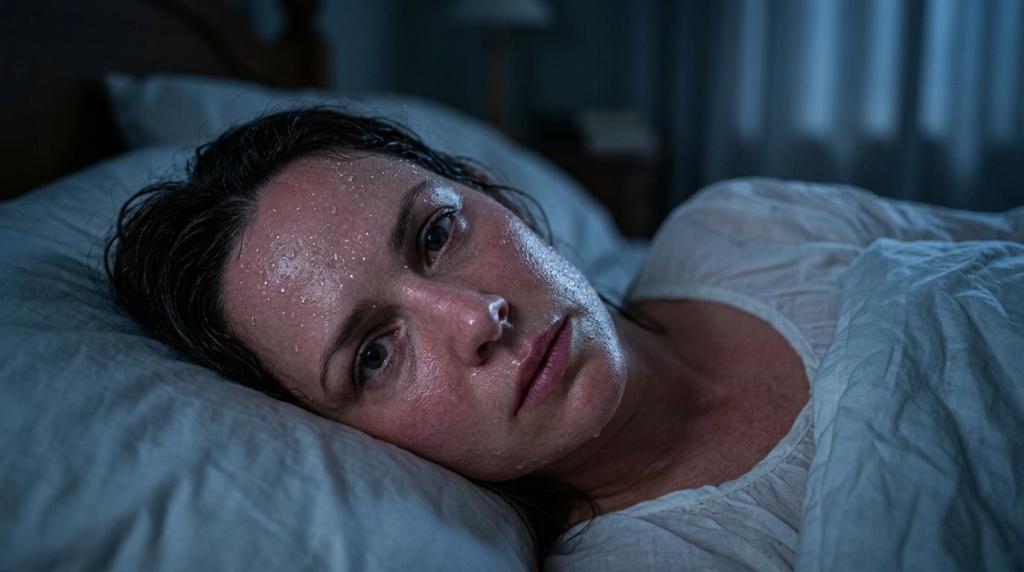
Waking up hot at 3 am? Learn how REM sleep, hormones, meds, apnea, and trapped bedding heat can trigger night sweats too.
If you keep experiencing frequent wake-ups and waking up hot at 3 AM, you’re not imagining a pattern. A lot of people notice that the heat hits at almost the same time night after night, often due to lifestyle choices. Sometimes it feels like a wave of warmth in the chest, neck, or back. Sometimes the sheets are damp, and sometimes you just feel overheated and restless due to stress and restlessness issues.
That timing often makes sense from a sleep and body-temperature standpoint. Later in the night, your sleep contains more rapid eye movement (REM) sleep, and REM is a stage where temperature control is weaker. Sleep science references from the National Center for Biotechnology Information (NCBI) note that REM periods get longer as the night goes on, while core body temperature is usually lower in the early morning hours (NCBI Bookshelf overview of sleep physiology). A peer-reviewed review on sleep and thermoregulation goes even further, stating that REM and thermoregulation are largely incompatible, which helps explain why people can feel more vulnerable to room temperature and trapped bedding heat during that stage (PMC review on sleep and thermoregulation).
This is not medical advice. Always consult your doctor or oncology team before making changes, especially if night sweats are new, severe, or happening with weight loss, fever, chest symptoms, low blood sugar, or breathing pauses.
A typical night of sleep cycles through non-rapid eye movement (NREM) sleep and REM sleep several times, and insomnia can disrupt these cycles further, compounding the discomfort. Early cycles usually contain more deep NREM sleep. Later cycles contain more REM. That matters because REM is not the same as quiet, sturdy deep sleep. It is a more active brain state, often where dreams occur, and your body is less flexible about adjusting to temperature changes during it, especially if you’re experiencing stress, which can further influence your sleep quality.
So if your room is a little warm, your comforter holds too much heat, your pajamas don’t breathe well, or your body, especially women experiencing hormonal fluctuations, is already primed to sweat because of hormones, medication, or anxiety, 3 AM can become the moment when all of that shows up at once.
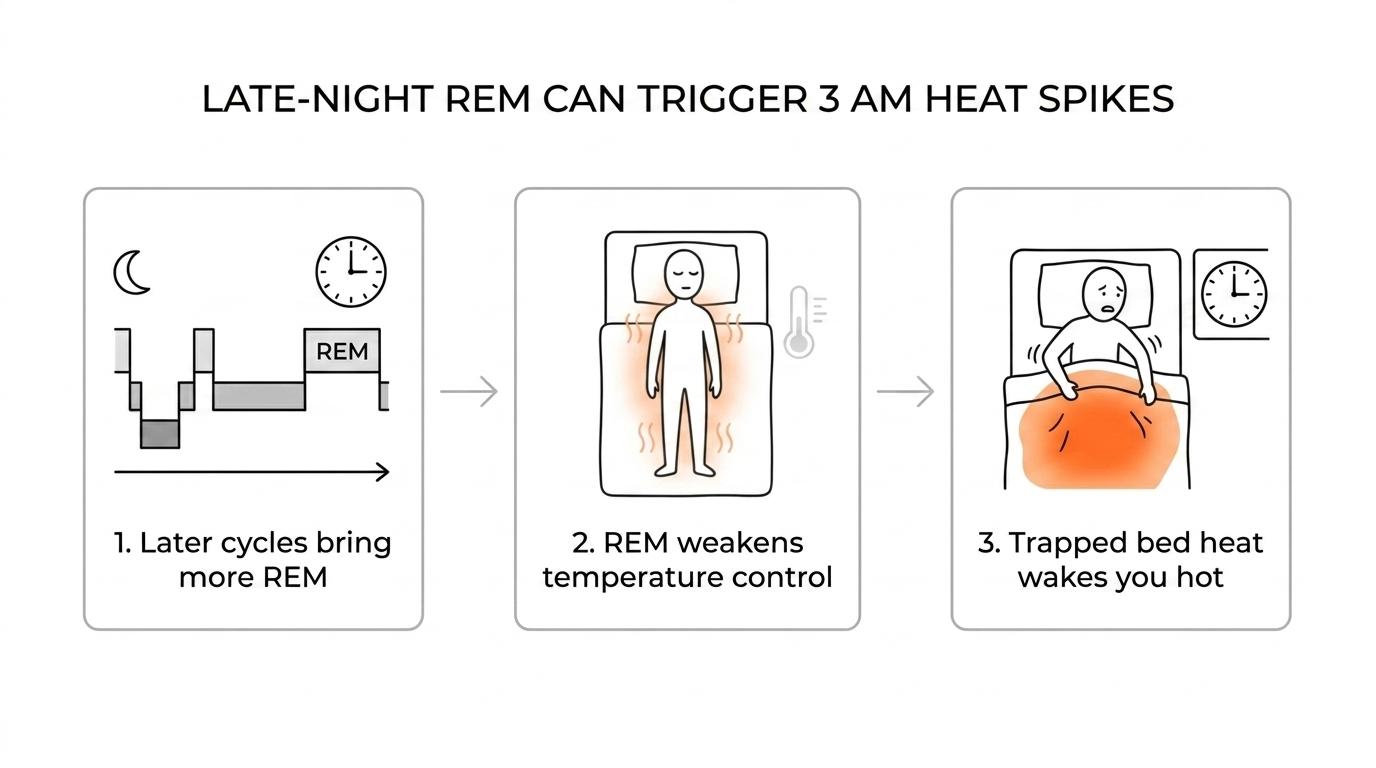
There’s another wrinkle. Core body temperature follows a circadian rhythm. It usually drops overnight and reaches a low point in the latter part of the nighttime or early morning. That sounds like it should keep you cooler, but it can also make your sleep more sensitive to heat trapped around the skin. If your body is trying to shed heat but your bedding keeps that heat close, you may wake abruptly feeling too warm, sticky, or suddenly alert.
Most sleep experts recommend a bedroom temperature between 60°F and 67°F for better sleep. That range helps the body release heat instead of fighting the environment all night. If your room is warmer than that, or your bed creates a little heat pocket under the covers, waking hot gets more likely.
What surprises many people is that the bed itself can be the real problem, not just the thermostat. Mattresses, mattress toppers, heavy duvets, and even a partner’s body heat can trap warmth under the sheets. That is why some people still wake hot even when the bedroom feels cool enough. A Bedfan can help here because it moves the cool air already in the room under the covers, where the heat is actually building up. Neither a Bedfan nor a Bedjet cools the air itself. They use the room’s existing air to evaporate sweat and carry heat away from the body.
Many hot sleepers can raise the room temperature by about 5°F and still feel comfortable if airflow is getting under the sheets consistently. That can mean better sleep and lower air conditioning use at the same time.
A few very ordinary things can make 3 AM heat much worse:
Sometimes 3 AM heat is mostly about sleep stage and bedding. Sometimes it points to a medical trigger, such as stress, that is becoming obvious during sleep. According to Cleveland Clinic, true night sweats are episodes of heavy sweating that can soak sleepwear or bedding, and common causes include menopause, pregnancy, menstrual cycle changes, medications, infections, anxiety, panic disorders, alcohol use, and sleep apnea (Cleveland Clinic night sweats overview).
Menopause and perimenopause are among the most common reasons. These are often called vasomotor symptoms, meaning the body’s temperature-control system becomes jumpy and can trigger sudden flushing, heat, and sweating. The same can happen with hormone therapy changes, certain cancer treatments, or after surgical menopause.
Medications are another big one. Antidepressants, steroids, some pain medicines, diabetes medicines that can contribute to low blood sugar, and some hormone-related treatments can all play a part. If the timing changed after a medication was started, increased, or taken later in the evening, that clue matters.
Obstructive sleep apnea (OSA) deserves special attention. People with OSA may wake sweaty, overheated, or with a pounding heart, even if they do not remember gasping. Night sweats can also come with anxiety surges, stress, cortisol fluctuations, reflux, infections, thyroid problems, or blood sugar swings.
Common medical patterns worth discussing with a clinician include:
One common story goes like this: a woman in her late 40s says she falls asleep fine but wakes around 2:45 or 3:15 almost every night, like many women experiencing hormonal shifts, suddenly hot from the chest up, then cold a few minutes later because her shirt is damp. Her room is not especially warm, yet her dreams often bring a sensation of heat. In that situation, later-night REM sleep may be part of the timing, but the repeat pattern often points toward perimenopause. She still needs a medical conversation, because treatment options vary a lot based on symptoms, age, and health history.
Another person might be a man in his 50s who assumes he is just “sleeping hot.” He experiences wake-ups near 3 AM feeling sweaty, his heart racing, and sometimes has a dull morning headache, which may indicate restlessness issues. His partner says he snores and occasionally stops breathing. That pattern raises concern for OSA. Cooling the bed may help comfort, but it should not replace testing when breathing symptoms are part of the picture.
The goal is not only to cool the room, especially for those suffering from insomnia, but also to consider lifestyle changes that can improve overall sleep quality during nighttime. It’s to get heat and moisture away from your body at the moment they build up under the bedding. That is where many standard room fans fall short. They may help the bedroom air, but they often do very little for the microclimate trapped between your body, sheets, and mattress.
This is one reason bed cooling fans have stayed useful for years. The original Bedfan was invented in 2003, long before Bedjet came along. A Bedfan directs airflow under the top sheet so sweat can evaporate and heat can move away from the skin. If you are sensitive to noise, that matters too. Many people do better with a cooling option that runs around 28 to 32 dB at lower settings, has remote and timer controls, and uses very little electricity. The Bedfan uses about 18 watts on average, so it is easy to run nightly without the energy hit of turning the whole house colder.
If you sleep with a partner, dual-zone matters. Two Bedfans can create dual-zone microclimate control, essential for a comfortable lifestyle, at a fraction of the cost of a dual-zone Bedjet setup, which runs over a thousand dollars and is more than twice the price of two Bedfans.
A few simple changes often help right away:
If this is new, severe, or happening often, don’t write it off as “just sleeping hot,” as it could be a sign of stress or even insomnia.
Please get medical care sooner if you also have fever, unexplained weight loss, swollen lymph nodes, a new cough, chest pain, severe reflux, low blood sugar symptoms, heavy snoring, witnessed breathing pauses, or drenching sweats that soak the bed regularly. The same goes for people in cancer treatment, people with immune problems, and anyone whose symptoms changed after starting a new medication.
If you do see a doctor, it helps to bring a short log for one to two weeks. Write down the time you wake, how sweaty you are, room temperature, alcohol intake, medication timing, menstrual cycle timing if relevant, and whether you snore or wake short of breath. Those details can make the visit much more useful.
If you’re reading related articles on bedfan.com, strong companion topics for this issue would be pages on night sweats, menopause night sweats, medication-related night sweats, sleep apnea and sweating, sleeping cooler, and lowering air conditioning costs while keeping the bed cool.
All links have been checked and are currently working.
If you need a non-drug way to cool the bed where the heat actually gets trapped, take a look at the Bedfan store. For many people, gentle airflow under the sheets is the missing piece that helps them sleep through those common 3 AM wake-ups during a heat spike. This is not medical advice. Always consult your doctor or oncology team before making changes, especially if symptoms are persistent, worsening, or paired with other warning signs.