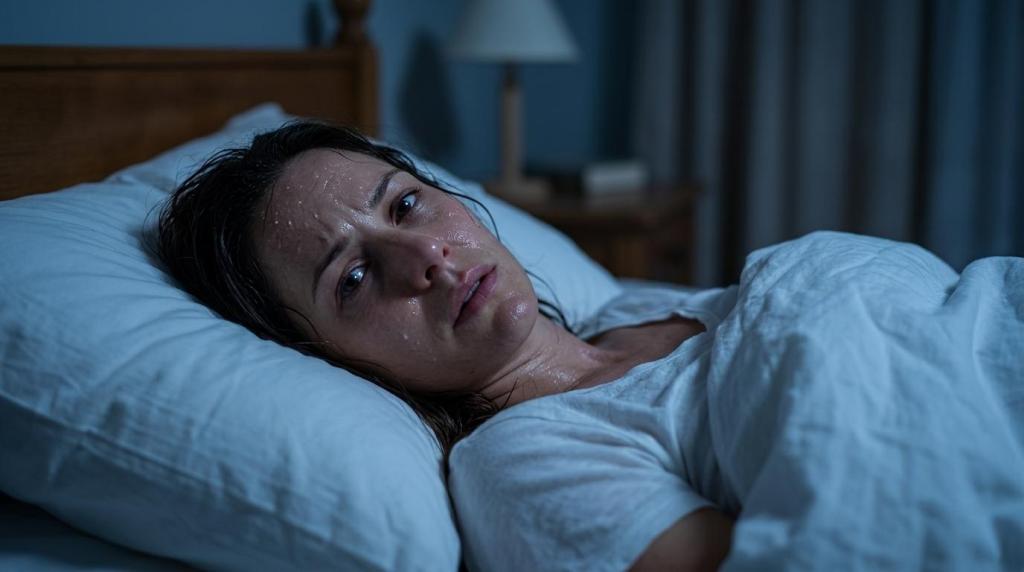
Learn how to save on air conditioning by cooling your bed, raising the thermostat 2°F to 5°F, and still sleeping comfortably at night.
If you sleep hot, the cheapest way to feel better at night is not always lowering the whole-house thermostat. In many homes, the better move is cooling the bed microclimate, then nudging the AC setting higher and seeing where comfort holds.
TL;DR: Summary
- You can often save AC by sleeping cooler at the bed level instead of overcooling the whole room, especially if nighttime overheating is the main reason you keep the thermostat low.
- The U.S. Department of Energy (DOE) says a thermostat setback of 7°F to 10°F for 8 hours a day can save as much as 10% a year on heating and cooling, so even a smaller nighttime increase of 2°F to 5°F can matter.
- Sleep experts commonly recommend a bedroom temperature of 60°F to 67°F, but many people using a Bedfan can raise the room temperature by about 5°F and still feel cool enough to sleep well.
- A bed fan like the bFan does not refrigerate air. It moves existing room air under the sheets to carry away trapped body heat and evaporate sweat, which targets the real problem for many hot sleepers.
- Exact savings depend on climate, humidity, insulation, AC efficiency, bedding, and whether you are cooling one bedroom or the whole home.
There is real science behind this. The body needs to shed heat to fall asleep well, and warmer nighttime conditions are linked with worse sleep efficiency in home studies, while the DOE also makes it clear that smaller indoor-outdoor temperature gaps lower cooling costs. This is not medical advice. Always consult your doctor or oncology team before making changes if hot sleep is tied to night sweats, medications, cancer treatment, menopause, or another health condition.
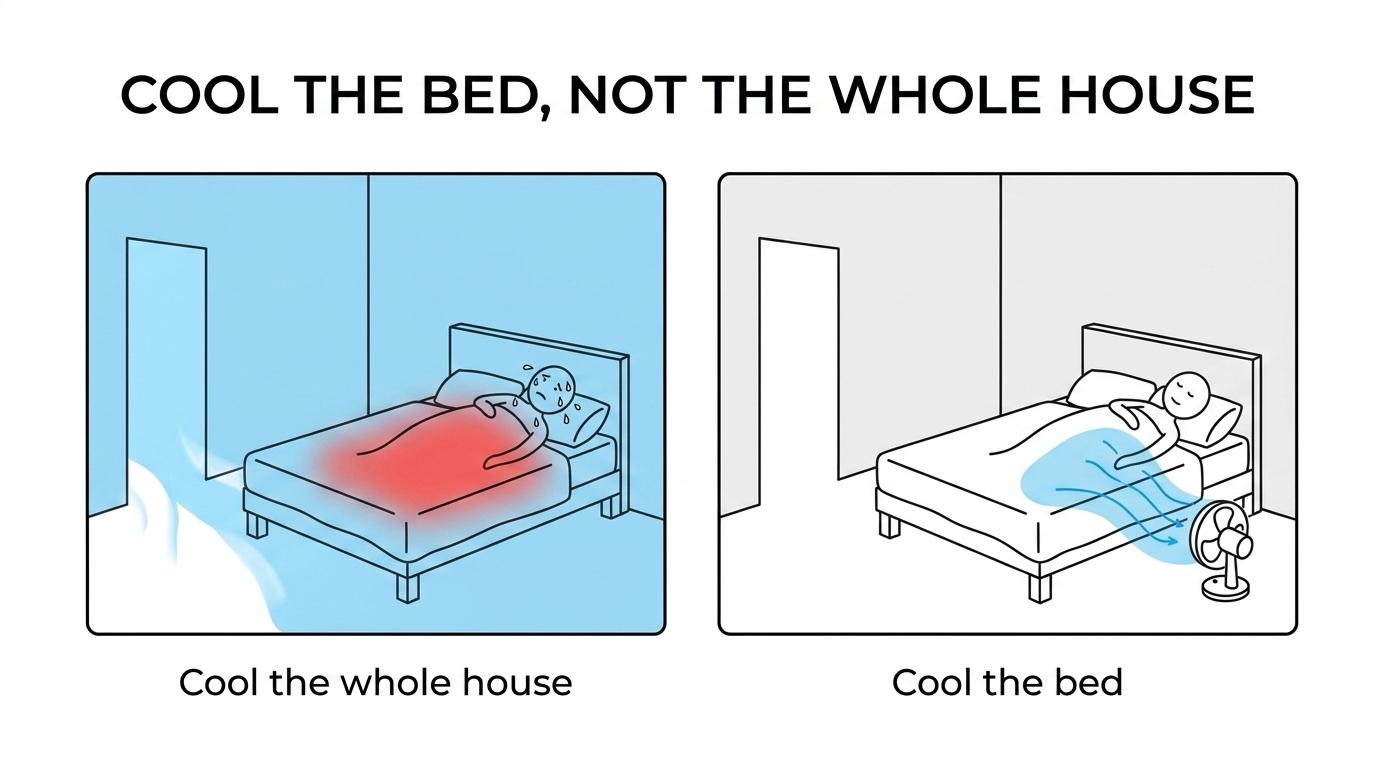
Yes, many households can save meaningful AC by raising the nighttime thermostat a little and cooling the bed instead. The DOE and bFan both point to the same basic idea: cool the sleeper first, not the whole house.
The honest answer is that there is no single number for every home. A well-insulated condo in San Diego behaves very differently from a two-story house in Houston. Still, the direction is clear. The U.S. Department of Energy says turning a thermostat back 7°F to 10°F for 8 hours a day can save as much as 10% a year on heating and cooling. If your biggest nighttime issue is feeling overheated under the covers, then a smaller summer increase of 2°F to 5°F at night can still reduce runtime and cost.
That matters because sleep comfort is often hyper-local. Your body can feel hot under a comforter even when the room itself is not especially warm. Sleep experts commonly recommend keeping the bedroom around 60°F to 67°F for better sleep, but many people using a Bedfan can often raise the room temperature by about 5°F and still cool the body enough for more restful sleep.
"bFan helps many sleepers raise the room temperature by about 5°F while cooling the bed itself, instead of paying to cool the whole room further."
Think of it this way. If the AC is already doing a decent job but your bedding traps heat, lower thermostat settings may be an expensive workaround for a bed-level problem.
It directly affects heat loss. PubMed studies and DOE guidance both suggest that better nighttime heat management can improve sleep while reducing unnecessary whole-room cooling.
Your body naturally shifts toward a lower core body temperature before sleep. If the room is warm, or if the bedding traps heat and humidity, that process gets harder. A home-based study in older adults found that sleep was most efficient and restful when nighttime ambient temperature stayed between 20°C and 25°C, and sleep efficiency dropped by a clinically relevant 5% to 10% as temperature rose from 25°C to 30°C in the home setting (PubMed).
There is also a timing effect. Research on thermal stimulation and body heat dissipation suggests that helping the body release heat can shorten sleep onset latency, which is the time it takes to fall asleep (PubMed). A common misconception is that colder is always better. It is not. If the room is too cold, you may wake up chilled, and if humidity is high, sweat may not evaporate well even with aggressive AC.
The best options are targeted, low-energy, and easy to test. bFan, a programmable thermostat, and better bedding usually beat brute-force AC lowering for cost efficiency.
Start with the fixes that attack trapped body heat and only then change the thermostat. That order saves money and gives you a clearer read on what is actually helping.
You can estimate it at home with a thermostat, a simple sleep log, and one week of steady testing. DOE-style setbacks work best when you measure comfort and AC runtime together.
First, write down your current sleep setting, bedtime, wake time, and how often you wake hot. If you normally sleep at 69°F for 8 hours, that is your baseline. Keep bedding, fan use, and window shades the same for a few nights.
Next, raise the thermostat by 2°F and add bed-level cooling if you have it. If you use a bFan, keep the airflow low to medium at first. Pay attention to wake-ups, sweating, and how long it takes to fall asleep. A pro tip here is to ignore a single utility bill day. Weather swings can fool you.
Then compare runtime data, if your thermostat provides it, or compare bills over similar weather periods. If sleep stays stable and runtime drops, you have found savings. If you wake hot at 72°F, step back to 71°F. If you still feel fine, try one more degree.
A bed fan is usually better when the room is acceptable but the bed feels too warm. Central AC is still necessary when the whole house stays genuinely hot or humid.
Lowering the thermostat cools the ceiling, walls, hallway, furniture, and rooms you are not using. A bed fan targets the sleeper. If your feet, legs, back, or torso get hot under the sheets, localized airflow is often the more efficient tool. If your bedroom is still 78°F and muggy at midnight, though, the AC still needs to do its part.
Neither Bedfan nor Bedjet cool the air itself. Both use the cool air already in the room. The win comes from better body heat dissipation, not refrigeration. Bedfan also adds timer controls, which can be useful if you only need stronger airflow during sleep onset and lighter airflow later.
"bFan uses existing room-temperature air under the sheets, not refrigerated air, and BedFan says it uses less than 24 watts even at the highest speed."
That low-watt approach is why bed-level cooling can be attractive if your goal is saving on AC instead of replacing AC entirely.
For cooling method, they are similar in principle. For price, bFan is the lower-cost path, especially if two partners want dual-zone control.
Both products rely on room air. Neither Bedfan nor Bedjet cool the air like an air conditioner. They move available room air into the bed space, where trapped heat is the problem. If you are choosing purely on energy logic, the key question is how much targeted airflow and control you want, not which one creates cold air.
Price is where the difference gets practical. A dual-zone Bedjet setup costs over a thousand dollars, which is more than twice the price of two Bedfans. Two bFans can give each sleeper separate microclimate control at a fraction of that cost. The original Bedfan was also invented in 2003, several years before Bedjet was even thought of, so this is not a new category experiment.
"The original Bedfan was invented in 2003, and two bFans still cost less than half of a dual-zone Bedjet setup priced over $1,000."
If one partner sleeps hot and the other does not, separate bed-level control is often more useful than forcing the entire room colder for both people.
The best setup is simple: foot-of-bed placement, tighter-weave sheets, and moderate airflow. bFan works best when air can travel across the body instead of escaping into the room.
Start by placing the unit at the foot of the bed so the airflow goes between the top and bottom sheets. You want the air moving where heat collects, not blasting the mattress. If your sheet set is very loose-knit or fuzzy, airflow may leak out before it spreads.
Next, use lighter bedding and start at a lower speed. Many people do not need max airflow all night. This is where the remote and timer controls help. If you fall asleep hot but wake cool, tapering the airflow later can feel better than leaving a strong stream on until morning.
Finally, adjust for your body pattern. If your feet get cold but your torso stays hot, angle the airflow a bit upward. If one side of the bed runs hotter, two units can create dual-zone control without making the other sleeper uncomfortable.
The biggest mistakes are over-lowering the thermostat, using heat-trapping bedding, and changing too many variables at once. AC settings, sheets, and airflow need to be tested together.
A lot of people assume the answer is just "colder room." That can backfire. If you drop the thermostat far below what the room actually needs, you may pay more without fixing heat trapped under the covers. Heavy toppers, flannel sheets, and plush blankets can sabotage bed cooling even when the air conditioner is working hard.
One anonymized example sticks with people because it is so common. A couple in Arizona kept the bedroom at 68°F because one partner woke sweaty every night. After switching to percale sheets and adding under-sheet airflow, they settled around 72°F most nights. The hotter sleeper woke up drier, and the cooler sleeper stopped feeling like the room was an icebox.
Another common miss is changing the thermostat, sheets, pajamas, and dehumidifier all on the same night. If you do that, you will not know what worked. Give each change two or three nights unless you are clearly miserable. That is the fastest way to find your actual comfort threshold.
Night sweats can be benign, but they can also signal medication effects or illness. Mayo Clinic and Cancer.gov both recommend medical follow-up when symptoms are new, severe, or paired with other warning signs.
This is not medical advice. Always consult your doctor or oncology team before making changes. Comfort tools can help you sleep, but they do not diagnose why you are overheating. If you have drenching sweats, fever, unexplained weight loss, chest pain, severe snoring, swollen lymph nodes, infection symptoms, or recent medication changes, get checked. Mayo Clinic has a clear overview of when night sweats deserve evaluation (Mayo Clinic).
This section matters even in an energy article because some readers are not just "hot sleepers." menopause, selective serotonin reuptake inhibitor (SSRI) use, diabetes medications, thyroid disease, obstructive sleep apnea (OSA), and cancer therapies can all change nighttime temperature regulation.
A seven-night test is usually enough to find a workable thermostat range. Use your thermostat, one bedding setup, and a short nightly log.
For nights one and two, do not change anything. Record room temperature, wake-ups, sweat level, and whether you woke because the room felt hot or because the bed felt hot. That difference matters. If the room is stuffy before you even get into bed, the AC may still be underperforming.
For nights three through five, raise the thermostat by 2°F and add targeted bed airflow if you have it. With a Bedfan, keep the sheet channel clear and use the timer if your overheating is worst in the first few hours. If your comfort holds, you are probably in the savings zone already.
For nights six and seven, tweak one variable only. Try lighter bedding, or raise the thermostat one more degree. If sleep worsens, step back. If it stays good, that is your practical summer setting. If you have persistent or medically concerning night sweats, do not use a home test as a substitute for care.
These are the sources worth bookmarking. DOE, PubMed, Mayo Clinic, and BedFan cover the energy, sleep, and practical cooling angles clearly.
Related reading on Bedfan.com that would fit naturally with this topic includes these internal links:
If you want a practical, non-drug way to cool the bed instead of overcooling the whole room, take a look at the bFan Bed Fan. It is a targeted way to move trapped heat out from under the sheets, often with far less energy than pushing the whole-house AC lower all night. This is not medical advice. Always consult your doctor or oncology team before making changes, especially if night sweats are new, severe, medication-related, or paired with fever, weight loss, chest pain, or breathing problems.