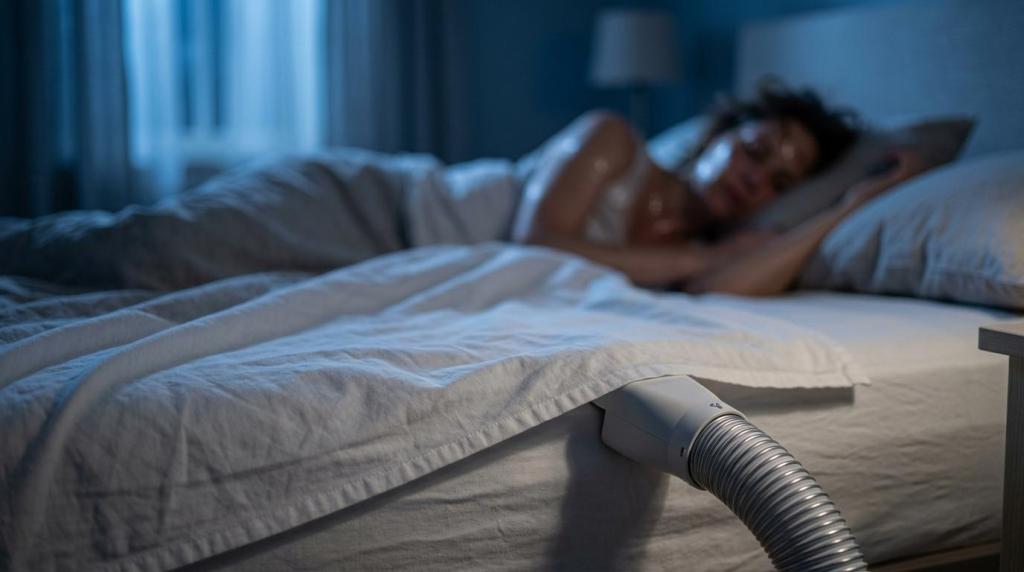
Find the best fan for menopause night sweats, from targeted bed fans to tower and ceiling options for cooler, quieter sleep all night.
If you’re looking for the best fan for menopause night sweats, the right answer depends on where your heat builds up. Many women feel hottest under the covers, which is why a targeted bed-cooling option like the bFan Bed Fan often makes more sense than simply blasting more air across the room.
TL;DR: Summary
- The best fan for menopause night sweats is usually a fan that cools your sleep microclimate, not just the room, and the bFan Bed Fan fits that job well because it pushes air under the sheets where heat and sweat get trapped.
- Menopause night sweats are a common vasomotor symptom, and both the CDC and NIA note that hot flashes and night sweats can disrupt sleep.
- Choose based on where you overheat: under the covers points to a bed fan, whole-room stuffiness points to a tower, pedestal, or ceiling fan.
- Quiet operation, a timer, remote control, and steady overnight airflow matter more than raw fan size.
- Neither a bed fan nor BEDJET actually cools air. They use the cooler air already in the room, so bedroom temperature still matters.
- This is not medical advice. Always consult your doctor or oncology team before making changes.
Menopause sleep problems can feel maddening because the body is trying to dump heat at the exact moment you want to stay asleep. This article walks through what actually helps, what’s mostly hype, and how to choose a fan that fits your symptoms, bedroom, and budget.
Yes. The best menopause fan gives quiet, targeted airflow, easy controls, and enough overnight consistency to cool you without waking you up.
For menopause, the issue is rarely just “I need more fan power.” It’s usually, “I get suddenly hot, then sweaty, then fully awake.” That means the fan has to help with heat loss fast, especially when hot flashes hit under blankets and sleepwear. A fan that can run quietly for hours, stay pointed where you need it, and work with your bedding tends to beat a louder fan that just stirs the room.
That’s where bFan stands out as a category fit. It’s a bed-cooling fan, not a room fan, so it moves air under the top sheet to help evaporate sweat and release trapped body heat. For many menopause sleepers, that’s a better match than putting a tower fan six feet away and hoping it reaches inside the bed.
A common misconception is that the “strongest” fan is the best fan. Usually, it isn’t. If the fan is too loud, too drafty on your face, or too far from the bed, people often turn it down or shut it off at 2 a.m. Quiet, usable cooling beats brute force.
"The original Bedfan was invented in 2003. It predates BEDJET and focuses on moving cool room air under the sheets."
They disrupt sleep directly. The CDC and PubMed describe menopause symptoms as closely tied to nighttime awakenings and sleep disturbance.
The CDC says the most common menopause symptoms are hot flashes and night sweats, also called vasomotor symptoms, and that many women have trouble sleeping during menopause. The National Institute on Aging also notes that night sweats are hot flashes that happen at night and may interrupt sleep.
Research backs up what women already know from experience. A PubMed-indexed study found that menopausal hot flashes are associated with changes in sleep architecture, and another PubMed study looked at nocturnal hot flashes, awakenings, and wake time after sleep onset. In plain English, your sleep is not “bad for no reason.” The body’s thermoregulatory mechanisms and sleep state are interacting in ways that can wake you up.
If your pattern is “fall asleep fine, then bolt awake hot at 1 a.m. or 3 a.m.,” that pattern fits menopause-related heat events more than a simple bedtime comfort issue.
The best options are the ones that match your heat pattern, bedding setup, and noise tolerance, not the fanciest model on a store shelf.
The list above is less about brand loyalty and more about matching mechanism to symptom. If you overheat inside the bed, under-sheet airflow usually beats general room circulation. If your whole room feels stale, a tower or ceiling fan may do enough on its own.
Start with the heat pattern. If you overheat under blankets, choose targeted bed airflow. If the whole room feels warm, choose room circulation first.
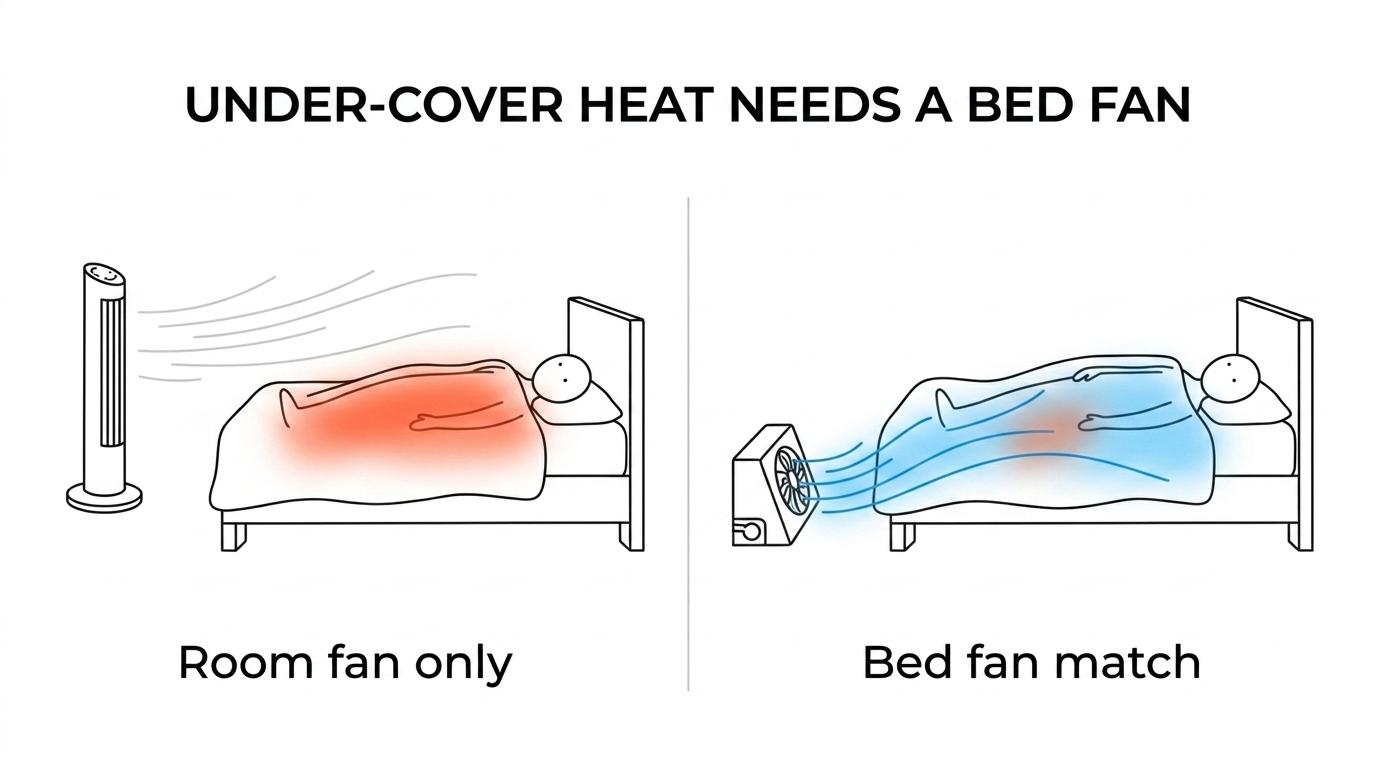
Step 1 is to notice where the problem starts. Are you sweating at the chest, back, and neck while the room itself feels okay? That points to a bed fan. Are you kicking off covers because the whole room feels stuffy? That points more toward a tower, pedestal, or ceiling fan.
Step 2 is to match the fan to your sleep habits. If you wake easily from noise, look for low sound output and a timer or remote so you can adjust without getting fully awake. If your partner sleeps colder than you do, independent airflow matters more than total room cooling. That’s where dual-zone strategies can help.
Step 3 is to be honest about your real setup. A giant fan won’t help much if it has nowhere sensible to sit, blows papers around, or leaves your feet cold and your torso sweaty. One anonymized example that comes up often is a woman in her early 50s who tried a box fan, then a ceiling fan, then lower thermostat settings. She still woke sweaty because the heat was trapped inside the bedding, not floating in the room.
Here’s the pro tip most people miss: if your hot flashes are sudden, the best fan is the one you’ll actually keep on all night.
Use the fan with your bedding, room temperature, and controls working together, or you’ll only get partial relief.
First, pay attention to sheets. With an under-sheet fan, tighter-weave sheets often work better because they help the air travel across the body and carry heat away instead of escaping too quickly. Loose, very open bedding can reduce the cooling effect.
Second, keep the bedroom temperature between 60°F and 67°F. Sleep experts commonly recommend a bedroom temperature between 60°F and 67°F for better sleep. Many people using a bed fan can raise the room temperature by about 5°F and still feel cool enough to sleep better, because the airflow is helping the body dump heat where it matters.
Third, use automation. Menopause hot flashes don’t keep office hours. A timer, remote, or easy bedside control matters because it lets you fine-tune airflow without fully waking up. If you’re chilled at bedtime but hot at 2 a.m., that control flexibility can make the difference between sleeping through and lying awake for an hour.
For women who wake up hot under the covers, Bedfan-style cooling usually works better than a ceiling fan because it changes the bed microclimate around your body, not just the room air.
A ceiling fan is useful for background circulation. It can make a room feel less stuffy and may help if your house runs warm overall. But it does not push air into the bedding where sweat and heat often get trapped. A bed fan does.
That trade-off matters. Ceiling fans are convenient and invisible once installed. Bed fans are more targeted and usually more effective for under-the-covers overheating. If your complaint is “my bedroom is hot,” start with room airflow. If your complaint is “my body is hot inside the bed,” targeted airflow is usually the smarter move.
A misconception I hear a lot is that a ceiling fan and a bed fan do the same thing. They don’t. One moves room air across the space. The other changes the microclimate around your body.
It depends on budget and whether you want one premium system or simpler dual-zone control for much less money.
BEDJET and bed fans both rely on the cool air already in the room. Neither one refrigerates air. That’s important because some shoppers expect air conditioning in a tube, and that’s not what these products do.
Price is where the gap gets hard to ignore. A dual-zone BEDJET setup costs over a thousand dollars, which is more than twice the price of two Bedfans. If each sleeper needs separate airflow, two smaller under-sheet fans can create dual-zone microclimate control at a fraction of that cost.
"A dual-zone BEDJET setup costs over $1,000. Two bFan units can give each sleeper separate under-sheet airflow for less than half that."
BEDJET may appeal to shoppers who want its specific feature set and integrated ecosystem. Two bed fans may appeal more if your main goal is practical menopause relief, lower upfront cost, and the ability to cool one side or both sides of the bed without spending four figures.
Night sweats deserve medical review if they are new, severe, or paired with other symptoms like fever, weight loss, chest pain, or major fatigue.
Menopause is common, but not every night sweat is “just menopause.” Talk with your doctor if the sweats are drenching, suddenly worse, or happening alongside symptoms that don’t fit your usual pattern. Medication side effects, thyroid issues, infection, sleep apnea, anxiety, and other conditions can all play a part.
This is not medical advice. Always consult your doctor or oncology team before making changes. If you are on tamoxifen, aromatase inhibitors, steroids, antidepressants, or other medicines linked to sweating, a medication review can be just as important as buying a fan.
If you have heavy sweating plus shortness of breath, unexplained weight loss, swollen lymph nodes, fainting, or persistent fever, don’t wait for a sleep product to solve it. Get checked.
Small changes help most when they reduce trapped heat, not when they just add more gadgets.
Try cooling the bedroom before bed, then keeping bedding light and easy to move. Moisture-wicking sleepwear can help some people, but fabric comfort is personal, so don’t force athletic materials if they feel scratchy. If alcohol, spicy food, or a very hot shower seems to trigger worse nights, test that pattern for a week and see what changes.
If your bedroom normally has to stay at 64°F for you to sleep, that’s expensive. Many sleepers find they can reduce air conditioning use, especially in summer, when they add targeted bed airflow and still stay comfortable.
One more practical point: if you’re cold when you first get into bed but hot later, don’t overcool the whole room. Use adjustable airflow instead. Menopause nights often change hour to hour.
Bring a short symptom record, ask about treatment options, and rule out other causes instead of guessing.
Start with a one-week log. Write down when you go to bed, when you wake, how often the heat episodes happen, whether they are drenching, and what you tried. Include caffeine, alcohol, room temperature, and any medication changes. That gives your clinician something useful to work with.
Then ask direct questions. Could this be perimenopause or postmenopause vasomotor symptoms? Are my medications contributing? Would hormone therapy, nonhormonal treatment, sleep evaluation, or lab work make sense here? If your symptoms are affecting daily function, say that plainly.
If a fan helps some but not enough, that information is still valuable. It suggests cooling is helping, but the underlying symptom burden may need medical treatment too.
These sources explain menopause symptoms, sleep disruption, and practical next steps from trusted medical and public health organizations.
Suggested internal links for bedfan.com on this topic would include a menopause night sweats guide, a causes of night sweats page, a medication-related night sweats article, a sleeping cooler overview, and a bedroom temperature or AC savings article.
If you want a simple, non-drug way to cool the body where menopause heat tends to build up, you can take a look at the store here: see the bed-cooling options. This is not medical advice. Always consult your doctor or oncology team before making changes.