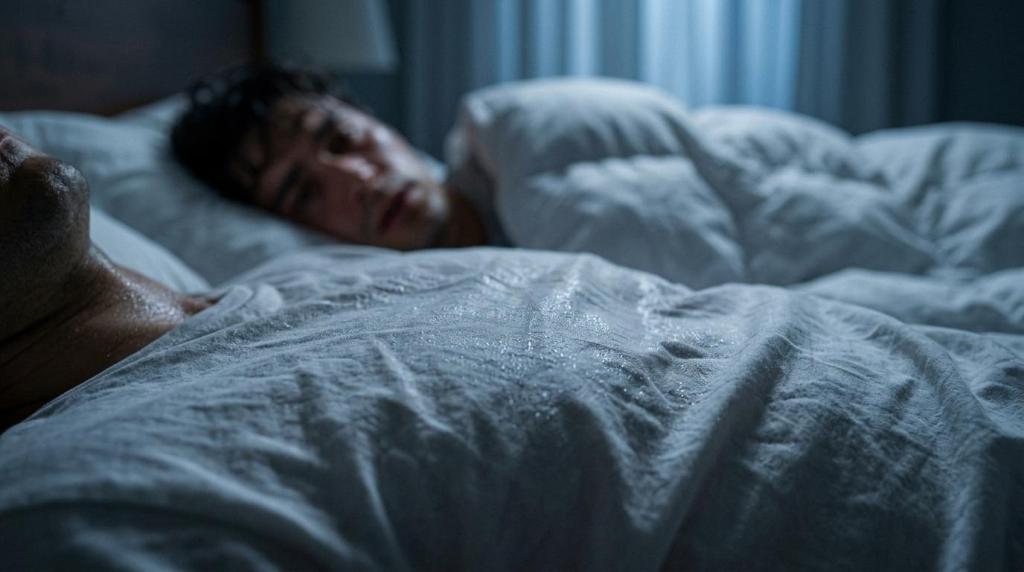
Cooling bedding helps hot sleepers, but sheets, comforters, pillows, and airflow all shape a cooler, drier bed microclimate.
If you sleep hot, “cooling bedding” can sound like the answer to everything. Then you buy the bamboo sheets, swap the comforter, maybe even flip the pillow three times a night, and you still wake up warm, damp, and irritated.
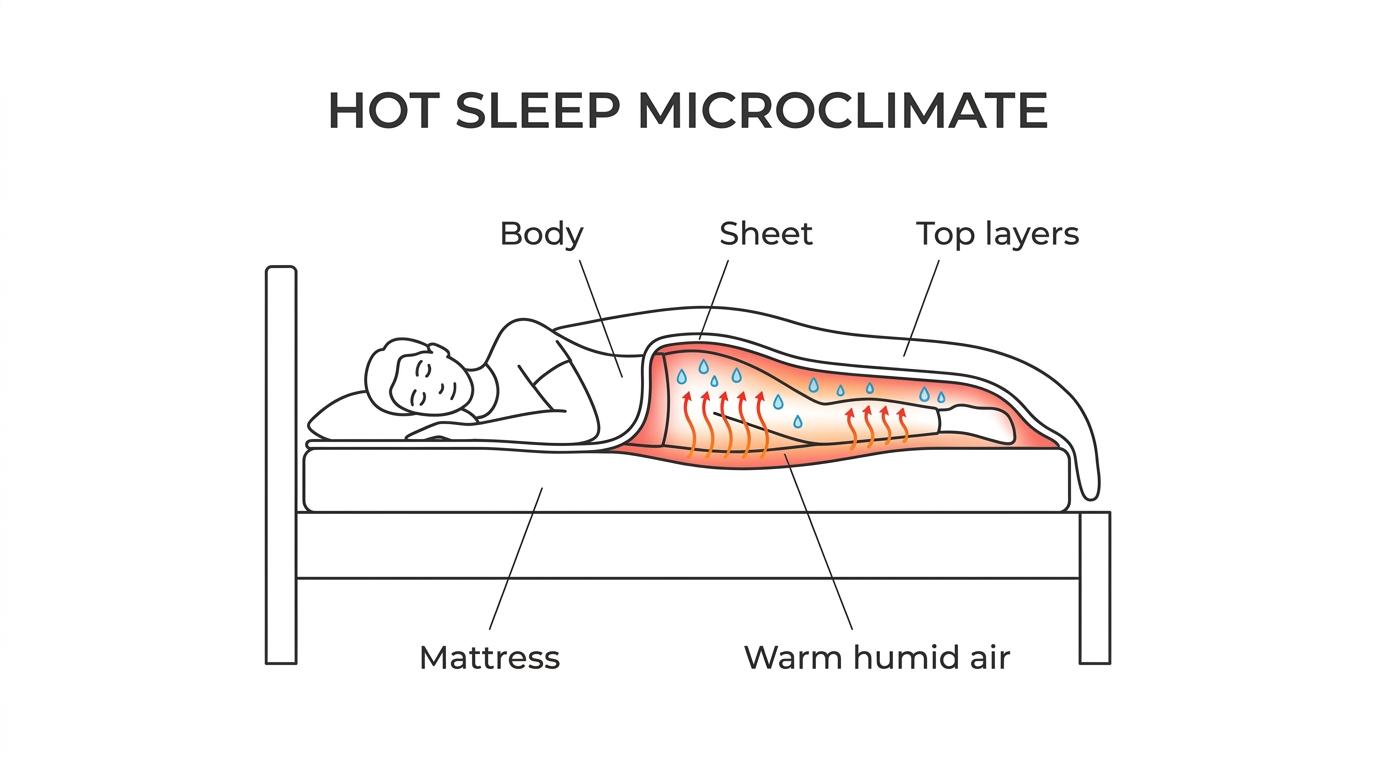
That happens because hot sleep is rarely just a fabric problem. It is usually a bed microclimate problem. Heat and moisture get trapped between your body, mattress, sheet, and top layers. Once that warm pocket builds up, even good bedding can stop feeling cool.
This is not medical advice. Always consult your doctor or oncology team before making changes, especially if you have severe night sweats, cancer treatment side effects, fever, unexplained weight loss, chest pain, or new symptoms.
The first thing that matters is not the label on the package. It is how your whole bed system handles heat, sweat, and airflow.
Research backs that up. A 2023 study on bedding thermal comfort found that ambient temperature and bedding thermal resistance are two major factors shaping sleep comfort under the covers: https://pubmed.ncbi.nlm.nih.gov/37748286/. A 2024 review also found that bedding fiber type can affect skin temperature, body temperature, and sleep quality, with linen bedsheets showing benefits in warm conditions: https://pmc.ncbi.nlm.nih.gov/articles/PMC11596996/.
So yes, your sheets matter. Your comforter matters too. Your pillow matters. But the way those layers hold or release heat matters even more.
A lot of hot sleepers get stuck because they keep changing materials while ignoring structure. A very breathable sheet under a heavy, lofty duvet can still trap heat. A “cooling” pillow with a thick synthetic protector can still sleep warm. If the bed keeps storing your body heat, the problem stays put.
Think of your bedding as a small climate zone around your body. If that zone is humid and insulated, sleep gets lighter and more broken. This is especially true for people dealing with night sweats, menopause, medication side effects, or just a naturally warmer sleep pattern.
The best cooling bedding setup usually starts with breathable layers that do not over-insulate. For many people, a tighter-weave cotton percale sheet works especially well because it helps under-sheet airflow spread more evenly across the body. Linen can also do very well in warm conditions, especially if you like a drier, lighter feel.
After that, the big issue is loft. Thick comforters, fluffy duvets, and dense fills often trap more heat and moisture than hot sleepers realize. If you love the feeling of being covered, try using a lighter insert with a breathable shell instead of giving up layers completely.
A simple way to judge your current setup is this:
Here is what usually helps most when choosing sheets and top layers:
Pillows matter more than people think. Your head, neck, and upper chest are common places to notice overheating first. If your pillow runs warm, it can make the whole bed feel stuffy.
That said, a cooling pillow will not solve trapped heat around the rest of your body. This is where people can get frustrated. They buy the cool-touch pillowcase and still wake up sweating from the waist down.
One patient scenario I hear often goes like this: a woman in perimenopause switches to linen pillowcases and a cooling gel pillow. Her face feels better, but she still wakes up soaked across her back and legs around 2 a.m. The issue was not only the pillow. It was the warm, humid air staying trapped under the comforter all night.
If your pillow seems hot, check the whole setup:
Sleep experts commonly recommend a bedroom temperature between 60°F and 67°F for better sleep. The Centers for Disease Control and Prevention (CDC) also advises keeping the bedroom cool for healthier sleep habits: https://www.cdc.gov/sleep/about/index.html.
That room temperature guidance is useful, but it is only half the story. You can have a 65°F room and still feel overheated if your bedding traps heat next to your body. This is where active airflow under the sheets works differently from passive cooling fabrics.
A Bedfan or bFan does not cool the air. Bedjet does not cool the air either. Both systems use the cooler air already in the room. The difference is that under-sheet airflow can push that room air through the bed microclimate to carry away trapped heat and help evaporate sweat. That targets the root issue more directly than fabric alone.
With a Bedfan, many people can raise the room thermostat by about 5°F and still sleep cool enough for more restful sleep, because the body is being cooled where heat builds up under the covers. That can matter a lot if air conditioning costs are climbing.
When airflow is set up well, these basics usually work best:
Night sweats are different from simply preferring a cool room. If you are waking up drenched, changing clothes, or washing bedding constantly, it is worth talking with a clinician. The Mayo Clinic notes that night sweats can be linked to menopause, infections, medicines, anxiety, low blood sugar, and other medical issues: https://www.mayoclinic.org/symptoms/night-sweats/basics/definition/sym-20050768.
This matters if you are taking an antidepressant like a selective serotonin reuptake inhibitor (SSRI), dealing with menopause, recovering from illness, or going through cancer treatment. Bedding can improve comfort, but it should not replace medical care.
I have also heard versions of this story many times: someone starts a new medication, then within a few weeks the hot sleep kicks in hard. They buy “cooling” sheets, then a cooling mattress pad, and still wake up uncomfortable because the sweat has nowhere to go. Passive materials can help a bit. Airflow that flushes out warm, humid air under the sheets often helps more.
A practical option here is a Bedfan placed at the foot of the bed. It quietly moves room air under the sheets, usually around 28 to 32 dB at normal settings, and uses about 18 watts on average. The remote and timer are useful if you mainly need help falling asleep or want cooling early in the night without running it until morning.
Not every hot sleeper needs the same solution. Some people do well with percale sheets and a lighter comforter. Others need active airflow because the bed keeps trapping heat no matter what fabric they choose.
The original Bedfan was invented in 2003, several years before Bedjet was even thought of. That history matters because this category did not start with flashy app features. It started with a simple idea: move room air under the covers where the heat actually gets trapped.
Here is the practical breakdown:
If you are comparing active systems, keep cost and setup in mind. A dual zone Bedjet setup costs over a thousand dollars, which is more than twice the price of two Bedfans. Two Bedfans can give couples dual-zone microclimate control at a fraction of that price, which is useful when one person sleeps hot and the other does not. Bedfan also offers timer controls, and because it relies on room air rather than refrigeration, it stays simple and energy-light.
You do not need to throw out everything on your bed. Start by reducing what traps heat most, then add airflow if you still feel warm.
A good test setup is a tighter-weave sheet, a lighter comforter, a cooler room, and less bulk around your legs and torso. If you use a bed fan, place it so the airflow can spread under the top sheet. Tight-weave sheets usually help the air move across the body better than very open, fluffy, or heavy top layers.
One more small point that matters. If you love the feel of a thick comforter, you may still be able to use it, but the cooling effect tends to be better with less loft and less insulation. That is why people often notice the biggest change when they adjust both the bedding and the airflow, not one or the other.
If you want to keep reading, these pages fit naturally with the same problem from slightly different angles:
Systematic review on sleepwear, bedding fibers, and sleep quality: Reviews how bedding materials affect thermal comfort, skin temperature, and sleep, including findings on linen bedsheets in warm conditions.
PubMed study on quilt thermal resistance and sleep thermal comfort: Explains why ambient temperature and bedding insulation both shape how warm or cool you feel during sleep.
CDC sleep guidance on healthy sleep habits: Includes practical advice on keeping your bedroom cool, quiet, and sleep-friendly.
Mayo Clinic overview of night sweats: A quick medical reference on common causes of night sweats and when to seek care.
If your sheets are breathable but your bed still feels hot, the missing piece may be airflow, not another fabric swap. You can see the bFan Bed Fan options at BedFan and decide whether under-sheet cooling makes sense for your setup. This is not medical advice. Always consult your doctor or oncology team before making changes, especially for severe, new, or unexplained night sweats.