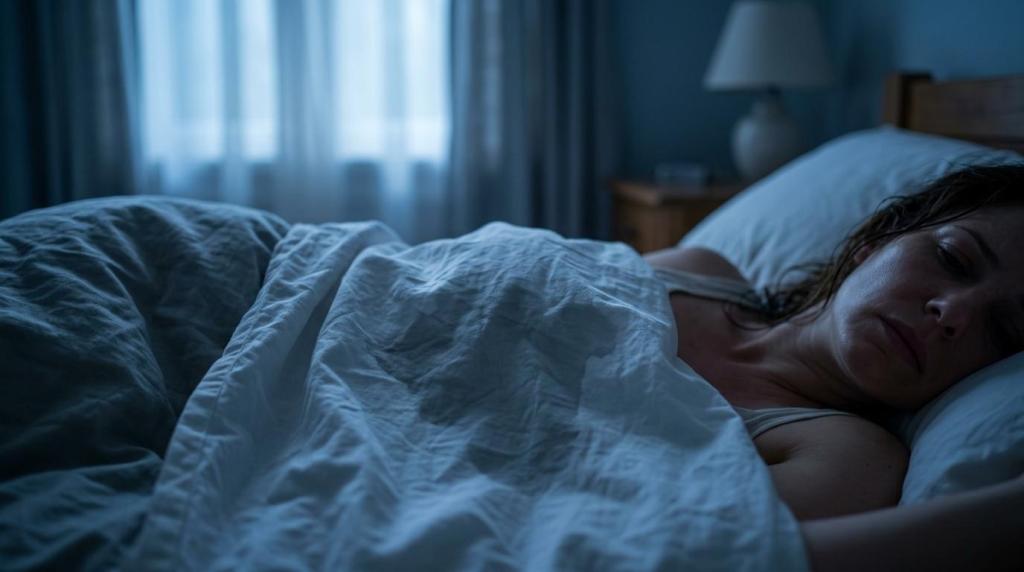
Chemotherapy night sweats cooling fan options can improve under-covers airflow, reduce trapped heat, and support better restful sleep.
If chemotherapy or hormone therapy has you waking up soaked, overheated, then suddenly chilled a few minutes later, you are not imagining it. Night sweats during cancer treatment are common, deeply disruptive, and exhausting in a way people often do not fully appreciate until they live through it.
From a clinical perspective, the goal is not just to make you feel cooler for a few minutes. It is to reduce repeated sleep disruption, cut down on sheet changes, lower the stress that builds around bedtime, and give your body a better shot at restorative sleep while you are already carrying a heavy treatment load.
Medication is not the only path to relief. For many people, under the covers airflow can be a practical comfort tool, especially when the problem is trapped heat building up inside the bed rather than a room that is too warm.
Chemotherapy night sweats can happen for a few different reasons. Some drugs affect the way your body regulates temperature. Some cancer treatments trigger sudden hormonal shifts. Some people also get sweats because of steroids, pain medicines, antidepressants, low blood sugar, infection, or the stress response that builds up during treatment. If you are on endocrine therapy, including tamoxifen, aromatase inhibitors, ovarian suppression, or androgen deprivation therapy, the pattern can look very similar to menopause related hot flashes, just layered onto cancer care.
At the body level, the problem often comes down to a narrower comfort zone for temperature control. A small rise in skin or core temperature can trigger a big vasomotor response, your blood vessels open up, your skin flushes, and sweating kicks in fast. During the day, you may be able to fan yourself, change clothes, or move around. At night, trapped heat inside the bedding becomes a much bigger issue.
That matters because the bed itself can become a heat pocket. Your own body warmth gets held under the sheets, the mattress reflects some heat back, moisture builds, and sleep becomes lighter and more fragmented. You wake, cool off, drift back down, then the cycle repeats.
People often tell me the worst part is not just feeling hot. It is the anticipation of it.
A bed fan works on a simple principle. It moves room air through the space between your sheets so that heat and moisture can be carried away from your skin before they build up enough to wake you. This does not change the underlying medical cause of your night sweats, but it can make the sleep environment much easier to tolerate.
That distinction is important. Neither a Bedfan nor a BedJet actually cools the air. They both use the cooler air that is already in your room. What helps is the airflow itself, because moving air improves evaporative cooling and reduces the pool of trapped heat under the covers. For someone with chemo related or hormone therapy related night sweats, that local cooling can feel very different from just lowering the thermostat for the entire room.
Clinical trials that focus only on under sheet bed fans in oncology patients are still limited. Even so, the broader science around vasomotor symptoms points in a helpful direction. Reviews of cancer related hot flashes and night sweats consistently include cooling strategies as a reasonable non drug support, even though device specific trial data are not yet robust. There is also related evidence showing that targeted peripheral cooling can reduce severe hot flashes, which fits what we know about thermoregulation.
In plain English, cooling the skin can calm the body’s urge to dump heat.
This is where a Bedfan or bFan can make practical sense. A Bedfan from Bedfan.com is built to sit at the foot of the bed and push air under the top sheet, rather than blowing across your face from across the room. For a lot of people, that feels more natural, more contained, and less annoying than sleeping with a high room fan all night.
Sleep experts commonly recommend a bedroom temperature between 60°F to 67°F, 15.5°C to 19.5°C, for better sleep. With a Bedfan, many people can raise the room temperature by about 5°F and still cool the body enough for more restful sleep, which can also lower air conditioning use and cost. That is especially appealing if you share a room with someone who does not want the bedroom to feel like a refrigerator.
After you think about the mechanism, the appeal becomes pretty clear.
When people search online for help, they usually see the same cluster of options, air conditioning, room fans, cooling mattress systems, moisture managing sheets, cooling blankets, and specialty bed fans. Each can help, but they do not work in the same way.
Lowering the whole room temperature is the standard first step, and it is reasonable. Sleep experts commonly recommend 60°F to 67°F. The trouble is that many cancer patients still feel hot under the sheets even when the room is technically cool enough. That is because the bed microclimate can stay warm and damp, even if the room air is fine.
A bedside or tower fan can help, but it cools the exposed parts of your body more than the parts trapped under bedding. Cooling mattress pads can feel great for some people, though they are often more expensive, less portable, and sometimes too cold if set aggressively. They also change the feel of the mattress, which matters more than people think when sleep is already fragile.
A bed fan sits in a useful middle ground. It targets the problem zone without forcing the entire room to match your symptoms.
If you are comparing products, a few points come up again and again in patient questions and online search results.
That last point deserves a second look. Because sleep experts recommend 60°F to 67°F, many people assume they must force the whole bedroom into that range to sleep well. In practice, some people using a Bedfan can raise room temperature by about 5°F and still feel cool enough under the covers for better sleep. If your home cooling bills are painful, this can be one of the most practical benefits.
A good setup matters almost as much as the device itself. If you place cool air under thick, dense, poorly breathing bedding, the effect will be weaker. If your sheet choice helps that air travel across the body, the result is often much better.
Sleep experts commonly recommend a bedroom temperature between 60°F and 67°F, 15.5°C to 19.5°C, for better sleep. That is a useful starting point. If you add a Bedfan, many people can raise the thermostat by about 5°F and still stay comfortable enough to fall asleep faster and wake less often from overheating. That can take some pressure off the rest of the household and help with AC costs.
You also want the air to move across the skin, not just leak out of the sides of the bedding. Counterintuitive as it sounds, a top sheet with a tighter weave often works better with a bed fan, because it channels the airflow across your body instead of letting it disappear too quickly. You can still choose breathable fabrics, but the sheet structure matters.
Layering helps too. Use lighter layers that you can peel back without fully remaking the bed at 2 a.m. Choose sleepwear that wicks moisture and does not cling when damp. If your feet tend to get cold before the rest of you, start the fan low and adjust upward only after you settle in.
A bFan from www.bedfan.com is often worth a look for this kind of targeted setup, because it is designed specifically for the space under the sheets rather than as a general room fan. Its timer controls can also be useful if you tend to get the worst overheating during the first half of the night, then cool down later.
Here is the setup advice I give most often.
It is easy to dismiss cooling devices as a luxury until you connect them to sleep disruption. Broken sleep is not a cosmetic issue. When you are in active treatment or recovery, poor sleep can worsen fatigue, irritability, pain perception, concentration, and coping capacity. It can also make daytime naps more likely, which then pushes bedtime later and starts a frustrating cycle.
That does not mean every person with night sweats needs a device. Some will do well with lighter bedding, a cooler room, and a simple fan. Some need medication changes, treatment for infection, or workup for endocrine issues. Still, for the large group of people whose main problem is heat trapped in the bed, a bed fan can be a very reasonable comfort measure.
There is a psychological side to this too. When you know you have a plan for the next hot flash, bedtime can feel less threatening. Patients often sleep better when they stop bracing for the next surge of heat.
The best results usually come from combining tools, not relying on one fix.
Cooling support works best when it sits inside a bigger sleep plan. The basics still matter, and they often get lost when the focus turns only to the symptom itself.
Keep caffeine earlier in the day. Go lighter on alcohol, especially in the evening, because it can make vasodilation and heat surges worse. Avoid heavy meals right before bed. If you are waking often to urinate on top of sweating, shift more of your fluid intake earlier in the day, unless your medical team has given you different instructions.
A cool shower before bed can help reset the skin temperature for a while. Relaxation practices, paced breathing, and cognitive behavioral approaches have some of the best non drug evidence for hot flashes and sleep complaints in cancer survivors. They will not blow cool air under your sheets, of course, but they can cut the alarm response that makes every episode feel even more disruptive.
You do not need an elaborate routine. You need a repeatable one.
Most night sweats during cancer treatment are not an emergency, but some absolutely need prompt medical review. This is especially true if you are neutropenic, on steroids, have diabetes, or are at risk for infection. Sweating can be a treatment side effect, but it can also be a clue that something else is going on.
Fever changes the picture. So do shaking chills, new cough, shortness of breath, low blood sugar symptoms, rash, confusion, or drenching sweats that are new and intense. If you have lymphoma, leukemia, recent surgery, or an active infection history, the threshold for calling your team should be low.
Do not assume every sweat is “just chemo.”
Yes, they are fairly common, though not every person gets them and the pattern varies a lot. Chemotherapy itself, steroid premedications, pain medicines, antidepressants, hormonal shifts, and stress on the body can all contribute.
Some people have mild warmth and damp clothing. Others have drenching episodes that require changing pajamas or sheets. If the sweats are new, severe, or paired with fever, your oncology team should know.
Absolutely. Treatments that lower estrogen or testosterone often trigger vasomotor symptoms that look a lot like menopause related hot flashes. Tamoxifen, aromatase inhibitors, ovarian suppression, and androgen deprivation therapy are common examples.
For many patients, nighttime symptoms are worse because heat gets trapped in the bed. That is why local cooling, including a bed fan, can be useful even if the bedroom itself is not especially warm.
No. This is a key point. A Bedfan, Bed Fan, bFan, or BedJet does not chill the air the way an air conditioner does. It uses the cooler air already in the room and moves it through your bedding.
That airflow helps carry heat and moisture away from your skin. In practical terms, it can feel much cooler even though the air itself has not been mechanically refrigerated.
Sleep experts commonly recommend a bedroom temperature between 60°F and 67°F, 15.5°C to 19.5°C, for better sleep. That range is a solid starting point for hot sleepers and people dealing with night sweats.
If you use a Bedfan, many people can raise the room temperature by about 5°F and still feel cool enough under the covers for more restful sleep. That can improve comfort for a bed partner and help with air conditioning costs.
For many people, no. Normal operating sound is usually in the range of about 28 dB to 32 dB, which is quite low. That is far quieter than many box fans or louder HVAC cycles.
Sensitivity varies, of course. If you are a very light sleeper, start at a low setting and see how your body responds. Some people find the gentle sound becomes part of the sleep cue.
A Bedfan uses only about 18 watts on average, so the energy use is modest. Compared with dropping the whole house thermostat several degrees overnight, that is a small electrical load.
This is one reason some people find it easier to manage cooling costs with a bed fan. If you can keep the room about 5°F warmer and still sleep comfortably, the savings on AC can matter.
Often, yes. Many people assume the loosest, airiest sheet must work best, but under the covers airflow is a little different. A tighter weave top sheet can help guide the air across your body instead of letting it spill away too quickly.
You still want comfort and breathability, but the airflow path matters. If you already own a Bedfan and it seems weak, changing the sheet setup can make a real difference.
It can, and this is one of the most appealing use cases. Since the airflow is directed under your side of the covers, it does not have to cool the entire room or blast your partner across the face all night.
This is also where dual zone thinking comes in. Two Bedfan units can offer dual zone microclimate control at a fraction of the cost of some premium systems, including dual zone BedJet setups that often run over $1000.
That depends on your budget, bed setup, and what kind of control you want. Both rely on room air, not chilled air. BedJet does not cool the air either. The main difference is how the airflow is delivered and what you pay.
BedJet is often about twice the price of a Bedfan. If you want dual zone control, two Bedfan units can give many couples a practical way to cool each side of the bed at a much lower total cost. The original Bedfan also came to market several years before BedJet, which some shoppers see as a sign of category experience.
Yes. Even if the cause seems obvious, it is smart to mention it. Your team may spot a medication trigger, timing issue, steroid effect, endocrine cause, infection risk, or blood sugar problem that is worth addressing.
Comfort tools like a bed fan are helpful, but they are not a substitute for medical review when symptoms change, intensify, or come with fever, chills, weight loss, or breathing symptoms.
National Cancer Institute guidance on hot flashes and night sweats
A patient friendly overview of causes and treatment options for cancer related vasomotor symptoms.
Cancer Research UK resources for hormone related symptoms
Helpful support information for people dealing with treatment related hormonal symptoms, including coping tools.
Peer reviewed review of vasomotor symptom management in cancer survivors
Summarizes non drug and medication based approaches for hot flashes and night sweats in cancer care.
Mechanisms of hot flashes and the role of peripheral cooling
Explains why small temperature shifts can trigger major symptoms and why skin cooling can help.
Sleep Foundation guidance on the best bedroom temperature for sleep
A practical summary of why many sleep experts recommend keeping the bedroom in the 60°F to 67°F range.