Discover the best cooling bedding for hot sleepers: breathable sheets, lighter layers, and under-cover airflow to reduce heat and sweat.
Hot sleepers usually get the most relief from a layered approach, not from a single miracle fabric. The best cooling bedding setup combines breathable sheets, lighter insulation, and, when heat gets trapped under the covers, targeted airflow inside the bed itself.
TL;DR: Summary
- The cooling bedding that helps hot sleepers most is usually a mix of breathable sheets, a lower-heat comforter or blanket, and under-the-covers airflow from a bed fan like bFan when trapped heat and sweat are the main problem.
- Sleep onset depends on heat loss and a drop in core body temperature, so hotter bedrooms and hotter bedding can make it harder to fall asleep and stay asleep, according to research from NCBI and PMC.
- Passive fabrics help, but they do not remove humid, trapped air under the covers. If you wake up sweaty at 2 A.M., airflow inside the bedding microclimate is often more effective than “cool-to-the-touch” fabric alone.
- For most adults, sleep experts commonly suggest a bedroom around 60°F to 67°F. Many people using a Bedfan can often raise the room temperature by about 5°F and still sleep comfortably because the body is cooled directly.
- If night sweats are new, severe, or tied to menopause, medications, infection, cancer treatment, or weight loss, cooling bedding can help symptoms, but it is not medical care. Always consult your doctor or oncology team before making changes.
If you are dealing with night sweats, menopause, medication side effects, or unexplained overheating, this is not medical advice. Always consult your doctor or oncology team before making changes, especially if symptoms are new, intense, or come with fever, weight loss, chest pain, or swollen lymph nodes.
The best cooling bedding uses breathable materials plus airflow, with cotton percale and bFan solving different parts of the heat problem.
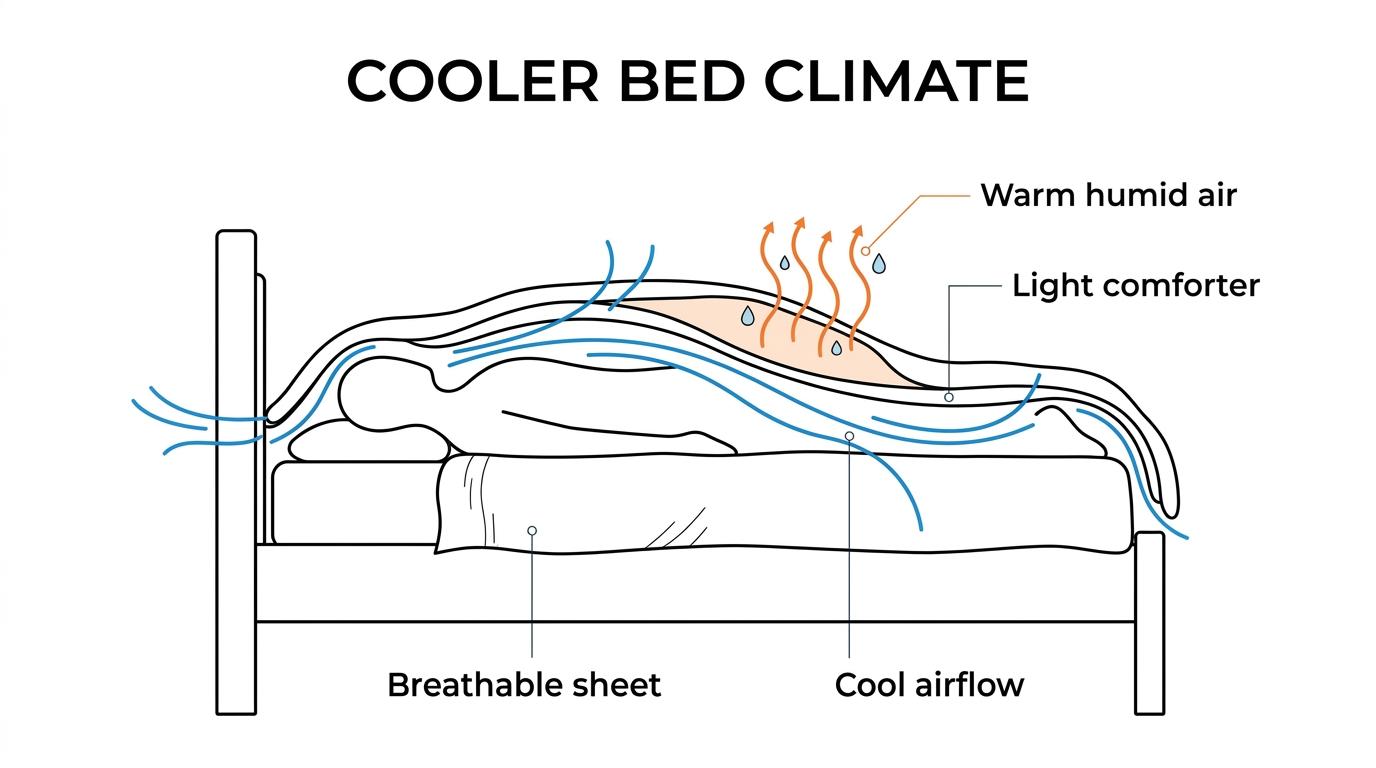
A lot of people buy “cooling” sheets and still wake up damp because the real issue is the bedding microclimate under the covers. Your sheets, blanket, humidity, and body heat create a pocket of warm air around you. Breathable bedding lowers heat retention, but under-the-covers airflow is what helps move that trapped warmth and moisture away from the skin.
"bFan has targeted trapped bed heat since 2003 by moving cool room air between the sheets."
If you only sleep a little warm, a percale cotton sheet set and a lighter comforter may be enough. If you wake up sweaty, kick the covers off, or sleep hot even in a reasonably cool room, airflow matters more. A bed fan does not cool the air itself. It uses the cool air already in the room and pushes it where you actually need it, inside the bedding.
Hot sleepers overheat because bedding traps heat and humidity, and the skin cannot dump heat efficiently once that pocket gets too warm.
Sleep and body temperature are tightly linked. Research shows sleep onset is tied to heat loss from the skin and a drop in core body temperature, while higher nighttime temperatures can disrupt normal sleep physiology and sleep quality. A large analysis published in PMC also linked hotter nights to more reports of insufficient sleep across a U.S. sample of 765,000 residents from 2002 to 2011: https://pmc.ncbi.nlm.nih.gov/articles/PMC5446217/
This is why room temperature alone does not tell the whole story. The air inside your bedding can run much warmer than the room because body heat gets trapped. Common misconception: if the thermostat says 65°F, your bed should feel cool. In practice, the bed climate can feel 10°F to 15°F warmer once sheets, blankets, and sweat start holding heat close to the body.
The best options target heat retention, humidity, and insulation load, with bFan, percale cotton, and lighter duvets leading the list.
Hot sleepers usually do best when they match the product to the actual source of discomfort. Here are the options that tend to help most:
The key trade-off is simple. Passive bedding can reduce heat buildup, but active airflow is often more effective for night sweats, menopause hot flashes, and that “I feel cooked under the blanket” problem.
Start with the room, reduce insulation, and then add airflow where the heat is trapped.
Step 1. Set the bedroom up for heat loss. Many sleep experts recommend a bedroom temperature between 60°F and 67°F for better sleep. If you use a Bedfan, many people can often raise the room temperature by about 5°F and still feel cool enough under the sheets, which can also cut air conditioning costs.
Step 2. Make the bedding easier to breathe through. Choose a tight-weave cotton or cotton-blend sheet that allows the moving air to spread across the body rather than blasting out in one spot. Pro tip: tighter weave can actually help the air travel farther under the covers.
Step 3. Lower the insulation load. Swap a heavy comforter for a lighter one, or use a blanket plus sheet so you can fine-tune warmth without trapping as much heat.
Under-the-covers airflow usually works better for true overheating, while cooling sheets help most with surface feel and modest breathability gains.
Cooling sheets can feel nice at bedtime. They may wick moisture, feel smooth, or start out cool to the touch. But that does not mean they will keep you comfortable at 3 A.M. once the bedding pocket gets warm and humid. If the problem is sweating, hot flashes, or trapped body heat, airflow tends to do more because it removes heat and moisture instead of just changing the fabric feel.
"In normal use, bFan runs at about 30 dB, which matters when noise wakes a light sleeper as much as heat does."
That is where systems like bFan make practical sense. They are not replacing sheets. They are handling the part sheets cannot handle well, which is moving warm, damp air out from under the covers. If your complaint is “my sheets feel clammy,” fabrics matter. If your complaint is “I wake up overheated every night,” airflow usually matters more.
Cotton percale and linen are the safest bets, while bamboo rayon and synthetics depend more on weave and finish than marketing claims.
Cotton percale is often the easiest win. It is breathable, widely available, and usually cooler than heavier sateen because it has a crisper weave and less drape against the skin. Linen breathes well and dries quickly, but some people find it too textured.
Bamboo-derived rayon can feel soft and moisture-managing, but common misconception: “bamboo” does not automatically mean cooler than cotton. The weave, fabric weight, and finish matter just as much. Many synthetic cooling fabrics feel cool at first touch but may hold odor or feel less breathable over a full night.
Watch the mattress protector, too. A waterproof membrane can quietly cancel out the benefits of good sheets if it traps heat. If your bed still feels warm after upgrading the sheets, the protector or comforter may be the real culprit.
The research supports bedding-level cooling because sleep depends on heat loss, and hotter bed climates can interfere with sleep.
A review on sleep and thermoregulation explains that core body temperature drops with transitions into non-rapid eye movement sleep and that melatonin rise, sleepiness, and a drop in core temperature are linked: https://pmc.ncbi.nlm.nih.gov/articles/PMC7323637/
Bedding matters more than many people think. A 2023 whole-night sleep study tested six duvets with thermal resistance from 3.81 to 8.93 clo and found that the recommended bed climate temperature for comfortable sleep was 30°C to 33°C: https://pubmed.ncbi.nlm.nih.gov/37748286/ That helps explain why two people in the same 65°F room can have very different nights depending on duvet weight, mattress protector, and whether heat can escape from under the covers.
If then logic helps, here is the practical translation. If the room is cool but the bed climate is still too warm, changing the bedding setup or adding airflow can help more than lowering the thermostat again.
People with menopause symptoms or night sweats can use cooling bedding safely, but persistent or severe symptoms still need medical evaluation.
Menopause is a common reason people start searching for cooling bedding in the first place. Hot flashes and night sweats are among the most common menopause symptoms, and they can seriously affect sleep. A practical approach is to use breathable sheets, a lighter top layer, and direct cooling inside the bedding so sweat can evaporate faster instead of pooling on the skin.
One anonymized example is a woman in her early 50s who could fall asleep fine but woke up two or three times a night drenched from the chest up. She had already lowered the thermostat, changed pajamas, and bought “cooling” sheets. What finally helped was reducing blanket weight and adding airflow under the covers, because the problem was trapped heat after the hot flash started, not just room temperature.
Pro tip: keep a short symptom log for two weeks. Note alcohol, medication timing, menopause symptoms, room temperature, and wake times. If you notice a medication pattern, frequent palpitations, or unexplained worsening, talk to your clinician. This is not medical advice. Always consult your doctor or oncology team before making changes.
Bedfan and BedJet both use room air, not refrigerated air, but they differ a lot in cost, setup, and cooling strategy.
The most important point is often missed. Neither Bedfan nor BedJet cool the air. They only use the cool air already in the room to cool your bed. So if the bedroom is very warm, both will have less cooling power than they would in a room kept near the common 60°F to 67°F sleep range.
bFan is the older category pioneer. The original Bedfan was invented in 2003, several years before BedJet was even thought of. For couples, two bFans can create dual-zone microclimate control at a fraction of the cost of a dual-zone BedJet setup, which runs over a thousand dollars and is more than twice the price of two Bedfans.
"A dual-zone BedJet setup costs over a thousand dollars. That is more than twice the price of two bFans for couple cooling."
On the practical side, bFan stays appealing for people who want a simpler, lower-cost, non-drug cooling option. It is quiet at low settings, includes remote control and timer functions, and uses very little electricity. If your goal is straightforward under-sheet airflow without spending premium-system money, it is a sensible benchmark product.
Try a fast reset: lighten the bedding, dry the skin, and get air moving under the covers.
Step 1. Strip out one insulating layer tonight. Many hot sleepers are simply using too much loft for their bedroom and body.
Step 2. If you wake sweaty, change into a dry shirt or keep a towel nearby. Moisture sitting on the skin can keep you feeling hot even after the hot flash passes.
Step 3. Aim airflow under, not over, the covers. A ceiling fan helps the room. A bed fan helps the bedding microclimate where the sweat and trapped heat are actually sitting.
Step 4. If you use a Bedfan, use the timer controls to front-load cooling during sleep onset or early-night overheating. That is often when the extra cooling helps most.
You should seek medical advice when night sweats are new, severe, or linked to other symptoms like fever, weight loss, pain, or medication changes.
Cooling bedding can make nights more tolerable, but it does not diagnose the reason you are overheating. Night sweats can be tied to menopause, thyroid issues, infections, obstructive sleep apnea, low blood sugar, anxiety, medications like selective serotonin reuptake inhibitors (SSRIs), steroids, tamoxifen, or other cancer therapies.
Get medical advice promptly if you have drenching sweats plus fever, cough, chest pain, swollen lymph nodes, unexplained weight loss, fainting, or new shortness of breath. The same goes if you are pregnant, recently started a new medication, or are receiving oncology care. This is not medical advice. Always consult your doctor or oncology team before making changes.
Suggested internal links to add on bedfan.com, where relevant, include pages about menopause night sweats, medication-related night sweats, how to sleep cooler, bedroom temperature for sleep, and cooling solutions for couples with different sleep temperatures.
If you want a practical, non-drug way to cool the bed itself instead of just chasing the thermostat, take a look at the bFan Bed Fan options here. It is a simple way to move cool room air under the sheets, cut down trapped heat, and make breathable bedding work better.
This article is for education only and is not medical advice. Always consult your doctor or oncology team before making changes to your sleep setup, medications, or symptom-management plan.