Heat intolerance at night can stem from hormones, meds, thyroid issues, or bedding. Learn causes, symptoms, and cooler sleep tips.
If you regularly wake up feeling too hot, sweaty, restless, or weirdly wired, even when everyone else in the house seems fine, you are not imagining it. Nighttime heat intolerance is real, and it can turn what should be a normal night of sleep into hours of tossing, kicking off covers, waking up thirsty, and staring at the ceiling.
A lot of people assume this is just a comfort issue, but it is more than that. Your body is supposed to cool down at night, and that drop in core temperature is part of how you fall asleep and stay asleep. When your body cannot shed heat well, sleep tends to get lighter, more broken up, and less refreshing. In many cases, severe heat intolerance can lead to significant sleep disturbances that affect the overall quality of your slumber.
Sometimes the cause is simple, a warm room, heavy bedding, high humidity, or a mattress that traps heat. Sometimes it is tied to menopause, thyroid problems, medications, anxiety, dysautonomia (a disorder of the autonomic nervous system), fibromyalgia, heat intolerance, or another health issue. And sometimes it is a mix of several things, which is why this can be so frustrating to sort out.
Heat intolerance at night usually means your body feels too hot when it should be cooling down for sleep. You may notice it as a general sense of overheating or as clear night sweats, hot flashes, flushing, or repeated wake ups where your first thought is, “Why am I so hot?” These issues often contribute to sleep disturbances that can affect your overall wellbeing.
This matters because sleep and temperature are tightly linked. Sleep experts commonly recommend keeping the bedroom between 60°F and 67°F, or 15.5°C to 19.5°C, because that range tends to support the normal overnight drop in body temperature. If your room is warmer than that, or if your bedding traps a lot of heat and moisture around you, your body has a harder time letting go of excess warmth.
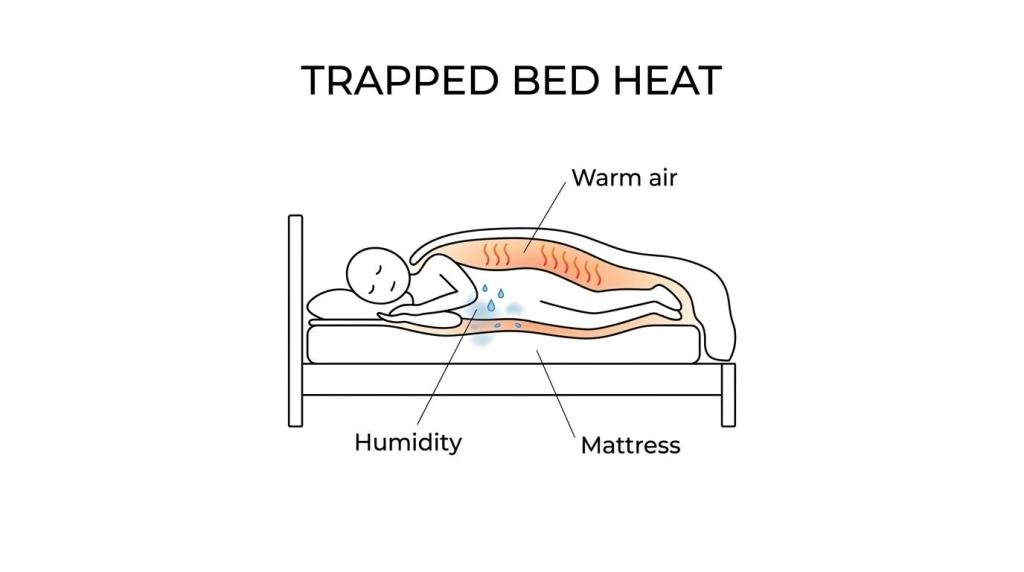
That trapped warmth creates what sleep researchers often call the bed microclimate, basically the little pocket of air and humidity between your skin, your sheets, and your mattress. If that space gets warm and sticky, your body has to work harder to cool itself, and your sleep usually pays the price.
The symptoms can be obvious or they can sneak up on you over time. Some people wake up drenched, others never sweat much but still feel hot, agitated, or unable to settle into deep sleep. You might also experience dizziness during episodes of intense heat exhaustion.
You may also notice that the poor sleep carries into the next day, and that can show up as irritability, fatigue, brain fog, or the sense that you slept for hours but still do not feel restored.
After a paragraph like this, the most common signs usually look like this:
If you are waking with chills after sweating, that can happen too. Your body dumps heat, sweat evaporates, then you get cold fast. That hot, cold, hot pattern is very common with hormonal shifts and vasomotor symptoms.
The short version is that nighttime heat intolerance shows up when your body is making too much heat, trapping too much heat, or struggling to get rid of it.
The room itself is often part of the problem, with warm air, high humidity, stale airflow, thick comforters, heat holding foam, and non-breathable mattress protectors making you feel much hotter than the thermostat suggests. A mattress that traps heat is another common bedding culprit. If your feet tend to get hot, especially due to heat intolerance, letting them out from under the covers can help. High humidity is a big one, because sweat does not evaporate as well when the air is already loaded with moisture.
Hormones are another major reason, because menopause and perimenopause are among the most common causes of overheating at night, thanks to hot flashes and night sweats. Pregnancy, cycle-related hormone shifts, and hormone therapy can do it too. Men can deal with hormone-related night heat as well, though it often gets talked about less.
Medical issues matter here too, because hyperthyroidism can raise metabolic heat production and make you feel hot, sweaty, anxious, and keyed up. Infections and fever can do the same. Sleep apnea, reflux, autonomic problems, anxiety disorders, and some cancers can be linked to night sweats as well. Additionally, conditions like dysautonomia, a dysfunction of the autonomic nervous system, can affect your body's ability to regulate temperature. Fibromyalgia is another condition that not only causes widespread pain and sleep disturbances but may also make you more sensitive to temperature changes.
A lot of medications can trigger nighttime overheating or sweating. Antidepressants are a classic example, especially SSRIs and SNRIs. Steroids, pain medicines, some blood sugar medicines, hormone therapies, and several cancer treatments can also be part of the picture.
The patterns often overlap:
That last group matters more than many people think. Alcohol can widen blood vessels and trigger sweating later in the night, late hard exercise can leave your body temperature up when you are trying to sleep, and stress can keep your nervous system revved up, which makes temperature regulation less steady.
Sleep is not just about being tired enough, because your body needs the right conditions, and temperature is one of them.
As you get ready for sleep, core temperature is supposed to drift down. When that cooling process gets blocked, sleep onset tends to take longer. You may feel sleepy in your head but not settled in your body. Then once you do fall asleep, you wake more easily, especially when heat builds under the covers or a hot flash hits.
People often describe this as light sleep, half sleep, or fractured sleep. They wake up more often, spend more time adjusting blankets or moving around, and can struggle to get back to sleep. Over time, that can leave you with irritability, daytime sleepiness, poor concentration, and the sense that bedtime has become a nightly battle. In extreme cases, prolonged overheating can lead to heat exhaustion, and if left unchecked, even heat stroke. Episodes of excessive heat may also be accompanied by dizziness, which further compromises a refreshing slumber.
Heat can also shorten or disturb the sleep stages that help you feel mentally and physically restored, and that is one reason you can spend plenty of time in bed and still wake up feeling wrung out.
This is where the practical fixes start to matter. Again, sleep experts commonly recommend a bedroom temperature between 60°F and 67°F, or 15.5°C to 19.5°C, because most people sleep better when the room supports that natural overnight cooling.
If your room is warmer than that, you do not always need to blast the air conditioning to freezer levels. Targeted airflow can make a big difference. Many people find that with a bed fan moving room air under the sheets they can raise the room temperature by about 5°F and still stay cool enough for more restful sleep. That can help cut air conditioning use and still keep the body from overheating.
That point is worth being very clear about, because it gets misunderstood. Neither the bedfan nor the BedJet cools the air, because they do not refrigerate it. They use the cooler air already in the room and move it where it matters most, right into the warm pocket under the covers where body heat gets trapped.
Bedding choice matters too, because if you are using a bed fan, tighter weave sheets often work better than loose, very open fabrics. That sounds backwards at first, but a tight weave can help channel the airflow across your body under the covers, which helps carry heat and moisture away more effectively.
A few bedding basics can help a lot:
If your feet tend to get hot, letting them out from under the covers can help, and that simple trick still works.
You do not need a perfect setup to start feeling better. Small changes can add up fast, especially when the cause is partly environmental.
Start with the room. Lower the temperature before bed if you can, reduce humidity if that is an issue in your area, and use a ceiling fan or room fan to keep air moving, even if you also use targeted bed cooling. A stale, humid room tends to make everything feel worse.
Then look at your pre-bed routine. A lukewarm shower can help, as can avoiding alcohol close to bedtime, keeping very spicy or heavy meals earlier in the evening, and giving yourself time to cool down after exercise before you get into bed. Also, proper hydration throughout the day ensures your body is better able to regulate its temperature during the night.
If overheating is a regular problem, it helps to think in layers, covering the room, bedding, body, and possible medical causes. That gives you a better shot at fixing the actual issue instead of chasing random tips.
A simple routine many hot sleepers use looks like this:
For many people, targeted airflow is the missing piece. A room fan may cool the general space, but it often does not reach the trapped heat under your sheets. The air is going exactly where the heat is collecting.
If your main problem is overheating in bed, a bed fan is one of the most direct tools you can use. It does not ask you to cool the whole house more than necessary, it just helps move heat away from your body where it builds up the fastest.
The original bed fan came to market several years before BedJet was even thought of, and that matters because it helped establish this whole category of under-sheet bed cooling. The basic idea is simple and still smart: move air into the bed microclimate so trapped body heat and moisture do not sit there all night.
A bedfan is usually the more straightforward and budget-friendly route. A single BedJet is more than twice the price of a single bedfan. If you are comparing dual-side setups for couples, the price gap gets even wider. The dual-zone BedJet setup costs over a thousand dollars and more than twice the price of two bedfans. If you want dual-zone microclimate control without spending that much, using two bed fans can get you there at a fraction of that cost.
That is one reason many couples look hard at the bFan bed fan. Two units can give each person separate control, so one side can run stronger while the other side runs lower or turns off. That is real dual-zone microclimate control in practical terms, and it is often much easier on the budget.
The bedfan also keeps things simple. It offers timer controls to reach recommended sleep, low power use, and a modest sound level of between 28db and 32db at normal operating speed. Power use is low too, around 18 watts on average for the classic bedfan setup, which is tiny compared with running home air conditioning lower all night.
A quick comparison helps:
If you want a practical recommendation, the bFan from www.bedfan.com is a solid place to start if your main issue is trapped heat under the covers, night sweats, or wanting to raise your room temperature a bit and still sleep cool. Many people can bump the thermostat up by about 5°F and still sleep comfortably because the moving air helps the body release heat more effectively.
Just keep the core limitation in mind, and this is true for bedfan and BedJet alike, because they work best when the room air is at least reasonably cool. If your bedroom is very hot, you may still need to bring the room temperature down first, ideally into that 60°F to 67°F range or somewhere close, before any bed fan really shines.
This kind of cooling tends to help people whose issue is trapped heat, sweat, or humidity in bed, not people who want ice-cold air blown at them.
That includes hot sleepers in general, people dealing with menopause or perimenopause, individuals experiencing heat intolerance, people whose medicines trigger sweating, and anyone trying to avoid cranking the air conditioning down all night. It can also be useful for couples where one person sleeps hot and the other does not want the whole room freezing.
A bedfan can be especially appealing when you want lower running costs. If targeted airflow lets you keep the thermostat about 5°F higher and still sleep well, the savings can add up during warm months, especially in places with high utility rates.
Most nighttime overheating is not an emergency, but it should not always be brushed off either. If the pattern is new, intense, or paired with other symptoms, it is worth getting checked.
Think about the bigger picture. Are you having hot flashes and changes in your cycle, which can point toward menopause or perimenopause? Are you having tremor, weight loss, or a racing heart, which could fit thyroid disease? Did the problem start after a medication change? Are you snoring heavily, choking awake, or waking with reflux? Those clues matter, and also, if you experience severe dizziness along with heat-related symptoms, it might be a sign that your body is struggling with proper temperature regulation, potentially leading to heat exhaustion or, in extreme cases, heat stroke.
There are a few situations where you should move faster and talk with a clinician sooner rather than later:
If you are not sure whether your symptoms are hormonal, environmental, or medical, keep a simple two-week log. Write down room temperature, humidity if you know it, bedding used, alcohol, exercise, medications, cycle timing if relevant, and how often you woke up hot or sweaty. That kind of pattern tracking can be surprisingly useful.
Sometimes yes, sometimes not.
A ceiling fan or room fan helps with whole room airflow, and that alone can improve comfort. In a warm, still room, moving air makes sweat evaporate better and helps your skin lose heat. For some people, that is enough.
But if most of your heat is getting trapped under blankets, a room fan may not solve the real issue, because the covers block the airflow from reaching the bed microclimate. That is why many hot sleepers feel better with a bed fan than with a fan across the bedroom, because the air is going exactly where the heat is collecting.
That pattern is common. You may feel fine at bedtime, then wake up overheated after a sleep cycle or two.
One reason is simple heat buildup. Your body warms the air trapped under the covers over time. If the bedding does not release that heat well or if the room is humid, the problem gets worse as the night goes on.
Hormones can also hit in waves, because menopausal hot flashes often wake people from sleep rather than showing up right when they first lie down. Medication effects, blood sugar swings, and alcohol can do something similar.
That is the point where you should think beyond the thermostat.
If the room is already in the recommended zone, around 60°F to 67°F, and you are still having frequent night sweats or strong heat intolerance, it is worth looking at hormones, medications, thyroid issues, infection, sleep apnea, dysautonomia, anxiety, reflux, and other health factors.
It is also possible that the room is cool but your bed is not. Heat-trapping bedding, a mattress that traps heat, or poor under-cover airflow can still make the bed microclimate uncomfortable even when the room temperature looks fine on paper.
That is one reason bedfan-style airflow helps some people so much. The room can stay at a reasonable temperature, even about 5°F warmer than before, yet the body still feels cooler because the moving air pushes warm, humid air away instead of letting it linger around your body all night.
Sudden heat intolerance at night can be triggered by several factors, including hormonal changes, anxiety disorders, or medical conditions like hyperthyroidism. Sometimes, medications or even menopause can play a role. If you notice a sudden change, it’s a good idea to talk with your doctor to rule out any underlying health issues.
Yes, high cholesterol can contribute to heat intolerance. When arteries are narrowed by cholesterol, blood flow to the skin is reduced, making it harder for your body to release heat. Some heart medications, like beta blockers and diuretics, can also make it more difficult for your body to handle heat, especially at night.
The most common symptoms include excessive sweating, feeling uncomfortably hot when others feel fine, and trouble falling or staying asleep. You might also notice a racing heart, headaches, or even skin flushing. If these symptoms are persistent, it’s worth discussing them with a healthcare provider.
To sleep cooler, keep your bedroom temperature between 60°F and 67°F, which sleep experts recommend for optimal rest. Use breathable, tightly woven sheets to help air flow across your body and carry away heat. Consider using a bedfan, like the bFan from www.bedfan.com, which offers dual-zone microclimate control and timer settings, letting you raise your room temperature by about 5°F while still sleeping cool.
Yes, several medical conditions can make you more sensitive to heat at night. These include thyroid disorders, menopause, diabetes, and neurological conditions like multiple sclerosis. If you suspect a medical issue, it’s important to consult with your doctor for proper diagnosis and management.
Simple changes can make a big difference. Try wearing lightweight, moisture-wicking pajamas, stay hydrated, and avoid caffeine or alcohol before bed. Cooling devices like a bedfan can help, and keeping your room dark and well-ventilated is key. If you share your bed, dual-zone solutions like the bFan let both partners customize their comfort without breaking the bank, especially compared to pricier options like the Bedjet.
Night sweats can be caused by hormonal fluctuations, stress, certain medications, or underlying health issues. Even if your room is cool, your body might still overheat due to these internal factors. If night sweats are frequent or severe, check in with your healthcare provider to rule out any serious causes.
A pounding heart and feeling hot at night can be linked to anxiety, hormonal changes, or even certain medications. Sometimes, it’s just your body’s way of reacting to being overheated. If this happens often, especially with other symptoms, it’s wise to get checked out by a doctor.
Neither the Bedjet nor the bedfan actually cool the air. They simply move the cooler air already in your room under your sheets to help carry heat away from your body. The bedfan uses only 18 watts on average, making it energy efficient, and it’s much more affordable than a Bedjet, especially for dual-zone setups, which can cost over a thousand dollars with Bedjet.
Look for sheets with a tight weave made from breathable materials like cotton or linen. These help air flow across your body and wick away moisture, keeping you cooler. Pairing quality bedding with a bedfan can make a noticeable difference in your sleep comfort.
If you’re struggling with heat intolerance at night, remember, you’re not alone, and there are practical solutions out there. For many, a bedfan is a game-changer, offering comfort, energy savings, and a better night’s sleep.
By naturally incorporating mindful hydration habits, understanding potential underlying issues like dysautonomia or fibromyalgia, and taking precautions against the severe outcomes of heat exhaustion or even heat stroke, you can better manage nighttime heat intolerance and reduce sleep disturbances.
All links above are working and lead to authoritative, up-to-date resources on heat intolerance.


