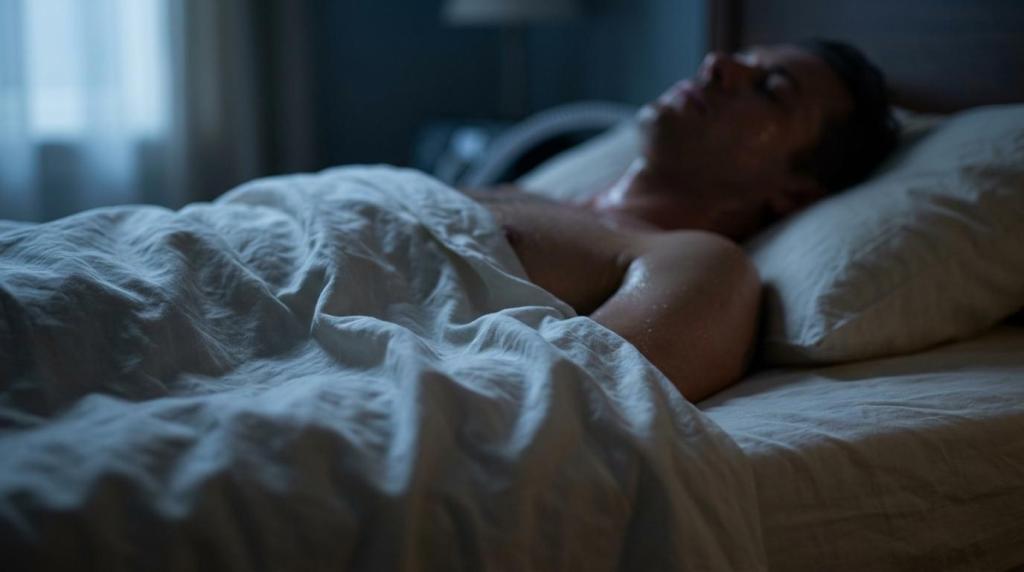
A bed fan for CPAP users cools trapped heat under the covers, reduces sweating and wakeups, and helps improve comfort without freezing the room.
Sleeping with CPAP should make breathing easier, but many users run into a different problem when the lights go out, and that is getting too warm. A mask resting on your face, humidified airflow, tubing near your head and neck, blankets, and a bedroom that tends to hold heat can create a warm pocket around your body. This mix often leads to sweating, tossing the covers off, mask discomfort, and repeated wakeups.
From a medical perspective, nighttime overheating is more than just a comfort issue, and it can even be made worse by an underlying medical condition. Heat can make your sleep lighter and more fragmented, and it can also make CPAP feel harder to tolerate. When you wake up hot, damp, or irritated under your mask, you are more likely to adjust it, pull it off, or cut down your total CPAP use. That matters because CPAP really only works when you wear it consistently.
A targeted bed fan can be a practical answer for many of these sleepers. Instead of turning the whole room into a refrigerator, a bed fan pushes air through the bedding where most of the heat is trapped. For CPAP users, that often means a cooler body, less facial sweating, fewer sleep interruptions, and less pressure to drop the thermostat for everyone else in the home.
Heat buildup during sleep is common, and CPAP can make it more noticeable. The mask forms a seal against your skin, which can trap warmth and moisture around your nose, mouth, and cheeks. In warm weather, many users describe the mask as feeling sticky or clingy, especially if you’re someone who tends to sweat at night.
Humidified airflow can also change how the night feels. Humidification is helpful for dry nose, dry mouth, and nasal irritation, but on warmer nights it can feel stuffy to some people. The issue usually isn’t that the CPAP machine is “heating” your whole body. It’s the mix of mask contact, exhaled warmth, bedding, humidity, and room temperature that creates a hotter sleep environment.
There are also health and life-stage factors that can pile onto your CPAP experience. For example, medications can trigger night sweats or overheating, and common culprits include antidepressants, steroids, blood pressure drugs, stimulant medications, and some cancer therapies.
When several of these factors appear at once, even a room that feels “fine” in the evening can become miserable by 2 a.m. After these patterns are identified, the main sources of heat usually look like this:
A bed fan works differently from whole-room cooling, and installing one is typically straightforward on any bed. Instead of cooling every square foot of your bedroom, it moves air between your top and bottom bedding layers, flushing out trapped warmth and humidity right where you need it. This creates a cooler sleep microclimate just below your covers.
This is why many hot sleepers respond so well to a bed fan, even when the room itself isn’t extremely hot. Often the problem isn’t the overall bedroom temperature, it’s the heat that collects underneath the covers after 20 to 60 minutes of lying still. That trapped warmth builds around your torso, legs, neck, and face, and it can interfere with one of your body’s easiest ways to cool down.
For CPAP users, that localized cooling can be a lifesaver because it lowers discomfort without forcing the room temperature down for everyone else. If one partner sleeps hot and the other prefers a cooler environment, whole-room AC often turns into a nightly thermostat battle, and a bed fan focuses the airflow where it matters most.
A recent sleep study on bed cooling in an overheated bedroom found better thermal comfort, faster sleep onset, and more total sleep time when the bed environment was cooled. Although that study used a cooling topper rather than a fan, the message remains the same: targeted cooling at the bed level can make a real difference in your sleep quality.
One practical option is the bFan Bedfan from www.bedfan.com, designed to sit at the foot of the bed and direct air under the top sheet. For CPAP users who feel overheated under their blankets but don’t want to freeze the room, this type of under-sheet bed fan is often a sensible first step instead of dialing down the AC for everyone.
A common question is whether a bed fan can interfere with CPAP treatment. In normal use, the answer is no. A bed fan doesn’t connect to the CPAP machine, change your therapeutic pressure, or alter any of the machine settings. It’s simply moving the room air around your body.
Placement does matter, though. You wouldn’t want strong airflow blowing directly into the CPAP machine intake from very close range, so it’s best to keep the machine in its normal spot and direct the bed fan’s airflow under your bedding, not at the device itself. When used this way, research does not show any evidence that a bed fan disrupts pressure delivery or mask performance.
In fact, some CPAP users sleep better with a cooler face and body because sweating can lead to mask slip. If your skin becomes damp, the cushion may shift more easily, especially with nasal or full-face masks during warm weather. Cooling the bed area can help keep your skin drier, which in turn may support a steadier seal all night long.
There is one tradeoff to watch for, and that is dryness. Any extra airflow can make your nose, mouth, eyes, or throat feel drier, particularly if you already struggle with dryness or congestion. If that happens, you should not give up on cooling; instead, try a small humidifier adjustment, review mask leak settings, and use a moderate fan setting rather than a strong draft.
For many hot sleepers, the goal is not to get cold air everywhere, but rather to reduce the trapped heat where your body is already warm.
Lowering your thermostat can help, but it often cools more than what’s needed. Many CPAP users aren’t trying to turn a 78°F room into a 60°F one; they simply want to prevent the heat from building up under the covers and around the mask. That’s when targeted cooling makes the most sense.
When you compare cooling options, the differences are usually straightforward:
The energy difference can be significant; a central or window AC unit uses far more power than a low-watt bed fan. The current bFan Bedfan, for instance, uses only 18 watts on average, with many users saying they can raise the room thermostat and still sleep comfortably. For those trying to keep utility costs under control, that matters a great deal.
Noise is another important factor, especially for CPAP users who are already listening to mask airflow, hose rustle, or even a partner’s sleep sounds. A loud fan might solve one problem while creating another, which is why the bFan Bedfan is often preferred because it is relatively quiet. Its low settings are about as soft as typical bedroom sounds, with more powerful settings available if you need extra cooling. This range lets you start gently and only ramp up the airflow when required.
Another strength of a bed fan is that it cools the sleeper rather than cooling the furniture, walls, and the rest of the home. It may seem like a small detail, but it changes the whole experience. Many people don’t like waking up in a cold room or stepping into one at 4 a.m. after falling asleep hot at 10 p.m. Localized bed cooling helps narrow the treatment to where the actual problem is.
Most CPAP users can try a bed fan safely, but a few setup details can make a big difference. Start with a low or medium fan speed, as a soft stream of air under your sheet is usually enough to remove trapped heat. If the airflow seems too strong at first, it might feel drafty and could dry your skin or upper airway.
Humidification should be adjusted based on your symptoms rather than any guesswork. If your nose feels dry, your throat is scratchy, or you experience a worsened dry mouth, then the humidifier setting might need a small increase; if the air feels too warm or muggy, a slight decrease might work better. The right setting can vary by mask type, room temperature, season, and even mask leak.
Tube position also matters. If the hose lies under heavy blankets or against warm bedding for hours, it may trap heat. A simple hose lift or rerouting can reduce tugging and keep the hose out of your main airstream. This not only makes the overall setup tidier but also more comfortable throughout the night.
A few practical habits usually make the biggest difference:
Night sweats warrant a special note here. If your night sweats are new, severe, or persistent, a cooling device might soothe you, but it should not replace a medical evaluation. Night sweats can be linked to medication effects, infections, thyroid issues, reflux, low blood sugar, cancers like lymphoma, alcohol use, hormonal shifts, and even untreated sleep problems. While symptom relief is useful, it is still important to address the underlying cause.
The best candidates for a bed fan are usually CPAP users who feel overheated under their covers, sweat under their masks, or keep lowering the thermostat just to make the bed a bit more tolerable. This includes users with facial sweating, those using full-face masks, and anyone who wakes up kicking off the blankets only to pull them back on later.
Many women going through menopause or perimenopause experience this pattern. Hot flashes and night sweats can make CPAP feel even more frustrating because your mask is just one more thing touching already overheated skin. People taking medications like antidepressants, steroids, opioids, or stimulants also often report similar issues. In these groups, a bed fan can be a very reasonable tool to improve comfort.
Shared beds are another strong case for using a bed fan, especially if one partner wants the room cool enough to see their breath while the other prefers two blankets and socks. A bed fan can cool just one side of the bed, offering a more focused solution rather than a whole-room compromise.
This is also where a product like the Bedfan from www.bedfan.com really stands out. It is a purpose-built bed fan, not just a regular room fan pointed toward your mattress, and it’s designed to send airflow right between your sheets where many CPAP users feel the heat build-up the most. Plus, compared to Bedjet, which is twice the price of a bedfan, the bedfan offers dual-zone microclimate control using two fans at a fraction of the cost, along with timer controls to help you reach recommended sleep. The original bedfan came to market several years before Bedjet was even thought of, and neither product cools the air; they only use the cool air in the room to cool your bed. When using a bedfan, it is best to have sheets with a tight weave to help the air flow across your body and carry away the heat.
When you’re looking for a cooling tool to use with your CPAP, the goal is pretty simple: better comfort, fewer awakenings, and no interference with your therapy. A bed fan checks those boxes for many users because it’s easy to add without changing masks, machines, or pressure settings, and its installation is straightforward.
The bFan Bedfan is one option worth considering. It’s made for discreet placement at the foot of the bed and offers adjustable airflow rather than a one-speed draft, very much like the Bedjet 3, but it uses only 18 watts on average, saving you energy. Its dual-zone microclimate control lets you fine-tune your cooling based on weather, bedding, and personal comfort, and if you only need a gentle stream of air to control sweating, you don’t have to cool the entire room to get the effect you want.
Its low energy use is another practical advantage; a bed fan uses far less power than air conditioning, which means you can raise the room thermostat slightly and still sleep comfortably even during long warm seasons when AC costs rise quickly.
For CPAP users who want a reasonable first-line comfort step, a bed fan is often one of the safest and most effective changes you can try.
In regular use, no. A bed fan does not connect to your CPAP circuit, and it does not change any therapeutic settings or pressure being delivered through your mask. The main precaution is its placement, so avoid having strong airflow blowing directly into the machine intake from a very short distance, and instead direct the airflow under your bedding.
It can potentially, but not always. Extra airflow in your sleep space might increase dryness for those who already run dry, breathe through their mouth, or experience mask leak. Usually, this is manageable by making a small humidifier adjustment, checking your mask fit, or, in some cases, using a chin strap.
Yes, it often can. When your face stays drier, the mask cushion is less likely to slide, especially during warm nights or hot flashes. While this doesn’t replace having a proper mask fit, it does remove one of the common reasons masks start leaking after several hours of sleep.
For many people, yes, because it targets the actual area where you need cooling. Most nighttime discomfort comes from the heat trapped under your bedding, not from a room that’s slightly too warm overall. Lowering the thermostat can help, but it tends to be less focused and often costs more.
The best position is usually at the foot of the bed, directing airflow under the top sheet. That way, the cooling effect is focused on your body rather than on the machine itself. Also, try to keep the hose from draping across the main airflow to avoid any tugging or noise, and many users do well with a simple setup adjustment.
It might help indirectly in some setups. If you don’t need to cool the entire room as aggressively, there may be less of a temperature difference between the room and the warm humidified air in the tubing, which can mean less condensation. However, rainout has several causes, and heated tubing, hose covers, room temperature, and humidifier settings all play a role. A bed fan is just one part of managing your comfort, not the sole solution.
Yes, it can be very useful for symptom relief. These groups often struggle with sudden heat surges that wake them up or make CPAP feel uncomfortable, and even though a bed fan does not treat the underlying hormonal or medical condition, it can lower the trapped heat under your bedding, making it easier to keep the mask on. That can really improve your quality of life while other issues are being addressed.
You should definitely get a medical review if your night sweats are new, drenching, unexplained, or if they come with fever, weight loss, swollen lymph nodes, chest pain, severe reflux, or major changes in blood sugar control. A cooling device can improve your comfort, but it should not delay an evaluation when symptoms point to something more serious.
Often yes, and that is one of the strongest reasons to choose localized bed cooling. Whole-room AC affects everyone in the room, while a bed fan focuses more on the sleeper who needs cooling. Results depend on your bed size, the bedding, and the fan placement, but many couples find it much easier than arguing over the thermostat every night, because it offers a more targeted way to manage different sleeping temperature needs.