Cymbalta night sweats may ease after a few weeks, but some persist. Learn timelines, triggers, relief tips, and when to call your doctor.
Waking up soaked after starting Cymbalta can feel confusing, especially if the medication is helping your mood, nerve pain, or anxiety. You may wonder whether the sweating is a brief adjustment phase or something that could stick around for months.
The short answer is that Cymbalta night sweats sometimes ease after the first few weeks, but not always. Duloxetine labeling lists night sweats as a known adverse reaction, and it also warns that increased sweating can happen during discontinuation, which is one reason not to stop it abruptly. The official prescribing information on DailyMed is clear on both points.
Cymbalta is the brand name for duloxetine, a serotonin-norepinephrine reuptake inhibitor (SNRI). By changing levels of serotonin and norepinephrine, it can also affect the body systems that regulate sweating and temperature. That can show up as damp pajamas, a hot chest or neck, sweaty legs under the covers, or sudden bursts of sweating that wake you up.
This is not rare in the broader antidepressant category. A clinical practice guideline project published on PubMed reported antidepressant-induced excessive sweating in about 22% of patients taking antidepressants. Cymbalta will not cause that side effect in everyone, but if it started after you began the medication or after a dose increase, the timing matters.
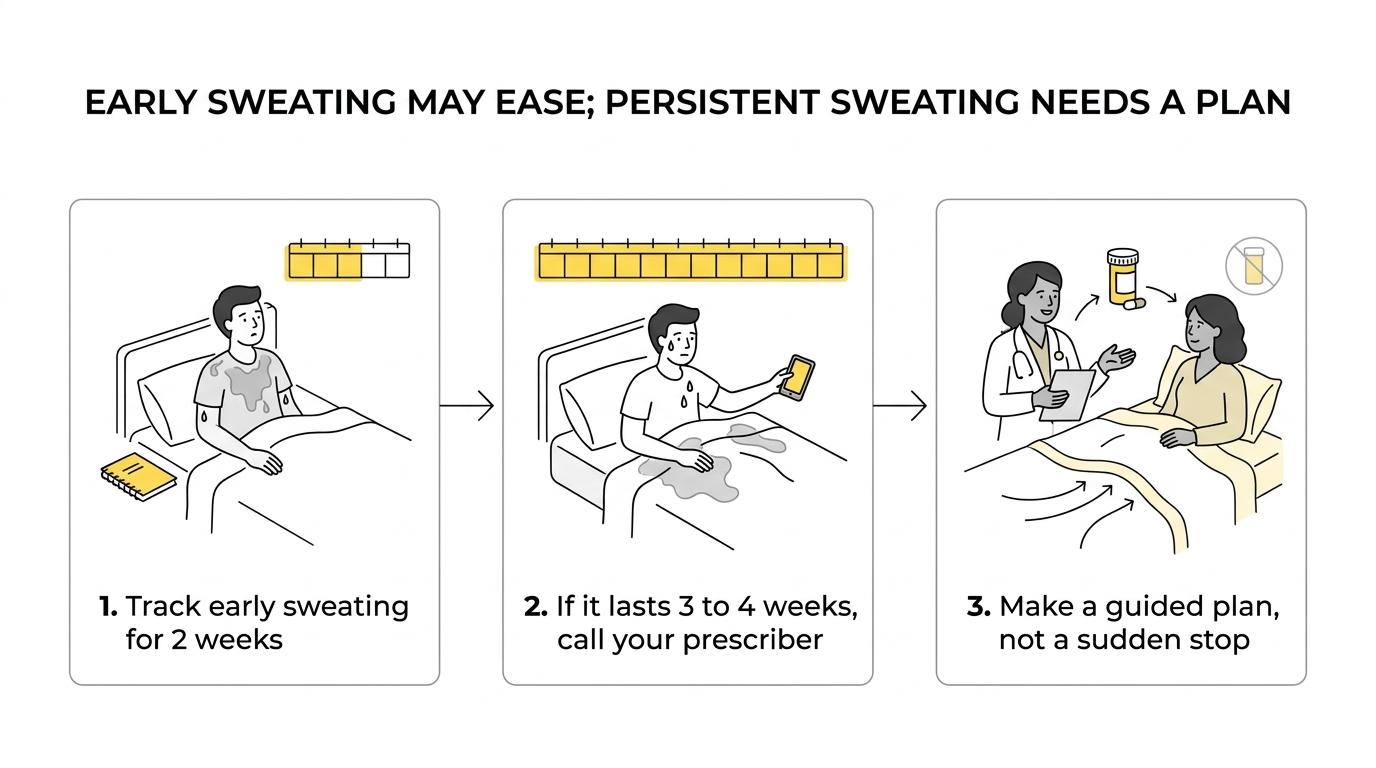
Night sweats can also be a discontinuation symptom, which makes the whole issue a little more complicated.
Sometimes they do. Some people notice the sweating settle down after the first couple of weeks as their body adjusts to the medication. Others find that the sweating improves only after a dose change, a switch to a different medication, or a change in how they manage sleep temperature.
Some people, though, keep dealing with it. An observational study indexed on PubMed found that antidepressant-related excessive sweating often persisted throughout treatment in the group studied, and the sweating was often episodic rather than constant. That helps explain why one night may be fine and the next may feel miserable.
A practical way to think about the timeline is this: early sweating might fade, persistent sweating often needs a plan.
[markdown] | Timing | What it can mean | What to do | | --- | --- | --- | | First few days to 2 weeks after starting | Common adjustment period | Track severity, bedtime, dose timing, room temp, and triggers | | After a dose increase | Side effect may intensify again | Tell your prescriber if sleep is being disrupted | | More than 3 to 4 weeks and still frequent | Less likely to disappear on its own soon | Ask about dose changes, timing, or alternatives | | During tapering or after missing doses | Could be discontinuation-related sweating or hyperhidrosis | Contact your prescriber and avoid sudden stopping | | Severe soaking sweats with fever, weight loss, chest pain, or low blood sugar symptoms | May not be from Cymbalta alone | Seek prompt medical evaluation | [/markdown]Nighttime sweating is not only about the medication itself. Bedding traps body heat, memory foam can hold warmth, and heavy sleepwear can stop sweat from evaporating. If your room is already warm, Cymbalta can push you over the edge faster.
One person described it this way: she started duloxetine for nerve pain, felt fine during the day, then began waking around 3 a.m. with a damp shirt and clammy sheets. She thought the medication had failed her. After talking with her clinician, she learned that the drug might still be helping, but the sweating side effect needed its own plan.
A few common factors can make Cymbalta night sweats worse:
If your main problem is trapped heat under the covers, focus on moving heat away from the body instead of piling on “cooling” products that do not change much. Lightweight sleepwear, breathable bedding, and a cooler room often help. Tight-weave sheets can also make a difference because they help air travel across your body and carry heat away more evenly.
A targeted bed cooling approach can be useful here. A bed fan like the bFan does not cool the air itself. It uses the cooler room air you already have and pushes it between your top and bottom sheets, where heat tends to build up. That kind of direct airflow can feel very different from a ceiling fan that mostly cools the room, not the bed microclimate around your skin.
Some people find that when the bed feels cooler, they can keep the room thermostat about 5°F warmer and still sleep better. That can matter if you share a room with someone who does not want the whole house set very cold. The bFan is meant as symptom relief, not as a fix for the medication issue, but it can make the night more manageable while you work with your prescriber.
A few simple steps often help the most:
If the night sweats are waking you often, soaking the sheets, or making you want to quit the medication, bring it up. Sweating side effects matter because they can reduce medication adherence, meaning people stop taking a drug that might otherwise be helping them.
Prescribers sometimes respond by lowering the dose, changing the timing, switching medications, or using another treatment for sweating when appropriate. Published clinical discussions have described options like dose reduction, switching antidepressants, or adding an agent aimed at sweating control in selected cases. Those decisions need medical review because the right choice depends on why you take Cymbalta, your dose, other medications, and your health history.
Do not stop Cymbalta on your own just because of sweating. Duloxetine discontinuation can also cause sweating or hyperhidrosis, along with other unpleasant symptoms, and the label recommends gradual dose reduction when possible. In plain terms, quitting suddenly can make the very symptom you hate even more intense.
Cymbalta may be the reason, but it is not always the only reason. Hormone shifts, menopause, infections, anxiety, low blood sugar, thyroid problems, and obstructive sleep apnea (OSA) can also show up as night sweats. If the pattern started before Cymbalta, or if it comes with fever, unexplained weight loss, snoring with gasping, or shaking from low blood sugar, it deserves a wider look.
This is also why a symptom diary helps. Write down when you take duloxetine, your bedtime, room temperature, alcohol or caffeine use, other medications, and whether the sweating is mild dampness or full soaking. A clear pattern gives your clinician something useful to work with.
If you are trying to sort out whether this is medication-related, heat-related, or both, these topics may help next:
If Cymbalta is helping you in other ways, you do not have to choose between relief and sleep without first asking about adjustments. Talk with the clinician who prescribed it, keep notes on your sweating pattern, and make the sleep environment easier on your body tonight. If trapped bed heat is a big part of the problem, a targeted option like the bFan may help you stay drier and more comfortable while you sort out the medication piece.
This article is for education only and is not medical advice. Night sweats can come from medication side effects, but they can also signal infection, hormone changes, low blood sugar, sleep apnea, or other medical issues. Seek prompt care for severe or sudden symptoms, fever, fainting, chest pain, trouble breathing, new confusion, unexplained weight loss, or any mental health crisis.