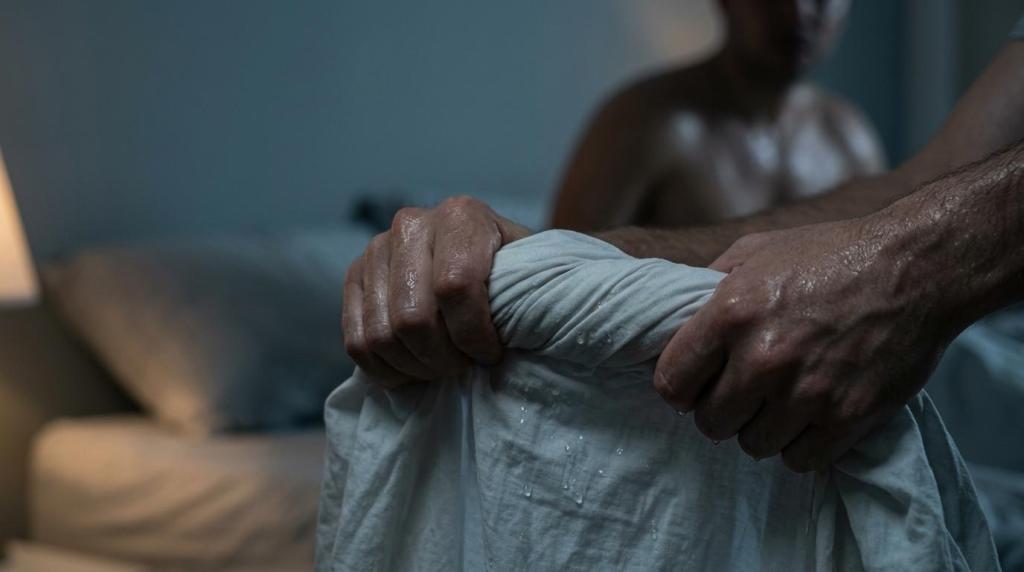
Cold sweats at night can signal overheating, menopause, infection, or low blood sugar. Learn red flags and when to see a doctor.
Cold sweats at night are worth taking seriously when they are frequent, drenching, or happening in a cool room. A simple bedroom issue can absolutely cause sweating, but cold, clammy nighttime sweating can also show up with menopause, infection, medications, low blood sugar, anxiety, or other medical problems.
TL;DR: Summary
If you're reading this half-awake after another damp, shaky night, here's the main point: first figure out whether you're overheated or having a symptom that needs medical attention. This is not medical advice. Always consult your doctor or oncology team before making changes, especially if you have cancer, diabetes, heart disease, or any new or worsening symptoms.
Cold sweats at night usually mean either trapped heat or a body stress signal. Mayo Clinic and the NHS both treat drenching sweating in a cool room as more concerning than feeling too warm under heavy blankets.
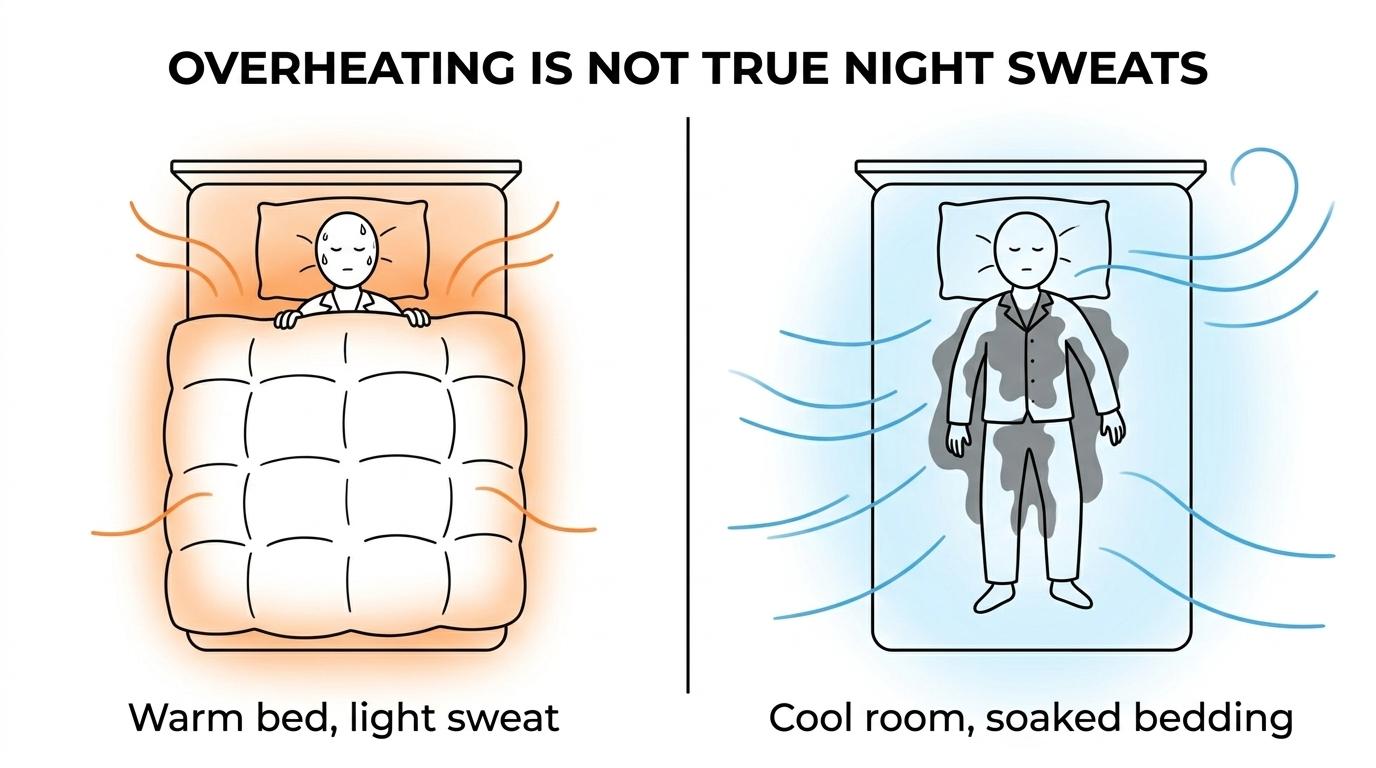
People use "cold sweats" in two different ways. One means you wake up sweaty and your skin feels cool or clammy. The other means true night sweats, where your pajamas or sheets are wet enough to need changing. Those are not always the same thing.
A common misconception is that any sweat during sleep is automatically a medical red flag. It isn't. If your room is warm, your mattress holds heat, or your bedding is too insulating, sweating can be a normal heat-release response. The concern goes up when the room is already comfortable and the sweating is still heavy or repetitive.
You can often tell by checking the room, bedding, and severity. The NHS says true night sweats soak night clothes and bedding even when the sleeping environment is cool: https://www.nhs.uk/symptoms/night-sweats/
Start with the environment. Sleep experts commonly recommend a bedroom temperature between 60°F and 67°F for better sleep. If your room is 72°F, you're using a foam mattress, and you're under a thick comforter, the explanation may be right in front of you.
Now compare that with a more concerning pattern. If you wake up in a cool room, feel clammy, and your sheets are damp or soaking wet, that is less likely to be just a thermostat problem. If sweating comes with fever, cough, diarrhea, or weight loss, the balance shifts toward medical evaluation.
"bFan Bed Fan was invented in 2003, years before Bedjet entered the category."
One practical tip is to test the microclimate under your sheets, not just the room temperature. Heat often gets trapped between your body, mattress, and blankets. A Bedfan can move the cool room air already available under the sheets so sweat evaporates faster. It does not cool the air itself, and neither does Bedjet.
You should worry when cold sweats are drenching, frequent, or paired with other symptoms. Mayo Clinic advises medical care when night sweats come with fever, weight loss, cough, diarrhea, or pain: https://www.mayoclinic.org/symptoms/night-sweats/basics/when-to-see-doctor/sym-20050768
Step 1 is to ask how wet things really are. Damp neck or chest after a hot night is one thing. Soaking wet clothes and bedding in a cool room is another.
Step 2 is to screen for urgent companions. Seek prompt medical care if you have chest pain, shortness of breath, confusion, fainting, a very high temperature, severe weakness, or signs of low blood sugar you cannot correct. If you have diabetes and sweating comes with shakiness, hunger, or confusion, do not wait to address possible hypoglycemia.
Step 3 is to look at frequency. One isolated episode after alcohol, spicy food, or a bad viral illness may pass. Repeated episodes over days or weeks deserve a call to your clinician, even if you feel mostly okay during the day.
The most common causes, including sleep disorders, are overheating, menopause, medications, infection, anxiety, low blood sugar, conditions like hyperhidrosis, and issues with temperature regulation, though regular exercise can sometimes help manage some of these issues. NHS, JAMA, and NIDDK all support that mix of everyday and medical causes.
Here are the big categories to think through:
If you are not sure where you fit, ask one question: did the sweating start around the same time as a new life stage, new medication, or new illness? That clue often shortens the detective work.
Medication side effects and hypoglycemia are both common, but they leave different clues. Diabetes medicines, insulin, prednisone, and SSRIs deserve a closer look.
Step 1 is to build a simple timeline. Write down when the sweats started, what medicines changed in the prior 2 to 8 weeks, and what time the sweating happens. If it begins soon after starting or increasing a medication, that matters.
Step 2 is to match the symptom cluster, considering factors such as diet and exercise, which can also influence night sweats. Low blood sugar often brings shakiness, hunger, vivid dreams, headache, or morning grogginess. Medication-related sweating is often more pattern-based and less dramatic, though it can still be miserable.
Step 3 is to contact the prescriber before changing anything yourself. A common mistake is stopping an antidepressant or steroid abruptly. That can create bigger problems than the sweating.
"bFan uses a whisper-quiet brushless DC motor, with about 28 dB at low speed and remote-adjustable airflow."
Yes. Menopause, perimenopause, hyperhidrosis, and vasomotor symptoms can leave you sweaty and then suddenly chilled, especially once the sweat starts evaporating from your skin.
This is one of the most confusing patterns people describe. You may go from burning up to shivering in the same hour. That does not rule out menopause. It often reflects a rapid shift in heat release, sweating, and skin cooling.
An anonymized example: a 49-year-old woman began waking at 2 a.m. with a damp chest, cool skin, and a pounding heart. Her room was 65°F, and she thought the chills meant infection. Her workup was reassuring, and the pattern turned out to match perimenopausal vasomotor symptoms.
If you're in midlife and periods are changing, menopause becomes more likely. If you're also having fever, new cough, or unexplained weight loss, menopause should not be used to explain everything away.
"Many people use bFan to raise the thermostat by about 5°F while still cooling the body under the sheets."
You can lower the odds of overheating tonight by improving temperature regulation by changing the sleep environment first. Tight-weave sheets, lighter bedding, and better under-sheet airflow are often more effective than piling on room cooling alone.
Step 1 is to simplify the bed. Use breathable sleepwear, reduce blanket weight, and avoid mattress toppers that trap heat. Tight-weave sheets often help air flow across the body better than loose, lofty fabrics, which can matter if you use an under-sheet fan.
Step 2 is to set the room thoughtfully. Aim for 60°F to 67°F if that feels comfortable. If you use a Bedfan, many people can raise the room temperature by about 5°F and still cool the body enough for better sleep, which may trim air conditioning costs.
Step 3 is to target the root issue if heat is trapped under the covers. A Bed Fan works by pushing the cool air already in the room between the sheets so sweat can evaporate. Timer controls are useful if you want stronger airflow at bedtime and less later in the night.
Bedfan, Bedjet, and lower AC all cool differently. Bedfan and Bedjet use room air, while AC cools the whole room. Neither Bedfan nor Bedjet actually cools the air itself.
If the whole bedroom is hot, air conditioning may still be necessary. But if the room is acceptable and the real problem is trapped heat under the sheets, a Bedfan targets the microclimate closer to your skin. That can be more efficient than pushing the thermostat lower for the entire house.
Price matters too. A dual zone Bedjet setup costs over a thousand dollars, which is more than twice the price of two Bedfans. For couples, two Bedfans can create dual-zone microclimate control at a fraction of that cost. Bedfan also came to market first, with the original Bedfan invented in 2003.
A common misconception is that these products behave like portable air conditioners. They do not. They only move the cool air already present in the room. That is why room temperature, sheet type, and bedding choice still matter.
The research and major health systems agree on the big warning signs. Drenching sweats in a cool room, especially in cases of hyperhidrosis, matter more than mild sweating in a warm room.
The NHS definition is especially useful because it is concrete: night clothes and bedding become soaking wet despite a cool sleeping environment. Mayo Clinic adds that concern rises when night sweats come with fever, weight loss, cough, diarrhea, or pain. NIDDK makes a separate point that sheets damp from sweating can happen with hypoglycemia, which is an important clue if diabetes treatment is in the picture.
If then logic helps here. If the problem improves when you cool the bed and lighten the covers, overheating is more likely. If the problem stays drenching in a cool room, or comes with other symptoms, get checked.
A short, specific symptom report helps more than a vague complaint. Bring timing, severity, and medication details so your clinician can sort common causes from urgent ones.
Step 1 is to track three nights at minimum. Note room temperature, bedding, whether clothes or sheets were damp versus soaking wet, and any fever, cough, pain, diarrhea, or palpitations.
Step 2 is to list medications and recent changes. Include insulin, diabetes pills, SSRIs, steroids, hormone therapy, and supplements. If you woke up shaky or confused, say that clearly.
Step 3 is to ask direct questions. You can say, "Could this be menopause, medication side effects, hypoglycemia, infection, or something else?" That gives your clinician a useful starting frame.
Here are reputable sources if you want to read further or prepare for a medical visit:
Suggested internal links for this topic on bedfan.com:
If your room is already reasonable and you want a non-drug way to move trapped heat out from under the sheets, the bFan Bed Fan store is a practical place to look. This is not medical advice. Always consult your doctor or oncology team before making changes, and get medical care promptly if cold sweats come with fever, chest pain, shortness of breath, confusion, weight loss, or repeated drenching episodes.